

Business
White House says Trump has fired CDC Director Susan Monarez, will name replacement soon


Susan Monarez, President Donald Trump’s nominee to be the Director of the Centers for Disease Control and Prevention (CDC), arrives to testify for her confirmation hearing before the Senate Committee on Health, Education, Labor, and Pensions in the Dirksen Senate Office Building on June 25, 2025 in Washington, DC.
Kayla Bartkowski | Getty Images
The White House on Thursday said President Donald Trump has fired Centers for Disease Control and Prevention Director Susan Monarez after she refused to resign, and that a new replacement will be named soon.
“The president fired her, which he has every right to do,” White House press secretary Karoline Leavitt said during a briefing.
She said Trump has “the authority to fire those who are not aligned with his mission,” and that he or Health and Human Services Secretary Robert F. Kennedy Jr. will announce a new CDC director “very soon.”
In a statement, lawyers for Monarez said they were “not aware of anything new happening.”
Earlier Thursday, Monarez’s attorney Mark Zaid said Monarez would remain in the role because she is a presidential appointee and only Trump can fire her. Zaid said White House personnel had tried to fire her, not the president.
“Receiving an email from an HR staffer simply saying ‘you’re fired’ is insufficient as a matter of law to constitute the termination of a federal employee, especially one appointed by the president and confirmed by the Senate,” Zaid said.
He also said she “refused to rubber-stamp unscientific, reckless directives and fire dedicated health experts” and that “she chose protecting the public over serving a political agenda.”
“For that, she has been targeted,” he said.
Monarez and Kennedy were at odds over vaccine policy, The New York Times reported Wednesday, citing an anonymous administration official.
Kennedy, a prominent vaccine skeptic, has taken several steps to change immunization policy in the U.S.
Monarez was sworn in on July 31. A longtime federal government scientist, she is the first CDC director to be confirmed by the Senate following a new law passed during the pandemic that required lawmakers to approve nominees for the role.
Trump’s move to oust her is the latest in a leadership upheaval at the CDC.
At least four other top health officials announced Wednesday that they were quitting the agency shortly after HHS said Monarez was “no longer” the director of the CDC in a post on X.
In a Fox News interview Thursday morning, Kennedy declined to comment on “personnel issues.” But he said the agency “is in trouble, and we need to fix it, and we are fixing it, and it may be that some people should not be working there anymore.”
Kennedy said Trump has “very, very ambitious hopes for the CDC right now.” But he said the CDC “has problems,” claiming that the agency took the “wrong” approach when it came to social distancing, masking and school closures during the Covid pandemic.
“We need to look at the priorities of the agency, if there’s really a deeply, deeply embedded … malaise at the agency, and we need strong leadership that will go in there and that will be able to execute on President Trump’s broad ambitions for this agency, the gold standard science and to what it was when we were growing up, which was the most respected health agency in the world,” Kennedy said.
The leadership departures come at a tumultuous time for the agency, which is reeling from a gunman’s attack on the CDC’s Atlanta headquarters on Aug. 8. A police officer died in the shooting.
Correction: This article has been updated to reflect the correct day the White House said Trump fired Susan Monarez after she refused to resign, and to reflect the correct wording of Robert F. Kennedy Jr.’s last quote.
— CNBC’s Angelica Peebles contributed to this report.



India is rapidly strengthening its position in global electronics trade, now supplying about 40 per cent of the smartphones imported by the United States that were previously sourced from China.According to a recent report by McKinsey & Company, cited by ANI, the United States has been actively diversifying its import sources and has replaced about two-thirds of the goods it previously sourced from China, valued at more than $80 billion. India and ASEAN economies have played a significant role in this shift.“India, for example, increased smartphone exports to the United States to levels equal to roughly 40 per cent of what China had supplied,” the report stated.India’s rise in smartphone exports has been particularly notable, with shipments to the US increasing sharply despite the long geographical distance of around 13,000 kilometers. This reflects the country’s growing role in global electronics manufacturing and supply chains.The report also highlighted that ASEAN economies replaced about two-thirds of US laptop imports that had earlier come from China, pointing to a broader shift in manufacturing bases across Asia.It noted that global trade remained resilient in 2025 despite concerns of a slowdown. Both US imports and Chinese exports reached new highs during the year, while overall global trade grew faster than the global economy.Among emerging economies, India stood out for expanding trade across regions. However, while overall exports remained largely unchanged, smartphones were a key exception and drove export growth.The report said the shift in trade patterns is being driven by domestic priorities and geopolitical realignments. Advanced economies and China are increasingly reorienting trade away from geopolitically distant partners, while emerging economies like India continue to expand trade across markets.It also pointed to changes in other regions. ASEAN strengthened its position as a manufacturing hub by importing more inputs from China and exporting finished goods to the United States. Brazil increased commodity exports to China, replacing goods that China had earlier sourced from the US.
Business
Crude oil prices plunge over 10% as Iran reopens Strait of Hormuz, stocks rally – The Times of India

Crude oil prices plunged more than 10% on Friday after US President Donald Trump and Iran announced that the Strait of Hormuz is fully open again for oil tankers carrying crude from the Persian Gulf to customers worldwide, easing fears of supply disruptions.The sharp drop in oil prices lifted global markets, with US stocks rallying strongly. The S&P 500 rose 1% as it moved toward a third straight week of gains, while the Dow Jones Industrial Average jumped 722 points, or 1.5%, and the Nasdaq composite added 1.1% in morning trading.
The price decline came immediately after Iran’s foreign minister, Abbas Araghchi, said on X that the passage for all commercial vessels through the strait “is declared completely open” and would remain so for the duration of the current ceasefire period in Lebanon. US crude fell 10.2% to $81.88 per barrel, while Brent crude dropped 10.3% to $89.09. Despite the fall, prices remain above their pre-war levels, indicating lingering caution in markets.Optimism has been building on Wall Street in recent weeks, with stocks rising 12% since late March on hopes that the United States and Iran can avoid a worst-case economic outcome despite ongoing conflict. The reopening of the Strait of Hormuz is seen as the clearest sign yet of easing tensions, although the situation remains uncertain. President Donald Trump said in a speech late Thursday that the war “should be ending pretty soon.”Shortly after Iran’s announcement, Trump said on his social media platform that the US Navy’s blockade of Iran remains “in full force” until both sides reach an agreement. He added that negotiations “should go very quickly in that most of the points are already negotiated,” emphasizing the statement in all capital letters.Companies with high fuel costs led the market gains as oil prices fell. United Airlines rose 9.8%, while Norwegian Cruise Line and Royal Caribbean Group both climbed 9.3%.A solid start to the earnings season also supported investor sentiment. State Street gained 2.9%, and Fifth Third Bancorp rose 1.4% after reporting stronger-than-expected quarterly results.Not all companies benefited from the rally. Netflix fell 9.2% despite posting higher profits, as it did not increase its full-year revenue forecast. The company also said cofounder and chairman Reed Hastings will step down from its board in June when his term expires.European markets also moved higher following the development, with France’s CAC 40 rising 2% and Germany’s DAX gaining 2.2%.Asian markets, which had closed before the announcement, ended lower. Japan’s Nikkei 225 fell 1.8%, and Hong Kong’s Hang Seng dropped 0.9%.In the bond market, Treasury yields declined as lower oil prices reduced pressure on inflation. The yield on the 10-year Treasury fell to 4.24% from 4.32% late Thursday.

The Netflix logo is pictured at the company’s offices on Vine in Los Angeles, Dec. 5, 2025.
Patrick T. Fallon | AFP | Getty Images
For years, Netflix top brass would tell investors they were builders not buyers. Now, that sentiment toward growth may be changing.
On Thursday Netflix reported its quarterly earnings. Typically, Netflix’s earnings calls are focused on metrics like engagement, content spending, price hikes and membership. While those factors were still present on Thursday’s call, analysts were also questioning Netflix’s merger and acquisition aspirations following the Warner Bros. Discovery sale process.
Late last year, Netflix emerged as a bidder for WBD, surprising many in the industry and market. Even more stunning was an announcement in December that Netflix had reached a deal to acquire WBD’s film studio and streaming assets in a $72 billion deal.
While the transaction initially raised eyebrows, it’s now opened the door to questions from media onlookers and insiders about whether the company needs to pursue other deals as streaming becomes more competitive.
Netflix co-CEO Ted Sarandos said Thursday that questions also arose both internally and externally about the company’s ability to do such a megadeal.
“What we did learn, though, was that our teams were more than up to the task,” said Sarandos. “We’ve learned so much about deal execution, about early integration.”
Netflix had said its reasoning was simple for the pivot toward a big acquisition. Despite being the largest streaming service by far when it comes to subscribers — 325 million paid global members reported in January — it wanted to deepen its bench of franchises and intellectual property, and get more squarely in the movie studio business.
Paramount Skydance ultimately upended the deal in February with a superior bid, and Netflix walked away (collecting its $2.8 billion breakup fee in short order).
“But mostly, we really built our M&A muscle,” Sarandos said. “And the most important benefit of this entire exercise, though, was that we tested our investment discipline.”
‘M&A muscle’
Netflix CEO Ted Sarandos arrives at the White House in Washington, Feb. 26, 2026.
Andrew Leyden | Getty Images
Sarandos’ newfound openness to M&A has left some wondering whether the streaming giant could be on the lookout for new targets.
After all, its library of intellectual property and its relationship to the movie studio business are still right where they were before it took on the WBD deal.
Although Wall Street was clearly not a fan of Netflix’s proposed acquisition of WBD — shares fell 15% between the announcement of the deal and the day it fell apart, and have since risen about 26% — the media landscape will be undeniably different if Paramount’s takeover is approved.
Paramount is seeking to buy the entirety of WBD’s business — cable TV networks, film studio, streaming and all. That would create a behemoth of a competitor for Netflix and its media peers on various fronts.
“The way the WBD cards fell matters a lot. A probable combination of Paramount+ and HBO Max changes the streaming landscape in ways Netflix hasn’t really had to contend with before,” said Mike Proulx, vice president and research director at Forrester, prior to Netflix’s earnings release.
“I just want to remind you that we said this from the beginning that the WB deal was a nice to have, not a need to have. We are very confident in the core business,” Sarandos said Thursday. He added that Netflix viewed its biggest risk going into the deal process as losing focus on its core business.
“As you can see from our Q1 results, we did not lose focus,” he said.
Still, Netflix’s earnings report, and particularly its forward-looking guidance, seemed to disappoint investors.
The company’s stock dropped roughly 10% in extended trading after the streamer maintained full-year guidance despite a first-quarter revenue beat and the termination of the WBD deal.
Netflix stock sinks after Q1 earnings report.
“The bigger surprise this quarter was the unchanged full-year margin guidance despite walking away from the Warner Bros. deal and related M&A costs,” said analyst Robert Fishman of MoffettNathanson in a research note Friday.
Netflix, for its part, didn’t spend too much time on M&A during the earnings call, instead focusing on its more familiar talking points like user engagement, a growing advertising business, and spending on content that holds onto members (and helps justify price hikes).
The return to Netflix’s typical narrative appeared to be welcome.
“Post WBD, the company could return to its relentless focus on growing revenue and profits by leveraging its global subscriber scale,” said Fishman in Friday’s note. He added that Netflix management “emphasized the success of its recent price increases and noted that retention was strong,” as well as that it remains on track to double ad revenue this year.
Still, Proulx of Forrester said in a note after the earnings call that while Netflix was back to being “squarely focused on executing its tried‑and‑true playbook,” questions still remained.
“None of that changes the reality that the streaming market is more competitive than it was a year ago,” Proulx said. “Pricing power has to be earned quarter by quarter, and holding engagement as prices rise remains the central challenge across the streaming market. Netflix is betting that steady execution on its core business wins in a more crowded, consolidating market.”


Frank Lampard’s Coventry City promoted to Premier League

WWE star Danhausen says Mets ‘curse’ isn’t exactly lifted as team drops ninth straight game

Ice Spice slapped at McDonald’s by fan: Here’s what actually happened

-

 Tech1 week ago
This AI Button Wearable From Ex-Apple Engineers Looks Like an iPod Shuffle
-

 Politics1 week ago
Indian airlines hit hardest after Dubai limits foreign flights until May 31
-

 Politics1 week ago
Chinese, Taiwanese will unite, Xi tells Taiwan opposition leader
-

 Entertainment5 days ago
Palace left in shock as Prince William cancels grand ceremony
-

 Sports5 days ago
The case for Man United’s Fernandes as Premier League’s best
-

 Entertainment7 days ago
Dua Lipa hits major career high ahead of wedding with Callum Turner
-
 Business5 days ago
UK could adopt EU single market rules under new legislation
-
 Business1 week ago
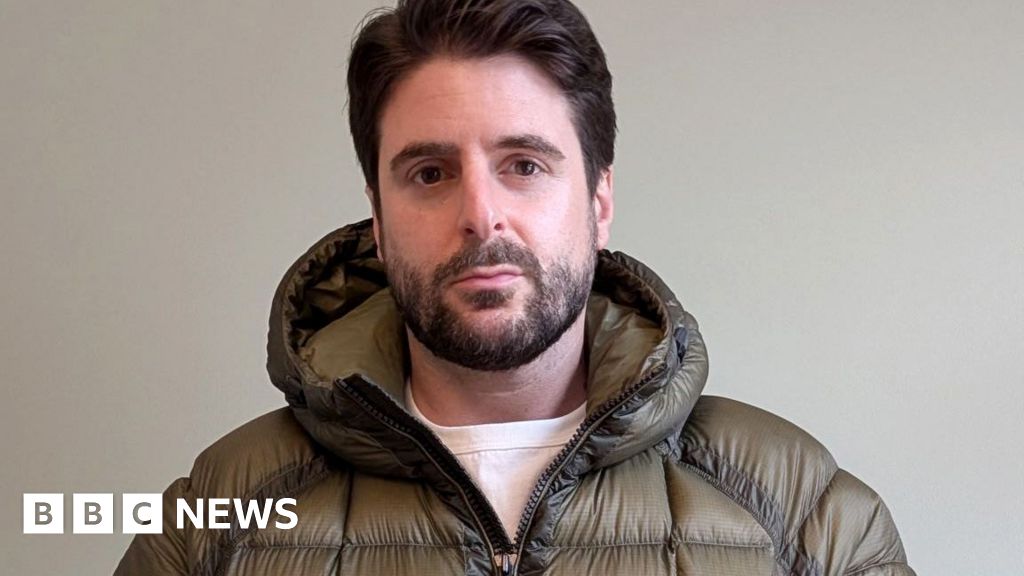
He paid $248 in illegal tariffs for this coat. Will he ever get it back?