

Fashion
Why Chinese shoppers are choosing local luxury over LVMH and Gucci

By
Bloomberg
Published
November 17, 2025
When Bernard Arnault, one of the world’s richest men and chairman of LVMH, dropped by Shanghai in September, many assumed his itinerary would be routine: check in on Louis Vuitton, Dior, and the rest of his empire’s boutiques in China’s most prestigious malls. But instead, Arnault did something unexpected.
He went shopping for Chinese brands.
At the new-age luxury shopping mall Qiantan Taikoo Li in Shanghai, Arnault stopped by Songmont, a minimalist leather goods label. There, he bought two handbags, according to people familiar with the situation who asked not to be named discussing a private matter.
He also went to another high-end mall and wandered into Laopu Gold, a homegrown jeweler that opened a store a few doors down from Cartier and Van Cleef & Arpels. He reportedly lingered for half an hour, muttering words like “exquisite” and “interesting.” It was a small gesture with big symbolism. Arnault, whose companies helped define modern luxury, was now browsing in boutiques that may represent its next chapter, at least in China.
The anecdote reflects how China’s $49 billion luxury market is changing fast. As the economy cools, spending on foreign premium brands has stalled. Instead, when Chinese consumers do splash out, they’re turning to homegrown labels. Their rise is redrawing the map of one of the world’s top luxury markets and forcing global players to take note.
Online retail platforms have been key to their growth. According to data compiled by BigOne Lab and analyzed by Bloomberg News, five domestic prestige brands in handbags, apparel, fragrance, cosmetics, and jewelry have outpaced seven foreign rivals in sales growth over the past two years.
E-commerce sales at Laopu Gold have surged more than 1,000% during the first three quarters of this year compared with two years ago, while Songmont’s online bag sales have grown about 90%.
By contrast, Gucci’s online bag sales in China have slumped more than 50% and Michael Kors’ has dropped about 40%. Other Chinese labels – make-up brand Mao Geping Cosmetics, perfumier To Summer, and luxury clothing label Icicle – have pulled off similar feats in their categories.
On Tmall, the country’s largest online retailer, revenues for some Chinese brands are on par or even higher than overseas ones: Laopu sold $630 million in its Tmall store over 12 months through to October, compared with $57 million for Van Cleef & Arpels, according to industry consultant Hangzhou Zhiyi Tech. Mao Geping’s revenue was $125 million, more than doubling Bobbi Brown’s sales. For Laopu Gold, sales for both online and in-store jumped 250% in the first half of this year, after doubling in both 2023 and 2024, according to its financial results. Mao Geping Cosmetics, a homegrown beauty label named after its celebrity founder, reported double-digit revenue growth so far this year as well as in 2024.
Meanwhile, Bain & Co. estimates that China’s luxury market, which is dominated by European giants like LVMH Moet Hennessy Louis Vuitton, Kering SA, and Burberry Group Plc, shrank by as much as 20% last year, its steepest decline since at least 2011. Though there have been glimmers of recovery, executives talk about “caution” and “uncertainty.”
China’s worsening economy has wrecked the appetite for global luxury brands. Demand that was supposed to return after the lifting of strict Covid restrictions has instead slumped for overseas firms. That disappointment has helped erase shares at key luxury houses, with LVMH down about 30% from their 2023 peak while Kering has plunged roughly 60% since its high in 2021 in Paris. In the US, Estee Lauder Companies Inc. shares are about 76% off their high in 2021. After spiking following the easing of Covid lockdowns in 2021, consumer spending in China has largely flatlined.
Representatives at LVMH, Kering, Channel, Richemont, Estee Lauder, Max Mara, Capri didn’t respond to requests for comment.
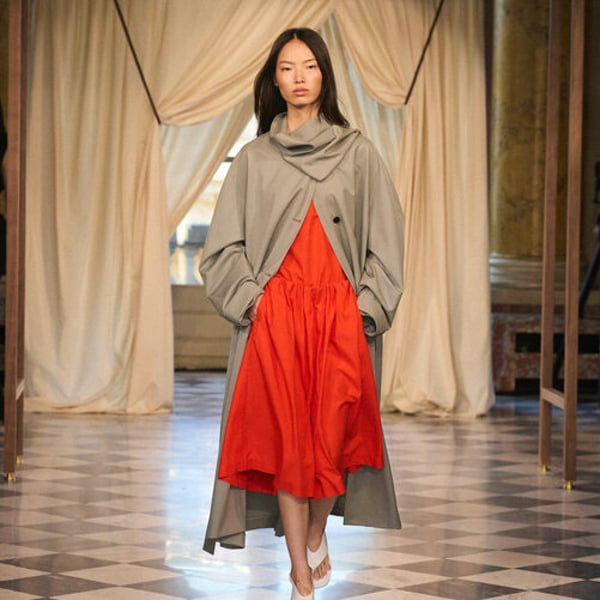
That’s leading shoppers to turn to domestic brands with their lower pricing. ICICLE’s cashmere and wool Aircoat is priced between about $1,123 to $2,808. Max Mara’s 101801 coat, often highlighted as comparable by Chinese consumers, costs more than $4,200. Songmont’s bucket bags, described by social media users as a dupe for Hermes’ Picotin Lock bags, sell for around $421, while the latter costs between $5,054 to $8,016.
It’s not just a China phenomenon. Shoppers globally have become more discerning, with consumers turning to labels that look premium at lower price points as they grow increasingly weary of spending on big name brands that keep raising prices.
But what’s more surprising is that the price tag alone isn’t the deciding factor, said Jacques Roizen, managing director of China consulting at Digital Luxury Group.
“Contrary to common perception, Chinese beauty brands aren’t competing on price – they’re building rich brand universes and prioritizing storytelling,” said Roizen. “For Western prestige beauty brands, the rise of local competitors should serve as both a wake-up call and a warning.”
That story is rooted in craft and cultural pride, and is resonating with younger Chinese shoppers who no longer see Western logos as tickets to sophistication. Instead, modern shoppers are hunting for items that feel more tailored to them, and many Chinese brands have turned that shift into their core identity. Labels like To Summer and Songmont draw deeply from local history, art, and everyday life. The message: modern luxury can be proudly Chinese.
Songmont’s philosophy emphasizes “Eastern aesthetics,” with the designs of its stores reflecting Chinese calligraphy. To Summer builds scents around traditional ingredients like tea, osmanthus and preserved orange peel and uses porcelain made in Jingdezhen, China’s most important ceramics production center. ICICLE draws on the Confucian ideal of harmony and restraint.
It’s a concept that Songmont’s founder Fu Song consciously designed from the start.
“We’ve positioned ourselves as a Chinese brand rooted in local culture,” she said. “In the global fashion conversation, there are still too few Chinese voices.”
The strategy works especially well online, with the marketing more attuned to local consumers. Songmont launched its own podcast focusing on the lives of urban women, which is resonating for its celebration of self-worth and diverse life values rather than social status, said BigOne partner Amber Zhang. The campaign struck deeper than those from global brands, she said.
For shoppers like Wan Yihuan, a 30-year-old Shanghai finance worker, that message hits home. Once a self-described Hermès and Tom Ford addict, she now carries a $210 Songmont hobo bag and wears Mao Geping makeup. “I fell into the trap of consumerism when I was younger,” she said. “Now I just want things I truly like.”
Among the new Chinese players, Laopu Gold stands out for its more-than 100% revenue growth in physical stores since early 2024, where Tiffany and Bulgari have seen double-digit declines, according to BigOne data. At Beijing’s exclusive SKP mall, Laopu Gold’s sales rose more than 200% in the first half of the year, according to a person familiar with the figure who declined to be named discussing a private matter. In October, it opened a store in Plaza 66, a glass-clad cathedral of luxury long dominated by European names, becoming the first domestic brand to establish a presence in all ten of China’s top-tier malls.
It may seem strange to associate Made-in-China with luxury, a country where low-cost manufacturing helped drive its economy to the world No. 2 spot. But these domestic premium brands are challenging that perception with a slower and more premium manufacturing process that’s relayed to consumers through localized marketing campaigns.
In 2013, ICICLE bought a garment factory that manufactures for Max Mara in China’s eastern Jiangsu province. Songmont uses full-grain top-layer cowhide and gold-plated hardware, crafted by artisans with decades of traditional sewing and craftsmanship experience from the founder’s hometown. Laopu Gold incorporates elaborate filigreed shapes and enamel glazes into its jewelry. Mao Geping, China’s answer to America’s Bobbi Brown, teaches makeup application on local models to millions of fans online.
Their popularity is spreading outside China’s border. In London, 16-year-old Naomi Jiang now looks beyond marquee labels when buying handbags. Finding designer brands like Hermes overpriced, she chose Songmont for its design and value instead. “We’re getting a more diverse, higher quality selection of clothing,” she said.Executives at the Chinese brands, including Songmont, To Summer and Mao Geping, say they want to expand globally. The brands haven’t disclosed their overseas sales yet but analysts’ consensus is that the amount is likely still small.
“Chinese brands must look beyond China,” To Summer’s founder and chief executive officer Elvis Liu said. “Why are global brands often better positioned in their competition against Chinese brands? Because they are backed by the global market. If you only have the Chinese market, it’s like you are a local brand and this will put you at a very disadvantageous position amid the competition.”
Still, obstacles loom. Few domestic brands have crossed the 10-billion-yuan ($1.4 billion) annual revenue mark, said Michelle Cheng, retail analyst at Goldman Sachs Group Inc. “China’s market is huge, so you can hit 1 billion yuan with hot products, or even 3 to 5 billion,” she said. “But further growth depends on having a strong management team, talented staff, and long-term vision.”
The high sales growth figures also stem from a low base: the top 10 best selling brands in China’s personal luxury segment are all Western brands, accounting for 63%, or about $31 billion, in sales last year, according to Euromonitor International data. In contrast, no Chinese brands have more than 0.5% of the market share, the data showed.
The bigger risk may be psychological, with the same economic malaise that led to European brands’ sales waning potentially spreading to domestic brands too, said Cheng. “For luxury to truly grow, you need rising wages and a growing middle class, both of which are being challenged by ongoing economic headwinds,” she said.
Take Guo Wenjun, who once spent over $70,000 in a shopping spree – Rolex, Chanel, even a toddler-sized Armani jacket. Now, the 37-year old has a child in an expensive international school and feels job uncertainties are mounting. She’s turned to buying $7 tote bags and $4 T-shirts from budget shopping site 1688.com.
“Luxury used to make me feel like a queen,” she said. “Now it no longer has that magic.”









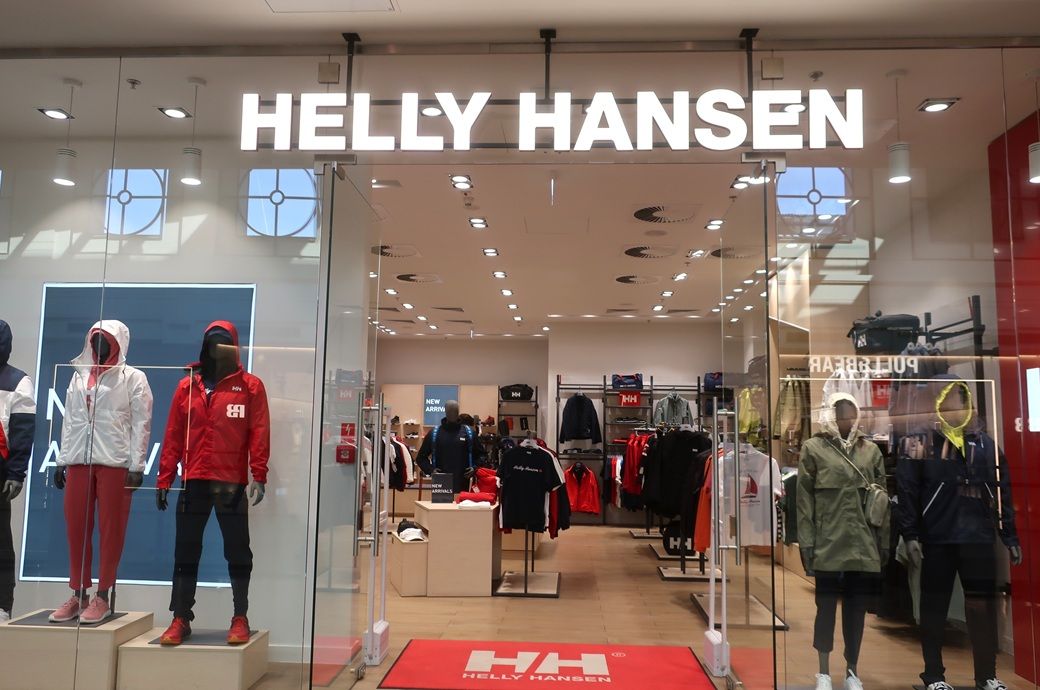
“We are thrilled to welcome Erinn Murphy to Kontoor Brands,” said executive vice president, chief financial officer & global head of operations, Joe Alkire. “Having led investor relations and corporate strategy from within a high-growth consumer brand and nearly twenty years of experience covering global lifestyle brands as a respected senior equity analyst, she understands what drives long-term value creation from every angle. Her perspective will expand the operational and strategic depth of the Helly Hansen leadership team as we focus on accelerating growth and expanding the brand’s global reach, while also strengthening how Kontoor engages with the investment community.”
Kontoor Brands has named Erinn Murphy VP, global head of finance & operations for Helly Hansen and Corporate Investor Relations, starting May in Oslo.
She joins from Crocs, Inc., bringing nearly two decades of experience across investor relations, strategy and equity research.
Michael Karapetian will expand his role and return in Q3 2026 to support transition and investor engagement.
Murphy joins Kontoor from Crocs, Inc., a global leader in innovative casual footwear, where she served as Senior Vice President, Investor Relations and Corporate Strategy. Prior to that, she served as Managing Director of Consumer Equity Capital Markets for leading investment bank, Piper Sandler. She was recently appointed as a member of the board of directors for Revolve Group, Inc. (NYSE: RVLV).
Murphy’s appointment coincides with an expanded role for Michael Karapetian, who will serve as Vice President, Global Brand & Operations Finance and Corporate Investor Relations, with responsibility for all aspects of global brand and supply chain finance and corporate investor relations. Karapetian will return from his international assignment at Helly Hansen in the third quarter of 2026 to allow for a transition period.
Note: The headline, insights, and image of this press release may have been refined by the Fibre2Fashion staff; the rest of the content remains unchanged.
Fibre2Fashion News Desk (RM)
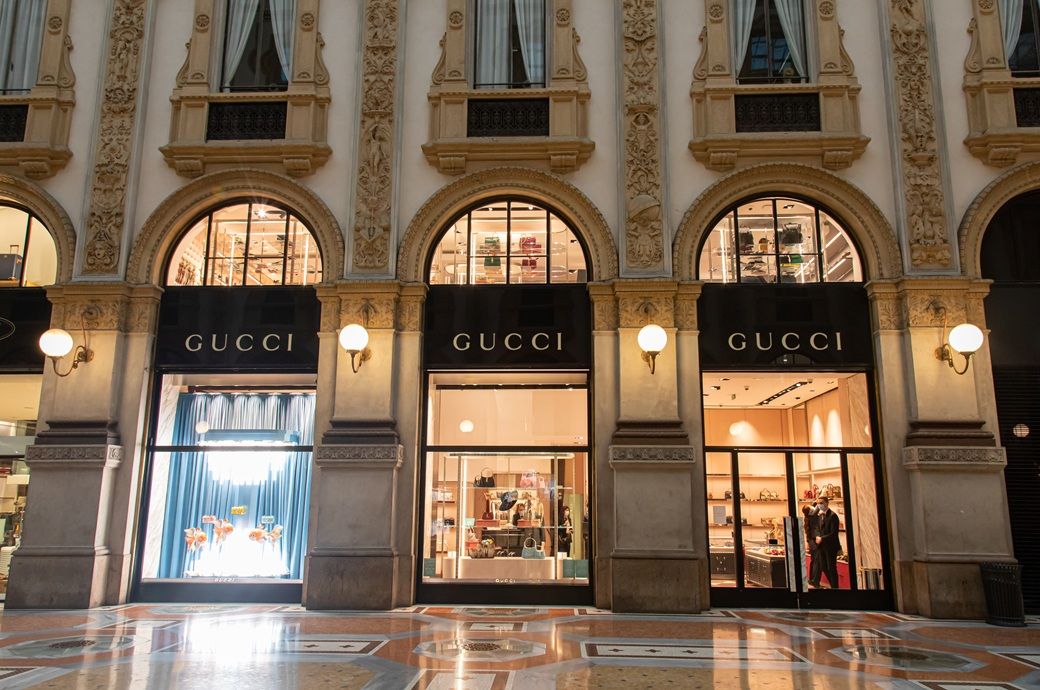
The group reported first-quarter (Q1) 2026 revenue of €3,568 million (~$4,210.24 million), down 6 per cent year-over-year (YoY) on a reported basis but stable on a comparable basis, signalling early signs of recovery despite geopolitical pressures.
Kering’s Q1 2026 revenue reached €3,568 million (~$4,210.24 million), down 6 per cent YoY but stable comparably, signalling early recovery.
Retail fell 2 per cent, while wholesale rose 6 per cent.
Fashion & Leather Goods sales went down 9 per cent.
Gucci declined 14 per cent to €1,347 million (~$1,589.46 million).
Middle East retail dropped 11 per cent, contributing 5 per cent of sales.
“In the first quarter of 2026, group revenue stabilised, marking an important first step in our recovery and a further sequential improvement. This performance reflects the first tangible effects of our actions, despite a challenging geopolitical environment,” said Luca de Meo, CEO of Kering.
Retail sales, including e-commerce, declined 2 per cent on a comparable basis, reflecting uneven regional demand. Wholesale revenue rose 6 per cent, Kering said in a press release.
Kering’s Fashion & Leather Goods posted a revenue of €2,852 million, down 9 per cent reported and 3 per cent comparable. Direct retail sales fell 4 per cent. Growth was driven by Saint Laurent, Bottega Veneta, Balenciaga and Brioni, particularly in North America.
Saint Laurent saw strong traction in shoes and ready-to-wear, while Bottega Veneta performed well in Asia-Pacific. Balenciaga continued to benefit from leather goods demand, and Brioni maintained positive momentum. Wholesale revenue for the segment increased 2 per cent.
Gucci posted €1,347 million (~$1,589.46 million) in revenue, down 14 per cent reported and 8 per cent comparable. Retail sales declined 9 per cent. North America grew 8 per cent, but this was offset by declines in Asia-Pacific and Western Europe.
“Gucci remains our top priority. A comprehensive turnaround is underway, with decisive actions across client, distribution and, above all, the offer,” added de Meo. “We have reset the product architecture and strengthened category focus, with new collections rolling out progressively in stores throughout the year.”
Regionally, the Middle East remains a key area of focus, contributing around 5 per cent of retail revenue. The Group operates 79 stores and employs approximately 1,100 people in the region. Retail revenue there declined 11 per cent in Q1 following earlier growth, amid geopolitical tensions. However, all stores are currently operational.
Kering continued to strengthen its operational structure and growth platforms during the quarter.
“The first quarter of 2026 marked continued progress, as we executed with pace and focus. We have launched a Group platform designed to support the growth of our Houses and enhance efficiency,” said de Meo.
Kering remains focused on restoring growth and improving margins in 2026 through disciplined execution and strategic repositioning.
Fibre2Fashion News Desk (SG)
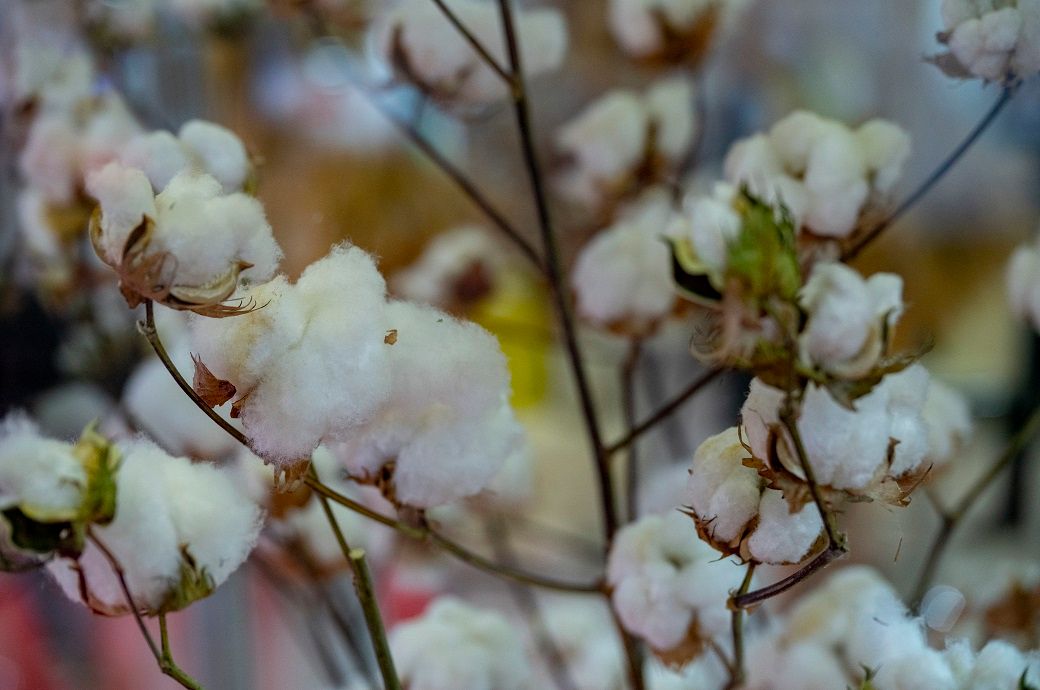
The May 2026 contract settled at 75.11 cents per pound, up 0.77 cent or 1 per cent. The most traded contract of July 2026 rallied 0.90 cent or 1.20 per cent to settle at 77.42 cents per pound. It had touched an intraday high of 77.75 cents, marking its highest level since July 2024. Other contracts also rose to reach a high level.
ICE cotton surged to a 22-month high, led by a weaker US dollar, firm crude oil and drought concerns in key US regions.
The July 2026 contract hit its highest since July 2024.
Strong trading volumes and rising synthetic fibre costs supported demand, while weather risks and macro factors kept market sentiment firmly bullish.
Deliverable stocks remained unchanged, signalling tight supply conditions.
Total trading volume was recorded at 98,489 contracts, reflecting strong participation and sustained buying interest.
Crude oil prices remained firm as supply disruption concerns persisted due to ongoing geopolitical tensions involving Iran. Markets reacted to mixed signals after statements indicating a possible end to the US-Iran conflict, but uncertainty kept oil prices supported. The conflict has effectively disrupted flows through the Strait of Hormuz, which handles nearly 20 per cent of global oil and gas shipments along with key commodities like fertilisers. Elevated crude oil prices are increasing polyester fibre production costs, thereby supporting cotton demand as a substitute fibre.
The US dollar index edged lower and traded in a narrow range as investors assessed the likelihood of renewed US-Iran negotiations. A weaker dollar made US cotton more competitive in global markets, providing additional support to export demand.
According to market analysts, high crude oil prices and rising synthetic fibre costs are key drivers supporting the cotton market, along with the impact of a weaker dollar.
The ongoing drought conditions in the United States also continued to pose risks to crop development unless weather conditions improve. Weather conditions in major US cotton-producing regions remain dry, reinforcing concerns over crop health, yield potential, and overall supply outlook.
ICE data showed that deliverable No. 2 cotton futures stocks remained unchanged at 159,512 bales as of April 14.
Broader financial markets showed strength, with the S&P 500 and Nasdaq closing at record highs driven by strong corporate earnings and optimism around geopolitical developments. CBOT wheat futures rose for the third consecutive session and have gained nearly 4 per cent so far this week due to drought conditions in the US Plains impacting crop prospects.
Cotton futures remain in a strong bullish phase with prices at multi-month highs, supported by macroeconomic factors such as a weaker dollar and firm crude oil, along with fundamental support from adverse US weather conditions. Market sentiment continues to favour further upside in the near term.
This morning (Indian Standard Time), ICE cotton for May 2026 was trading at 75.98 cents per pound (up 0.87 cent), cash cotton at 73.11 cents (up 0.77 cent), the July 2026 contract at 78.32 cents (up 0.90 cent), the October 2026 contract at 78.94 cents (up 1.37 cent), the December 2026 contract at 79.10 cents (up 0.75 cent) and the March 2027 contract at 79.85 cents (up 0.66 cent). A few contracts remained at their previous closing levels, with no trading recorded so far today.
Fibre2Fashion News Desk (KUL)


Spoiler alert! Surprise twist in “Survivor 50” elimination

Layla Banaras: Bridging two worlds, building Pakistan’s women’s football future

Kane hails ‘special night’ as Bayern finally gets past old rivals Madrid

-

 Entertainment1 week ago
Queen Elizabeth II emotional message for Archie, Lilibet sparks speculation
-

 Tech1 week ago
Azure customers up in arms over ‘full’ UK South region | Computer Weekly
-

 Tech1 week ago
As the Strait of Hormuz Reopens, Global Shipping Will Take Months to Recover
-

 Fashion1 week ago
CII submits 20-pt agenda to Indian govt to back firms hit by Iran war
-

 Tech1 week ago
This AI Button Wearable From Ex-Apple Engineers Looks Like an iPod Shuffle
-

 Politics6 days ago
Indian airlines hit hardest after Dubai limits foreign flights until May 31
-

 Entertainment4 days ago
Palace left in shock as Prince William cancels grand ceremony
-

 Politics6 days ago
Chinese, Taiwanese will unite, Xi tells Taiwan opposition leader