

Business
Why Do Most Indians Quit SIPs Within 3 Years? Analysts Explain The Real Reason


Last Updated:
Nearly 9 out of 10 retail investors discontinue SIPs within 3 years, missing out on long-term wealth as experts urge discipline and patience for successful mutual fund investing

Finance and corporate banking provide a stable and lucrative career for CAT-qualified candidates. Professionals work in banks, financial institutions, and investment firms managing portfolios, corporate loans, and risk assessment. These roles require solid analytical and decision-making abilities.
A striking pattern in India’s fast-expanding mutual fund landscape is worrying market observers. Even as systematic investment plans (SIPs) continue to attract record enrolments, industry data show that nearly 9 out of 10 retail investors discontinue their SIPs within the first three years, undermining long-term wealth creation.
Financial planners attribute this churn to a predictable cycle of emotion-driven decision-making. The initial year is marked by enthusiasm, with investors entering the market buoyed by optimism. By the second year, even a modest correction triggers anxiety, prompting many to pause or cancel their contributions. When markets rebound in the third year, these same investors return, often with a sense of missed opportunity. This loop of excitement, fear and regret, experts say, erodes the very advantage SIPs are designed to offer.
Wealth managers point out that the cost of such interruptions is far greater than most investors realise. Illustrating the impact, they explain that a monthly investment of Rs 5,000 over 20 years, earning an annualised return of 12%, can accumulate to roughly Rs 45 lakh. But halting contributions for just three years during that period could shave off nearly Rs 15 lakh from the final corpus, solely due to lost compounding.
Analysts stress that the principle of rupee-cost averaging works best during downturns, when investors accumulate more units at lower prices. Ironically, that is also when most investors choose to step back. Market strategists liken it to “switching off the engine just as the vehicle picks up speed”, arguing that the true strength of SIPs emerges when investors hold steady through volatility.
Industry experts emphasise that long-term investing hinges on discipline rather than attempts to outguess short-term market movements. Each missed instalment delays financial goals, and frequent breaks weaken the compounding effect that underpins SIP performance. Seasoned investors, they note, continue investing through market cycles, treating fluctuations as part of the normal rhythm of equity markets.
While volatility may feel unsettling, advisors reiterate that markets have historically rewarded patience. The consensus across the industry remains unchanged; wealth creation is a function of staying invested, not timing entry and exit.
November 19, 2025, 20:28 IST
Read More

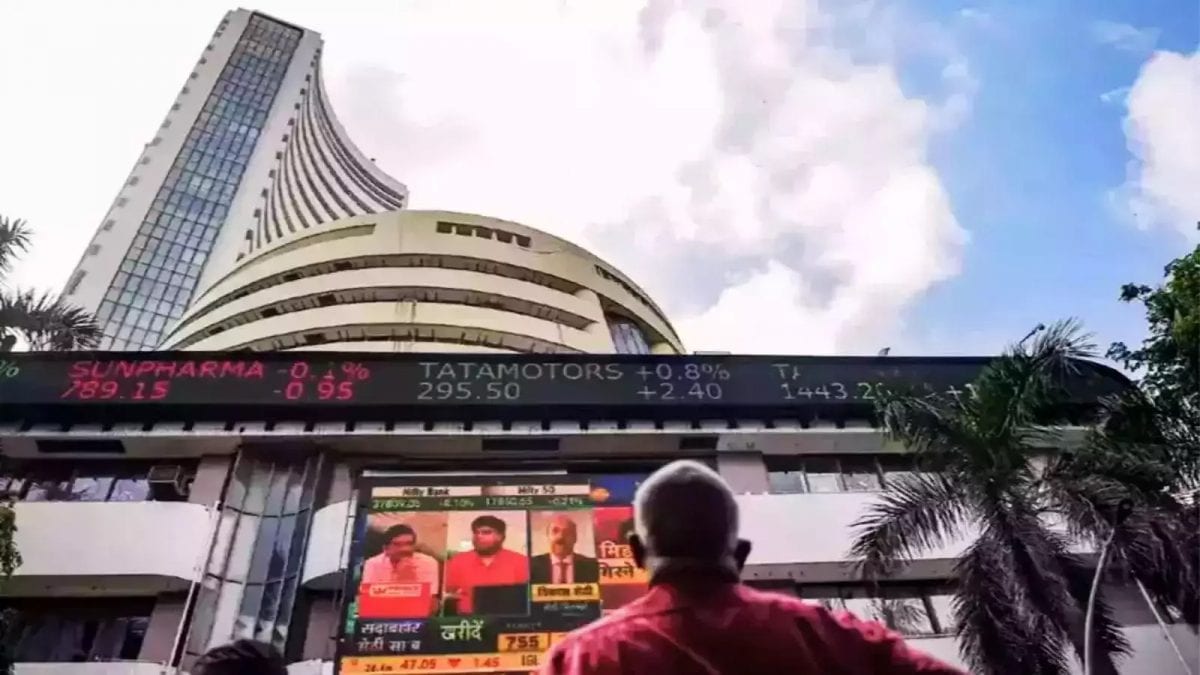
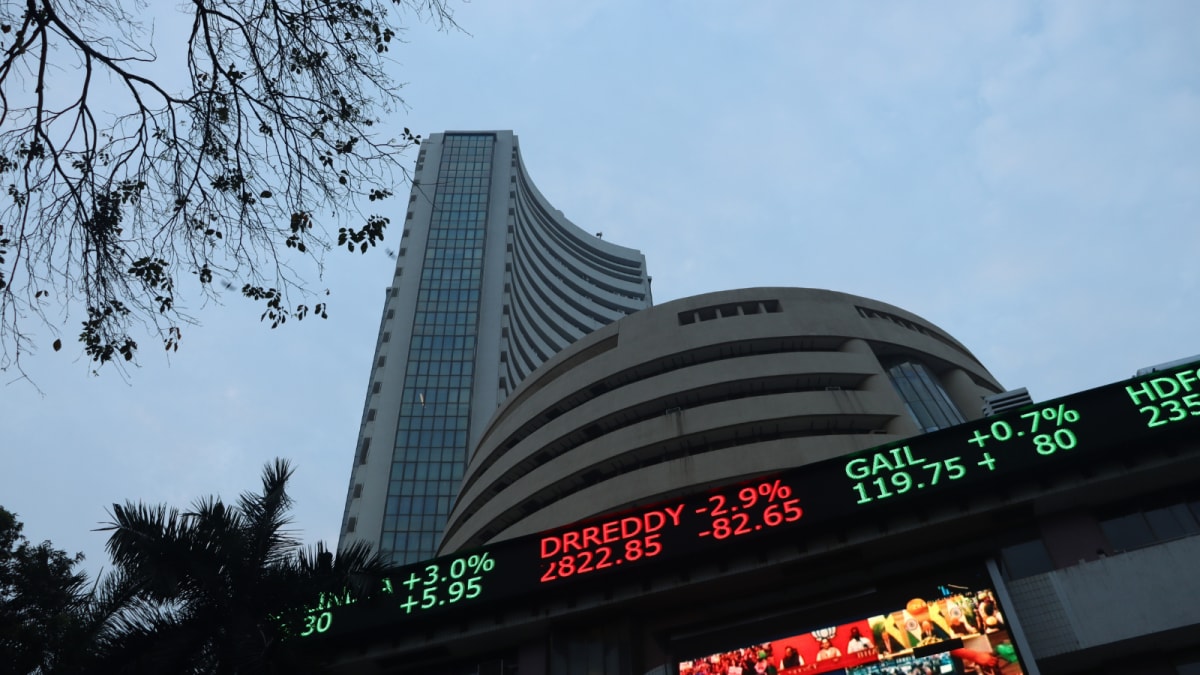




KARACHI: The Pakistan Stock Exchange rallied on Thursday after Saudi Arabia assured Pakistan of facilitating crude oil shipments through the Red Sea port of Yanbu Port, easing concerns over potential fuel supply disruptions.
The benchmark KSE-100 Index climbed sharply during the trading session, rising 4,439.93 points (2.85%) to reach an intraday high of 160,217.14 points.
Market Recovery
Analysts attributed the market rebound to renewed institutional buying and improving investor sentiment after Saudi assurances on oil supplies.
Market expert Ahsan Mehanti, CEO of Arif Habib Commodities, said easing fuel supply concerns played a key role in the recovery.
He added that rising global crude prices, expectations of a new International Monetary Fund loan tranche for Pakistan, and positive economic indicators also boosted investor confidence.
Alternative Oil Route
Pakistan sought an alternative supply route after Iran announced the closure of the Strait of Hormuz, a crucial global oil transit corridor.
Federal Petroleum Minister Ali Pervaiz Malik held talks with Nawaf bin Said Al-Malki, requesting Saudi support for uninterrupted energy supplies.
Saudi authorities reportedly assured Pakistan that oil shipments could be routed through Yanbu, and one crude vessel has already been prepared for dispatch.
Global Oil Market Impact
Oil prices continued to rise amid tensions in the Middle East conflict involving Iran, Israel and the United States.
Brent crude: up 3.26% to $83.99 per barrel
West Texas Intermediate (WTI): up 3.70% to $77.42 per barrel
Energy markets remain volatile as shipping disruptions threaten supply through the Strait of Hormuz, a route that handles nearly 20% of global oil trade.
Analysts say the Saudi assurance helped calm fears about Pakistan’s energy supply chain, contributing to the strong recovery at the PSX.
Business
Asian stocks today: Markets inch higher mirroring Wall Street gains; Kospi jumps 10%, Nikkei up 1,400 points – The Times of India

Asian stocks inched higher on Thursday, after days of trading in red amid ongoing Middle East tensions. This comes as equities were lifted by a rebound on Wall Street as oil prices paused their recent spike and economic updates painted a more positive picture of the American economy. In South Korea, Kospi hit a pause on its downward rally to add a whopping 10% or 513 points, to reach 5,606. Japan’s Nikkei 225 also climbed 2.7% to 55,713. Hong Kong’s HSI also traded in green, rising 353 points to 25,603 as of 9:10 am. Shanghai and Shenzhen added 0.9% and 1.7% respectively. Gains elsewhere in the region were more modest. Australia’s S&P/ASX 200 added 0.3% to 8,927.20, while New Zealand’s benchmark index moved 0.9% higher. In contrast, US futures indicated a subdued start ahead. Futures linked to the Dow Jones Industrial Average were almost unchanged, while S&P 500 futures ticked up 0.2%. The S&P 500 advanced 0.8% on Wednesday, clawing back much of the decline seen since the onset of the Iran conflict. The Dow Jones Industrial Average rose 0.5%, and the Nasdaq Composite outperformed with a 1.3% gain. Globally, market sentiment has remained sensitive to developments in the Middle East, with oil price swings continuing to steer trading direction. Crude prices eased during Wednesday’s session. Brent crude briefly moved above $84 a barrel before settling at $81.40, roughly matching the previous day’s level. US benchmark crude edged up 0.1% to finish at $74.66 per barrel. By early Thursday, however, oil was on the rise again. Brent crude climbed 2.4% to $83.32 per barrel, while U.S. benchmark crude jumped 2.5% to $76.53 per barrel.
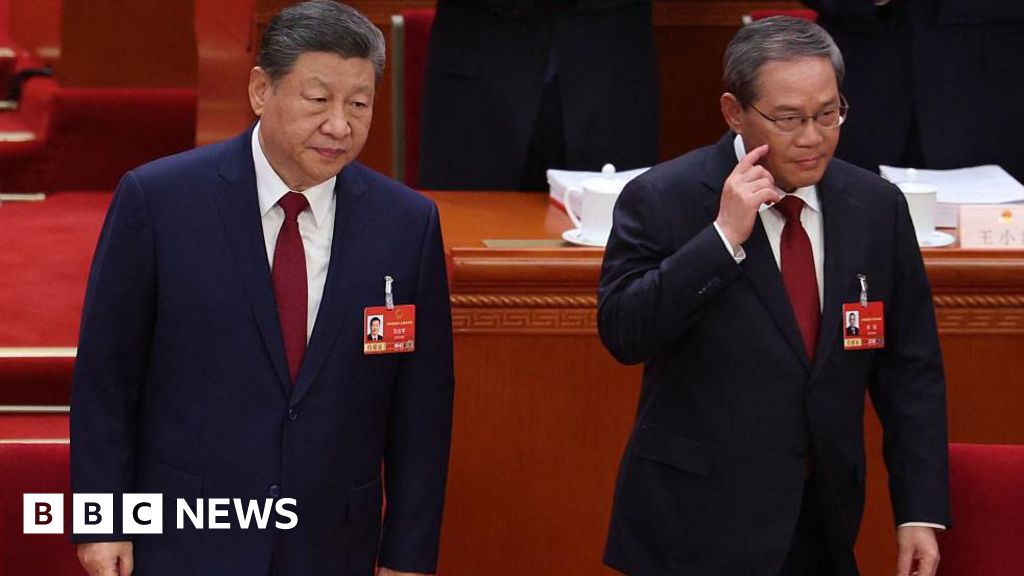
It is also the first time the target has been lowered since it was cut to “around 5%” in 2023.
Source link


Extreme heat threatens health, jobs in Indian textile sector: Report
Saudi Oil Supply Assurance Lifts Pakistan Stock Market – SUCH TV

Has the Iran war changed the Gulf forever?

India Us Trade Deal: Fresh look at India-US trade deal? May be ‘rebalanced’ if circumstances change, says Piyush Goyal – The Times of India

What are Iran’s ballistic missile capabilities?

Attock Cement’s acquisition approved | The Express Tribune

-
Business6 days ago
India Us Trade Deal: Fresh look at India-US trade deal? May be ‘rebalanced’ if circumstances change, says Piyush Goyal – The Times of India
-
 Politics7 days ago
What are Iran’s ballistic missile capabilities?
-
Business7 days ago
Attock Cement’s acquisition approved | The Express Tribune
-
 Business1 week ago
Households set for lower energy bills amid price cap shake-up
-

 Politics1 week ago
US arrests ex-Air Force pilot for ‘training’ Chinese military
-
 Fashion1 week ago
OECD GDP growth slows to 0.3% in Q4 amid mixed trends
-

 Fashion7 days ago
Policy easing drives Argentina’s garment import surge in 2025
-

 Sports6 days ago
LPGA legend shares her feelings about US women’s Olympic wins: ‘Gets me really emotional’