

Business
Why one of the nation’s largest auto lenders isn’t worried about high vehicle prices or ‘forever loans’


Used cars are offered for sale at a dealership on July 11, 2023 in Chicago, Illinois.
Scott Olson | Getty Images
The head of one of the nation’s largest auto finance lenders isn’t overly concerned about rising consumer automotive debt and inflated used car prices leading to longer loans on vehicle purchases.
His main reasoning? The percentage of income consumers are spending on their vehicles has remained relatively flat compared with 2019, before the coronavirus pandemic led to inflated pricing as demand surged but inventories stayed low.
“If I just told you, ‘Car prices going up, interest rates going up, insurance prices going up,’ you would say, ‘You know what, consumers must be paying more as a ratio to the income,'” Capital One Auto President Sanjiv Yajnik told CNBC. “However, if you look at every quintile of salary and earnings of people, the payment-to-income ratio has remained fairly flat.”
While Capital One reports median monthly car ownership payments have jumped from $390 to $525 since 2019, data provided exclusively to CNBC from its automotive unit suggest that vehicle costs have stayed relatively stable compared with income. That’s because, overall, the payment-to-income ratio has remained flat at approximately 10% since 2019, according to the automotive arm of the American bank.
Capital One Auto found 80% of car purchasers who finance a vehicle are below the generally recognized payment to income threshold of 15%.
“The consumer is being cautious. They’re being responsible. This is a much healthier way to do things than the alternative, because it’s not a discretionary spend,” said Yajnik, referring to consumers prioritizing vehicle payments for transportation, including work.
To get to that goal, however, more consumers are taking on longer loans to keep payments affordable.
The auto finance veteran’s view contrasts with others in the industry who view the longer term loans as a detriment to consumers’ pocketbooks.
They argue that so-called “forever loans” of six years or more have led to many buyers, particularly of new vehicles, being underwater on the equity of their cars and trucks. That means they owe more than their vehicle is worth when they decide to trade it in.
Edmunds reports roughly 26% of used vehicles purchased that involved a trade-in vehicle had negative equity this year through April. The amount of negative equity averaged $5,105, a 35% increase from 2019.
“As loan term lengths increase on average, the pace at which consumers make progress paying down their balance slows,” Jessica Caldwell, head of insights for CarMax‘s Edmunds, wrote in a recent online post. “If consumers then trade in their vehicle too soon for any reason, they are increasingly left holding more loan debt.”
Regarding financing for new vehicles during the first quarter, 90.2% of new vehicle loans involving trade-ins with negative equity carried terms of at least 72 months, and 43% extended to 84 months, according to Caldwell. The average negative equity trade-in was $7,183 during the quarter for new vehicles, according to Edmunds.
Those figures have been climbing since 2022, when inflated used vehicle values caused by a pandemic-fueled chip shortage insulated more shoppers from carrying debt into their next vehicle.
Consumers need to keep their vehicles for more time to make the long loans worth it, according to Yajnik. But that can also cause increases in maintenance costs as well as the likelihood that a vehicle needs repairs that exceed its value or has to be scrapped altogether.
“Yes, it takes longer to get your equity, but in the meantime, you get a use of the car, and you’re earning money,” said Yajnik, a 28-year veteran of Capital One who has led the automotive lending division since 2008.
The average listed price of a used vehicle was $25,390 in March, according to Cox’s most recent data. That compares to new vehicles, which depreciate faster, at $48,667.
Cox Automotive reports if all other things are equal on a loan, financing for a $30,000 vehicle at a 9% annual percentage rate would cost $3,100 more on an 84-month term than a 48-month loan. However, there’s a $264 difference in the monthly payments, which Yajnik said makes it more affordable for many consumers, especially those in lower income brackets.
“There’s obviously going to be pockets that have problems, but one has to start from a different place, which is, for which reason are people buying cars, and are they doing so irrationally?” Yajnik said.





Campaigners are calling for a ban on the use of the weedkiller over health concerns.
Source link
Business
Assam ships 20 tons of honey consignment to US, farmers get export market boost – The Times of India
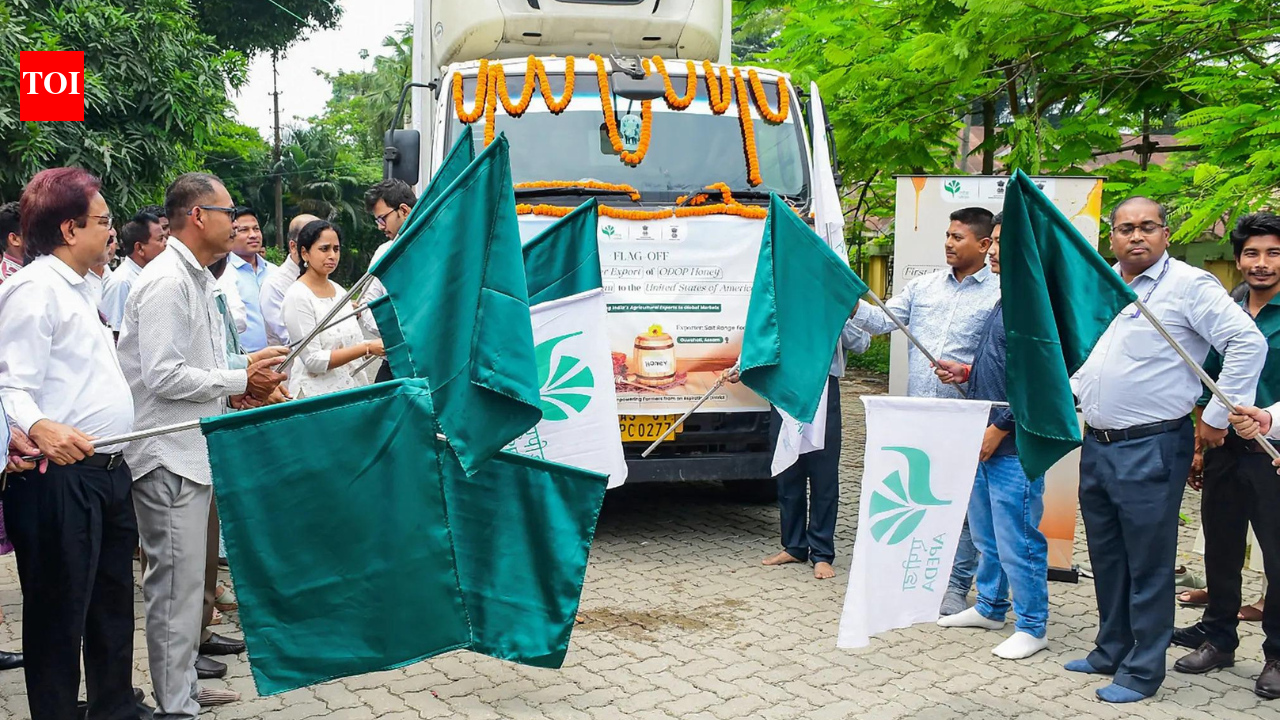
In a major push to India’s agricultural exports and the government’s One District One Product (ODOP) initiative, APEDA has facilitated the first-ever export of 20 metric tonnes of honey from Assam’s Baksa district to the United States, ANI reported.According to the Commerce and Industry Ministry, the consignment was flagged off on May 9 and exported by APEDA-registered exporter M/s Salt Range Foods Pvt Ltd.“In a major boost to the diversification of India’s agricultural exports and furthering the One District One Product (ODOP) initiative, the first-ever export consignment of ODOP honey from Baksa, an Aspirational District in Assam, to the USA was flagged off on 09 May 2026 through the initiative of APEDA,” the ministry said in a release.The ministry said the 20-metric-tonne consignment was sourced from Baksa district, which has been identified under the ODOP programme for its strong honey production and export potential.“Sourced from eco-friendly and pesticide-free environments, honey from Baksa district is known for its high quality and near-organic characteristics, reflecting the region’s rich biodiversity and sustainable agricultural practices,” the release stated.The ministry noted that honey collection has traditionally been practised by indigenous communities such as the Karbi, Mishing and Bodo tribes, where honey has long been used for food, medicinal and cultural purposes.As per National Horticulture Board data cited in the release, Assam produced around 1,650 metric tonnes of honey during FY24. Major honey-producing districts in the state include Baksa, Kokrajhar, Chirang, Udalguri and Tamulpur in the Bodoland Territorial Region.The government said the export initiative is expected to significantly improve earnings for local beekeepers and farmers.“The initiative is expected to significantly benefit local beekeepers and farmers, with producers receiving nearly 43 per cent higher price realisation compared to prevailing local farm gate prices, thereby enhancing income opportunities and strengthening rural livelihoods in the region,” the ministry said.According to the release, APEDA supported the export process by facilitating infrastructure development and providing testing and laboratory equipment at the processing facility to ensure compliance with global food safety and quality standards.“The export initiative marks a significant milestone in integrating farmers from Aspirational Districts into global value chains, ensuring better price realisation and sustained market access,” the ministry added.The ODOP initiative seeks to promote district-specific products, strengthen local economies, encourage value addition and create employment opportunities by linking regional products with international markets.
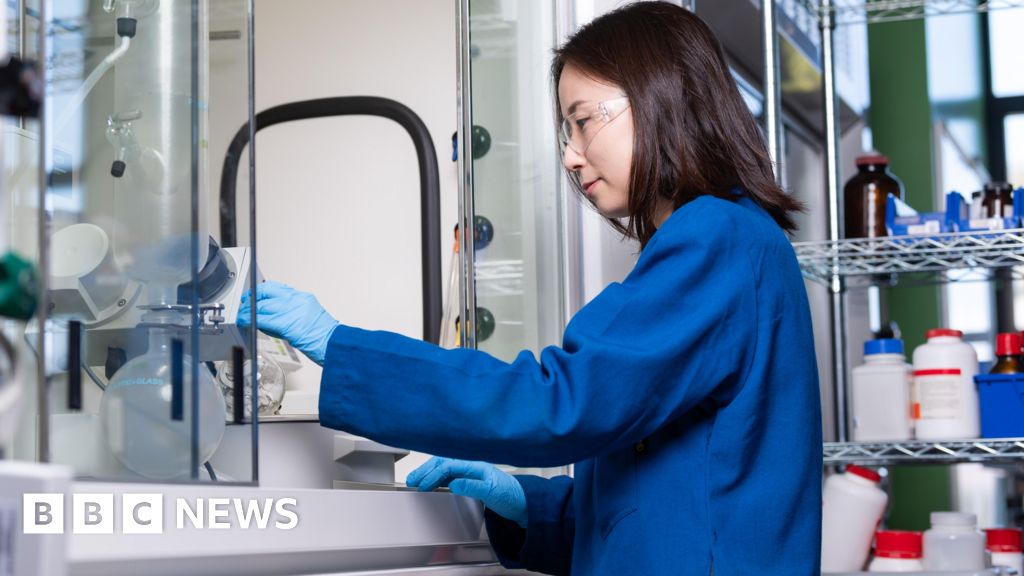
Molecules that can capture heat could be a useful technology to decarbonise heating.
Source link

Campaigners call for ban on use of glyphosate at harvest time

Morocco’s textile, leather industry contracts in Mar 2026

UK–India textile machinery corridor launched in Mumbai

-

 Politics6 days ago
Iran weighs US reply delivered via Pakistan as Trump signals opposition to deal terms
-

 Fashion1 week ago
Canada’s Lululemon appoints Esi Eggleston Bracey to board of directors
-

 Tech1 week ago
This Indigenous Language Survived Russian Occupation. Can It Survive YouTube?
-

 Fashion1 week ago
US’ J.Jill, Inc. appoints Kimberly Wallengren as CMO
-

 Fashion1 week ago
US’ Gap partners with Victoria Beckham on timeless wardrobe essentials
-
 Business1 week ago
Apollo Sports Capital and Tom Dundon make landmark $225 million investment in pickleball
-

 Fashion1 week ago
AAFA pushes for swift US House passage of key anti-counterfeiting law
-

 Fashion1 week ago
US cotton export sales show strong recovery, Upland rise 36%