

Business
Will we see signs of economic growth in 2026?

Andrew SinclairEast of England political editor, Colchester
 Andrew Sinclair/BBC
Opinion polls suggest just over half of voters see the economy and the cost of living as the most important issues facing the country, while local chambers of commerce say business confidence is at its lowest level for some time.
How the government addresses these two key issues will dominate politics in 2026 and have a major bearing on whether Sir Keir Starmer is still Prime Minister by the end of the year.
Will we see clear signs of economic growth in 2026 after a year of flatlining, to give businesses confidence to invest and employ more people? Will the measures announced in November’s budget, such as raising the minimum wage, scrapping the two-child benefit cap and removing some of the so-called “green taxes” from energy bills, make voters feel better off?
Staff at food banks are on the frontline of the cost of living crisis, while the hospitality sector is one of the East’s main employers. How do they see the year ahead?
‘The new normal’

 Andrew Sinclair/BBC
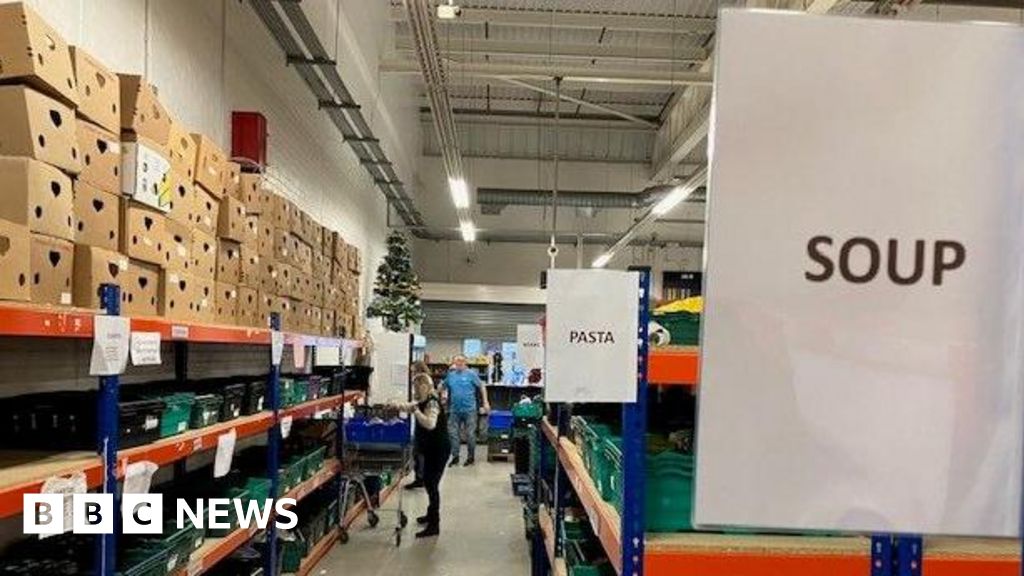
There are people arriving at Colchester’s Foodbank every few minutes. The charity’s 11 centres, which are dotted around the town, help as many as 3,000 people every month.
“The stories all come back to not having enough money to buy food and the choice between putting food on the table or heating the house” says co-director Nikki Ranson.
“We have schoolteachers coming in, we have police officers and nurses. We had a nurse not so long ago who always grabs all the overtime [she can get] but hadn’t been able to for a few weeks and was in dire straits.
“We’re supposed to be an emergency food service that is supposed to be a three-day food parcel a couple of times a year. We’ve become a normal. We’re now a go-to and that’s not right.”
According to the Trussell Trust anti-poverty charity, 332,500 food parcels were handed out across the East of England in the last year. This was a 5% decline on the previous year.
Ms Ranson says the changes announced in the budget will take a while to work through to people’s pockets and she says there’s still more to be done to help with benefits and wages. She expects the numbers using her food bank to stay the same this year.
A Treasury spokesman said: “We know there’s more to do to help families with the cost of living.
“That’s why the Chancellor took action at the Budget to freeze rail fares and prescription charges and will cut £150 off the average energy bill this year.”
The number of people using food banks by next Christmas will be an important indicator about whether cost of living pressures are easing.
‘Betrayed’
 Andrew Sinclair/BBC
“This year is going to be a fight for survival. If I make it to Christmas I’ll be impressed” says Matthew Alum who runs two pubs in the Colchester area.
He has recently had to hand back a third pub to the brewery because he could no longer afford to it.
“I feel betrayed by the budget. We were promised loads of support, and all we had was another rise in the minimum wage and another rise in business rates.”
He says every time the minimum wage goes up it adds £100,000 to his wage bill. He has already had to increase prices and is now thinking about reducing staff hours to help.
The increase in employers’ national insurance contributions, the phasing out of business rate relief and a rates revaluation has also added to his costs.
“When Labour came to power I was paying £445 a month, now it could be as much as £3,200 a month” he says.
The industry body Hospitality UK estimates that the average business will see its rates rise by 94% over the next three years.
Chief Executive Allen Simpson says: “Every high street is going to feel a massive hit and so will our communities when much-loved venues are forced to close”
Back at the Cricketers pub in Fordham Heath, near Colchester, Mr Allum says the Government must rethink the rates revaluation and cut VAT for hospitality.
“If a Labour MP comes to talk to me about what’s going on, I’ll talk to them – howeve,r until they’re prepared to have a proper conversation with me about what needs to be done i’ll be asking them to leave.
“This isn’t party politics… for me this is betrayal.”
A Treasury spokesman said the budget contained a £4.3bn support package for hospitality.
“This comes on top of our efforts to help more venues offer pavement drinks and put on one-off events, maintaining our cut to alcohol duty on draught pints, and capping Corporation Tax,” he said.
The High Street has been struggling for years but there are many in the hospitality industry who wonder if this year will be make or break.
The president also said the US will continue to blockade Iran’s ports until peace talks progress.
Source link
Business
High-Skilled Immigration: US tightens screws on high-skilled immigration: Denial rates surge across key visa categories – The Times of India

For Indian tech and medical professionals, researchers and even global achievers eyeing to work in the US, the path is becoming increasingly uncertain. New data shows that even the most elite immigration routes, once seen as relatively stable, are now facing sharply higher rejection rates, signalling a broader tightening of legal migration pathways.The US has significantly increased denial rates for high-skilled immigration categories in fiscal 2025 (year ending Sept 30, 2025), reflecting a policy-driven shift to restrict legal migration even for highly qualified professionals according to a new analysis by the National Foundation for American Policy (NFAP).“The latest data show that Trump administration officials intend to make it difficult for even the most highly skilled individuals from around the world to work in the US,” said Stuart Anderson, executive director of NFAP.A change of this magnitude indicates a crackdown on approvals, the analysis noted, pointing to a sharp rise in rejection rates despite no formal regulatory changes.
Green card routes for top talent see sharpest rise
The steepest increases are in employment-based green card categories used by highly accomplished professionals. The increase in denials occurred within a single year, despite no new regulations indicating a shift in adjudication standards.
- EB-1 (extraordinary ability): Denial rates nearly doubled from 25.6% in Q4 FY2024 to 46.6% in Q4 FY2025
- EB-2 National Interest Waiver (NIW): Denials rose from 38.8% in Q4 FY2024 to 64.3% in Q4 FY2025
Over a longer period, the trend is even sharper: NIW denial rates rose from 4.3% in FY2022 to 44.8% in FY2025, states the report.
Temporary work visas also tightening
Denial rates have also increased across key temporary work visa categories, particularly toward the end of FY2025:
- O-1 visas: Denial rates rose from 5.0% in Q4 FY2024 to 7.3% in Q4 FY2025 . These visas are meant for individuals with extraordinary ability in fields such as science, technology, arts, education, business or sports. It is typically used by top researchers, startup founders, artists and senior professionals with a strong record of achievement.
- L-1A visas: Denial rates increased from 8.0% in Q4 FY2024 to 9.6% in Q4 FY2025. These visas are used by multinational companies to transfer senior executives or managers from an overseas office to a US office. It is a key route for leadership mobility within global firms.
- L-1B visas: Denial rates rose from 8.1% in Q4 FY2024 to 9.2% in Q4 FY2025. These visas are also for intracompany transfers, but specifically for employees with specialised knowledge and are often used for technical experts and niche-skilled staff.
H-1B remains stable—but pressure persists
The H-1B visa, widely used by Indian IT professionals, has not seen a comparable increase in denial rates, the denial rates remained stable at around 2.0%–2.1% in FY2025. This is attributed to a 2020 legal settlement, which limits changes to adjudication standards without formal rulemaking.However, policy pressure continues through other measures. President Trump has signed an executive order mandating a $100,000 fee to petition for an H‑1B worker outside the US. Further, selection in the lottery for H-1B cap visas is linked to wages and there is a proposal to increase wages across all levels.
Backlogs and delays worsen the squeeze
For the Indian diaspora, these statistics are worrying. Between Q4 FY2024 and Q4 FY2025, backlogs rose across key immigration filings. Pending I-129 petitions—used by employers to sponsor non-immigrant workers such as H-1B, L-1 and O-1 visa holders — increased by more than 54,000. The backlog for I-140 petitions, which are employer-sponsored applications for employment-based green cards, rose by 58,400.At the final stage, delays also deepened: the backlog for I-485 applications—filed by individuals to adjust status to permanent residence (green card) within the US—continued to grow.
Bottom line
The data signals a clear shift: legal immigration pathways are narrowing over FY2025, particularly in the latter half of the fiscal year, driven by stricter adjudication rather than new laws.
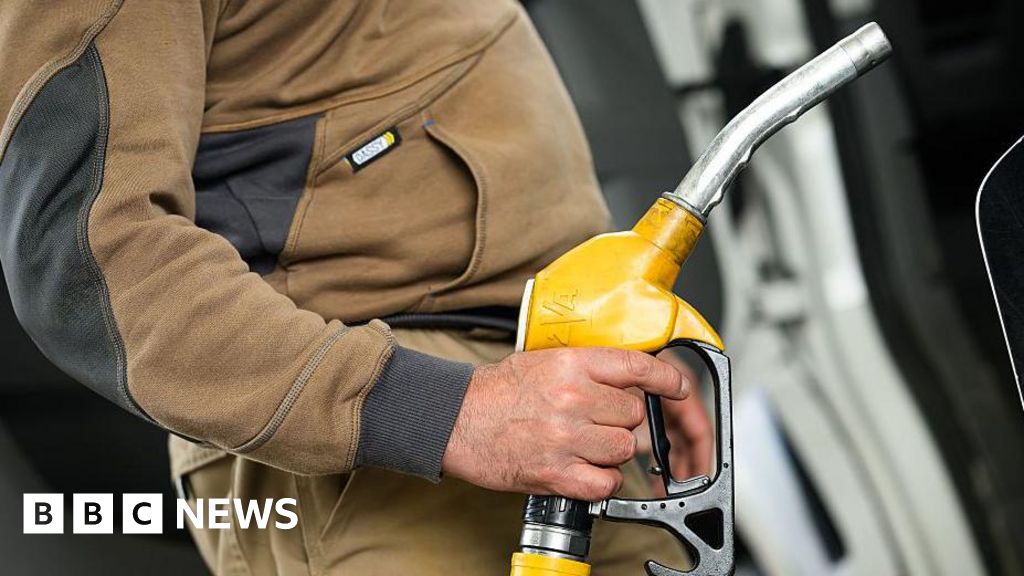
UK inflation lifted to its highest since December after a sharp jump in diesel and petrol prices caused by the conflict in the Middle East, according to official figures.
Chancellor Rachel Reeves said the Iran crisis was “not our war, but it is pushing up bills for families and businesses” as a result.
The rate of Consumer Prices Index (CPI) inflation increased to 3.3% in March from 3% in February, the Office for National Statistics said.
The increase was in line with predictions from economists.
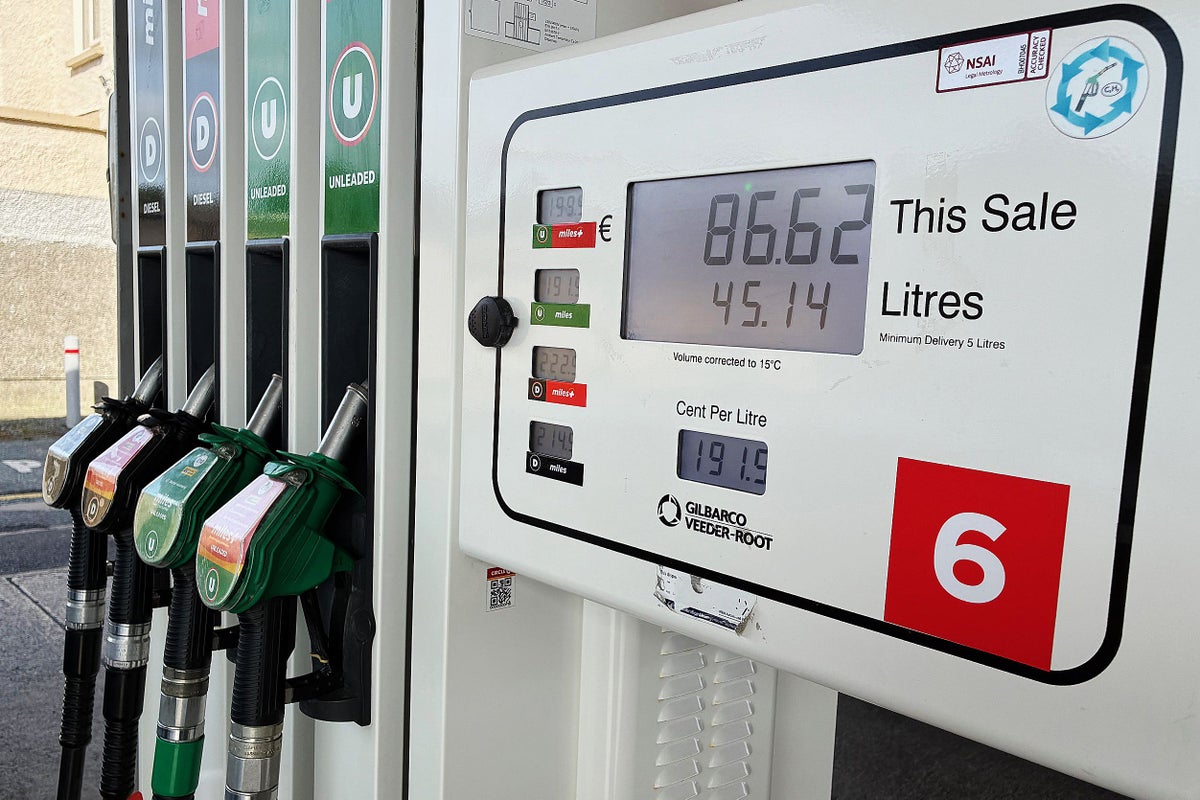
Higher motor fuel was the main driver of the acceleration in inflation, increasing by 8.7% month-on-month – the largest increase since June 2022, shortly after the Russian invasion of Ukraine.
The ONS found that the average price of petrol rose by 8.6p per litre between February and March to 140.2p per litre. This marked the highest price since August 2024.
Diesel prices meanwhile increased by 17.6p per litre in March to an average of 158.7p per litre, the highest price since November 2023.
Office for National Statistics chief economist Grant Fitzner said: “Inflation climbed in March, largely due to increased fuel prices, which saw their largest increase for over three years.
“Air fares were another upward driver this month, alongside rising food prices.
“The only significant offset came from clothing costs, where prices rose by less than this time last year.”
The data revealed that the cost of air travel also increased significantly, with inflation of 14.5% compared with the same month last year.
The rise in air fares, which analysts have partly linked to the early timing of the Easter holidays, was the highest since July last year.
Meanwhile, food and non-alcoholic drink prices were up 3.7% year-on-year in March, accelerating from 3.3% inflation in the previous month.
This included another acceleration in the price of sweets and chocolates, which were up 10.6% year-on-year.
Elsewhere, clothing and footwear had a downward pressure on inflation, as prices dipped 0.8% for the month.
Sales and discounting activity pulled inflation in the category to its lowest level since March 2021.
The rise in the overall rate of inflation drives the UK further away from the 2% inflation target set by the Government and the Bank of England.
Ms Reeves said: “We’re acting to protect people from unfair price rises if they occur to bring down food prices at the till, and are boosting long-term energy security — building a stronger, more secure economy.”
James Smith, developed markets economist at ING, said: “The latest rise in UK headline CPI tells us virtually nothing about the scale and duration of the inflation wave to come.
“The Bank of England is still flying blind, with the conflict unresolved, but the limited amount of survey data available so far suggests little cause for alarm on inflation.”
Anna Leach, chief economist at the Institute of Directors, said: “As inflation has come in in line with revised expectations, and given yesterday’s labour market data which showed a fall in vacancies and further downward progress in wage growth, interest rates should hold at next week’s MPC (Monetary Policy Committee) meeting.
“But there remains tremendous uncertainty over the outlook for energy supply and prices.”

Oil prices fluctuate as Trump extends Iran war ceasefire

Chaos reigns in Asian Champions League after VAR intervenes over substitution

Italy’s inflation edges up to 1.7% in March: Istat

-

 Fashion6 days ago
France’s LVMH Q1 revenue falls 6%, shows resilience amid Iran war
-

 Entertainment7 days ago
Is Claude down? Here’s why users are seeing errors
-
 Business1 week ago
Delta Air Lines unveils first new Delta One suite in premium cabin arms race
-

 Fashion1 week ago
Asia claims largest share of markets on Kearney FDI Confidence Index
-

 Sports7 days ago
PSL 11: Peshawar Zalmi win toss, opt to field first against Quetta Gladiators
-

 Tech1 week ago
The Deepfake Nudes Crisis in Schools Is Much Worse Than You Thought
-

 Tech1 week ago
Bremont Is Sending a Watch to the Moon’s Surface
-

 Tech1 week ago
Human-machine teaming dives underwater