

Business
Women bosses face more scrutiny than men, says chief of Government-backed review


Most of the UK’s biggest businesses have hit targets for gender representation in their boardroom, but fall short when it comes to women leaders who face greater scrutiny and unconscious bias, according to Government-backed report.
Data from the FTSE Women Leaders Review shows that women held 43% of board positions on FTSE 350 companies in 2025.
It marks a significant leap towards gender balance in the boardrooms of the UK’s biggest listed companies, from the 9.5% recorded when the review began 15 years ago.
Nevertheless, the proportion is more or less the same than it was in 2024.
Vivienne Artz, chief executive of the FTSE Women Leaders Review, said the “pace of change is naturally beginning to level as parity approaches”, adding: “Boards are still making progress, which is great, but there’s not as much progress to make.”
The review, which is supported by the Government, tracks the progress of the FTSE 350 and 50 of the UK’s largest private companies towards voluntary gender representation targets.
The latest report revealed that the proportion of women in leadership positions on the FTSE 350 has edged up to 36%, from 35% the previous year, as of the end of October 2025.
Within that, the proportion of women in chief executive roles was 8%, up from 7%.
There were nine women chief executives at FTSE 100 companies.
There has been a recent flurry of female bosses quitting from top listed companies and being replaced by men, such as Dame Emma Walmsley from drug firm GSK, Liv Garfield from water supplier Severn Trent, and Diageo’s Debra Crew.
On the other hand, energy giant BP appointed its first ever female chief executive, who is due to step into the role in April.
Ms Artz said firms were making slow progress when it comes to gender balance for the CEO, chair and finance director roles.
“It’s because they are incredibly demanding and difficult roles to fill,” she told the Press Association.
“I think that too often we rely on the safe option which is, ‘we’re going to have have someone who’s done it before’.
“And if you’re always going back to fishing in the same pond then you’re not finding new talent… you’re not looking at skills and expertise, as opposed to a CV that you feel comfortable with and you’re seen before,” she said.
Furthermore, Ms Artz said women can face barriers to leadership positions due to prevailing attitudes which have “not been easy to dismantle”.
“I think we can say that female CEOs get a lot more scrutiny and they get judged on different things that male CEOs do,” she said.
She said that talking points such as whether the person is married or has children can be “distracting, and in many ways it diminishes the credibility of the leader”.
“We do know that there is absolutely still unconscious bias and that there’s attitudes that need to change,” she said.
Ms Artz also argued that the cost of childcare means that families are led to making decisions that can “derail” or “sideline” a woman’s career.
Responding to the report, Chancellor Rachel Reeves said the data “shows how far we’ve come”, adding: “But there is still a long way to go as women remain under‑represented in key executive roles.
“As Chancellor, I’m clear there should be no ceiling on a woman’s ambition.
“When they can participate fully at every level, organisations make better decisions, innovate more and perform more strongly, boosting our whole economy.”
Business and Trade Secretary Peter Kyle said: “It’s essential that our top talent can reach the highest levels of leadership, which is why I’m so pleased the UK continues to lead the charge for gender equality in boardrooms.
“However, be in no doubt that despite this progress, there is still much more work to do.”
Looking at individual companies, drinks giant Diageo and supermarket and services chain The Co-operative Group have the highest representation of women in their boardrooms, at 77.8% and 72.7% respectively.
Marks & Spencer, HSBC, and water firms Severn Trent and Pennon Group are among those to record representation greater than 60%.
At the other end of the scale, parcel giant Evri and yoghurt maker Muller had no women on their boards, while the likes of pub groups Mitchells & Butlers and Wetherspoons were towards the bottom of the list with representation of 22%.
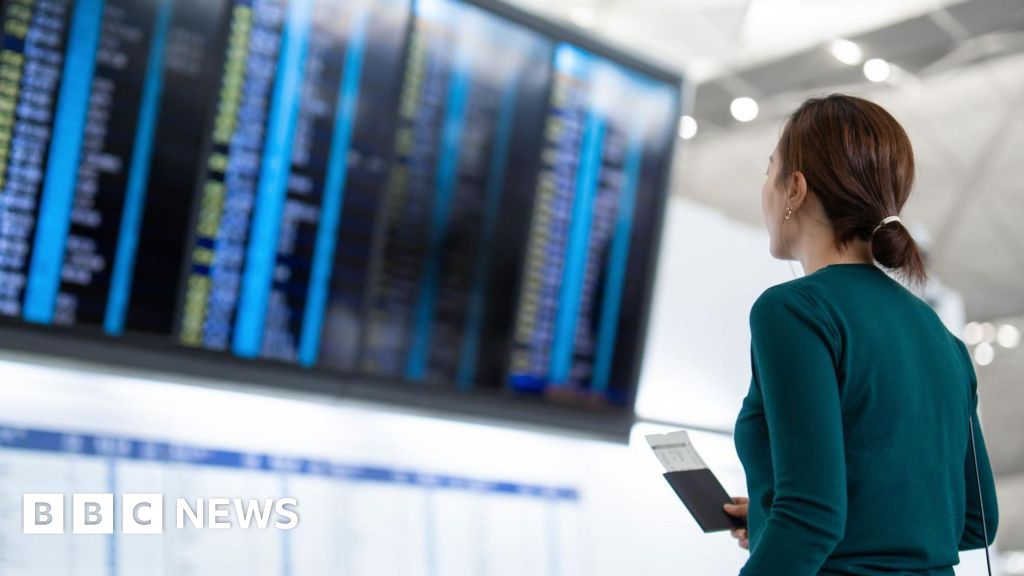
The consultancy Teneo says airspace restrictions caused by the conflict have forced airlines to reroute many flights.
Source link
Business
Us-India Trade Talks: US–India trade deal: Where do talks stand & what to expect – explained – The Times of India

Fresh negotiations between India and the United States are underway in Washington, DC this week, with officials indicating that a long-running effort to seal a bilateral trade agreement is nearing completion.A senior US official, responding to queries on the progress of the talks, said, “The Trump administration and India continue to have positive and productive discussions towards a finalised trade deal.” The negotiations come as Indian representatives visit the American capital for discussions scheduled from April 20 to 22, marking a renewed push to conclude the first phase of the agreement.People familiar with the matter suggested that only a handful of issues remain unresolved. “Most of it is almost done,” one official said on condition of anonymity, adding, “There aren’t many loose ends left.” The current round is expected to concentrate on closing these remaining gaps, with much of the agreement already worked out.The Indian side is being led by Darpan Jain, Additional Secretary in the Department of Commerce, accompanied by officials from the customs department and the ministry of external affairs. On the US side, Brendan Lynch, Assistant US Trade Representative for South and Central Asia, is heading the negotiations under the Office of the US Trade Representative.The timing of the talks follows recent developments in the US tariff structure. After the US Supreme Court struck down reciprocal tariffs imposed under the 1977 International Emergency Economic Powers Act, the US administration introduced a temporary flat 10% tariff on all countries for 150 days starting February 24. These changes had earlier delayed a planned February meeting between the chief negotiators, with discussions now resuming under the revised framework.In addition to tariff-related matters, negotiators are also expected to address two Section 301 investigations initiated by the US Trade Representative. India has contested these probes, seeking their withdrawal and arguing that the notices lack adequate justification.The ongoing discussions build on a framework for an interim agreement announced on February 7, which outlined reciprocal and mutually beneficial trade measures. The framework reaffirmed a commitment to broader bilateral trade agreement (BTA) negotiations launched by US President Donald Trump and Prime Minister Narendra Modi on February 13, 2025, aimed at enhancing market access.US Ambassador to India Sergio Gor described the visit of the Indian delegation as a significant step towards finalising the deal. In a post on X, he said, “The Indian trade delegation will be arriving in Washington this week. A great step to finalise our bilateral trade deal. A win-win for both nations!”Commerce and Industry Minister Piyush Goyal also indicated that the first tranche of the agreement is close to completion. “We have almost finalised our free trade agreement, the first tranche of the bilateral trade agreement with them. We are trying to close the Ts and dots on that and work out what would be the mechanism by which India can get a preferential access, market access in the US market compared to our competitors,” he said at the India-Korea Business Forum in New Delhi.He added, “We have almost finalised the first tranche of bilateral trade agreement with them… We are trying to work out what would be the mechanism on which India would get a preferential access in the US market compared to our competitors. The team will be discussing this while they are in Washington.”With senior officials from both sides now engaged in discussions and most substantive issues already settled, expectations are building that an announcement on the proposed agreement could follow soon.
Business
US stocks today: Wall Street inches higher as markets eye ceasefire deadline; Dow jumps 300 points, S&P 500 remains flat – The Times of India
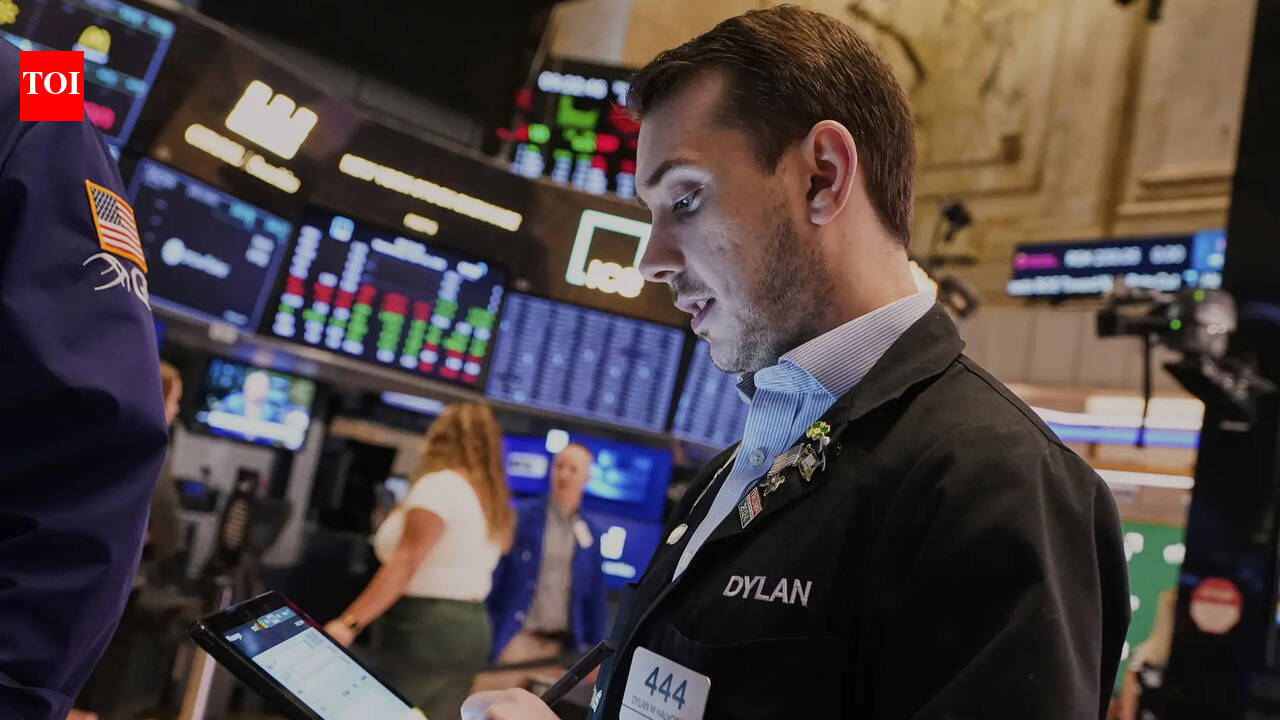
US stocks moved higher on Tuesday, as investors remained optimistic over a possible extension of the US-Iran ceasefire. Markets showed early strength, with the Dow Jones Industrial Average rising 0.56% or 279 points to 49,721.56 around 8 pm IST. The S&P 500 inched up 0.2% to 7,129, while the Nasdaq Composite gained 96 points or 0.4% to reach 24,500. As trading progressed, the upward momentum strengthened, with the Dow climbing 397 points, or 0.8%, and the S&P 500 adding 0.2%, putting it within reach of another record high. The Nasdaq remained modestly higher. Investor sentiment was shaped in part by developments in the Middle East. Oil prices, which had surged a day earlier amid renewed disruption to the Strait of Hormuz, eased on Tuesday. Brent crude slipped 0.7%% to $94.78 per barrel ahead of the expected expiry of a two-week ceasefire between the United States and Iran. The conflict has driven sharp swings in oil markets, with prices ranging from about $70 before the war to peaks of $119 as concerns over a prolonged closure of the key shipping route intensified. Economic data released during the session pointed to continued resilience in consumer activity. US retail sales rose 1.7% from the previous month to $752.1 billion, beating expectations, largely due to higher petrol prices. Spending remained relatively steady even when excluding gasoline sales, indicating broader stability in consumption during the first full month of the conflict. Global markets presented a mixed picture, with European indices trading unevenly after a stronger performance in Asia, where South Korea’s Kospi index jumped 2.7%. In the bond market, US Treasury yields edged higher, with the 10-year yield ticking up to 4.27% from 4.26% the previous day. Attention is also turning to Washington, where Kevin Warsh, nominated by US President Donald Trump to lead the Federal Reserve, is scheduled to testify before Congress later in the day. Investors are expected to closely watch his remarks for indications on interest rate policy and the central bank’s independence.(Disclaimer: Recommendations and views on the stock market, other asset classes or personal finance management tips given by experts are their own. These opinions do not represent the views of The Times of India.)


Florida top scorer Thomas Haugh to return, pass on NBA draft

King Charles adorns Windsor in surprise move after Andrew’s exit
Air fares soar by nearly a quarter, research shows

-

 Fashion5 days ago
France’s LVMH Q1 revenue falls 6%, shows resilience amid Iran war
-

 Sports1 week ago
The case for Man United’s Fernandes as Premier League’s best
-

 Entertainment1 week ago
Palace left in shock as Prince William cancels grand ceremony
-
 Business1 week ago
UK could adopt EU single market rules under new legislation
-

 Entertainment6 days ago
Is Claude down? Here’s why users are seeing errors
-

 Fashion1 week ago
Energy emerges as biggest cost driver in textile margins
-
 Business1 week ago
Delta Air Lines unveils first new Delta One suite in premium cabin arms race
-

 Fashion1 week ago
Asia claims largest share of markets on Kearney FDI Confidence Index