

Tech
Would you watch a film with an AI actor? What Tilly Norwood tells us about art—and labor rights


Tilly Norwood officially launched her acting career this month at the Zurich Film Festival.
She first appeared in the short film AI Commissioner, released in July. Her producer, Eline Van der Velden, claims Norwood has already attracted the attention of multiple agents.
But Norwood was generated with artificial intelligence (AI). The AI “actor” has been created by Xicoia, the AI branch of the production company Particle6, founded by the Dutch actor-turned-producer Ven der Velden. And AI Commissioner is an AI-generated short film, written by ChatGPT.
A post about the film’s launch on Norwood’s Facebook page read,
“I may be AI-generated, but I’m feeling very real emotions right now. I am so excited for what’s coming next!”
The reception from the industry has been far from warm. Actors—and audiences—have come out in force against Norwood.
So is this the future of film, or is it a gimmick?
‘Tilly Norwood is not an actor’
Norwood’s existence introduces a new type of technology to Hollywood. Unlike CGI (computer generated imagery), where a performer’s movements are captured and transformed into a digital character, or an animation which is voiced by a human actor, Norwood has no human behind her performance. Every expression and line delivery is generated by AI.
Norwood has been trained on the performances of hundreds of actors, without any payment or consent, and draws on the information from all those performances in every expression and line delivery.
Her arrival comes less than two years after the artist strikes that brought Hollywood to a standstill, with AI a central issue to the disputes. The strike ended with a historic agreement placing limitations around digital replicas of actors’ faces and voices, but did not completely ban “synthetic fakes.”
SAG-AFTRA, the union representing actors in the United States, has said:
“To be clear, ‘Tilly Norwood’ is not an actor; it’s a character generated by a computer program that was trained on the work of countless professional performers—without permission or compensation.”
Additionally, real actors can set boundaries and are protected by agents, unions and intimacy coordinators who negotiate what is shown on screen.
Norwood can be made to perform anything in any context—becoming a vessel for whatever creators or producers choose to depict.
This absence of consent or control opens a dangerous pathway to how the (digitally reproduced) female body may be represented on screen, both in mainstream cinema, and in pornography.
Is it art?
We consider creativity to be a human quality. Art is generally understood as an expression of human experience. Norwood’s performances do not come from such creativity or human experience, but from a database of pre-existing performances.
All artists borrow from and are influenced by predecessors and contemporaries. But that human influence is limited by time, informed by our own experiences and shaped by our unique perspective.
AI has no such limits: just look at Google’s chess-playing program AlphaZero, which learned by playing millions of games of chess, more than any human can play in a lifetime.
Norwood’s training can absorb hundreds of performances in a way no single actor could. How can that be compared to an actor’s performance—a craft they have developed throughout their training and career?
Van der Velden argues Norwood is “a new tool” for creators. Tools have previously been a paintbrush or a typewriter, which have helped facilitate or extend the creativity of painting or writing.
Here, Norwood as the tool performs the creative act itself. The AI is the tool and the artist.
Will audiences accept AI actors?
Norwood’s survival depends not on industry hype but on audience reception.
So far, humans show a negative bias against AI-generated art. Studies across art forms have shown people prefer works when told they were created by humans, even if the output is identical.
We don’t know yet if that bias could fade. A younger generation raised on streaming may be less concerned with whether an actor is “real” and more with immediate access, affordability or how quickly they can consume the content.
If audiences do accept AI actors, the consequences go beyond taste. There would be profound effects on labor. Entry- and mid-level acting jobs could vanish. AI actors could shrink the demand for whole creative teams—from make-up and costume to lighting and set design—since their presence reduces the need for on-set artistry.
Economics could prove decisive. For studios, AI actors are cheaper, more controllable and free from human needs or unions. Even if audiences are ambivalent, financial pressures could steer production companies toward AI.
The bigger picture
Tilly Norwood is not a question of the future of Hollywood. She is a cultural stress-test—a case study in how much we value human creativity.
What do we want art to be? Is it about efficiency, or human expression? If we accept synthetic actors, what stops us from replacing other creative labor—writers, musicians, designers—with AI trained on their work, but with no consent or remuneration?
We are at a crossroads. Do we regulate the use of AI in the arts, resist it, or embrace it?
Resistance may not be realistic. AI is here, and some audiences will accept it. The risk is that in choosing imitation over human artistry, we reshape culture in ways that cannot be easily reversed.
This article is republished from The Conversation under a Creative Commons license. Read the original article.
Citation:
Would you watch a film with an AI actor? What Tilly Norwood tells us about art—and labor rights (2025, October 8)
retrieved 8 October 2025
from https://techxplore.com/news/2025-10-ai-actor-tilly-norwood-art.html
This document is subject to copyright. Apart from any fair dealing for the purpose of private study or research, no
part may be reproduced without the written permission. The content is provided for information purposes only.










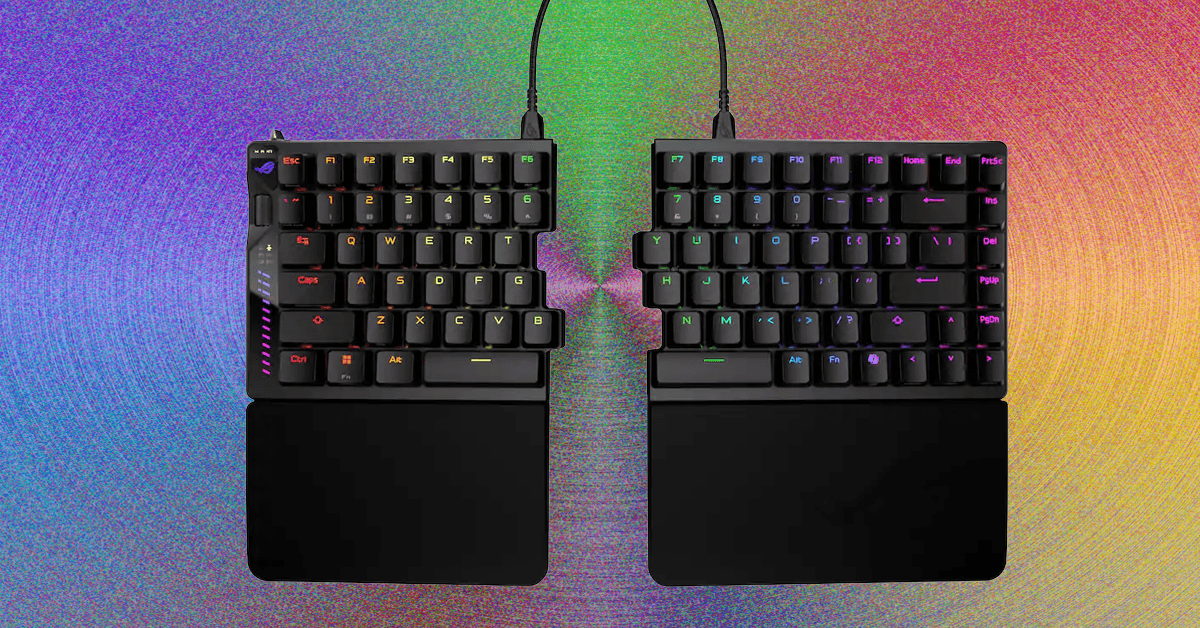
The wheel on the left side has options to adjust actuation distance, rapid-trigger sensitivity, and RGB brightness. You can also adjust volume and media playback, and turn it into a scroll wheel. The LED matrix below it is designed to display adjustments to actuation distance but feels a bit awkward: Each 0.1 mm of adjustment fills its own bar, and it only uses the bottom nine bars, so the screen will roll over four times when adjusting (the top three bars, with dots next to them, illuminate to show how many times the screen has rolled over during the adjustment). The saving grace of this is that, when adjusting the actuation distance, you can press down any switch to see a visualization of how far you’re pressing it, then tweak the actuation distance to match.
Alongside all of this, the Falcata (and, by extension, the Falchion) now has an aftermarket switch option: TTC Gold magnetic switches. While this is still only two switches, it’s an improvement over the singular switch option of most Hall effect keyboards.
Split Apart
Photograph: Henri Robbins
The internal assembly of this keyboard is straightforward yet interesting. Instead of a standard tray mount, where the PCB and plate bolt directly into the bottom half of the shell, the Falcata is more comparable to a bottom-mount. The PCB screws into the plate from underneath, and the plate is screwed onto the bottom half of the case along the edges. While the difference between the two mounting methods is minimal, it does improve typing experience by eliminating the “dead zones” caused by a post in the middle of the keyboard, along with slightly isolating typing from the case (which creates fewer vibrations when typing).
The top and bottom halves can easily be split apart by removing the screws on the plate (no breakable plastic clips here!), but on the left half, four cables connect the top and bottom halves of the keyboard, all of which need to be disconnected before fully separating the two sections. Once this is done, the internal silicone sound-dampening can easily be removed. The foam dampening, however, was adhered strongly enough that removing it left chunks of foam stuck to the PCB, making it impossible to readhere without using new adhesive. This wasn’t a huge issue, since the foam could simply be placed into the keyboard, but it is still frustrating to see when most manufacturers have figured this out.
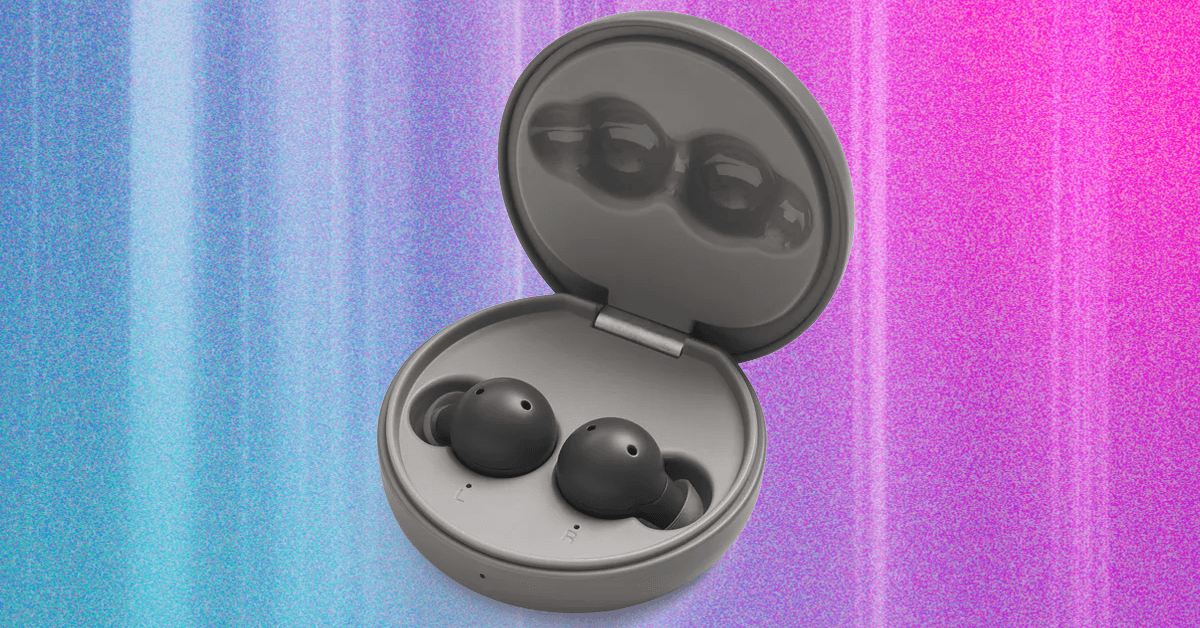
Don’t call them hearing aids. They’re hearpieces, intended as a blurring of the lines between hearing aid and earbuds—or “earpieces” in the parlance of Lizn, a Danish operation.
The company was founded in 2015, and it haltingly developed its launch product through the 2010s, only to scrap it in 2020 when, according to Lizn’s history page, the hearing aid/earbud combo idea didn’t work out. But the company is seemingly nothing if not persistent, and four years later, a new Lizn was born. The revamped Hearpieces finally made it to US shores in the last couple of weeks.
Half Domes
Photograph: Chris Null
Lizn Hearpieces are the company’s only product, and their inspiration from the pro audio world is instantly palpable. Out of the box, these look nothing like any other hearing aids on the market, with a bulbous design that, while self-contained within the ear, is far from unobtrusive—particularly if you opt for the graphite or ruby red color scheme. (I received the relatively innocuous sand-hued devices.)
At 4.58 grams per bud, they’re as heavy as they look; within the in-the-ear space, few other models are more weighty, including the Kingwell Melodia and Apple AirPods Pro 3. The units come with four sets of ear tips in different sizes; the default mediums worked well for me.
The bigger issue isn’t how the tip of the device fits into your ear, though; it’s how the rest of the unit does. Lizn Hearpieces need to be delicately twisted into the ear canal so that one edge of the unit fits snugly behind the tragus, filling the concha. My ears may be tighter than others, but I found this no easy feat, as the device is so large that I really had to work at it to wedge it into place. As you might have guessed, over time, this became rather painful, especially because the unit has no hardware controls. All functions are performed by various combinations of taps on the outside of either of the Hearpieces, and the more I smacked the side of my head, the more uncomfortable things got.

The AI radar 2026 study from Boston Consulting Group (BCG) has reported that artificial intelligence (AI) investment is set to double in 2026 compared with 2025. The study, based on a survey of 2,400 business executives, of which 640 are CEOs, found that almost every chief executive polled (94%) is committed to continuing investments even if returns take time to materialise.
In fact, almost all (90%) of the CEOs polled believe AI agents will deliver a measurable return on investment (ROI) by 2026.
The study found that over two-thirds (72%) of CEOs now act as the primary decision-maker for AI in their organisation, taking responsibility from CIOs, who were previously the main lead in AI projects.
Christoph Schweizer, CEO of BCG, said: “Corporate investment in AI is here to stay. 94% of our survey respondents say they will continue to invest in 2026, even if it takes time to see the return. They intend to spend 1.7% of revenue on AI comprehensively. That is more than twice of what it was a year ago.”
BCG’s research suggests that companies leading the way in AI deployments are investing 60% of their AI budgets on agentic AI (AI agents). “We tell CEOs that they need to make AI a key priority,” he said. “The way they own it, the way they talk about it, the way they bring their organisation along. They need to spend time on deepening their own AI literacy.”
BCG recommends that CEOs understand the tools, the technology, and keep in touch with technology suppliers and partners. “Ultimately, you need to know what you talk about so that you can bring your organisation along and steer for maximum return,” added Schweizer.
With regards to the adoption of agentic AI, BCG found that more than 30% of the CEOs investing in AI during 2026 said they would be building agents to deploy in the work environment. Vladimir Lukic, global leader of BCG’s Technology and Digital Advantage, said: “AI agents will truly be something that will unlock organisations and deliver a return on investment within 2026.”
Sylvain Duranton, head of BCG X, said the research highlights differences in CEOs’ AI confidence in different regions. BCG reported that UK businesses are less likely than global peers to make large-scale investments in AI in 2026.
The study found that only 24% of UK companies plan to invest more than $50m in AI, compared with much higher shares in countries leading the AI race, such as Greater China (68%), Japan (53%), the European Union (38%) and the Middle East (41%). BCG also reported that British CEOs are the most sceptical of AI’s potential return on investment and less involved in decision-making on AI.
Discussing the regional differences, Duranton said: “CEOs in the East, in India, in China, in Japan, the Middle East and Africa tend to be highly confident that AI is going to be a positive return on investment move. In the global West – Europe, the US and the UK – there’s a bit more caution.”
In his experience, many Asian companies have huge confidence and boldness in moving forward with AI. However, many European and US firms operate in a different way. “There’s some more skepticism in their workforce,” said Duranton. “There potentially is some more regulation that they deal with.”
Firms leading the way with AI deployments, which BCG categorise as “trailblazers”, tend to focus heavily on upskilling the workforce. Jessica Apotheker, chief marketing officer and managing director at BCG, said: “Trailblazers are putting 60% of their AI budget behind upskilling and retraining their workforce. So, they’re really wanting to go deep in the organisation, changing the way people work, putting people behind this new technology.”
BCG reported that in these organisations, 70% of the workforce has been upskilled or reskilled on AI.

Want to go to the national championship game? Got (at least) $2,700?

Pro-Iran protests held in Indian-occupied Ladakh

Burberry celebrates Year of the Horse 2026 with Shanghai campaign

-

 Politics1 week ago
UK says provided assistance in US-led tanker seizure
-

 Entertainment1 week ago
Does new US food pyramid put too much steak on your plate?
-

 Entertainment1 week ago
Why did Nick Reiner’s lawyer Alan Jackson withdraw from case?
-
 Business1 week ago
Trump moves to ban home purchases by institutional investors
-

 Sports1 week ago
PGA of America CEO steps down after one year to take care of mother and mother-in-law
-

 Sports4 days ago
Clock is ticking for Frank at Spurs, with dwindling evidence he deserves extra time
-
 Business1 week ago
Bulls dominate as KSE-100 breaks past 186,000 mark – SUCH TV
-
 Business1 week ago
Gold prices declined in the local market – SUCH TV