

Business
Yieldstreet tell investors in $89 million worth of marine loans to expect losses


Cargo containers stacked aboard a ship at the Jakarta International Container Terminal in Tanjung Priok Port on Aug. 7, 2025.
Str | Afp | Getty Images
The private market assets platform Yieldstreet struck a deal to recoup some of its legal expenses for an ill-fated series of marine loans — but its customers are less fortunate.
Yieldstreet is getting $5 million in a settlement with the borrowers who defaulted on the marine loans, the startup told customers last week in letters obtained by CNBC.
But since the company’s recovery cost “well exceeds the entire settlement amount,” it’s unlikely investors will see any repayment, Yieldstreet said. The deals are being closed and financial statements showing losses will be filed by February, the company said.
“We recognize this outcome is disappointing,” Yieldstreet said in the investor letter. “Yieldstreet pursued this extensive recovery effort because we are committed to exhausting every reasonable avenue for investor recovery.”
Yieldstreet put its investors into deals totaling $89 million in loans that were supposed to be backed by 13 ships, according to a lawsuit filed by the startup against the borrower in that project. The loans float money to companies that take apart ships for scrap metal; the vessels themselves are the collateral on the deals.
Yieldstreet lost track of the ships and then pursued the borrower, which it accused of fraud. While it won monetary awards in a number of jurisdictions outside the U.S., the borrower avoided paying the startup by concealing their assets, Yieldstreet said in the August investor letter.
The episode garnered media coverage and in 2020 contributed to the collapse of a high-profile partnership with BlackRock, the world’s largest asset manager.
The news of this latest loss follows CNBC’s report last month that Yieldstreet customers in four real estate deals worth $78 million have been wiped out, with roughly $300 million of other deals on watchlist for possible losses.
This year, Yieldstreet changed its CEO and announced a new business model that leans more on distributing private market funds provided by established Wall Street firms including Goldman Sachs and the Carlyle Group.
In a statement provided to CNBC, Yieldstreet said the investor letters refer to marine loan deals from 2018 and 2019 in an asset class that the firm no longer offers.
“While substantially less than the amounts invested by the funds and ultimately the investors, this settlement allows us to bring closure to litigation that could otherwise continue indefinitely,” Yieldstreet said in the statement.
The firm “takes its fiduciary responsibilities seriously and, throughout the recovery effort, advanced its own funds in an effort to protect its investors and has absorbed significant losses alongside its investors,” the startup said.
Bitter end
Arman, an investor who plowed $180,000 into marine loans in 2019, called the result a bitter disappointment. After receiving $16,000 from Yieldstreet in a class action settlement tied to the soured marine deals, he estimates that he lost more than 90% of his original investment.
CNBC is withholding Arman’s last name from publication at his request.
“My mother passed away in 2018, and I didn’t know where to put the money,” Arman said. “I thought this was somewhere safe to put it, and it wasn’t.”
The Yieldstreet marine loan deal was supposed to mature in six months, a relatively short-term investment.
Instead, it stretched into a six-year saga for Arman, who works as a firefighter and paramedic near the West Coast.
“They are now washing their hands of the whole thing,” he said. “They are taking $5 million to cover their own expenses, with no regard for investors.”


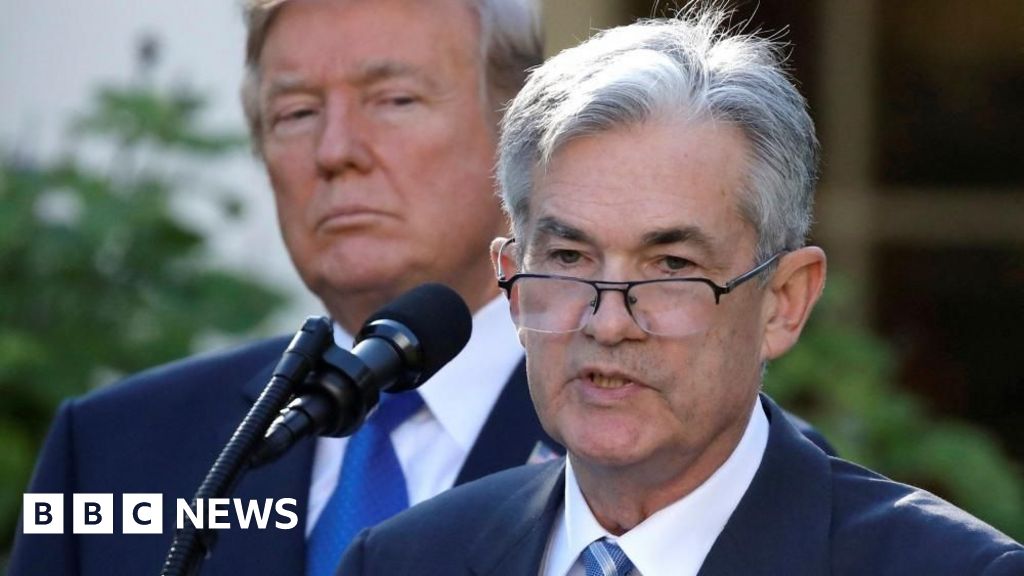
Powell’s term is nearing its end and the US Senate is considering Trump’s nominee for his replacement, Kevin Warsh. A key Republican, Thom Tillis, has withheld his support for Warsh unless the Trump administration would drop its investigation into Powell.
Business
Intel bags big gains! Chipmaker’s shares jump 26% on blockbuster results; how Trump admin benefits – The Times of India
Intel share price soared sharply on Friday after the chipmaker delivered a first-quarter performance that exceeded market expectations. And the win was not just for the chipmaker, but also the whole of US!The stock climbed 26.7% during trading on Friday, marking what could be its strongest single-day gain since 1987. Momentum continued after the closing bell, with shares rising a further 20% in after-hours trading as investors reacted to signs of a sustained turnaround driven by artificial intelligence.Intel reported revenue of $13.58 billion (€11.6bn) for the quarter, ahead of the $12.3 billion (€10.5 bn) forecast and up 7.2% from a year earlier. Adjusted earnings per share came in at $0.29, far exceeding expectations of $0.01.A key contributor to this performance was the company’s Data Centre and AI (DCAI) division, which delivered revenue of $5.05 billion (€4.2bn), up 22.4% year-on-year and well above analyst estimates of $4.41 billion (€3.77bn). The results indicate strong demand for Intel’s Xeon 6 processors and Gaudi 3 AI accelerators, particularly among enterprise clients and cloud service providers.Chief executive Lip-Bu Tan pointed to a broader shift in artificial intelligence usage as a major factor behind the growth. He said, “the next wave of AI will bring intelligence closer to the end user, moving from foundational models to inference to agentic.” He added, “This shift is significantly increasing the need for Intel’s CPUs and wafer and advanced packaging offerings.”The company also issued an upbeat outlook for the second quarter, forecasting revenue in the range of $13.8 billion (€11.8billion) to $14.8 billion (€12.6billion), surpassing investor expectations of $13 billion (€11.1billion).
But how is Washington winning?
The rally has had a direct impact on the US administration’s investment in Intel. In 2025, during a period of severe financial strain for the company, the administration of Donald Trump acquired a 9.9% stake in a move aimed at stabilising the business. The government invested $8.9 billion (€7.8bn) at a share price of $20.47 (€18.01), with $5.7 billion (€5bn) of that amount coming from previously approved but unpaid grants, according to the Euro News.At the time, Intel was facing multi-billion dollar losses and operational challenges, prompting concerns over its viability. As part of the intervention, the company cancelled planned factory projects in Germany and Poland, redirected focus towards US-based manufacturing, and reduced its global workforce by 25%, cutting around 25,000 jobs.Following the latest jump, Intel’s shares are now trading at $81.3 (€71.5), representing an increase of nearly 300% since the government first took its stake. The sharp rise highlights how the company’s improved financial performance has translated into substantial gains for the US administration.

Statistics Jersey says there have been “sharp increases” in some energy prices.
Source link


Charlie Sheen updates on relationship with old pal Jon Cryer

Iranian FM Abbas Araghchi lands in Pakistan ahead of renewed US talks

Mom’s Microwaved Coffee Won’t Stand a Chance With This Ember Smart Mug Deal

-

 Fashion1 week ago
France’s LVMH Q1 revenue falls 6%, shows resilience amid Iran war
-

 Tech1 week ago
CYBERUK ’26: UK lagging on legal protections for cyber pros | Computer Weekly
-

 Sports5 days ago
WWE WrestleMania 42 Night 2: Live match results and analysis
-

 Sports1 week ago
Faheem Ashraf backs Islamabad United’s push, calls league a ‘career-changing platform’
-

 Sports5 days ago
NCAA men’s gymnastics championship: All-time winners list
-
 Business1 week ago
PepsiCo earnings beat estimates as North American food business improves
-

 Tech1 week ago
Anthropic Plots Major London Expansion
-
 Business1 week ago
Oil prices fall again amid Middle East ceasefire hopes