

Politics
£50,000 reward offered after violent political attacks on British-Pakistani Conservative politicians

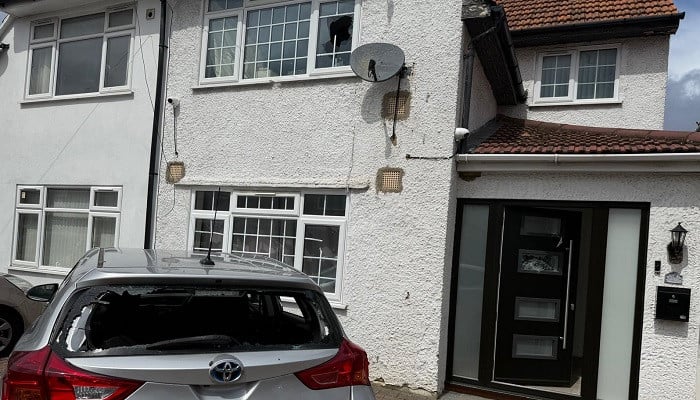
A £50,000 reward has been announced by Conservative politician Umer Farooq for information leading to the identification of those behind attacks on his family home and business in Hounslow, West London.
The family home of Farooq and fellow Conservative politician Tariq Aziz was targeted when bricks were hurled through upstairs and downstairs windows, causing serious damage and leaving family members, including children, deeply shaken.
The family said several relatives narrowly escaped serious injury as bricks came dangerously close to hitting them inside the house. A family car parked outside was also destroyed.
Within a day of the attack on the house, an attempt was made to set alight Farooq’s airline ticketing business, causing major damage to the front of the premises.
Farooq, a businessman who provides airline tickets for Pakistan, the Middle East and international destinations, was targeted in what he described as a separate firebomb attack.

CCTV footage shows a black car stopping outside the business before a masked man gets out, pours petrol on a vehicle and sets it on fire before fleeing the scene. The flames completely burnt the front entrance of the office premises. Video footage shows large flames outside the building. The fire brigade arrived within 15 minutes and extinguished the blaze.
Farooq described the attack as “planned and professional” and claimed those responsible used a stolen car to carry out the firebombing. He said the incident caused extensive damage and that the fire brigade arrived in time to prevent further destruction.
The attacks come amid heightened political tensions following the recent local council elections, in which Labour suffered heavy defeats across Britain, losing nearly 1,500 council seats. In Hounslow, a borough with a significant Pakistani and Asian community, Labour retained control but saw its majority reduced after losing 20 seats.
Local Conservative supporters claimed tensions began after Pakistani and Asian candidates campaigned strongly for their parties, and Conservatives made gains in areas previously seen as Labour strongholds. They alleged that some local Labour figures were behind the hostility and intimidation, though no evidence has yet been presented publicly to establish responsibility for the attacks.
Farooq said his life and his family’s lives were under threat and criticised local police, claiming they had failed to provide adequate protection despite the seriousness of the incidents.
“No family should have to live in fear in their own home,” he said, urging anyone with information to come forward and assist police with their investigation.
Local Pakistani community leader and businessman Nisar Malik condemned the violence, saying political rivalry, intimidation and attacks on families have no place in Hounslow or any democratic society. He called on all parties to resolve their political differences and urged police to take action.
Police said they were investigating the attacks and had gathered evidence. The local Labour Party said it had no connection to the incidents.
- Pakistan, Qatar help refine proposal.
- Israel wants the war resumed.
- Iran reviewing updated peace draft.
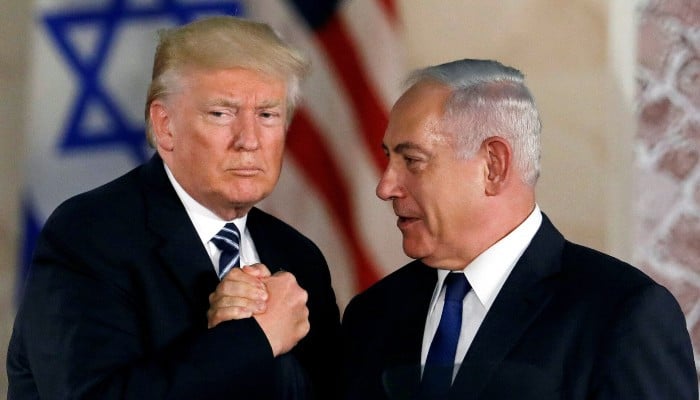
A revised Iran peace proposal drafted by Pakistan and Qatar triggered a tense call between US President Donald Trump and Israeli Prime Minister Benjamin Netanyahu, Axios reported, as Washington and Tehran weighed a possible deal to end the war.
The report said Qatar and Pakistan, with input from other regional mediators, worked on a revised peace memo to bridge gaps between the US and Iran while Trump considered whether to order a major strike or continue pursuing negotiations.
Netanyahu remains deeply sceptical of the talks and wants to resume the war to further degrade Iran’s military capabilities and weaken the regime by destroying critical infrastructure.
Trump, however, has continued to say he believes a deal can be reached, while warning that the war could resume if negotiations fail.
“The only question is do we go and finish it up or are they gonna be signing a document. Let’s see what happens,” Trump said on Wednesday at the Coast Guard Academy.
He later said the US and Iran were “right on the borderline” between reaching a deal and resuming the war. Trump also said Netanyahu “will do whatever I want him to do” on Iran, while adding that the two leaders had a good relationship.
Pakistan, Qatar, Saudi Arabia, Turkiye and Egypt have been working in recent days to refine the proposal. One source said there was no separate Qatari draft, but that Qatar was trying to bridge gaps from the previous Pakistani proposal.
A Qatari diplomat told Axios that Doha “has been and continues to support the Pakistani-led mediation efforts”, adding that Qatar had consistently advocated de-escalation “for the sake of the region and its people”.
Iran’s Foreign Ministry said negotiations were continuing “based on Iran’s 14-point proposal” and that Interior Minister Mohsin Naqvi was in Tehran to assist the mediation, marking his second visit in less than a week.
The latest effort aims to secure clearer Iranian commitments on its nuclear programme and more specific US assurances on how frozen Iranian funds would be gradually released, an Arab official told Axios.
However, the report said it remained unclear whether Iran would accept the new draft or significantly shift its position.
Meanwhile, Axios reported that Trump held a lengthy and “difficult” call with Netanyahu on Tuesday evening.
A US source briefed on the call said Trump told Netanyahu that mediators were working on a “letter of intent” that the US and Iran would sign to formally end the war and begin a 30-day negotiating period on Iran’s nuclear programme and the reopening of the Strait of Hormuz.
Two Israeli sources said Trump and Netanyahu disagreed over the way forward, while a US source said Netanyahu’s “hair was on fire” after the call.
Iran’s Foreign Ministry spokesperson said talks could succeed only if the US ended its “piracy” against Iranian ships and agreed to release frozen funds, while Israel would have to end its war in Lebanon.
Trump said the war could resume “very quickly” if Washington did not get “the right answer”, but added that he was willing to give talks a few more days.
“If I can save people from getting killed by waiting a couple of days, I think it is a great thing to do,” Trump said.
The White House and the Israeli Prime Minister’s Office declined to comment to Axios.
An Israeli source also said Netanyahu wants to travel to Washington in the coming weeks for a meeting with Trump.
- Oil flows may take 4 months to return to 80% of pre-war levels.
- Full flows may not return before first half of 2027: ADNOC chief.
- UAE planned decade ago infrastructure bypassing Hormuz.
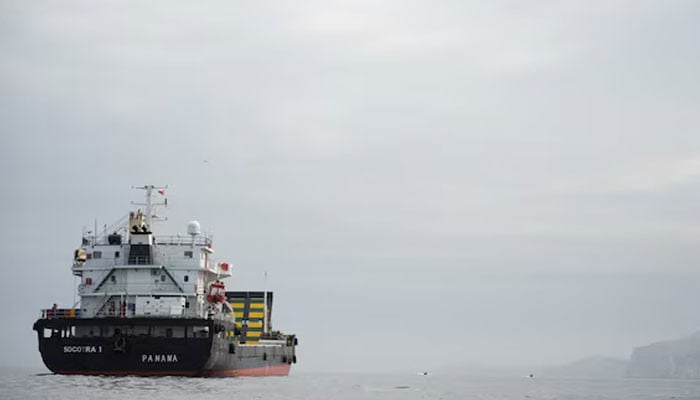
DUBAI: The UAE’s new crude pipeline bypassing the Strait of Hormuz is about 50% complete, the head of ADNOC said on Wednesday, adding that global oil flows may take at least four months to recover to 80% of pre-conflict levels after the Iran war ends.
Tehran has largely kept the waterway critical for global oil and gas supplies shut to all ships other than its own since US-Israeli strikes on February 28, sending energy prices and inflation surging and fanning fears of an economic downturn.
The Abu Dhabi Media Office revealed the existence of the new West-East Pipeline project last week, saying Crown Prince Sheikh Khaled bin Mohamed bin Zayed directed state-owned oil giant ADNOC to fast-track its construction in order to double export capacity via the port of Fujairah by 2027.
“Today, it’s already almost 50% complete, and we are accelerating its delivery toward 2027,” Sultan Al Jaber said during a live-streamed Atlantic Council event, among his most extensive public remarks since the war began.
“Right now, too much of the world’s energy still moves through too few choke points. That is exactly why the UAE made the decision more than a decade ago to invest in infrastructure that bypasses the Strait of Hormuz.”
The existing Abu Dhabi Crude Oil Pipeline (ADCOP), which carries up to 1.8 million barrels per day, has proved crucial as the UAE seeks to maximise exports from the Gulf of Oman coast just outside the Strait.
Iran, which has attacked vessels to assert control over the Strait, has expanded its definition of the waterway to include the UAE’s Gulf of Oman coastline. The US has imposed its own blockade on Iranian ports and attempted an aborted operation to reopen the chokepoint.
UAE targeted
Gulf Arab countries, which host US military bases, have come under attack during the conflict, even since the fragile ceasefire that began on April 8.
The UAE was targeted by more than 3,000 missiles and drones aimed at civilian infrastructure, including ADNOC’s, where damage assessment is ongoing and full operational capacity could take weeks to months in some cases, Al Jaber said.
“The UAE was attacked for its model of development,” he said.
Even if the conflict ended tomorrow, Al Jaber warned that pre-conflict flows through the Strait would not return fully before the first or second quarter of 2027.
“Once you accept that a single country can hold the world’s most important waterway hostage, freedom of navigation as we know it is just finished,” he said.
“If we don’t defend this principle today, we will spend the next decade defending against the consequences.”
Co-investors
The accelerated pipeline timeline follows the UAE’s withdrawal, effective May 1, from the de facto Saudi-led Organisation of the Petroleum Exporting Countries (OPEC), freeing it from output quotas.
The exit was a “sovereign, strategic decision” driven by a global need for more energy, Al Jaber said, stressing it was “not aimed at anyone” and “not intended to rupture any relationship”.
He warned the global sector remains dangerously under-invested, noting current upstream investment of around $400 billion a year barely offsets natural decline rates. Global spare crude capacity, currently around 3 million bpd, needs to be closer to 5 million bpd, he added.
Looking forward, AI will strain global grids and the world is underestimating how energy-intensive the revolution will be, Al Jaber said.
“In many ways, the AI race is an electron race,” he said, noting that the speed of AI-driven decision-making can be the difference between continuity and disruption during a crisis.
Al Jaber reiterated the UAE’s commitment to investing heavily in the US, adding ADNOC, its international arm XRG and renewables investor Masdar, where Al Jaber is chairman, already have investments worth $85 billion across 19 states.
“The UAE and the United States are not just trading partners. We are co-investors in the economy of the next century,” he said.
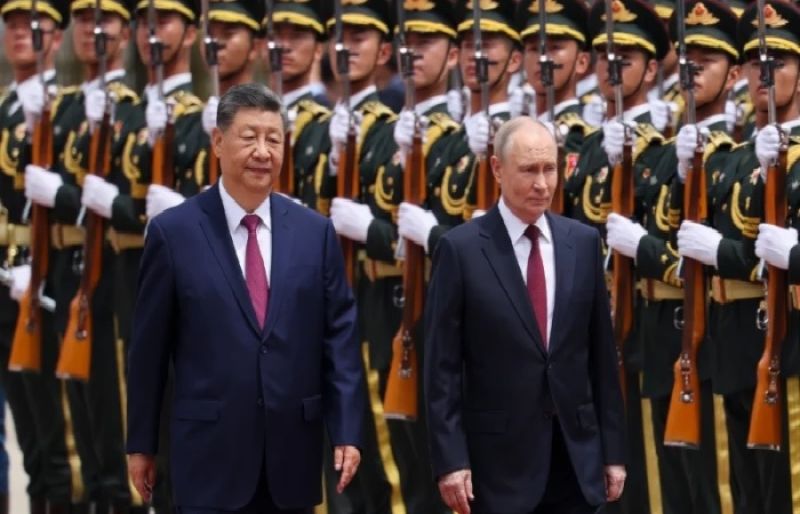
President Xi Jinping hailed China and Russia’s “unyielding” ties in talks with Vladimir Putin on Wednesday, as the pair met to underscore their alliance days after Donald Trump’s visit to the Asian superpower economy.
After the US president was received with pomp last week but left without major breakthroughs, including on help with reopening the Strait of Hormuz, Putin’s visit will be scrutinised for tangible takeaways.
Putin is, however, weakened by years of Russia’s war on Ukraine, as sanctions by Western powers put the squeeze on energy revenues and increased Moscow’s dependence on China, the main buyer of Russian oil.
The US war on Iran has however hampered crude and gas flows, giving an opportunity to Putin to offer Russian energy sources as an alternative.
Analysts believe that Putin could use the visit to push for progress on the major “Power of Siberia 2” natural gas pipeline from Russia to China through Mongolia — a land alternative to crude imported by sea from the Middle East.
Opening talks in Beijing’s opulent Great Hall of the People, Putin and Xi were quick to laud their countries’ special ties as they extended their treaty of “friendly cooperation”.
Beijing and Moscow have “continuously deepened our political mutual trust and strategic coordination with a resilience that remains unyielding”, Xi told the Russian leader, according to Chinese state media.
Putin, meanwhile, told Xi relations had reached and “unprecedentedly high level” despite “unfavourable external factors”, without naming any third country, video from Russian media showed.
Xi warned of “unilateral and hegemonic countercurrents running rampant”, in a veiled swipe at the United States.
‘Old friend’
Xi has played host to a series of world leaders as an increasingly unpredictable United States under Trump pushed many to shore up alliances with Beijing, and the war in Iran has further accelerated the trend.
Russia-China ties have deepened since Moscow launched its invasion of Ukraine in 2022, with Putin visiting Beijing every year since as his country is shunned by Western powers.
Putin’s visit promises to be less opulent than Trump’s, emphasising that “the Xi-Putin relationship does not require that kind of performative reassurance”, said Patricia Kim from the Brookings Institution in Washington.
Xi welcomed Putin with open arms as an “old friend” when he last visited Beijing in September 2025 — language the Chinese leader did not extend to Trump last week.
Both Putin and Xi view ties as “structurally stronger and more stable” than those between China and the United States, she told AFP.
Beijing has regularly called for talks to end the war in Ukraine but has never condemned Russia for sending in troops, presenting itself instead as a neutral party.
But with Russia reliant on sales to China to sustain its war effort, “Putin does not want to lose that support”, Asia Societys Lyle Morris told AFP.
Middle East priorities
When it comes to the US-Israeli war on Iran, though, China and Russia may have different priorities.
Russia has sought to capitalise on the energy crisis and rocketing oil prices spurred by the closure of the Hormuz strait.
Russia’s top diplomat Sergei Lavrov had said after meeting Xi in April that Russia could “compensate” for China’s energy shortages as the Middle East war hits global supplies.
China, however, wants the Middle East conflict concluded as soon as possible.
Xi underlined in talks with Putin that further hostilities in the Middle East is “inadvisable” as he said a “comprehensive ceasefire is of utmost urgency”.
“(China) relies on the freedom of the world´s major waterways to sustain its economic activities, and would prefer that the standoff in the Strait of Hormuz end sooner rather than later,” James Char of Singapore´s Nanyang Technological University told AFP.

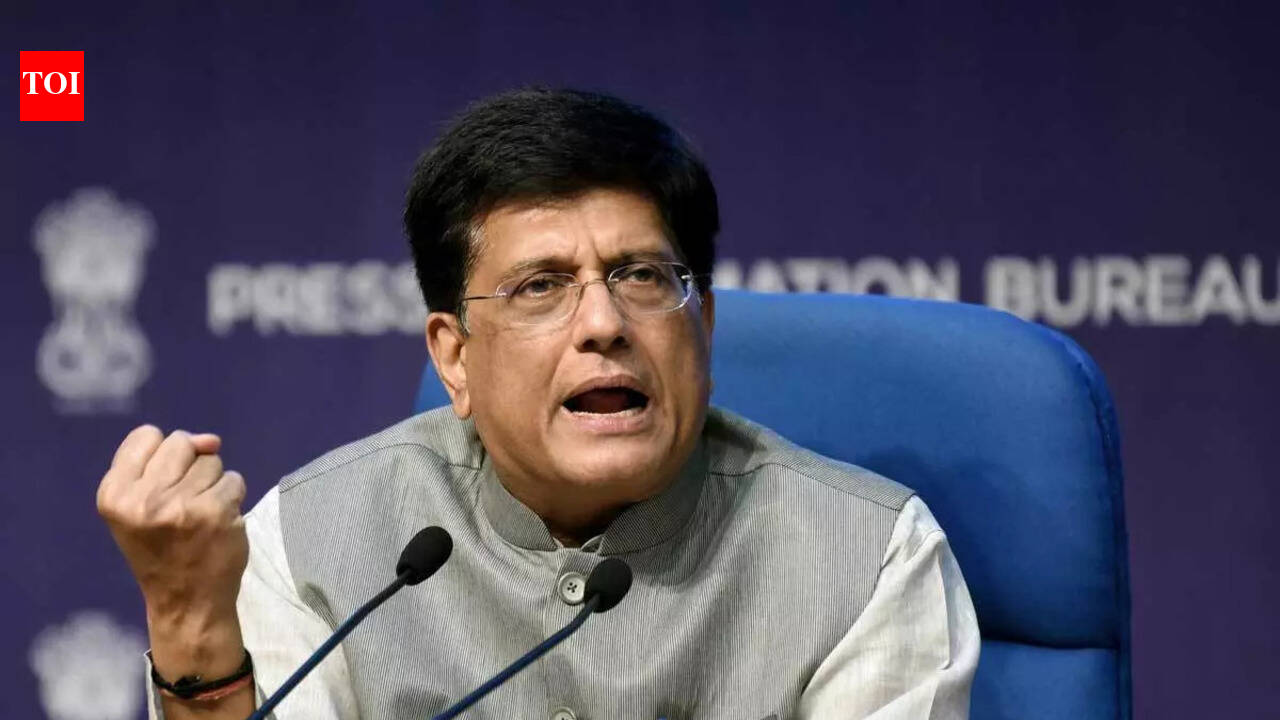
Rupee, CAD under watch, US trade talks on track: Goyal says India will ‘come out winner’

Prince William receives unexpected request as royal faces expensive bill

EU Commission clears $1.5-bn German aid to produce renewable hydrogen

-

 Entertainment1 week ago
Conan O’Brien hat tricks as Oscar host
-

 Fashion1 week ago
Italy’s Zegna Group’s Q1 growth boosted by strong organic performance
-
 Business1 week ago
Pound wobbles and bonds suffer as Starmer battles on
-

 Fashion1 week ago
US T&A exports decline 10% to $5 bn on softer regional demand
-

 Sports1 week ago
2025-26 NBA Title Odds: Thunder, Spurs Favored; Knicks Rising
-

 Entertainment5 days ago
Where Pete Davidson, Elsie Hewitt stand after breakup: Details revealed
-
 Business1 week ago
Tui issues update on summer jet fuel shortage fears
-
 Business7 days ago
Jersey Election 2026: Cost of living concern in St Helier Central