

Business
8th Pay Commission: Will Central Govt Employees Get 20–35% Salary Hike? All You Need To Know

Last Updated:
The government has started consultations for the 8th Central Pay Commission to review salaries and pensions. Suggestions are invited until April 30, 2026.




The 8th Pay Commission will impact the salaries of India’s three armed forces, with the minimum basic pay for soldiers expected to increase by 25–35% after implementation.
8th Pay Commission: The 8th Central Pay Commission, which is reviewing salaries, pensions and allowances for millions of central government employees and retirees, is working day and night to complete the task within the prescribed timeline of 18 months since the notification.
It is set to replace the 7th Pay Commission, which came into effect from January 01, 2016 until December 31, 2025.
The Ministry of Finance has invited suggestions from employees, pensioners, staff unions and other stakeholders as part of the exercise. Inputs can be submitted through an online portal until April 30, 2026.
The Terms of Reference for the commission were notified on November 3, 2025, and the panel has been given 18 months to submit its recommendations. Once the report is submitted and approved by the government, it could lead to a revision in pay structures and pension benefits.
The proposed revision is expected to affect around 50 lakh central government employees and nearly 69 lakh pensioners.
All central government employees and pensioners will get the benefits of the 8th pay commission retrospectively in the form of arrears from January 01, 2026.
How Much Salary Hike Would Employees Be Expected To Get?
Experts estimate that the 8th Pay Commission could bring a salary hike of around 20–35% for central government employees. The fitment factor—which is used to revise basic pay—is expected to be in the range of 2.4 to 3.0, though the final decision will depend on multiple economic factors.
As reported by CNBC-TV18, Pratik Vaidya of Karma Management Global said the final outcome will hinge on inflation trends, the government’s fiscal position, and recommendations from the upcoming Finance Commission of India.
He noted that previous pay commissions offer some perspective. The 6th Central Pay Commission resulted in an average salary increase of about 40%, while the 7th Central Pay Commission had an overall impact of roughly 23–25%, with a uniform fitment factor of 2.57.
Vaidya added that the final recommendation of the 8th Central Pay Commission will likely depend on factors such as inflation over the next 12–18 months, the government’s fiscal space after the 16th Finance Commission, tax collections, and broader policy considerations. According to him, the government may aim to strike a balance between offering a noticeable pay increase while adjusting allowances and dearness allowance structures in a calibrated manner.
March 15, 2026, 13:46 IST
Read More


Spirit Airlines check-in Kiosks sit idle at Oakland International Airport on August 13, 2025 in Oakland, California.
Justin Sullivan | Getty Images
Spirit Airlines could shut down as early as 3 a.m. ET Saturday, according to people familiar with the matter. The carrier has failed to secure a financial lifeline to continue operating, though it hasn’t commented on the potential shutdown or its plans.
About 290 Spirit flights are scheduled for Saturday, according to aviation site Flightradar24. Another 381 are scheduled for Sunday.
Travelers with Spirit tickets could be understandably rattled. While there have been some U.S. airlines to shut down in recent years, the budget carrier is larger than most recent airline failures and links major cities like New York, Miami, Detroit and Los Angles — and many others in between — with its Airbus jets.
Here’s what travelers need to know:
You have a Spirit ticket. What should you do?
Immediately? Nothing.
Travelers who are booked on a Spirit flight, like this CNBC reporter is for later this month, are likely to receive a refund if they purchased tickets with a credit card.
If the ticket was bought with a debit card or with loyalty points, however, the chances of recovering funds are slim to none, said Henry Harteveldt, founder of Atmosphere Research Group, a travel consulting firm.
“If you’re holding a reservation for a flight on Spirit don’t proactively cancel it. Wait for the airline to announce it is shutting down,” he said.
Would Spirit be able to help you at the airport?
Don’t count on it.
Spirit has declined to comment on a potential shutdown. If it confirms an end to operations, the carrier will most likely have information on its website about travelers’ next steps.
Harteveldt said travelers shouldn’t go to the airport expecting to find Spirit staff in the event the airline ceases operations. Call centers are likely to be overwhelmed if they are still staffed.
That could leave passengers with fewer answers than they’d like, but other airlines are likely to help assist affected customers.
Airlines that offer last-minute fares, likely with some discounts, will be available to travelers at airport ticket counters.
How can another airline help?
United Airlines, JetBlue Airways, Frontier Airlines and American Airlines are among the carriers that have said they are ready to assist Spirit customers and crews if the carrier shuts down.
That could mean scheduling additional flights to carry the stranded passengers, similar to what they do during a hurricane or other natural disaster.
Why could Spirit shut down?
Spirit, known for bright yellow planes, low fares and fees for everything else, had been successful for years, but this week it’s been on the brink of liquidation after failing to reach a deal with bondholders for a $500 million government bailout from the Trump administration.
Last year Spirit filed for its second bankruptcy in less than a year, though it’s had a host of problems even before then.
A plan to be acquired by JetBlue was blocked. Rising costs upended its business model. An engine defect grounded dozens of its planes. And, more broadly, upscale travel became more popular with consumers, driving airline profits.
At the same time, big, legacy airlines were selling their own basic economy fares that were similar to what Spirit was offering, but with bigger networks.
What does this mean for travel going forward?
Airlines have been adding flights since Spirit’s bankruptcy filing last year on some of its routes and at major airports. They’re likely to keep doing so.
Experts have said they expect fares to rise, at least in some markets, if the discounter goes away, even though the carrier has shrunk substantially.
Business
Middle East crisis: Air India to make food optional, help cut price of tickets – The Times of India
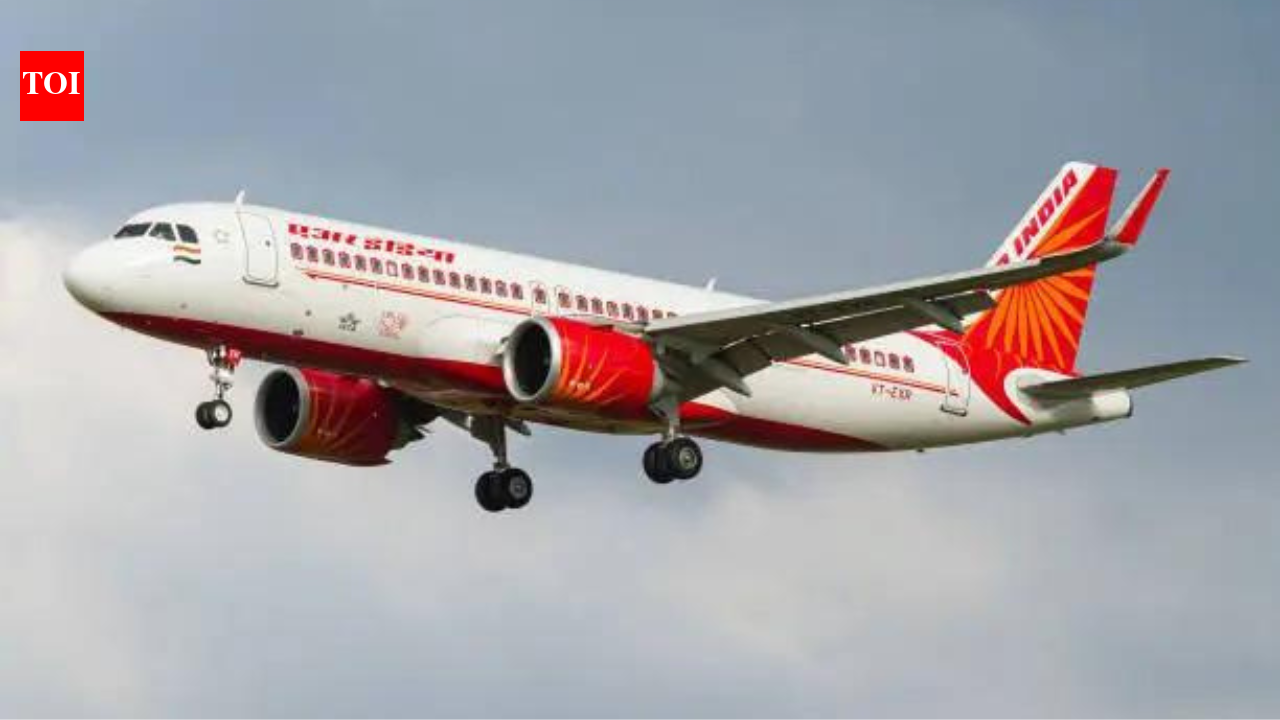
NEW DELHI: Desperate times call for desperate measures. Full service Air India is planning to make meals optional on its domestic and short international (under two hour) flights. Once this “unbundling” rolls out in the next month or two, passengers opting out of meals could have upwards of Rs 250 shaved off their ticket price. While this move, say people in the know, is “on the anvil,” the airline is looking at several other unprecedented measures to fly through the severe cost-revenue turbulence caused by the unending West Asia war.While not opting for meals could lead to slightly cheaper economy tickets, AI is looking at unbundling lounge access for business class passengers because those opting out of this, could get their tickets cheaper. On an average, lounge operators charge Rs 1,100-1,400 per user at metro airports and Rs 600-700 at non metros.The average spend is about Rs 1,000 per lounge. Many business class flyers are frequent travellers who just make it to airports in time for their flight and do not head to the lounge. If unbundled, this could be a saving in their ticket cost. Banks have been reducing lounge access for credit card users for the same reason to cut their costs.“From Day One, Air India has had meals bundled in its ticket price. Now the way aviation turbine fuel (ATF) price is rising and the rupee crashing since Feb 28, ticket prices are going up. India is a price-sensitive market and raising fares beyond a point leads to a fall in traffic with many opting to travel by train or road. This has led to the rethinking to unbundle meals on some flights. Other steps are also being considered,” said people in the know.Several airlines globally have over the past few years unbundled their onboard offerings. Many international full service airlines offer a basic meal in economy while giving the option of buying gourmet meals at an additional cost. Ditto for alcoholic beverages, with cheaper beer and wines being given at no extra cost while the others being charged for. “For passengers, the distinction between full service and low cost airlines is blurring very fast,” said an industry old-timer.
A tree surgeon said he thought he “was going to die” when he suffered a powerful electric shock from an overhead line while clearing hedges in Wiltshire.
Joshua Pocknell was working just after midnight on the A3102 near Royal Wootton Bassett when the mobile lighting tower he was pushing touched an 11,000 volt overhead powerline.
The 26-year-old was seriously injured and taken to hospital, where he spent the next five weeks, workplace watchdog the Health and Safety Executive (HSE) said.
“My whole body locked and I felt hot and cramping,” Mr Pocknell said of the shock.
“I could hear the electricity in my head and thought I was going to die.
“I hit the floor and passed out, still cramping.
“I later discovered a hole had burnt through my arm and hip all the way to the bone.”
More than two years after the incident on January 19 2024, the tree surgeon said he still experiences “considerable pain”.
“My injuries were complex and challenging and there were five or six different surgeons involved in my treatment,” he said.
“I still experience considerable pain and strange bodily sensations, including nerve pain and itching.
“This incident has torn the life from beneath me and I don’t think I will be able to return to the job that I used to love.”
The regulator said it investigated the incident and found Mr Pocknell’s employer, Upton Specialised Tree Services, did not properly plan for or risk assess the dangers posed by overhead power lines.
The firm did not put up barriers or provide training in operating the mobile lighting tower.
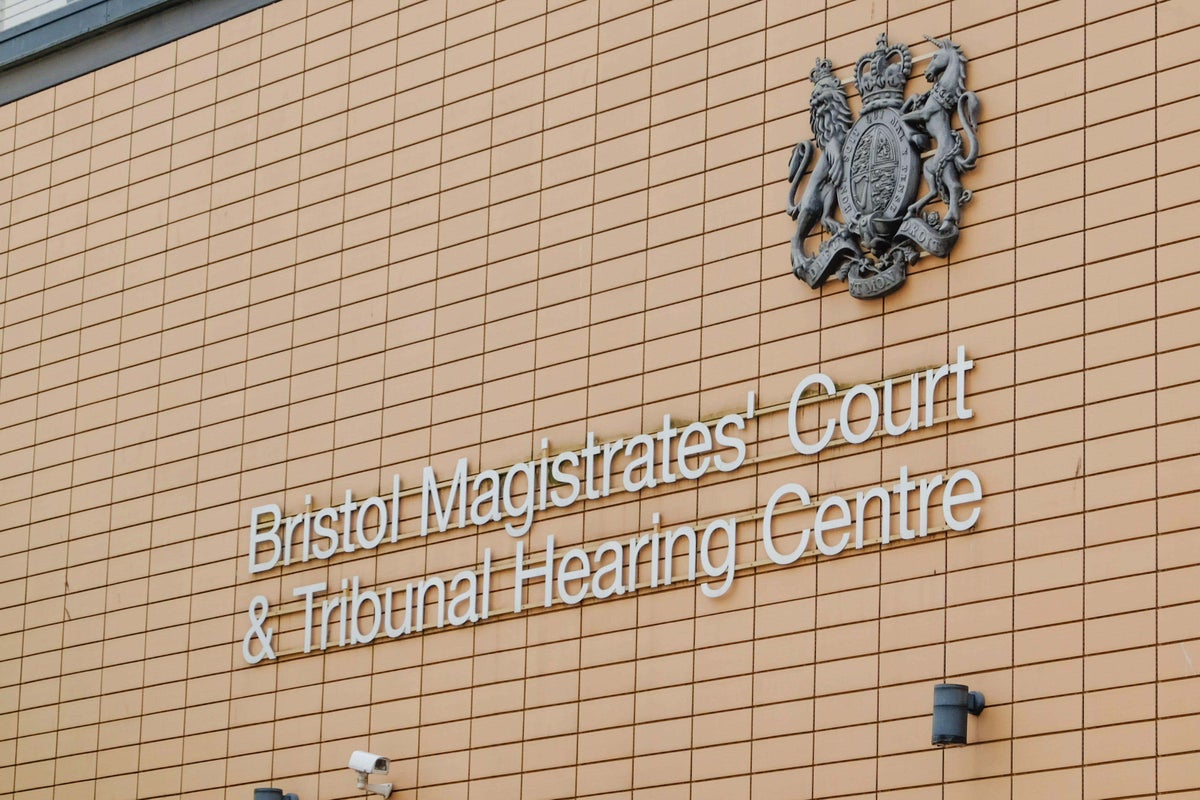
Upton Specialised Tree Services pleaded guilty to the charge of breaching Regulation 14 of the Electricity at Work Regulations 1989 by virtue of Regulation 3, the HSE said, and was fined £60,000 and ordered to pay £6,237 in costs at Bristol Magistrates’ Court on Friday.
HSE inspector Tom Preston said: “Joshua is lucky to be alive.
“Overhead electrical power lines present extreme risks to workers, but the risks can and must be controlled.
“Work near overhead power lines should only be carried out where it can be done safely, following a suitable risk assessment, the use of barriers or safety zones, and proper training on the equipment being used.
“In this case, a worker sustained severe injuries in a traumatic incident for all concerned that was entirely preventable.
“HSE will take action against those who fail to take the steps necessary to protect people at work.”


US awards $488m F-16 radar support contract for Pakistan, other countries

Germany urges stronger European defence after US reduces troops

ICE cotton witnesses sharp rise on weaker dollar, strong exports

-

 Tech1 week ago
They Wanted to Join Raya. They’ve Been on the Waiting List for Years
-

 Tech5 days ago
A Brain Implant for Depression Is About to Be Tested in Humans
-

 Entertainment1 week ago
Anne Hathaway makes shocking confession about Taylor Swift’s music
-

 Tech5 days ago
Almost 90% of women leave tech industry within 10 years | Computer Weekly
-

 Fashion1 week ago
North India cotton yarn steady despite continued push by spinners
-

 Tech1 week ago
Why Do I Like Dyson’s PencilVac So Much?
-

 Sports1 week ago
US says Iran can play in Fifa World Cup but IRGC-linked individuals won’t be allowed
-

 Tech1 week ago
US Special Forces Soldier Arrested for Polymarket Bets on Maduro Raid