

Business
FTSE 100 ends record breaking week at new high


Blue chips in London enjoyed another strong day on Friday, hitting a fresh peak, with a pick up in new listings adding to the more optimistic mood.
The FTSE 100 index closed up 63.52 points, 0.7%, at 9,491.25, a new closing high, and just shy of a fresh intra-day best level of 9,494.64 hit earlier in the trading day.
The FTSE 250 ended up 150.32 points, 0.7%, at 22,197.62, and the AIM All-Share advanced 7.57 points, 1.0%, at 796.52.
For the week, the FTSE 100 was up 2.2%, the FTSE 250 was 2.4% higher, while the AIM All-Share added 2.1%.
The upbeat mood came despite the ongoing US federal government shutdown and some downbeat domestic economic data.
AJ Bell investment director Russ Mould said: “There is growing expectation that the shutdown in Washington might continue until mid-October.
“How long investors remain relaxed about this state of affairs remains hard to predict, but one worry is that it makes it significantly harder for the Federal Reserve to make informed decisions around interest rates,” he added.
In the UK, speculation of tax hikes ahead of the Autumn budget was blamed for a slowdown in services sector activity in September.
The S&P Global UK services purchasing managers’ business activity index fell to 50.8 points in September from 54.2 in August, and missed the flash reading of 51.9 released late last month.
Tim Moore at S&P Global said: “Many survey respondents suggested that corporate clients had deferred spending decisions until after the Autumn budget, while households were also hesitant about major purchases.”
In better news for the “Square Mile”, consumer staples company Princes Group said it intends to float on the Main Market of the London Stock Exchange.
The Liverpool-based firm reported £2.1 billion in pro forma revenue in 2024, and pro forma adjusted earnings before interest, tax, depreciation and amortisation of £122.3 million.
Its portfolio includes Princes tuna, Branston, Flora, Napolina and own-brand products.
Chief executive Simon Harrison said: “Whilst we are renowned for our iconic Princes tuna, through a combination of organic growth and focused M&A, we have built an international £2 billion food and drink portfolio.”
In addition, Beauty Tech Group made its stock market debut in London.
The Cheshire-based seller of at-home beauty treatment technology, including laser devices and LED face masks through the brands Tria Laser, CurrentSkin and Ziip Beauty, closed at 288p per share, above the 271p initial public offer price in a successful first day’s trading.
Stocks in New York were higher at the time of the London close. The Dow Jones Industrial Average was up 0.8%, the S&P 500 index was 0.4% higher and the Nasdaq Composite 0.2% to the good.
In European equities on Friday, the CAC 40 in Paris closed up 0.2%, while the DAX 40 in Frankfurt fell 0.2%.
Amid the bullish market mood, Bank of America strategists said there is a risk that markets are “under-pricing the risk of weakening growth momentum”, and as well as “potentially over-pricing the support from productivity growth”.
As a result, BofA said it is positioned for macro data to “surprise to the downside relative to lofty expectations”, implying scope for widening risk premia and fading EPS expectations, consistent with “more than 10% downside for the Stoxx 600 and 10% underperformance for European cyclicals versus defensives”.
The pound was quoted higher at 1.3469 dollars at the time of the London equity market close on Friday, compared to 1.3415 dollars on Thursday. The euro stood at 1.1741 dollars, up against 1.1697 dollars. Against the yen, the dollar was trading at 147.43 yen, slightly higher compared to 147.37 yen.
The yield on the US 10-year Treasury was quoted unchanged at 4.11% from Thursday. The yield on the US 30-year Treasury stood at 4.70%, also flat from Thursday.
Broker recommendations drove a number of the leading risers on the FTSE 100.
Bunzl climbed 4.5%, as Goldman Sachs took the international distribution and services group off its “sell” list, moving to “neutral”.
While RBC Capital Markets double upgraded London-based supplier of specialised technical products and services Diploma to “outperform” from “underperform”, sending shares 2.3% higher.
RBC said Diploma’s track record in terms of organic growth, earnings before interest, tax and amortisation margins, cash conversion and, importantly, return on invested capital, “speaks for itself”.
The broker added: “The majority of financial metrics are at the top-end of the sector whilst the diversity of the business provides resilience through the cycle.”
Schroders closed up 3.7% as Citi upgraded to “buy” from “neutral” after recent underperformance that it called “somewhat surprising”.
The broker said the financial services provider has among the highest gearing to strongly-performing equities across its coverage, recent flow momentum appears strong, while it should also be “positively geared” to any improvement/recovery in private markets activity.
Meanwhile, Intertek advanced 2.6% as Bank of America restarted coverage with a “buy” rating.
Banks were a firm feature, with NatWest up 3.8%, Standard Chartered up 1.7%, Barclays up 1.4% and HSBC up 1.7%.
Elsewhere, JD Wetherspoon failed to cheer investors with shares down 5.6%, despite a strong rebound in profits and record sales, as analysts warned that rising wage and energy costs could crimp margins and stall momentum in the new financial year.
Audioboom stormed 18% higher after Sky News said it is working with advisers to explore terms of a potential takeover of the company.
New York City-based Fox Corp and San Antonio, Texas-based iHeartMedia could be potential bidders for the London-based podcast producer of Formula One motor racing’s official podcast, according to media analysts.
Brent oil traded at 64.61 dollars a barrel on Friday, up from 64.42 dollars late on Thursday.
Gold soared once more, trading at 3,885.67 dollars an ounce on Friday, up against 3,830.85 dollars on Thursday.
The biggest risers on the FTSE 100 were Bunzl, up 106p at 2,490p; NatWest, up 20.2p at 548p; Schroders, up 14.2p at 393.8p; Spirax, up 195p at 7,290p; and 3i Group, up 116p at 4,426p.
The biggest fallers on the FTSE 100 were Coca-Cola Europacific Partners, down 130p at 6,450p; Admiral, down 64p at 3,268p; Coca-Cola HBC, down 56p at 3,306p; Airtel Africa, down 3p at 239p; and GSK, down 18.5p at 1,628.5p.
Monday’s global economic calendar has eurozone retail sales figures and construction PMI readings in the eurozone and the UK.
Monday’s UK corporate calendar has a trading statement from Ferrexpo, the Swiss-headquartered iron ore company with assets in Ukraine.
Contributed by Alliance News.
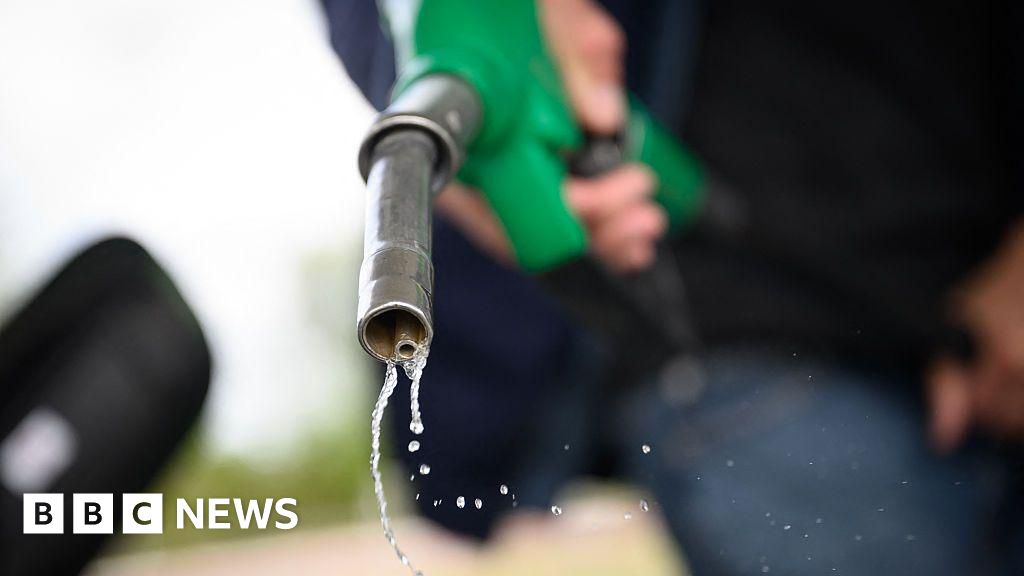
Energy markets have seen wild swings since the US and Israel attacked Iran on 28 February.
Source link
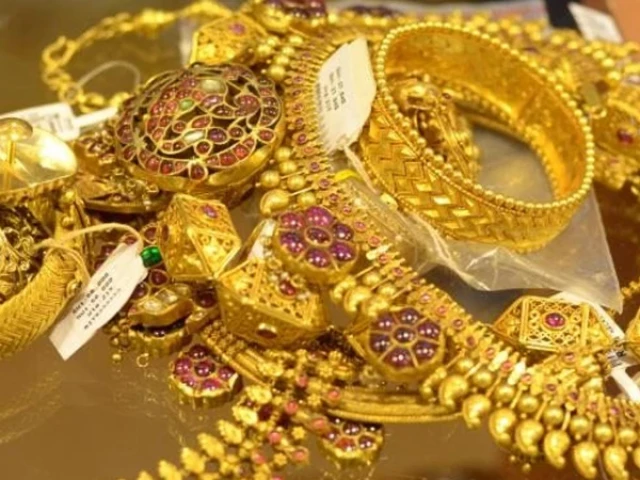
Gold and silver prices declined in both international and domestic markets, reflecting a broader downward trend in precious metals.
In the international bullion market, the price of gold fell by $49 per ounce, settling at $4,788.
According to the All-Pakistan Gems and Jewellers Sarafa Association (APGJSA), in the local market, gold prices also recorded a significant drop. The price per tola decreased by Rs4,900 to reach Rs501,162. Similarly, the price of 10 grams of gold declined by Rs4,201, settling at Rs429,665.
Silver prices also followed a downward trajectory. The price per tola of silver fell by Rs145 to Rs8,417 while the price of 10 grams of silver dropped by Rs124, reaching Rs7,216.
Read More: Gold, silver prices rise again in local and international markets
Gold and silver prices recorded an increase on Saturday in both international and local markets after declining on Friday, following a three-day upward trend in global and domestic markets.
According to the All Pakistan Sarafa Gems and Jewellers Association (APSGJA), in the international bullion market, the price of gold rose by $45 per ounce to reach $4,837. In the local market, the price of gold per tola increased by Rs4,500 to Rs506,062, while the rate for 10 grams rose by Rs3,858 to Rs433,866.
Silver prices also moved higher, with the per tola rate increasing by Rs118 to Rs8,562. Similarly, the price of silver per 10 grams rose by Rs101 to Rs7,340.
Business
Stocks to buy: What’s the outlook for Nifty for April 20-April 24 week? Check list of top stock recommendations – The Times of India

Stock market recommendations: APL Apollo Tubes, and HDFC Asset Management Company are Sudeep Shah, Head – Technical Research and Derivatives, SBI Securities’ top stock picks for this week. Below are his stock picks and also views on Nifty.Nifty ViewThe benchmark index Nifty continues to inch higher; however, this phase of the rally is notably different, as the spotlight has shifted away from the headline index. While Nifty has extended its pullback rally for the second consecutive week and closed in the green, the real strength is emerging beneath the surface. The broader markets have taken the lead, with Nifty Midcap 100 and Nifty Smallcap 100 delivering a robust rally and clearly outperforming the frontline index. Both indices have decisively moved above their key moving averages, signalling trend strength, whereas Nifty is still trading below its 100day and 200day EMA. Most importantly, Nifty Midcap 100 is now just a short distance away from its alltime high, suggesting that the next leg of opportunity may be unfolding beyond the conventional largecap space.Focusing back on Nifty, the index has been sustaining above its 50day EMA for the last three trading sessions, while the 20day and 50day EMA have started to edge higher, reflecting improvement in the shortterm trend. Meanwhile, the downward momentum in the 100day and 200day EMA has slowed considerably, indicating a stabilisation in the mediumterm structure. Momentum indicators further support the constructive bias, with the daily RSI trading above the 57 mark and moving higher, and the daily MACD histogram signalling strong bullish momentum.Collectively, these technical factors suggest that the pullback rally is likely to continue in the short term. On the upside, the 24650–24700 zone is expected to act as a crucial hurdle for the index. A sustainable breakout above 24700 could lead to an extension of the pullback rally towards 25000, followed by 25200 in the near term. On the downside, the 24050–24000 zone will serve as immediate support, and as long as the index remains above the 24000 mark, the ongoing pullback rally is likely to stay intact.Bank Nifty ViewThe banking benchmark Bank Nifty also ended the week on a positive note, indicating the continuation of its ongoing pullback rally. However, over the last three trading sessions, the index has struggled to decisively cross its 200day EMA, suggesting a phase of consolidation near a key long-term resistance zone. This price behaviour reflects hesitation at higher levels and points towards a pause in momentum after the recent recovery.This consolidation largely indicates a degree of caution among market participants, as investors appear to be awaiting clarity on the Q4 earnings outcome of major banking heavyweights, namely ICICI Bank and HDFC Bank. With both results scheduled over the weekend, the index is likely to witness a directional move post the earnings announcements, depending on earnings performance and management commentary.From a technical perspective, the index continues to maintain a constructive short-term setup, as it is trading above its 20day and 50day EMA, reflecting underlying strength. Momentum indicators remain supportive, with the daily RSI placed above the 55 level and trending higher, suggesting improving buying momentum and positive shortterm bias.Looking ahead, the 57000–57100 zone is expected to act as a crucial resistance area, as it coincides with both the prior swing high and the 100day EMA, making it an important supply zone. A sustainable move above 57100 could lead to a further extension of the pullback rally towards 57800, followed by 58500 in the short term. On the downside, the 55800–55700 zone is placed as an important support band, and any dip towards this region is likely to attract buying interest as long as the structure remains intact.Stock recommendations:APL Apollo TubesAPL Apollo Tubes has shown strong bullish intent after a 14.5% pullback from its early April lows near the 200-day EMA, indicating solid support at lower levels. The recent consolidation between 2072–1961 acted as a base, with the stock now delivering a decisive breakout on strong footing. A positive DI crossover on ADX signals clear buyer dominance, while the MACD nearing a move above the zero line with rising histogram bars points to strengthening momentum.The overall setup suggests the stock is well-positioned to extend its uptrend in the near term. Hence, we recommend to accumulate the stock in the zone of 2110-2090 with a stoploss of 2020. On the upside, it is likely to test the level of 2255 in the short term.HDFC Asset Management CompanyHDFC Asset Management Company has exhibited strong bullish momentum, closing Friday’s session with an impressive 4.89% gain. The stock has surged nearly 26% from its March lows, indicating robust buying interest. Momentum indicators remain firmly supportive, with RSI sustaining above 60, reflecting strength. Additionally, a positive DI crossover on ADX highlights clear buyer dominance, while rising MACD histogram bars with the MACD line above the zero mark further reinforce the ongoing uptrend. The overall structure suggests the stock is well-positioned to extend its upward trajectory. Hence, we recommend to accumulate the stock in the zone of 2800-2770 with a stoploss of 2690. On the upside, it is likely to test the level of 2990 in the short term.(Disclaimer: Recommendations and views on the stock market, other asset classes or personal finance management tips given by experts are their own. These opinions do not represent the views of The Times of India)


Long energy disruptions to raise pressures on SEA nations: S&P Global

start time, schedule, route—here’s your complete guide

India and South Korea plan $50 billion trade push with new deals

-

 Fashion4 days ago
France’s LVMH Q1 revenue falls 6%, shows resilience amid Iran war
-

 Sports1 week ago
The case for Man United’s Fernandes as Premier League’s best
-

 Entertainment1 week ago
Palace left in shock as Prince William cancels grand ceremony
-
 Business1 week ago
UK could adopt EU single market rules under new legislation
-

 Entertainment5 days ago
Is Claude down? Here’s why users are seeing errors
-

 Sports1 week ago
Lamar Jackson hits back at critics with faithful message on social media
-

 Fashion1 week ago
Energy emerges as biggest cost driver in textile margins
-

 Tech1 week ago
A Lot of Shops Won’t Fix Electric Bikes. Here’s Why