

Fashion
Paris is torn between Elie Saab’s working girl and the whimsical creations of Japanese designers


Published
October 5, 2025
Japan’s leading fashion houses once again made a major splash at Paris Fashion Week on Saturday, as evidenced on the sixth day of the women’s ready-to-wear shows for spring-summer 2026 by three of the country’s most emblematic labels: Junya Watanabe, Noir by designer Kei Ninomiya, and Comme des Garçons. On the same day, Elie Saab sent his army of power women down the catwalk.
As so often, it was Rei Kawakubo‘s show for Comme des Garçons that moved us most and left the deepest impression. In today’s chaotic world, where catastrophes and human tragedies follow one after another, the designer seemed intent on returning to origins, reconnecting with the values of the Earth. Folk songs and traditional tunes accompanied the show.
A procession of amorphous, swollen silhouettes advanced, draped in great swathes of burlap, hemp or linen, hastily knotted, or in old lace sheets, curtains and bedspreads. Some jackets appeared to be cut directly from the large beige canvas sacks used to store potatoes and other produce from the land. A waistcoat and goat-hair coats completed this rustic look.
These sculptural garments, generated by the play of layering, volume and padding techniques, lent a sense of solemnity to the whole. Topped with battered top hats and cotton-wool hair in pastel shades, the models evoked rag dolls or cloth puppets—old crones or witches—burned in the countryside in January in antiquity to lay the past year to rest and celebrate a richer, more auspicious new season.

This season, Junya Watanabe pushed the boundaries further in his experimental exploration of clothing, delivering a breathtaking collection in which constructions were constantly reinvented, with unexpected intrusions along the way. The Japanese designer folded, with complete ease, the ordinary elements of the textile universe and everyday life into his creations—objects and accessories that usually pass unnoticed.
The result was at once surreal and playful. Old white lace parasols unfurled like a corolla at the hem of a summer dress, while a flock of straw hats created a ruffled volume at the collar and across the shoulders of a long evening gown in nude-coloured guipure lace.
Bright red pumps adorned the shoulders of a black sheath. A cascade of metallic cutlery formed the sleeves of a crinkled silver nylon T-shirt. Rendered in gold, knives and forks compose intriguing sculptures on a shoulder or a flank. The emblematic coat hanger completed this kind of “prévert inventory”: trench coats, shirt dresses and polka-dot dresses were threaded onto it two or three at a time, then secured to either side of the body.

At Noir, Kei Ninomiya continued to explore three-dimensional structures through a mathematical approach. By infinitely multiplying elements as modules—flowers, stars or metal cones, for example—he created fairytale, sculptural ensembles. The show opened with a series of white tulle petticoats paired with sparkling, silver, carapace-like tunics.
The models’ faces were masked or hidden by bulky headdresses, reminiscent of aggregates of quartz crystals or other organic forms. In black and white, they also appeared in unexpected fluorescent hues (pink, orange, and yellow). Paradoxically, behind this whimsical appearance lies a rather classic, even retro wardrobe, composed of prim white blouses, black balloon or pleated skirts, and suits with gathered ruffles. Not forgetting platform moccasins set on a platform and fitted with a small stiletto heel.
These outfits were enhanced by harnesses or cage tunics slipped over the garments, to which all manner of spectacular structures were attached: a giant star covered in precious stones, a basket-dress-shaped grid formed by a Meccano-like chain, clouds of tulle, glittering garlands and other fabric petals.

A change of register at Elie Saab. The mood evoked the electric air of the great metropolises. In the darkness, the sound of heels echoed on the pavement. Suddenly, silhouettes emerged in a fog bathed in a ruddy glow. The first model cut across the catwalk. The tone is set—a little like “Bright Lights, Big City”.
The look was that of the working girl: a chic, tailored suit; a pencil skirt with a back slit; a silk blouse with a plunging neckline; or little polka-dot tops. She’s as at ease in pleat-front trousers as in a strapless python-skin dress, and has never looked more elegant than simply wearing a flowing camel trench that slips over her skin, or a jacket and T-shirt with those sensual, floaty silk trousers with a denim effect.
Her favourite game? Mix & match. She happily pairs Prince of Wales check with polka dots, a leather skirt with a metallic-fringed tank top, a worn leather jacket with an openwork sequinned skirt. For evening, the Elie Saab woman pulls out all the stops with glittering draped maxi dresses or shorter dresses with long trains.
This article is an automatic translation.
Click here to read the original article.
Copyright © 2025 FashionNetwork.com All rights reserved.











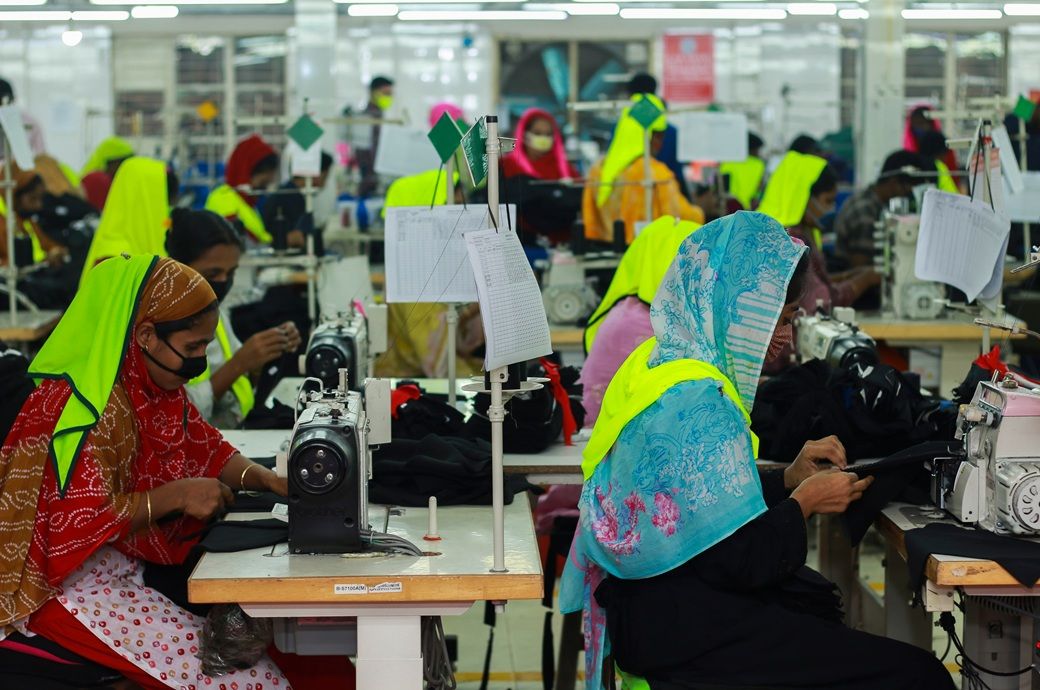
The call came at a national consultation in Dhaka on the draft Bangladesh National Strategy on Circular Economy for the sector.
Bangladesh government officials, industry leaders and sustainability experts recently called for finalising a national circular economy strategy for the textile and RMG sector as that is essential to protect competitiveness in the global apparel market.
They emphasised the need to embed circular practices across the entire value chain while improving transparency and building institutional capacity.
The event was organised by the United Nations Industrial Development Organisation (UNIDO) and the country’s Ministry of Commerce, in collaboration with Chatham House, under the Switch to Circular Economy Value Chains (SWITCH2CE) project, co-funded by the European Union (EU) and Finland.
SWITCH2CE project partner Chatham House worked with two leading national research organisations in Bangladesh to conduct two policy level research, and lessons from the pilot projects outlined future steps to foster a national circular textile strategy for Bangladesh, a release from SWITCH2CE said.
Through SWITCH2CE, technical support has been provided by Chatham House and a diverse network of partners, including international brands, research institutions, and financing organisations, working alongside local industry actors and technology providers.
Participants emphasised the need to embed circular practices across the entire value chain—from design and production to waste recycling—while improving transparency and building institutional capacity.
They emphasised policy recommendations to formalise and scale circular approaches across the entire value chain—from design and production to textile waste recycling—while improving traceability and building institutional and financial capacity.
Discussions also addressed challenges in blended fiber recycling, transparent supply chains, and the need for coordinated efforts to build a sustainable textile ecosystem by adopting a national circular strategy.
Fibre2Fashion News Desk (DS)
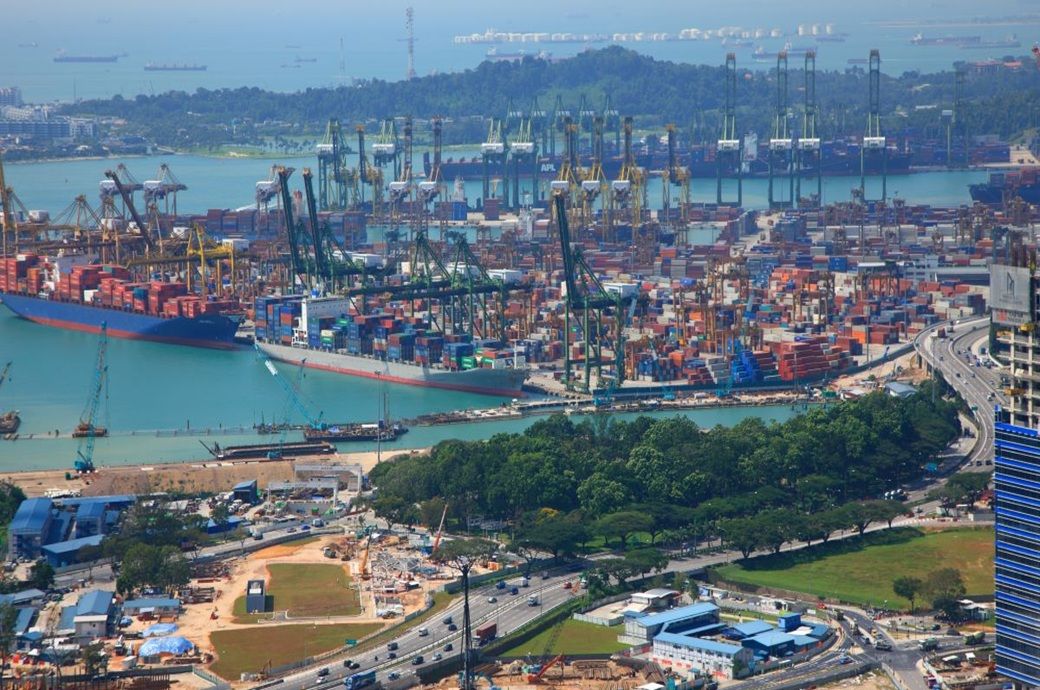
Singapore, one of the world’s most connected and efficient port hubs, offers a platform for testing and deploying innovations in areas such as cleaner fuels and digital technologies. UNCTAD complements this with global reach, policy expertise and hands-on support to developing countries.
UNCTAD and the Maritime and Port Authority of Singapore have launched a partnership to support the transition toward more sustainable, resilient and inclusive maritime transport systems.
They will promote adoption of alternative fuels and digital solutions across ports and shipping networks.
Efforts will focus on approaches that can be adapted to different national contexts.
Under the agreement, the partners will promote adoption of alternative fuels and digital solutions across ports and shipping networks. Efforts will focus on approaches that can be adapted to different national contexts, alongside knowledge-sharing in sustainable finance, digital innovation and workforce development.
“This partnership brings together Singapore’s operational excellence and UNCTAD’s global development expertise,” said Pedro Manuel Moreno, acting secretary general of UNCTAD.
“It will help accelerate a maritime transition that is not only greener and more efficient, but also resilient and inclusive—while contributing to global discussions at the UN Global Supply Chain Forum 2026,” he noted.
As pressure mounts to decarbonise ports, they face a complex balancing act: reducing emissions while keeping trade flowing efficiently and competitively, according to the UNCTAD, which recently said that challenge is turning more urgent as global supply chains navigate renewed uncertainty.
Recent tensions affecting key maritime chokepoints, including the Strait of Hormuz, have highlighted the risks of continued reliance on fossil fuels in global shipping. Volatility in energy markets and disruptions to shipping routes are reinforcing the case for alternative fuels and more resilient port infrastructure, UNCTAD said in a release.
A central priority of the partnership is ensuring that the maritime transition is inclusive.
Developing countries, many of which depend heavily on maritime trade, often face constraints in financing, technology and skills. The initiative will support these countries through training, advisory services and institutional strengthening.
Building on UNCTAD’s long-standing work with port communities, the partnership aims at improving port performance, strengthening connectivity and enhancing preparedness for disruptions.
The initiative will also contribute to preparations for the 2nd UN Global Supply Chain Forum taking place in late 2026, where policymakers, industry leaders and international organizations will address the future of trade logistics and resilience.
Fibre2Fashion News Desk (DS)
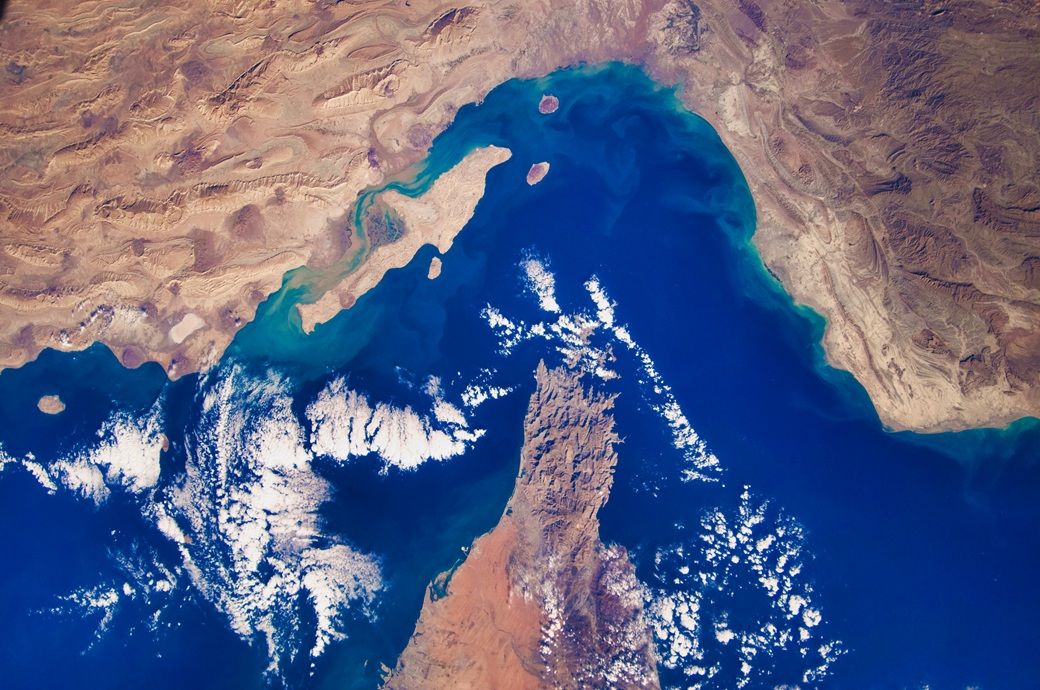
Describing the closure of the vital shipping route as a ‘structural rupture’ in global energy trade, the ERIA issue paper said member countries of the Association of Southeast Asian Nations (ASEAN), including Cambodia, are particularly exposed due to their heavy reliance on imported energy.
The Strait of Hormuz disruption is a systemic shock threatening Southeast Asia’s energy security and economic stability, a report by Economic Research Institute for ASEAN and East Asia said.
Flagging cascading impacts across key sectors beyond energy markets, it cautioned that these combined pressures could lead to slower economic growth, rising inflation and financial instability across the region.
The ASEAN region imports about two-thirds of its crude oil, with some like Cambodia, Singapore and the Philippines almost entirely dependent on external supplies. This dependence, combined with concentrated sourcing from the Middle East, makes ASEAN highly vulnerable to prolonged supply disruptions, the report noted.
Flagging cascading impacts across key sectors beyond energy markets, it cautioned that these combined pressures could lead to slower economic growth, rising inflation and financial instability across the region.
Higher import bills are expected to widen current account deficits, while currency volatility and capital outflows may further strain economies, it said.
The situation also poses risks to migrant workers in the Middle East, potentially affecting remittances that many ASEAN households depend on, it observed.
As fragmented national responses are insufficient to address such a complex crisis, ERIA called for stronger regional coordination, arguing that unilateral actions like stockpiling or subsidy policies could worsen supply shortages and increase competition among countries.
To strengthen resilience, the report outlined several strategic recommendations. These include developing indigenous energy resources such as biofuels, expanding regional energy trade and enhancing infrastructure through initiatives like the ASEAN Power Grid and Trans-ASEAN Gas Pipeline.
It also called for the creation of shared strategic reserves and coordinated stockpiling mechanisms to ensure more stable access to energy during crises.
ERIA also stressed on the importance of diversifying supply sources, accelerating renewable energy deployment and improving energy efficiency.
The Hormuz disruption is a ‘stress test’ for ASEAN’s economic and energy systems, and long-term resilience will depend on deeper regional integration, coordinated policymaking and a shift towards a more secure and diversified energy architecture, the report concluded.
Fibre2Fashion News Desk (DS)


Araghchi arrives in Russia for close consultations on regional, international issues
SBP raises policy rate by 100bps to 11.5% citing ‘risks to macroeconomic outlook – SUCH TV

‘Devil Wears Prada 2′ Meryl Streep reacts to surprise from on‑screen daughter

-

 Sports1 week ago
WWE WrestleMania 42 Night 2: Live match results and analysis
-

 Sports1 week ago
NCAA men’s gymnastics championship: All-time winners list
-

 Fashion1 week ago
UK’s Sosandar returns to profitability amid robust FY26 performance
-

 Politics6 days ago
UK’s Starmer seeks to deflect blame over Mandelson appointment
-
 Business1 week ago
No fuel shortage: Govt assures 100% domestic LPG, PNG, CNG supply amid Hormuz energy crunch – The Times of India
-
 Business7 days ago
How Trump’s psychedelics executive order could unlock stalled cannabis reform
-

 Entertainment7 days ago
Lee Anderson, Zarah Sultana kicked out of UK Parliament for calling PM ‘liar’
-
 Business1 week ago
Exercise to test response to offshore energy threat involving vessels and drones