

Fashion
Benetton Group rejigs corporate structure to kick off label’s relaunch


Translated by
Nicola Mira
Published
October 9, 2025
Italian fashion group Benetton continues its corporate reorganisation process designed to optimise its relaunch, having completed a first restructuring phase. According to Italian financial daily MF-Milano Finanza, which was able to glean some of Benetton’s internal documents, the group based in Ponzano Veneto “has created seven newcos (all based at Benetton’s corporate hub in Castrette) among which, following a complex partial double demerger and spin-off operation, various assets and corporate functions have been divided up.”
Seven new companies, which will become operational next January, have been created following the group’s internal reorganisation. Benetton Group has become the coordinating holding company and will always have the final say on financial, legal and auditing decisions. In July, Benetton indicated that the group’s corporate structure would be revised, with some units turning into separate companies, though they would still remain under the group’s direct control.
The current reorganisation has brought to an end the first phase of Benetton’s relaunch plan under new CEO Claudio Sforza, who replaced Massimo Renon in June 2024. Sforza has jettisoned a vertically integrated business model, deciding to close the production sites Benetton had in Tunisia, Serbia and Croatia, while in Italy, the workers formerly based at the Ponzano Veneto headquarters were moved to the nearby Castrette di Villorba factory. At the same time, several hundred employees voluntarily left the group, encouraged also by the incentives offered. By the end of 2025, the group expects to have approximately 700 employees, as opposed to 1,100 in summer 2024. Benetton is also ditching unprofitable stores around the world. Approximately 500 of them are being closed down, bringing the number of stores operated by the group to nearly 3,000.
Benetton’s goal is to further reduce its losses, which in 2024 amounted to €100 million (more than 57% lower than in 2023) and to become profitable again some time in 2026 or 2027. The group doesn’t have much to be cheerful about in 2025, coincidentally the year in which it celebrates its 60th anniversary, having been founded in 1965 by Luciano, Gilberto, Giuliana and Carlo Benetton.
MF-Milano Finanza reported that Benetton is open to the use of third-party suppliers, and is willing to consider both corporate spin-offs and industrial collaborations with select entities.

A partial demerger from Benetton Group resulted in the creation of the Retail Omnia Network (RON) and Property 347 companies. RON incorporates all of Benetton’s directly owned Italian stores (currently part of Retail Italia Network) and the stores run by the group’s foreign subsidiaries. Benetton Group still retains direct control of its retail business in Turkey, India, Korea, and Japan.
Property 347 will take over Villa Minelli, the group’s former headquarters, Benetton Fabrica, and other properties and land between Ponzano Veneto and Villorba, regarded as heritage assets to be preserved rather than destined to operational use. As a result of the partial demerger, RON and Property 347 will remain, as Benetton Group, under the direct control of Schema Eta, formerly Benetton S.r.l., whose board comprised, until April 2024, several members of the Benetton family, including founder Luciano Benetton.
As a result of the demerger and spin-off operation, Benetton Group now controls five other new companies: Green 347, Benetton Operations, Benetton Distribution, Benetton Logistics and Benetton E-commerce.
Benetton Operations, under CEO Vincenzo Meles, will take charge of the group’s operational activities, including design, product development, marketing and communications. Benetton Distribution, under CEO Nicola Capone, will oversee the retail distribution business, including Benetton’s franchised stores, while Benetton E-commerce and Benetton Logistics (the latter led by Matteo Miele) will take care of e-tail and warehousing and logistics respectively.

CEO Sforza has ambitious plans for Benetton E-commerce, since he reportedly regards the group’s online sales as too low at 13% of total revenue, compared to a global benchmark that is close to 35%. Benetton is keen to accelerate e-tail growth, and is aiming for online sales to account for 20%-25% of total revenue, as the group stated last April in a communiqué gleaned by FashionNetwork.com.
Finally, the Green 347 company, named after the colour and corresponding Pantone code of the group’s original logo, directly overseen by Sforza like Benetton E-commerce and Benetton Logistics, will manage the group’s trademarks, Benetton, Sisley, Playlife and Killer Loop.
Copyright © 2025 FashionNetwork.com All rights reserved.









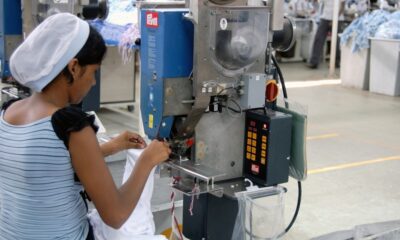


A significant minority equity investment from John Hogg Technical Solutions will now support the spinout’s industrial validation in working mill environments.
SwitchDye, a University of Leeds spinout, has secured investment from John Hogg Technical Solutions to scale its eco-friendly polyester dyeing technology.
Using a fizzy water-based system, it cuts chemical use, water consumption, and energy needs.
It will support real-world mill validation and commercialisation, aiming to reduce textile pollution and enable more circular manufacturing.
John Hogg will provide technical input, manufacturing and stewardship expertise, along with access to customer networks to help SwitchDye move from lab to mill at pace.
“SwitchDye’s pioneering approach to polyester dyeing will help to drive a more circular and sustainable textile industry,” said professor Nick Plant, University of Leeds.
Polyester makes up more than half of all global fibre output. Dyeing fibre is highly energy intensive and consumes 600 billion litres of water every year across the globe, the university said in a press release.
Textile production is estimated to be responsible for about 20 per cent of global clean water pollution, and polyester dyeing alone releases around 280,000 tonnes of waste dye and other chemicals annually.
“SwitchDye’s pioneering approach to polyester dyeing will help to drive a more circular and sustainable textile industry. This is another example of the outstanding talent that exists within our research community and our strength in nurturing and supporting innovation in new technologies,” explained Plant.
Born from an ongoing collaboration between the Schools of Design and Chemistry at Leeds, SwitchDye’s team includes researchers and co-founders Dr Nathaniel Crompton, Dr Harrison Oates, professor Richard Blackburn and professor Chris Rayner.
The new dyes were synthesised in the Wolfson CO2 laboratory in the School of Chemistry and then transferred to the facilities at the University’s School of Design and the Leeds Institute of Textiles and Colour (LITAC), where the team conducted rigorous tests to demonstrate how SwitchDye’s system can remove additives that typically account for up to 90 per cent of chemicals, without compromising performance.
The technology is designed as a drop-in for common dyehouse equipment, allowing mills to keep using their existing machinery.
In addition to the chemical savings and reduction in waste, the new dyeing system can also streamline operations by reducing rinse stages and shortening machine time, using 40 per cent less water and saving on energy. The dyes can also be removed more easily at the end of products’ life, supporting fibre-to-fibre recycling.
The university’s commercialisation team worked alongside SwitchDye to make investor introductions and provided funding to help the team achieve commercial validation.
“Partnering with John Hogg gives us the technical expertise and industry reach to move from lab success into consistent, real-world application. Over the coming months, we’ll be working closely with dyehouses and brands to demonstrate how the technology integrates into existing equipment and delivers measurable savings,” Dr Harrison Oates, chief technology officer at SwitchDye, said.
“The partnership with SwitchDye marks the start of an inspiring journey with the potential to improve the future of textile manufacturing for many years to come. At John Hogg, we have always taken pride in understanding our customers’ needs and the evolving demands of the market. Being part of an innovation that delivers a true step forward in sustainable dyeing technology is something we are genuinely excited about. We also see clear alignment between our businesses, with John Hogg’s wider capabilities helping to accelerate SwitchDye’s path to commercialisation,” Sam Walton, chief technical officer at John Hogg, said.
Fibre2Fashion News Desk (RR)

This partnership brings together ICCF’s deep understanding of the Chinese luxury ecosystem and cultural landscape with the Kering long-standing expertise in craftsmanship, operations and brand development in Europe.
Kering has partnered with ICCF and will take a minority stake to support the growth of ICICLE.
The collaboration combines ICCF’s insight into China’s luxury market with Kering’s expertise in craftsmanship and brand building.
Backed by Kering’s House of Wonders initiative, the deal aims to expand ICICLE internationally and broaden its product range.
The investment of Kering will support the next phase of development of ICCF’s flagship brand ICICLE, including the continued international expansion of the brand, as well as the enrichment of its product offering across new categories.
Founded in 1997 in Shanghai, ICICLE is a fashion brand known for a design aesthetic rooted in Eastern philosophy, bringing together natural materials, refined craftsmanship and a quiet, contemporary sensibility. The brand specializes in women’s and men’s ready-to-wear and accessories and operates more than 200 stores, including flagship locations in Beijing, Shanghai and Paris.
This strategic partnership is driven by House of Wonders, a strategic initiative newly launched by Kering, designed to selectively support emerging luxury Houses with strong cultural relevance across markets, categories and geographies. Through House of Wonders, Kering aims to build long-term value through a disciplined, partnership-driven approach, engaging with brands defined by a distinctive vision, deep authenticity and global resonance potential.
Note: The headline, insights, and image of this press release may have been refined by the Fibre2Fashion staff; the rest of the content remains unchanged.
Fibre2Fashion News Desk (RM)
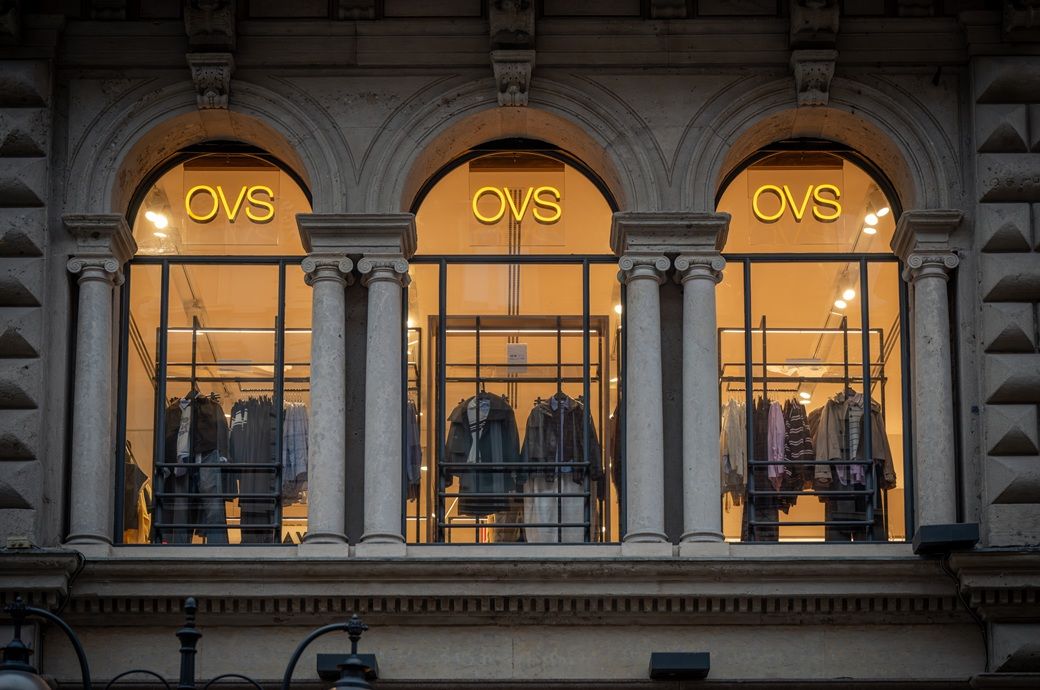
The company’s net sales rose 7 per cent year on year (YoY) to €1,745.9 million (~$2.06 billion) in FY25 ended January 31, 2026. Excluding Goldenpoint, sales growth stood at 2.9 per cent, significantly outperforming the reference market, which expanded by just 0.3 per cent during the period. Directly operated stores generated €1,431.3 million in revenue, up 8.2 per cent YoY, while franchising and B2B channels contributed €314.7 million.
OVS has posted record FY25 sales of €1,745.9 million (~$2.06 billion), up 7 per cent YoY, driven by like-for-like growth and Goldenpoint consolidation.
Adjusted gross margin rose 8.8 per cent, while net profit increased 14.8 per cent.
Key brands delivered solid EBITDA gains.
Womenswear and beauty led growth, with early FY26 performance remaining strong on robust collection demand.
The group delivered strong improvements across key financial metrics. Adjusted gross margin rose to €1,033 million, up 8.8 per cent YoY, with margin expanding to 59.2 per cent. Adjusted net profit was €89.4 million, an increase of 14.8 per cent YoY.
At the brand level, OVS reported EBITDA of €172.6 million, up €9.8 million YoY, while Upim recorded €44.0 million, compared with €40.1 million in 2024. Stefanel also delivered improved performance, with EBITDA rising by around €4 million. Goldenpoint contributed €3.9 million to EBITDA during its seven-month consolidation period, OVS said in a press release.
“2025 was a year of excellent results, with growth across all the main banners and brands. This performance confirms the validity of a positioning based on quality, stylistic research, and sustainability, which have elevated the perceived value of the brands, effectively intercepting a growing demand for quality products at affordable prices,” said Stefano Beraldo, CEO of OVS.
He added that the group continued to strengthen its brand portfolio, including the launch of Les Copains and extensions of the PIOMBO line, alongside the expansion of Altavia, B Angel, and Utopja. Womenswear and beauty remained standout categories, with the latter supported by Shaka stand-alone stores, now operating 10 locations.
“Another fundamental pillar remains the constant enhancement of the stores, in a context where offline is regaining centrality in customer preferences,” added Beraldo, highlighting investments in store design and customer experience.
Goldenpoint delivered sales growth of around 10 per cent during its initial consolidation phase, supported by product updates and store modernisation, along with purchasing synergies that improved margins.
“The internationalisation strategy of OVS is accelerating, supported by a solid financial position and the success of the womenswear offering. Expansion into the most promising markets is planned for 2026,” Beraldo said.
The 2026 financial year is showing significant growth compared to 2025 thanks to the very positive reception of the new collections, added the release.
Fibre2Fashion News Desk (SG)


Warner Bros shareholders approve Paramount’s $111bn takeover

Spoiler alert! "Survivor" castaway on elimination from game, role on the jury

‘Summer House’ is going to get cancelled? details revealed

-

 Fashion1 week ago
France’s LVMH Q1 revenue falls 6%, shows resilience amid Iran war
-

 Entertainment1 week ago
Is Claude down? Here’s why users are seeing errors
-

 Sports1 week ago
PSL 11: Peshawar Zalmi win toss, opt to field first against Quetta Gladiators
-

 Tech1 week ago
The Deepfake Nudes Crisis in Schools Is Much Worse Than You Thought
-

 Politics1 week ago
Iran in continuous message exchange with mediator Pakistan after US talks: Report
-
 Business1 week ago
Standard Life buys rival in £2b deal to create savings giant
-

 Tech1 week ago
CYBERUK ’26: UK lagging on legal protections for cyber pros | Computer Weekly
-

 Sports1 week ago
World Cup kit ranking: Which teams will look best in 2026?