

Politics
Pentagon told to restart nuclear tests ‘on equal basis’ with rivals

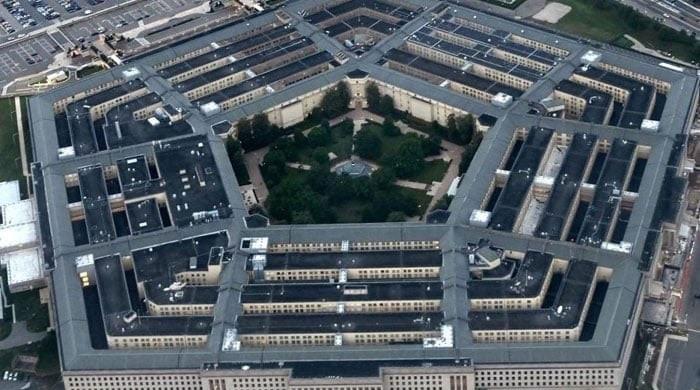
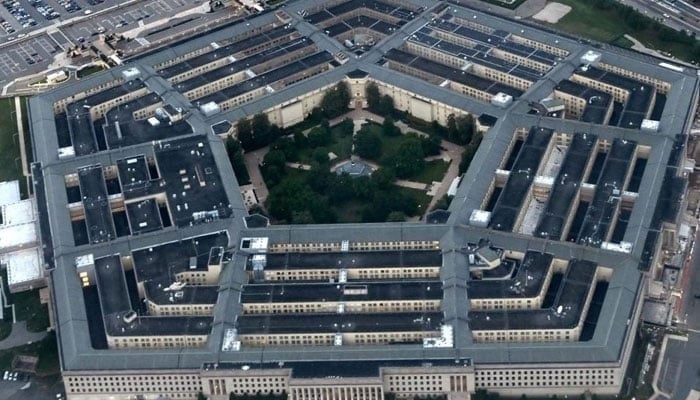
- Action taken ahead of Trump’s meeting with Xi in South Korea.
- US tests last conducted in 1992 to assess weapon reliability.
- New tests seen as signal of American strategic dominance.
US President Donald Trump, ahead of his meeting with Chinese President Xi Jinping on Thursday, said he has instructed the Department of Defence to immediately resume testing nuclear weapons on an “equal basis” with other nuclear powers.
“Because of other countries’ testing programmes, I have instructed the Department of War to start testing our Nuclear Weapons on an equal basis. That process will begin immediately,” Trump said on Truth Social, ahead of the meeting with Xi in South Korea.
“Russia is second, and China is a distant third, but will be even within 5 years,” Trump noted.
President Vladimir Putin said on Wednesday that Russia had successfully tested a Poseidon nuclear-powered super torpedo that military analysts say is capable of devastating coastal regions by triggering vast radioactive ocean swells.
As Trump has toughened both his rhetoric and his stance on Russia, Putin has publicly flexed his nuclear muscles with the test of a new Burevestnik cruise missile on October 21 and nuclear launch drills on October 22.
The United States last tested a nuclear weapon in 1992.
Tests provide evidence of what any new nuclear weapon will do – and whether older weapons still work.
Apart from providing technical data, such a test would be seen in Russia and China as a deliberate assertion of US strategic power.
The United States opened the nuclear era in July 1945 with the test of a 20-kiloton atomic bomb at Alamogordo, New Mexico, and then dropped atomic bombs on the Japanese cities of Hiroshima and Nagasaki in August 1945 to end World War Two.


Cyber criminals hacked into the Sri Lankan finance ministry’s computer system and siphoned off $2.5 million, the government said on Thursday, the most amount of cash ever stolen by hackers from a state institution in the debt-saddled country.
The cyberattack is a major blow to Sri Lanka, which is recovering from a crippling economic crisis in 2022 after Colombo defaulted on its $46 billion external debt.
The money was destined as debt repayment to Australia, finance ministry secretary Harshana Suriyapperuma told reporters in the capital.
Four senior officers at the Public Debt Management Office (PDMO) were suspended after the breach, he said.
Authorities were alerted to an attempt to break into the ministry’s e-mail server, and investigations showed that a $2.5 million payment owed to Australia had disappeared.
“Criminal investigators are looking into this and we are not in a position to give further details,” Suriyapperuma said, adding that Sri Lankan authorities were seeking help from foreign law enforcement agencies.
Sri Lanka established the PDMO earlier this year in line with an IMF-backed $2.9 billion bailout loan from early 2023, following the island’s economic meltdown.
Australia’s High Commissioner in Sri Lanka, Matthew Duckworth, said Canberra was aware of “irregularities” in payments owed to it.
“Sri Lankan authorities are investigating the matter and are coordinating with Australian officials, who are assisting the investigation,” Duckworth said on X.
“Australia remains committed to supporting Sri Lanka’s return to debt sustainability.”
The attack came as Sri Lanka’s central bank and finance ministry launched an advertising blitz in local newspapers earlier this year, warning Sri Lankans not to fall prey to cyber scams.
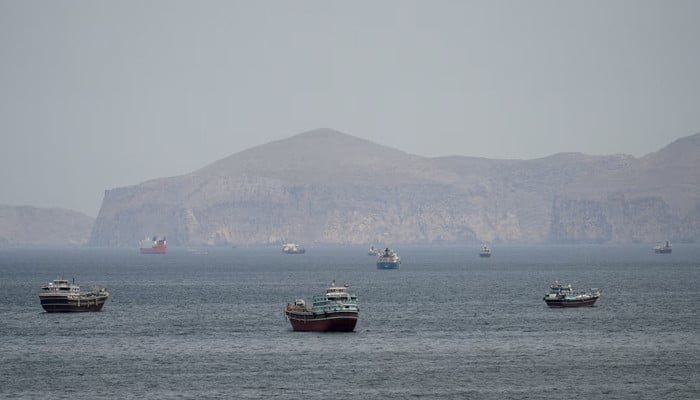

A Pentagon assessment said it could take six months to completely clear the Strait of Hormuz of Iranian-laid mines, which could keep oil prices high, the Washington Post reported on Wednesday.
Iran has all but blocked the vital waterway since the start of a war with the United States and Israel, sharply driving up oil and gas prices and disrupting the global economy.
The strait — through which one-fifth of the world’s oil and gas passes in peacetime — has remained largely closed during a shaky ceasefire, with the US imposing its own blockade.
Even if hostilities end and the blockade lifts, it could take months to clear the waterway of mines, according to a Pentagon assessment, the Washington Post reported citing officials close to the discussion.
The assessment added that it was unlikely such an operation would begin before the end of the war.
The six-month estimate was shared with members of the House Armed Services Committee during a classified briefing, the Post reported.
Lawmakers were told that Iran may have placed 20 or more mines in and around the strait, some floated remotely using GPS technology which makes them harder to detect, according to the report.
AFP has contacted the Department of Defense for comment.
Pentagon spokesman Sean Parnell told the Washington Post that its information was “inaccurate.”
Iran’s Revolutionary Guards have warned of a “danger zone” covering 1,400 square kilometres — 14 times the size of Paris — where mines may be present.
Iran’s parliament speaker said the Islamic republic would not reopen the strait as long as the US naval blockade remained.
A spokesman for German transportation giant Hapag-Lloyd cautioned last week that shippers needed details on viable routes as they remain fearful of mines.
When the Hormuz strait briefly reopened at the start of the ceasefire this month, only a few ships trickled through amid fears of attacks or mines.
Earlier in April, the US Navy said its ships transited the waterway to begin removing the mines, but that claim was denied by Iran’s Revolutionary Guard, which threatened any military vessels attempting to cross the channel.
London hosted talks with military planners from over 30 countries starting Wednesday on a UK and France-led multinational mission to protect navigation in the Strait of Hormuz once hostilities end.
The “defensive” coalition is set to discuss plans to reopen the strait and conduct mine clearance operations.
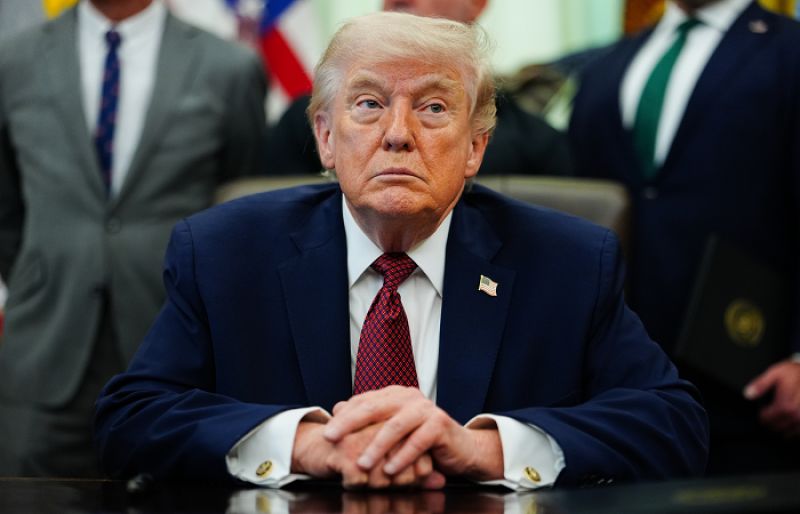
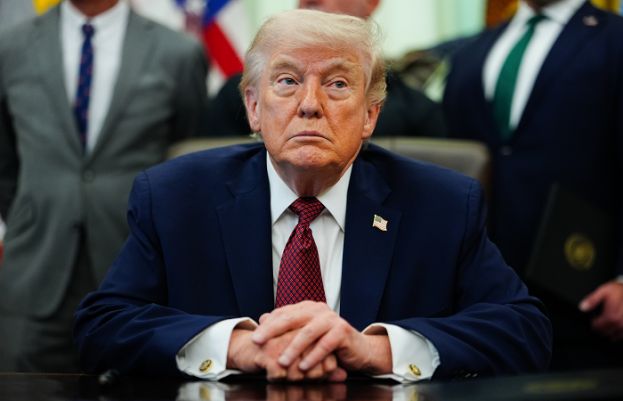
By extending a ceasefire indefinitely with Iran, President Donald Trump appears to be searching for a way out of a costly war, but Tehran may be unwilling to give him a win.
Trump has insisted on maintaining a naval blockade, which Iran is demanding must end before it can consider any agreement to end the conflict launched on February 28 by Israel and the United States.
For Trump, who boasts of his prowess to secure big deals quickly through his team of business buddies, negotiating with Iran’s Islamic republic presents an ultimate contrast — methodical, unyielding diplomats ready to fight for the long haul against what they see as a deceitful enemy.
Trump had raised hopes of progress at a second round of talks in Pakistan, with Vice President JD Vance designated to fly out, but Iran refused to confirm its attendance and Vance stayed home.
With a two-week ceasefire set to end, and Gulf Arab allies of the United States bracing for potential new Iranian strikes, Trump said he was extending the ceasefire because Iran’s leadership, decimated by the war, was “fractured” and needed time to come up with a proposal.
“He really could have doubled down and engaged in more reckless military action. But so far he has stopped digging himself into a deeper hole,” said Alex Vatanka, a senior fellow at the Middle East Institute who studies Iran.
For Trump, who campaigned on promises to shun military interventionism, the war has proven politically disastrous, facing opposition from even his Republican base.
Iran responded to being attacked by exerting control over the Strait of Hormuz, the gateway for one-fifth of the world’s oil, making American consumers pay more at the pump months before congressional elections.
– Seeking to exhaust all options –
Despite suffering losses, Iran’s clerical state is not on the verge of collapsing and will not surrender, said Danny Citrinowicz, a former Israeli intelligence expert on Iran now at Tel Aviv University’s Institute for National Security Studies and the Washington-based Atlantic Council.
Trump “does not want escalation. I am not saying there is not going to be one, but he is trying to really exhaust any political option,” he said.
“I think Trump is fed up with this war and more than that he understands, despite what he is saying, that the price is only going to intensify. It’s not going to decrease,” Citrinowicz said.
But Iranian leaders are deeply suspicious of Trump, whose negotiators were discussing a deal with them days before the United States and Israel attacked — a pattern also seen last June, with the two sides talking just before an Israeli bombing campaign then.
Both Trump and Iran’s ruling clerics are sensitive to any suggestion of backing down.
In declaring the naval blockade during the ceasefire, Trump had forced Iran to respond, undermining his own diplomacy “for the sake of optics and looking strong,” Vatanka said.
In one potential off-ramp, Vatanka said that the United States could maintain the blockade but not enforce it rigorously.
“The Iranians would know if it’s not being enforced because that is easy to measure,” Vatanka said.
Iran could call it a win but if they insist on a full opening, “that tells me they’re more interested in the optics than actually getting a deal. It would be a mistake on their part,” Vatanka said.
– How big a blockade? –
Trump has not indicated any let-up on the blockade so far. Senator Lindsey Graham, a Republican who long advocated for striking Iran, indicated the blockade could now serve as the key US means of pressure.
Graham wrote on X that he had concluded after speaking with Trump on Wednesday that “the blockade will be growing and that it could become global soon.”
Sina Toossi, a senior fellow at the progressive Center for International Policy, said Trump had a choice on the blockade — lifting it, which would reinforce to Iran how much leverage it had gained, or keeping it and risking ending the ceasefire.
“The prevailing view in Tehran is that time is on its side and that a prolonged conflict would impose mounting costs on the US and the global economy,” he said.


France’s Kering acquires ICCF’s minority stake to expand ICICLE

Hackers steal $2.5m from Sri Lanka finance ministry

This Is the Only Office Lamp That Does Double Duty on My Nightstand

-

 Fashion1 week ago
France’s LVMH Q1 revenue falls 6%, shows resilience amid Iran war
-

 Entertainment1 week ago
Is Claude down? Here’s why users are seeing errors
-

 Sports1 week ago
PSL 11: Peshawar Zalmi win toss, opt to field first against Quetta Gladiators
-

 Tech1 week ago
The Deepfake Nudes Crisis in Schools Is Much Worse Than You Thought
-
 Politics1 week ago
Iran in continuous message exchange with mediator Pakistan after US talks: Report
-
 Business1 week ago
Standard Life buys rival in £2b deal to create savings giant
-

 Tech1 week ago
CYBERUK ’26: UK lagging on legal protections for cyber pros | Computer Weekly
-

 Sports1 week ago
World Cup kit ranking: Which teams will look best in 2026?