

Tech
Amazon unveils latest move to keep customers from shopping elsewhere


At a Whole Foods store just outside of Philadelphia, Amazon built a small warehouse housing Goldfish crackers, Tide Pods and other items you wouldn’t find in an organic grocery store.
Amazon, which acquired Whole Foods in 2017, said the concept is a new experiment from the company to supplement the granola shopping experience of a Whole Foods with name-brand items found in other grocery stores.
But cases of Coca-Cola and boxes of Cheez-It crackers won’t share the shelves with their organic-branded counterparts.
Instead, the 10,000-square-foot warehouse Amazon constructed in Plymouth Meeting, Pennsylvania, within the Whole Foods’ back-of-house area acts as a micro fulfillment center. Shoppers will find QR codes throughout the store that take them to a custom digital storefront where they can order items not usually stocked in a Whole Foods, then pick them up in the store.
Jason Buechel, vice president of Amazon Worldwide Grocery Stores and CEO of Whole Foods, said in a news release that the move is to keep customers from shopping elsewhere after hitting up Whole Foods.
“At Whole Foods Market, we’ve always taken pride in offering a wide selection of natural and organic products, but we understand our customers appreciate the convenience of one-stop shopping,” he said.
Amazon has been trying to broaden its reach in the grocery industry and hack at the market share dominated by companies like Walmart. The company’s other ventures into physical stores include its Amazon Fresh grocery stores and Amazon Go convenience stores.
Amazon has also broken into the grocery delivery game, a business that CEO Andy Jassy recently said is growing fast.
Speaking during an earnings call with analysts last week, Jassy said over the past year, Amazon’s grocery business, not counting Whole Foods or Fresh, has brought in over $100 billion in gross sales, “which would make us a top three grocery in the U.S.”
Jassy also said Whole Foods is expanding over the next few years and recently launched a smaller version of the store for urban settings.
“We have three that we’ve launched that are off to very good starts that you should expect to see more of as well, Jassy said.
2025 The Seattle Times. Distributed by Tribune Content Agency, LLC.
Citation:
Amazon unveils latest move to keep customers from shopping elsewhere (2025, November 7)
retrieved 7 November 2025
from https://techxplore.com/news/2025-11-amazon-unveils-latest-customers.html
This document is subject to copyright. Apart from any fair dealing for the purpose of private study or research, no
part may be reproduced without the written permission. The content is provided for information purposes only.












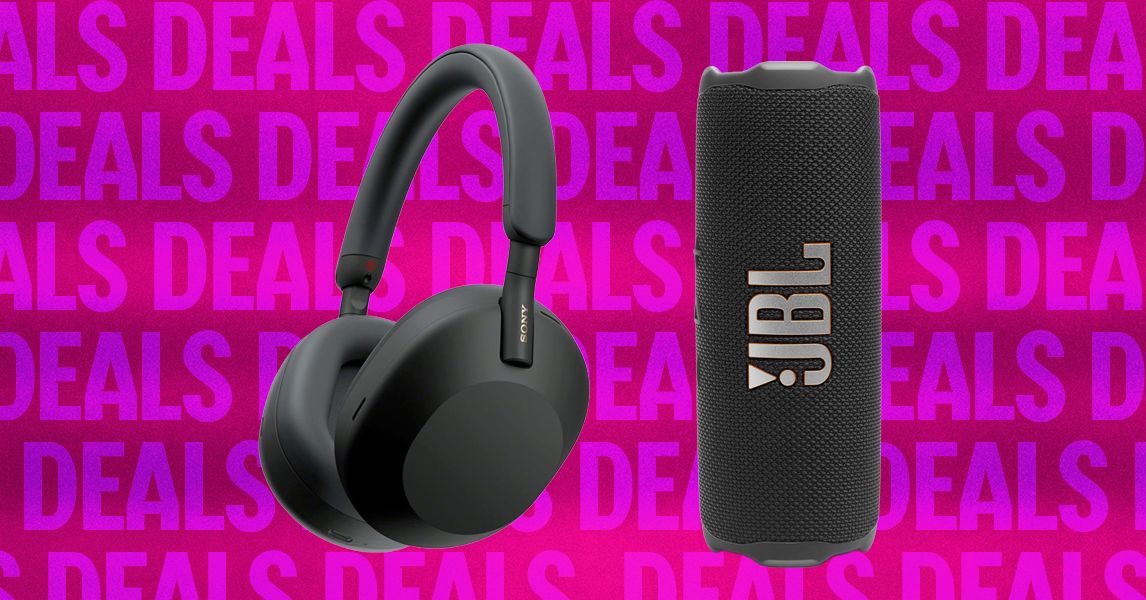
When you think of Memorial Day sales, you probably think of mattresses and other home goods. And while those items are definitely discounted, now is also a good time to purchase tech. Personally, I’m not buying anything right now unless it’s discounted—and fortunately many of our top picks are. Whether you’re shopping for a power bank, a new pair of headphones, or some other gadget, I’ve rounded up the best Memorial Day deals for your perusal. We’ll update this article again over the weekend.
Check out our buying guides for more recommendations, including the best headphones, the best laptops, and the best cheap phones.
Updated May 22: We’ve checked prices, removed expired deals, added ten new deals, and ensured accuracy throughout.
WIRED Featured Deals:
Sony WH-1000XM5 for $248 ($152 off)
The Sony WH-1000XM5 have a very frustrating name, but they’re the predecessor to our favorite wireless headphones, and they’re still an excellent pick if you don’t want to shell out for the new WH-1000XM6. They go on sale frequently, but rarely drop this low in price, which comes within $5 of their all-time low. If you’re in the market for over-ear headphones, they’re hard to beat. They’re comfortable, portable, lightweight, and stylish, and they’ll make your music sound great no matter what you like to listen to.

On Friday, the ultrafast-fashion giant Shein finalized its acquisition of Everlane, a US clothing retailer that made its name by promising “radical transparency” into how its clothes were made. Neither company disclosed the price of the deal, but Puck reported last weekend that it clocked in at $100 million.
Founded in 2010, Everlane became synonymous with a certain strain of millennial consumerism that was supposed to be the exact opposite of Shein. It mainly sold elevated basics, and told a generation of anxious and high-minded shoppers that they could feel morally good about buying yet another pair of plain ballet flats or black high-waisted skinny jeans. Shein, by contrast, became notorious by flooding the internet with astonishingly cheap, trendy clothing produced at enormous scale. It has been criticized for years for alleged poor labor practices.
Given how differently Shein and Everlane positioned themselves, many people online felt the acquisition fell somewhere between darkly ironic and outright dystopian. The fashion writer Derek Guy, better known online as the “menswear guy,” articulated the vibe in a post on X: “Under Shein,” he wrote, “Everlane’s ‘radical transparency’ means you get to read about the small child making your boring gray crewneck sweater.”
Really, though, the deal makes perfect sense. In the long run, it may end up looking like a preview of where Chinese consumer companies are heading next.
Chinese ecommerce giants conquered the global market largely by selling cheap stuff at eye-watering scale. Companies like Shein and Temu thrived in part because of the “de minimis” loophole, a US trade rule that allowed packages worth under $800 to enter the country tariff-free and with relatively little customs scrutiny. That system became the backbone of a new era of cross-border ecommerce, enabling Chinese companies to ship cheap stuff directly to American consumers faster and more efficiently than many traditional retailers could manage.
But after US president Donald Trump imposed sweeping new tariffs on Chinese imports and ended the de minimis exemption, the economics underpinning that model began to falter. Chinese companies quickly realized they could no longer rely solely on flooding Western markets with bargain-priced products. If they wanted to keep growing internationally, they needed something more durable: a good old-fashioned brand.
Shein buying Everlane, however culturally cursed it may appear, is part of a broader trend already unfolding across Chinese commerce and manufacturing. Increasingly, Chinese companies are trying to move beyond anonymous low-cost production and toward owning recognizable global brands associated with quality, lifestyle, and status.
One of the clearest examples comes from Temu’s parent company, Pinduoduo. In March, the company announced a major new initiative called New PinMu, a multibillion-dollar effort designed to help Chinese manufacturers build premium international brands. The project is part of a larger strategic vision outlined by Pinduoduo co-CEO Jiazhen Zhao, who has been hyping up the company’s ambitions to elevate manufacturing standards and create pathways for Chinese factories to move up the value chain.
Meanwhile, Luckin Coffee, a Chinese coffee chain that has become one of Starbucks’ biggest rivals, recently acquired Blue Bottle, the cultish specialty coffee brand that helped define American third-wave coffee culture. Anta Sports, a Chinese sportswear giant that began largely as a domestic sneaker company, has spent years buying into premium global sportswear brands, including controlling stakes in Arc’teryx and Salomon.
The trend also reflects broader political pressures inside China. The government has become increasingly critical of the brutal price wars and hypercompetition that dominate industries like ecommerce and electric cars, a phenomenon often referred to as “involution.” Beijing now wants companies to focus more on sustainable growth, higher-end manufacturing, and global competitiveness rather than an endless race to the bottom.
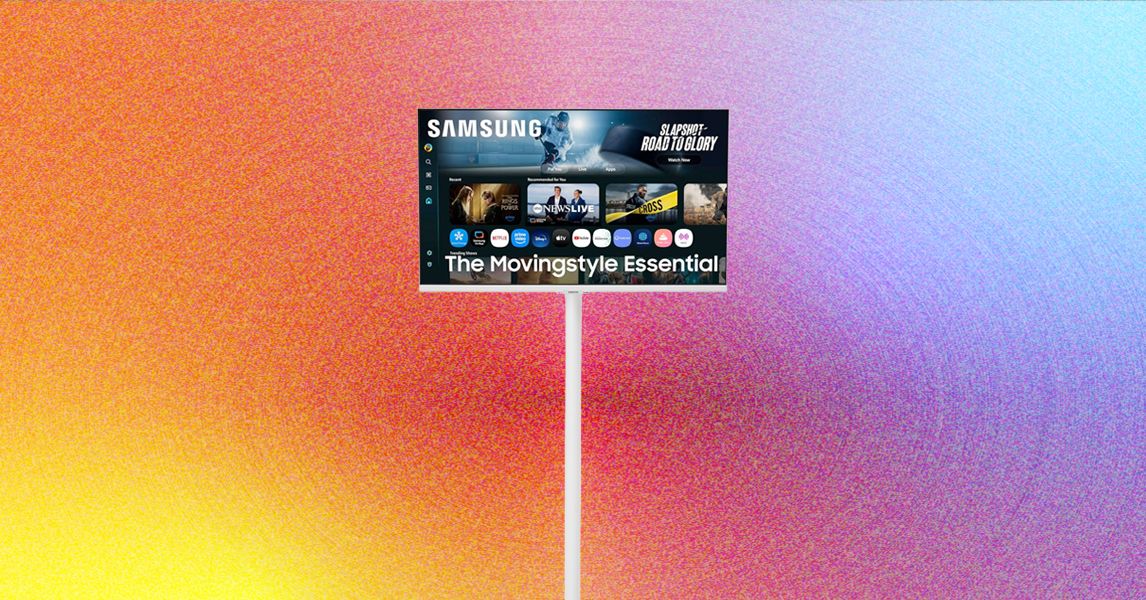
I’m torn on the price of the Movestyle, though. I love how affordable it is at $580, putting it within a more mainstream budget than I would have assumed. On the other hand, this is a very unique product, and I think higher-end specs might have been a better choice. This is a VA panel rather than IPS, and that means the color accuracy and saturation are OK, but not the best. Although it’s only rated for up to 250 nits of brightness, it topped out at 310 nits when measured against my colorimeter. But it’s not terribly bright, which could be a problem in a brightly-lit room. The display quality isn’t horrible, and this monitor isn’t made for professional video work.
And yet, in terms of the viewing experience, it doesn’t feel all that high-quality, either. For a similar price, you can get a more capable OLED monitor that’s brighter, faster, more colorful, and capable of HDR. But that doesn’t come with the adjustable, rolling stand. An even higher-end monitor would increase the price by at least a few hundred dollars. The lack of a touchscreen feels like a missed opportunity, too, especially since this could easily be used next to a desk or in a kitchen. There are just some cases where using your fingers is easier than using a remote.
Photograph: Luke Larsen
Interestingly, Samsung does sell a more premium Movingstyle monitor that’s even touchscreen-enabled and has a higher refresh rate of 120 Hz for gaming. But it’s a smaller 27-inch panel, comes with a lower-resolution 1440p display, and costs significantly more at $1,200. Whew. Another handy feature of the pricier model is a built-in battery. That means when the cord is unplugged, it doesn’t just immediately die. Speaking of the length of the cord, that does end up being one of the limitations of this design as a whole.
In a lot of ways, that more expensive model feels like what a Movingstyle monitor should be. For my purposes, the larger 32-inch 4K panel matches my needs better.
LG has its own version of this that moves in that direction, the LG Smart Monitor Swing. It comes with a 4K panel, measures 32 inches, and has a screen that can handle touch inputs. At $1,000, it’s priced in between the two Movingstyle monitors. For Samsung, perhaps the solution would be to sell the adjustable stand separately, which would give you the ability to pair it with whatever monitor you want.
Power up with unlimited access to WIRED. Get best-in-class reporting and exclusive subscriber content that’s too important to ignore. Subscribe Today.


Trump calls Kyle Busch a ‘LEGEND’ in Truth Social tribute after NASCAR champion’s death at 41

Jennifer Garner, Ben Affleck twin for L.A. reunion

Two top Walmart executives leave company under new CEO John Furner

-

 Entertainment6 days ago
Where Pete Davidson, Elsie Hewitt stand after breakup: Details revealed
-

 Entertainment1 week ago
Emilia Clarke recalls near-death incident while filming ‘Game of Thrones’
-
 Business1 week ago
Jersey Election 2026: Cost of living concern in St Helier Central
-

 Politics7 days ago
Rising diesel costs from Iran war strain US school budgets
-

 Politics1 week ago
UK’s Starmer faces survival battle as potential rivals circle
-

 Politics1 week ago
Trump says China will order 200 Boeing jets
-

 Tech1 week ago
Greg Brockman Officially Takes Control of OpenAI’s Products in Latest Shakeup
-

 Entertainment1 week ago
Drake drops highly anticipated "Iceman" album, plus two surprise albums