

Tech
Musk’s Grokipedia leans on ‘questionable’ sources, study says

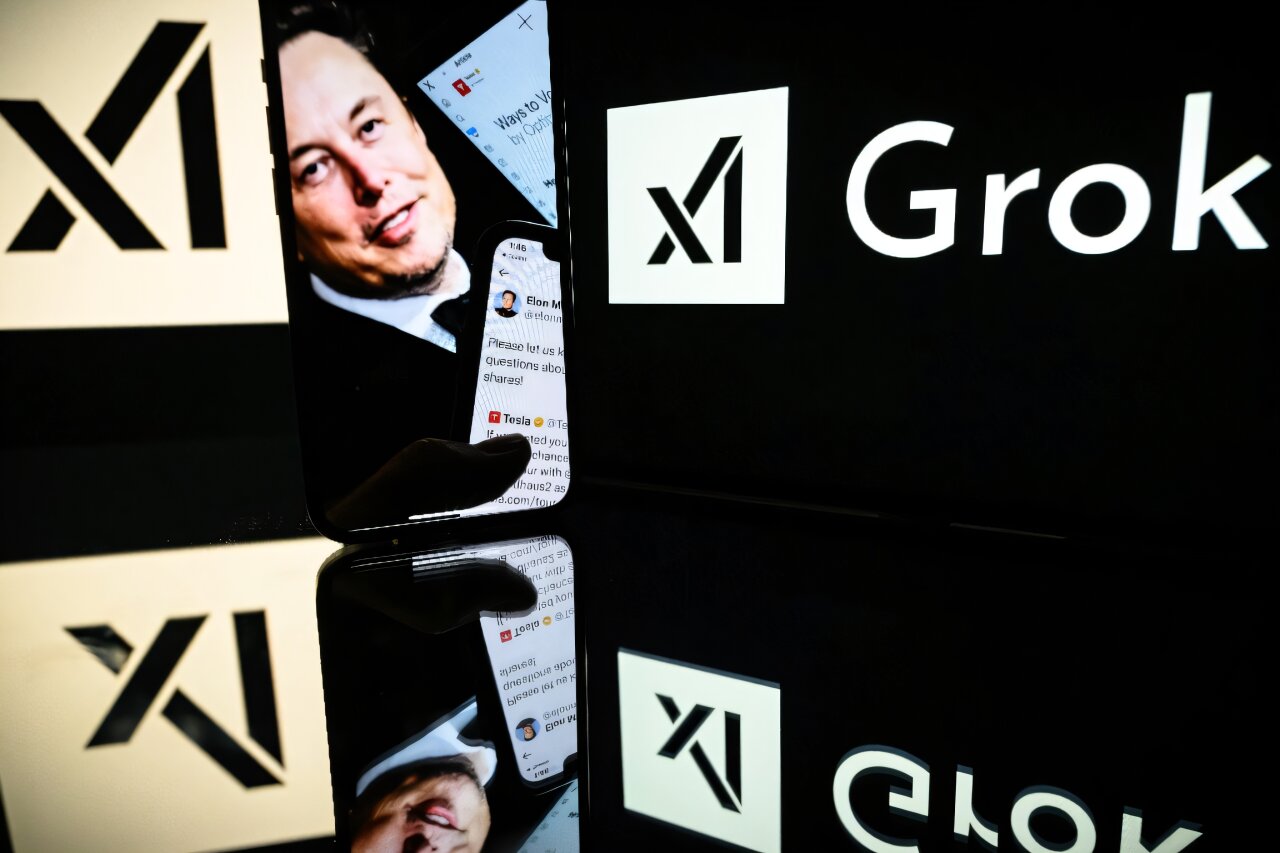
Elon Musk’s Grokipedia carries thousands of citations to “questionable” and “problematic” sources, US researchers said Friday, raising doubts about the reliability of the AI-powered encyclopedia as an information tool.
Musk’s company xAI launched Grokipedia last month to compete with Wikipedia—a crowdsourced information repository authored by humans that the billionaire and others on the American right have repeatedly accused of ideological bias.
“It is clear that sourcing guardrails have largely been lifted on Grokipedia,” Cornell Tech researchers Harold Triedman and Alexios Mantzarlis wrote in a report seen by AFP.
“This results in the inclusion of questionable sources, and an overall higher prevalence of potentially problematic sources.”
The study, which scraped hundreds of thousands of Grokipedia articles, said the trend was particularly notable in topics pertaining to elected officials and controversial political topics.
Grokipedia’s entry for “Clinton body count”—a widely debunked conspiracy theory that links the deaths of multiple people to former president Bill Clinton and his wife Hillary—cites InfoWars, a far-right website notorious for peddling misinformation.
Other Grokipedia articles cite American and Indian right-wing media outlets, Chinese and Iranian state media, anti-immigration, antisemitic or anti-Muslim sites, and portals accused of promoting pseudoscience and conspiracy theories, the report said.
“Grokipedia cites these sources without qualifying their reliability,” it said.
The study found that Grokipedia articles often “contain exactly identical copies of text” from Wikipedia, a site it has intended to outshine.
It said Grokipedia articles not attributed to Wikipedia are 3.2 times more likely than those on the rival platform to cite sources deemed “generally unreliable” by the English Wikipedia community.
They are also 13 times more likely to include a “blacklisted” source which is blocked by Wikipedia, it added.
‘Trustworthiness’
AFP’s request to xAI for comment generated this auto response: “Legacy Media Lies.”
Musk—the world’s richest person and owner of social media platform X who poured hundreds of millions of dollars into US President Donald Trump’s election campaign—has said that Grokipedia’s goal is “the truth, the whole truth and nothing but the truth.”
On Thursday, Musk said he plans to rebrand Grokipedia as “Encyclopedia Galactica” when it is “good enough (long way to go).”
“Join @xAI to help build the sci-fi version of the Library of Alexandria!” Musk wrote on X.
Musk and the US Republican Party have frequently accused Wikipedia of being biased against right-wing ideas. Last year, Musk urged his more than 200 million followers on X to stop donating to Wikipedia, dubbing the site “Wokepedia.”
In a recent interview with the BBC Science Focus podcast, Wikipedia founder Jimmy Wales rejected claims it has a left-wing bias as “factually incorrect,” while acknowledging there were areas for improvement among its volunteer community.
“Unlike Grokipedia, which relies on rapid AI-generated content with limited transparency and oversight, Wikipedia’s processes are open to public review and rigorously document the sources behind every article,” Selena Deckelmann, chief product and technology officer at the Wikimedia Foundation, told AFP.
“It is precisely this deliberate openness and community model that upholds the neutrality and trustworthiness essential for a global encyclopedia: no single individual, company, or agenda can exert influence over the work.”
© 2025 AFP
Citation:
Musk’s Grokipedia leans on ‘questionable’ sources, study says (2025, November 15)
retrieved 15 November 2025
from https://techxplore.com/news/2025-11-musk-grokipedia-sources.html
This document is subject to copyright. Apart from any fair dealing for the purpose of private study or research, no
part may be reproduced without the written permission. The content is provided for information purposes only.













I’m torn on the price of the Movestyle, though. I love how affordable it is at $580, putting it within a more mainstream budget than I would have assumed. On the other hand, this is a very unique product, and I think higher-end specs might have been a better choice. This is a VA panel rather than IPS, and that means the color accuracy and saturation are OK, but not the best. Although it’s only rated for up to 250 nits of brightness, it topped out at 310 nits when measured against my colorimeter. But it’s not terribly bright, which could be a problem in a brightly-lit room. The display quality isn’t horrible, and this monitor isn’t made for professional video work.
And yet, in terms of the viewing experience, it doesn’t feel all that high-quality, either. For a similar price, you can get a more capable OLED monitor that’s brighter, faster, more colorful, and capable of HDR. But that doesn’t come with the adjustable, rolling stand. An even higher-end monitor would increase the price by at least a few hundred dollars. The lack of a touchscreen feels like a missed opportunity, too, especially since this could easily be used next to a desk or in a kitchen. There are just some cases where using your fingers is easier than using a remote.
Photograph: Luke Larsen
Interestingly, Samsung does sell a more premium Movingstyle monitor that’s even touchscreen-enabled and has a higher refresh rate of 120 Hz for gaming. But it’s a smaller 27-inch panel, comes with a lower-resolution 1440p display, and costs significantly more at $1,200. Whew. Another handy feature of the pricier model is a built-in battery. That means when the cord is unplugged, it doesn’t just immediately die. Speaking of the length of the cord, that does end up being one of the limitations of this design as a whole.
In a lot of ways, that more expensive model feels like what a Movingstyle monitor should be. For my purposes, the larger 32-inch 4K panel matches my needs better.
LG has its own version of this that moves in that direction, the LG Smart Monitor Swing. It comes with a 4K panel, measures 32 inches, and has a screen that can handle touch inputs. At $1,000, it’s priced in between the two Movingstyle monitors. For Samsung, perhaps the solution would be to sell the adjustable stand separately, which would give you the ability to pair it with whatever monitor you want.
Power up with unlimited access to WIRED. Get best-in-class reporting and exclusive subscriber content that’s too important to ignore. Subscribe Today.

Numerous surveys show that businesses are failing to deliver a measurable return on their artificial intelligence (AI) investment. A big part of the problem, at least for Bernhard Schaffrik, principal analyst at Forrester, is that AI providers are failing to take into account the human impact of their technology.
“They completely ignored the human factor, and also the enterprise factor,” he told Computer Weekly during the CamundaCon 2026 conference in Amsterdam.
There is certainly a fear among employees that AI will take away their jobs. In its Building a pro-worker AI innovation strategy paper, published in 2025, the Trade Union Congress recommended that employers build a meaningful worker participation at every stage of the deployment of new AI technology to drive effectiveness of technology – from strategy development to problem definition, through to tender, application design and deployment.
While change management has always existed, Schaffrik points out that a big difference with AI – and specifically with generative AI – is that, because it’s so accessible, it usually starts as a boardroom discussion. “CEOs immediately understand the potential, so they have been pushing it even harder into their organisations,” he said.
In his experience, CEOs assume that people down the line who are in charge of change management, such as the human resources team, or the people in the business who are driving these transformation programmes, will handle change management. However, he said: “Since there is a direct implication on jobs, with job roles changing and people being displaced, the fear and concerns among employees increases exponentially.”
According to Schaffrik, not only are employees afraid and confused, those people who are supposed to implement the AI are also being impacted.
Along with a lack of addressing work relations effectively, he said that AI providers usually do not really consider the rigidity of enterprise technology frameworks and business processes. “Businesses don’t want to break the payroll process,” he said as an example, which means business leaders need to balance risk. “This is why AI providers are surprised when a deployment of their technology doesn’t work as intended. It’s a mix of human psychology and company inertia, as well as regulations and legal stuff.”
None of these things are new, but Schaffrik believes CEOs and other business decision-makers need to assess what AI is being used for in their organisation.
“If I were a CEO, I’d aspire to automate as much repetitive work as possible and I would be happy to deploy any enterprise-grade technology that allows this, such as workflow engines, robotic process automation, document processing – whatever technologies are available – and that also includes AI agents,” he said.
At the same time, he said business leaders should also strive to automate less repeatable processes that human workers find particularly challenging, such as making mistakes when comparing multi-page documents.
As Schaffrik points out, this can sometimes occur when someone in the legal team is asked to compare three versions of a large contract. “People make mistakes, but if you put hallucinations to one side, then AI is much better at doing these things,” he said.
As for handling AI hallucinations, this is where Schaffrik sees a need for having the human-in-the-loop. But to be a good checker of AI outputs and command a good salary for doing this job, he said that employees need to excel at the work the AI is taking over. In other words, a legal expert needs to be extremely proficient at analysing different versions of multi-page contracts.

Even though it said the financial year saw increased demand for its next-generation products and networks, the UK’s leading telco, BT, has announced a fiscal year 2026 with noticeable falls in revenue and broadband customers, offset by a modest gain in profitability.
For the full financial year to 31 March 2026, BT reported revenues of £19.7bn, down by 3% compared with the previous financial year, with adjusted revenue of £19.6bn, slipping by 4%. These figures were driven by lower international revenue, including divestments, declines in handset trading and declines in adjusted UK service revenue.
Adjusted UK service revenue was £15.4bn, down by 1% compared with fiscal 2025, mainly driven by lower voice volumes, offset by Consumer Price Index-linked price increases and an improved broadband fibre-to-the-premises (FTTP) mix in its Openreach broadband provision division.
The lower revenue was offset by strong cost transformation and cost control, according to BT, leading to adjusted earnings before interest, taxes, depreciation, and amortisation (EBITDA) of £8.2bn, flat year-on-year, excluding divestments. Like-for-like adjusted EBITDA was up by 1%. Reported profit before tax was £1.4bn, up 8%, with the increase said to be primarily driven by lower specific items, lower depreciation and amortisation, offset by a higher finance expense.
During the course of the year, and as part of its long-standing transformation plan, BT realised £580m in gross annualised cost savings, at a cost to achieve of £336m, taking total savings over two years to £1.5bn at costs of £800m. It said that it also realised year-on-year reductions in energy usage in its networks of 6%, in total labour resource of 7% to 108,000 and in Openreach repair volumes of 18%. The company’s overall transformation plan target has been raised to £3.7bn from £3bn, and the programme has been extended by a year to 2030, at a cost to achieve of £1.4bn from £1bn.
Among the officially selected highlights of the year, BT said it had reached a record FTTP build of 4.8 million premises passed in the year, achieving the accelerated target set in 2025 and the fastest build in Europe.
At the end of the year, BT’s FTTP footprint stood at 23 million premises, which is more than two-thirds of all UK premises, 6.3 million of which were in rural locations. It was on track to reach its stated target of hitting 25 million premises by December 2026.
The results also showed record customer demand for Openreach FTTP, with 2.2 million net adds in the year, bringing total premises connected to 8.8 million and take-up among all major fibre providers to over 38%. Higher FTTP take-up, speed mix and price increases saw Openreach broadband grow its average revenue per user by 4% on an annual basis to £16.7.
However, FTTP growth contrasted with overall broadband performance. Openreach broadband line losses amounted to 203,000 in the fourth quarter, giving full-year losses of 825,000. This, noted BT, was slightly better than its near 850,000 guidance, supported by expanded and accelerated build. However, BT also expects customer losses of around 800,000 over the course of the next financial year.
In the realm of mobile, the company boasted that its EE subsidiary remains the UK’s best mobile network, and its 5G+ population coverage increased to 73% from 43% at the end of fiscal 2025. The EE 5G base reached 14.5 million by 31 March, up 10% year-on-year.
BT’s business division achieved what was described as “significant” new connectivity and security wins, including those with BAE Systems, NIE Networks and easyJet. It is also partnering with Nscale to deliver sovereign AI datacentres in the UK.
Summing up her company’s performance over the course of the year, BT chief executive Allison Kirkby called the financial year 2026 another year of strong delivery against the company’s strategy.
“We are building the UK’s digital backbone even faster and further, connecting the country like no one else and accelerating our transformation – and we know there is much more we can do, as we create a better BT for all of us,” she remarked.
“We have delivered on our financial guidance, and we are transforming ahead of plan, offsetting headwinds while successfully competing…We’re announcing an increased full-year dividend of 8.32 pence per share and an updated dividend policy, and we are reiterating our guidance of sustained growth, including cash flow inflection to c. £2bn in FY27 and to c. £3bn by the end of the decade.”


FTA with GCC to remove estimated $779 mn in duties a year: UK govt

Morrisons planning to close 100 stores in next few months

In meeting with ACM Sidhu, Turkish air chief hails PAF support in training pilots

-

 Fashion1 week ago
Italy’s Zegna Group’s Q1 growth boosted by strong organic performance
-

 Entertainment6 days ago
Where Pete Davidson, Elsie Hewitt stand after breakup: Details revealed
-

 Entertainment1 week ago
Emilia Clarke recalls near-death incident while filming ‘Game of Thrones’
-
 Business1 week ago
Jersey Election 2026: Cost of living concern in St Helier Central
-

 Politics6 days ago
Rising diesel costs from Iran war strain US school budgets
-

 Fashion1 week ago
Global cotton production, stocks to fall; consumption to rise: WASDE
-

 Tech7 days ago
Greg Brockman Officially Takes Control of OpenAI’s Products in Latest Shakeup
-

 Entertainment1 week ago
Drake drops highly anticipated "Iceman" album, plus two surprise albums