

Tech
The 23 Best Shows on Amazon Prime Right Now

While Netflix is busy pumping out more series than any one person could watch (probably), some of the best shows are on Amazon Prime Video. Trouble is, navigating the service’s labyrinthine menus can make finding the right series a pain. We’re here to help. Below are our favorite Amazon series—all included with your Prime subscription.
For more viewing picks, read WIRED’s guide to the best movies on Amazon Prime, the best movies on HBO’s Max, and the best movies on Netflix.
Bat-Fam
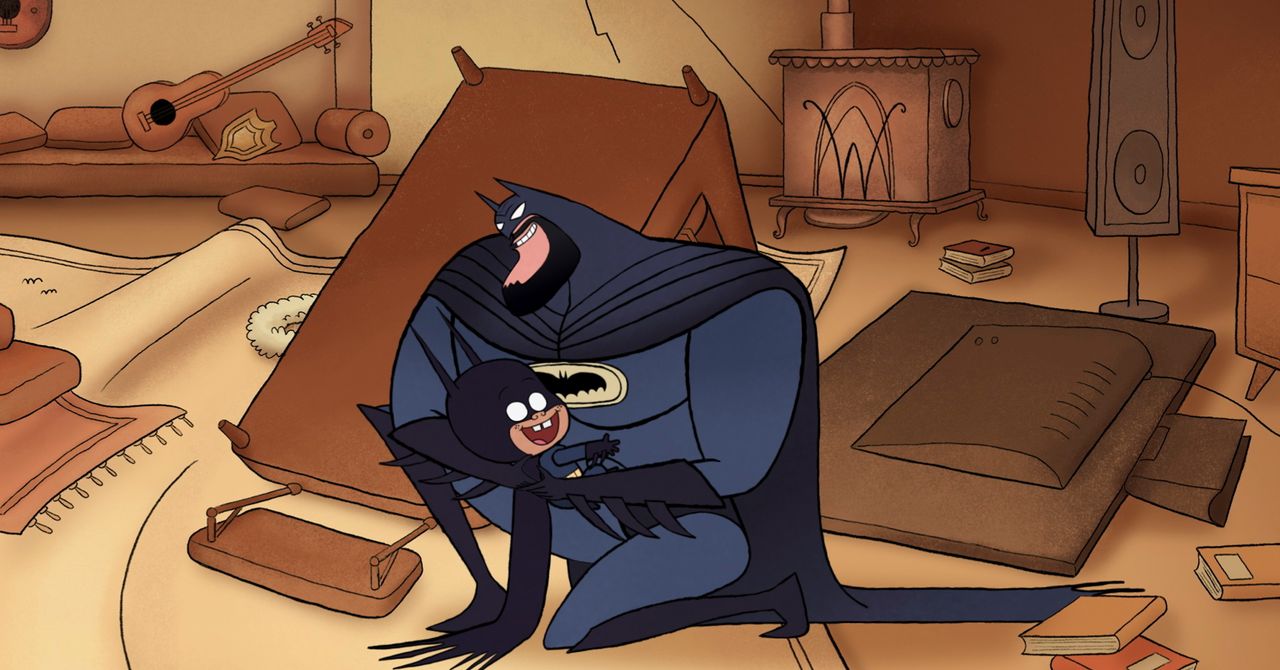
Batman: a grim defender of the night waging a one-man war on crime. Also Batman: a cool dad who keeps taking in strays. It’s a contrast comic book fans have come to love over the decades, and now it’s bleeding into wider media with Bat-Fam. Picking up after 2023’s holiday movie Merry Little Batman, Bruce Wayne (voiced by Luke Wilson) helps guide his son Damien (Yonas Kibreab) into the family business as “Little Batman,” while taking in adoptive daughter Claire—formerly the supervillain Volcana, de-aged to 12. Plus, with loyal butler Alfred, his niece Alicia, the meddling ghost of Damien’s grandfather Ra’s al Ghul, and former scientist Man-Bat all passing through, Wayne Manor is starting to get crowded! Charming, funny, and heartfelt, this animated comedy juggles all the best bits of bat-lore for a brighter look at the Dark Knight.
The Girlfriend
When working-class Cherry Laine (Olivia Cooke) meets wealthy Danny Sanderson (Laurie Davidson), sparks fly—until she meets his mother, Laura (Robin Wright). Overbearing and with an unhealthy level of control over her son’s life, Laura is set on destroying anyone who comes between them. Or maybe … Laura is a caring mother, alert to Cherry’s suspicious behavior, and desperate to save her son from a con artist—or worse. In this twisty psychological thriller, based on a novel by Michelle Frances, you can never quite tell who to trust, which is almost the best part, second only to the sensational chemistry between Wright and Cooke as they alternately try to charm, outwit, or destroy each other. Exploring themes of class, power, and control, The Girlfriend is six episodes of brilliantly tense drama.
Butterfly
Years ago, David Jung (Daniel Dae Kim) and Juno Lund (Piper Perabo) formed the private intelligence organization Caddis, reshaping global security from the shadows. Then, Lund ripped the operation out from under Jung—and took his daughter Rebecca (Reina Hardesty) with it, raising her to become an unstoppable assassin. Reunited in the aftermath of a hit on a Russian ambassador in Seoul, David and Rebecca find themselves on the run across South Korea, unsure if they can even trust each other, and with Caddis hot on their heels. A blend of next-level action choreography and family drama exploring themes of abandonment, Butterfly is an explosive twist on bring-your-kid-to-work day.
Ballard
A spin-off from Bosch, one of Prime’s biggest hits, Ballard is another creation of crime author Michael Connelly, seeing detective Renée Ballard (Maggie Q, Designated Survivor) stepping up as head of a newly formed cold-case unit. Left with no budget and no official support, Ballard hastily assembles a team of volunteers that includes her retired former partner Thomas Laffont (John Carroll Lynch) and disillusioned former cop Zamira Parker (Courtney Taylor). They soon find that diving into forgotten cases can mean unearthing secrets powerful people want to keep buried. A blend of crime-of-the-week cases and season-long mysteries make Ballard both a cozy procedural and a riveting longer-form drama, buoyed by a fantastic cast—including Titus Welliver reprising his role as Connellyverse staple Harry Bosch.
The Second Best Hospital in the Galaxy
If about 300 seasons of Grey’s Anatomy hasn’t scratched your medical drama itch, then a visit to The Second Best Hospital in the Galaxy might be just the treatment you need. Riffing on the hospital procedural genre and giving it a sci-fi twist, the show follows alien medics Dr. Sleech (Stephanie Hsu) and Dr. Klak (Keke Palmer) as they tackle the wildest diseases and injuries the universe can throw at them—from an anxiety-eating brain worm to a shape-shifting STI—all while navigating messy relationships and personal drama. See, just like Grey’s. Created by Russian Doll writer Cirocco Dunlap—bringing that show’s Natasha Lyonne along as the voice of occasionally invisible Nurse Tup—this Saharan-dry adult animated comedy will cure what ails you.
Overcompensating
Benny is so deep in the closet, he’s found Narnia. And rather than using his freshman year of college as a chance to find himself, he’s maintaining the illusion of heterosexuality by throwing himself into a campus life of partying, drinking, and chasing girls. The consequences, for Benny and his new best friend Carmen (Wally Beram), will be severe … but hilarious. Created by comedian Benito Skinner, who also stars as Benny, Overcompensating is a foul-mouthed and ferociously funny college comedy that’s almost painfully authentic in its depiction of the fine line between self-exploration and weapons-grade cringe.
Mobile Suit Gundam GQuuuuuuX
Prime Video doesn’t tend to pick up as much anime as rival Netflix does, but when it does, it’s often something big. Mobile Suit Gundam GQuuuuuuX (it’s pronounced “gee-kwux,” before you ask), takes things back to the very beginning of the iconic mecha franchise and asks a simple question: What if the bad guys, the “space Nazis” of the Principality of Zeon, won a crucial war? Don’t worry if you can’t tell a beam saber from a core fighter though—this alternate reality focuses on brand new character Amate Yuzuriha, a high school student thrust into a world of mounting military tensions after an experimental Gundam crashes into the space colony where she lives. GQuuuuuux also marks a creative high for Gundam, with Evangelion studio Khara bringing its dynamic style of animation to the series, but beyond the phenomenally flashy visuals, this has some real emotional depth, using a science fiction lens to explore how people can find hope and fight for freedom, even in the darkest of timelines. Weekly episodes drop on Tuesdays.
Reacher
Amazon has a way with action thrillers focused on military tough guys who answer to “Jack R.” First there was Jack Ryan, who also makes an appearance in this guide. Then there was Reacher, the sharp adaptation of Lee Child’s Jack Reacher novels, now in its third season. Alan Ritchson (Titans, Fast X) stars as the physically imposing Reacher, a former military policeman now drifting from town to town, trying to live a quiet life but unable to avoid conflict. Season one found him accused of a murder he didn’t commit, before season two drew him into a vast conspiracy. The newly arrived third—based on the seventh novel, Persuader—sees him up against his biggest threat yet: Paulie, an even bigger hulk of muscle (played by 7′2″ Olivier Richters). Sure, Reacher is also working undercover for the DEA and tracking down an old enemy, but three seasons in, the show is confident enough to play to its pulpy strengths, with top-tier fight choreography and surprisingly sharp dialog helping it punch above its weight.
Invincible
Mark Grayson inherited the incredible powers and abilities of his father, Omni-Man—only to learn dear old dad wasn’t a paragon of justice but the vanguard for an alien invasion. The newly dropped third season of Invincible finds Mark not only still struggling to escape his father’s shadow, guiding his younger brother to use his own burgeoning powers responsibly, but also drowning in a world of murky politics, pushed toward darker, tougher choices to keep Earth safe. A brilliantly animated adaptation of the hit Image comic book by writer Robert Kirkman and artists Cory Walker and Ryan Ottley, Invincible’s more mature take on superheroes allows it to do something Marvel and DC characters rarely do: grow up.
The Man in the High Castle
This adaptation of sci-fi master Philip K. Dick’s novel about a world in which the Nazis won the Second World War was one of Amazon’s first forays into original content. The world-building is stunningly done—a divided, alternate-reality 1960s America never seemed so plausible—but be warned: There might be just a touch too much present-day resonance for some viewers.
The Rig
Back for its second season, sci-fi thriller The Rig finds the surviving crew of isolated North Sea oil rig Kinloch Bravo forcibly relocated to The Stac, an even more remote facility in the Arctic. While most are desperate for answers and a way home, the team’s loyalties are tested as the sinister Pictor corporation seeks to use them to unearth something ancient and powerful from the sea floor. While The Rig doesn’t even aspire to subtlety when it comes to its ecological metaphors (one character even says, “If you keep punching holes in the Earth, eventually the Earth’s going to punch back”), it’s all brilliantly shot to make use of both the claustrophobic settings and the terrifying expanses and underwater pressures of the ocean. With the material elevated by a phenomenal cast of Game of Thrones and Line of Duty veterans, including Iain Glen and Rochenda Sandall—and bolstered further by the addition of the always-watchable Alice Krige in season 2—The Rig is far more than the guilty pleasure it might otherwise be.
Cross
Aldis Hodge steps into the shoes of Washington, DC homicide detective Alex Cross in Prime’s new series based on James Patterson’s long-running series of crime novels. However, unlike the streamer’s other thrillers Bosch and Reacher, Cross doesn’t directly adapt any of Patterson’s books—a risky move, but one that largely pays off, allowing this eight-episode first season to chart an unpredictable journey as Cross faces off against a twisted murderer who models each of his kills on another serial killer. Already renewed for a second season, Cross is a strong addition to Prime’s roster of crime dramas.
The Legend of Vox Machina
Bawdy, gory, and absolutely not for kids, The Legend of Vox Machina follows the eponymous adventurers’ guild—consisting of gunslingers, druids, and the requisite horny bard—as they grow from a motley crew of usually-drunk mercenaries into unexpected heroes for the realm of Exandria. The newly arrived third season continues the team’s battle against the Chroma Conclave, a horrifyingly powerful collective of dragons. It’s a quest that sends them on a small diversion to Hell itself. Adapting the hit Critical Role—the livestreamed Dungeons & Dragons sessions of some of the biggest voice actors in animation and gaming—this exquisitely animated fantasy takes things in unexpected directions that keep things fresh for new or returning viewers alike. A love letter to D&D that’s also unafraid to poke fun at the classic RPG, it’s one of the most original adult animated shows on Prime.
The Lord of the Rings: The Rings of Power
Tapping into The Lord of the Rings creator J. R. R. Tolkien’s sprawling history of Middle-earth, The Rings of Power is set millennia before the events of the core books (or films, which is really where the visual language of this adaptation comes from), detailing the major events of Tolkien’s Second Age. While the first season was a slow burn, dwelling on the fractious politics of the era, the second ratchets up the pace considerably. From Galadriel (Morfydd Clark) trying to prevent the ascension of Dark Lord Sauron (Charlie Vickers) to the long-awaited introduction of fan-favorite character Tom Bombadil (Rory Kinnear), the new season feels far richer and deeper than before. It remains a feast for the eyes too, with the stratospheric budget apparent in every frame, from quiet moments in luxuriant shires to cinematic battles between armies of Orcs and Elves. For sheer high fantasy spectacle, there’s little else to rival this streaming right now.
Batman: Caped Crusader
The first new solo Batman animated series in a decade, Caped Crusader harkens back to Batman: The Animated Series from the 1990s, with showrunner Bruce Timm returning to the Dark Knight and Hamish Linklater voicing Bruce Wayne/Batman in an ode to the late, great Kevin Conroy. Unlike rival ‘90s revival X-Men ’97, though, this isn’t a continuation but rather a wholly distinct take allowing for fresh interpretations of the iconic hero’s rogues’ gallery and allies—look out for drastically different takes on the Penguin and Harley Quinn in particular. Leaning heavily into a 1930s aesthetic that evokes Batman’s earliest comic book origins, this manages to be nostalgic and provocative at once—a fantastic outing that takes DC’s original urban vigilante back to his gritty pulp noir roots.
The Boys
Superheroes are meant to represent hope and optimism—the best of us, given outsize form. In The Boys, adapted from the darkly satirical comic by Garth Ennis and Darick Robertson, they’re a reflection of humanity’s worst—greed and unrestrained power, marketed to a gullible public by vested corporate interests, operating without restraint and leaving a trail of bodies in their wake. Enter Billy Butcher (Karl Urban) and his associates The Boys, gleefully dispatching “Supes” who’ve gone too far, often in extraordinarily violent ways. Unfortunately, the newly dropped fourth season finds the team in disarray, fractured by Butcher’s own lies, right as the world needs them most. Arch-manipulator Victoria Neuman (Claudia Doumit) is close to the Oval Office, while the sadistic, psychotic Homelander (Antony Starr) is planning a superhuman uprising. Probably Amazon’s goriest show, The Boys stands as a pertinent examination of the abuses of power, all wrapped in superhero drag.
Fallout
Maybe the end of the world is the secret sauce to making a great video game adaptation—between The Last of Us and now this spectacular interpretation of Bethesda’s postapocalyptic RPG series, we’re living in an unexpected golden era for the form. Yet unlike HBO’s bleak but beautiful world, Fallout taps into the source material to craft an apocalypse with a very different feel, one dripping in cracked Americana, black comedy, razor-sharp social satire, and just a little bit of camp. Its greatest strength, though, lies in how it doesn’t directly adapt any one of the core Fallout games. Instead, it perfectly channels their tone and feel, focusing on a core trio—naive Lucy (Ella Purnell), born and raised in a subterranean vault; driven Maximus (Aaron Moten), a recruit in an army seeking technology from the old world; and the Ghoul (Walton Goggins), a centuries-old bounty hunter mutated into a nigh-immortal zombie when the bombs fell—to showcase just how brilliantly twisted this nuclear wasteland really is.
Three-Body
No, you’re not on the Netflix list—Prime Video has its own distinct adaptation of Cixin Liu’s The Three-Body Problem. This take, originally released for Chinese audiences back in 2023, faithfully adapts Liu’s award-winning novel of humanity’s first contact with an almost unknowable alien species and the impact that their impending arrival on Earth has on humanity. Hopping between time periods, a galactic mystery unfurls after nanotech specialist Wang Miao (Luyi Zhang) is called in by detective Shi Qiang (Hewei Yu) to investigate a global spate of suicides among scientists, with the ominous phrase “Physics doesn’t exist” being the only link between the deaths. Although Three-Body is a bit softer than Netflix’s 3 Body Problem when dealing with some aspects of the story—notably anything related to China’s Cultural Revolution—a hearty 30-episode run allows for far more space to explore Liu’s complex themes and vast roster of characters. The pacing may take some getting used to for viewers more accustomed to western TV, and it’s subtitled-only, but this C-drama is out of this world.
Mr. and Mrs. Smith
You likely know the concept from the name alone—a married couple operate as undercover agents, blurring the lines between their personal and professional relationship. Unlike the 2005 Brad Pitt/Angelina Jolie movie, though, 2024’s Mr. and Mrs. Smith does far more with the concept. Donald Glover (who cocreated this reboot) and Maya Erskine offer much more developed takes on the mysterious characters of “John” and “Jane” Smith over the course of this eight-episode series, exploring their true identities, why they signed up for their dangerous careers, and whether their growing feelings for each other are just part of the roles they’re playing. It’s all backed up with plenty of Mission: Impossible–style action, of course, but it’s the sparkling chemistry between the show’s leads that will leave you thinking, “Brangelina who?”
Jack Ryan
There’s no shortage of screen adaptations of Tom Clancy’s Jack Ryan books, but John Krasinski’s turn as the CIA desk jockey turned field agent gets far more room to breathe than its predecessors. The prestige political thriller charts Ryan’s rise from analyst to operative—and beyond—over four perfectly crafted seasons. The final season caps Ryan’s career with his biggest challenge yet, investigating the convergence of a drug cartel and a terrorist organization set to create an unstoppable criminal enterprise, all while juggling the CIA’s possible involvement in a political assassination in Nigeria. While the show hasn’t been without controversies—season two attracted condemnation from Venezuela’s government for supposedly condoning a US invasion of the country; big yikes there—its sharp writing, incredible performances, and cinematic action make it compelling viewing.
I’m a Virgo
A surrealist comedy with the sharp political and social edge viewers have come to expect from creator and director Boots Riley (Sorry to Bother You), I’m a Virgo follows Cootie (Jharrel Jerome), a regular 19-year-old who just happens to be 13 feet tall. Raised in secrecy by Aunt Lafrancine (Carmen Ejogo) and Uncle Martisse (Mike Epps), Cootie is thrust into the limelight when his larger-than-life existence is inevitably discovered. Experiencing friendships and the outside world for the first time, gentle giant Cootie has to navigate everything from romance to the public’s reaction to a giant Black man wandering around Oakland. Oh, and did we mention Cootie’s idol, The Hero, a real-life superhero with an authoritarian streak that would put some of the worst offenders on The Boys to shame? Told you this was surreal. Do yourself a favor and watch the behind-the-scenes episodes too, tucked under Prime Video’s “Explore” tab, for Riley’s insight into each episode.
The Underground Railroad
Based on the Pulitzer Prize–winning novel by Colson Whitehead, this limited series from Moonlight director Barry Jenkins sticks pretty closely to the premise of the book. It’s a work of historical fiction that takes the idea of the Underground Railroad—the network of smugglers who helped escaped slaves flee the South—and reimagines it as an actual subway system with trains and secretive station agents.
The Marvelous Mrs. Maisel
What is a New York lady to do when she finds out her husband is having an affair with his dim-witted secretary? If Mrs. Maisel is anything to go by, the answer is to head to a dingy watering hole in your nightgown, do a little standup comedy, and get hauled away by the police after flashing the entire audience. Set in the 1950s, this fast-talking fashionista hides her new life as a comedian from her family and ex while battling sexism, bad crowds, and big competition. Rachel Brosnahan stars as Midge Maisel in this subtle nod to Joan Rivers’ career. With four seasons and a host of awards and nominations to its name, The Marvelous Mrs. Maisel is one of Amazon’s sharpest comedies.













Even though it said the financial year saw increased demand for its next-generation products and networks, the UK’s leading telco, BT, has announced a fiscal year 2026 with noticeable falls in revenue and broadband customers, offset by a modest gain in profitability.
For the full financial year to 31 March 2026, BT reported revenues of £19.7bn, down by 3% compared with the previous financial year, with adjusted revenue of £19.6bn, slipping by 4%. These figures were driven by lower international revenue, including divestments, declines in handset trading and declines in adjusted UK service revenue.
Adjusted UK service revenue was £15.4bn, down by 1% compared with fiscal 2025, mainly driven by lower voice volumes, offset by Consumer Price Index-linked price increases and an improved broadband fibre-to-the-premises (FTTP) mix in its Openreach broadband provision division.
The lower revenue was offset by strong cost transformation and cost control, according to BT, leading to adjusted earnings before interest, taxes, depreciation, and amortisation (EBITDA) of £8.2bn, flat year-on-year, excluding divestments. Like-for-like adjusted EBITDA was up by 1%. Reported profit before tax was £1.4bn, up 8%, with the increase said to be primarily driven by lower specific items, lower depreciation and amortisation, offset by a higher finance expense.
During the course of the year, and as part of its long-standing transformation plan, BT realised £580m in gross annualised cost savings, at a cost to achieve of £336m, taking total savings over two years to £1.5bn at costs of £800m. It said that it also realised year-on-year reductions in energy usage in its networks of 6%, in total labour resource of 7% to 108,000 and in Openreach repair volumes of 18%. The company’s overall transformation plan target has been raised to £3.7bn from £3bn, and the programme has been extended by a year to 2030, at a cost to achieve of £1.4bn from £1bn.
Among the officially selected highlights of the year, BT said it had reached a record FTTP build of 4.8 million premises passed in the year, achieving the accelerated target set in 2025 and the fastest build in Europe.
At the end of the year, BT’s FTTP footprint stood at 23 million premises, which is more than two-thirds of all UK premises, 6.3 million of which were in rural locations. It was on track to reach its stated target of hitting 25 million premises by December 2026.
The results also showed record customer demand for Openreach FTTP, with 2.2 million net adds in the year, bringing total premises connected to 8.8 million and take-up among all major fibre providers to over 38%. Higher FTTP take-up, speed mix and price increases saw Openreach broadband grow its average revenue per user by 4% on an annual basis to £16.7.
However, FTTP growth contrasted with overall broadband performance. Openreach broadband line losses amounted to 203,000 in the fourth quarter, giving full-year losses of 825,000. This, noted BT, was slightly better than its near 850,000 guidance, supported by expanded and accelerated build. However, BT also expects customer losses of around 800,000 over the course of the next financial year.
In the realm of mobile, the company boasted that its EE subsidiary remains the UK’s best mobile network, and its 5G+ population coverage increased to 73% from 43% at the end of fiscal 2025. The EE 5G base reached 14.5 million by 31 March, up 10% year-on-year.
BT’s business division achieved what was described as “significant” new connectivity and security wins, including those with BAE Systems, NIE Networks and easyJet. It is also partnering with Nscale to deliver sovereign AI datacentres in the UK.
Summing up her company’s performance over the course of the year, BT chief executive Allison Kirkby called the financial year 2026 another year of strong delivery against the company’s strategy.
“We are building the UK’s digital backbone even faster and further, connecting the country like no one else and accelerating our transformation – and we know there is much more we can do, as we create a better BT for all of us,” she remarked.
“We have delivered on our financial guidance, and we are transforming ahead of plan, offsetting headwinds while successfully competing…We’re announcing an increased full-year dividend of 8.32 pence per share and an updated dividend policy, and we are reiterating our guidance of sustained growth, including cash flow inflection to c. £2bn in FY27 and to c. £3bn by the end of the decade.”

Three months ago, OpenAI cofounder Greg Brockman told me his concerns about a mounting public relations crisis facing artificial intelligence companies: Despite the popularity of tools like ChatGPT, an increasingly large share of the population said they viewed AI negatively. Since then, the backlash has only intensified.
College commencement speakers are now getting booed for talking about AI in optimistic terms. Last month, someone threw a Molotov cocktail at OpenAI CEO Sam Altman’s San Francisco home and wrote a manifesto advocating for crimes against AI executives. No one has more to lose from this reputation crisis than OpenAI.
The person tasked with trying to fix it is Chris Lehane, OpenAI’s chief of global affairs and a veteran political operative. I sat down with him this week to discuss what I’d argue are his two biggest challenges yet: convincing the world to embrace OpenAI’s technology, while at the same time persuading lawmakers to adopt regulations that won’t hamper the company’s growth. Lehane views these goals as one in the same.
“When I was in the White House, we always used to talk about how good policy equals good politics,” says Lehane. “You have to think about both of these things moving in concert.”
After working on crisis communications in Bill Clinton’s White House, Lehane gave himself the nickname “master of disaster.” He later helped Airbnb fend off regulators in cities that viewed short-term home rentals as existing in a legal gray area, or as he puts it, “ahead of the law.” Lehane also played an instrumental role in the formation of Fairshake, a powerful crypto industry super PAC that worked to legitimize digital currencies in Washington. Since joining OpenAI in 2024, he’s quickly become one of the company’s most influential executives and now oversees its communications and policy teams.
Lehane tells me public narratives about how AI will change society are often “artificially binary.” On one side is the “Bob Ross view of the world” that predicts a future where nobody has to work anymore and everyone lives in “beachside homes painting in watercolors all day.” On the other is a dystopian future in which AI has become so powerful that only a small group of elites have the ability to control it. Neither scenario, in Lehane’s opinion, is very realistic.
OpenAI is guilty of promoting this kind of polarizing speech in the past. CEO Sam Altman warned last year that “whole classes of jobs” will go away when the singularity arrives. More recently he has softened his tone, declaring that “jobs doomerism is likely long-term wrong.”
Lehane wants OpenAI to start conveying a more “calibrated” message about the promises of AI that avoids either of these extremes. He says the company needs to put forward real solutions to the problems people are worried about, such as potential widespread job loss and the negative impacts of chatbots on children. As an example of this work, Lehane pointed to a list of policy proposals that OpenAI recently published, which include creating a four-day work week, expanding access to health care, and passing a tax on AI-powered labor.
“If you’re going to go out and say that there are challenges here, you also then have an obligation—particularly if you’re building this stuff—to actually come up with the ideas to solve those things,” Lehane says.
Some former OpenAI employees, however, have accused the company of downplaying the potential downsides of AI adoption. WIRED previously reported that members of OpenAI’s economic research unit quit after they became concerned that it was morphing into an advocacy arm for the company. The former employees argued that their warnings about AI’s economic impacts may have been inconvenient for OpenAI, but they honestly reflected what the company’s research found.
Packing Punches
With public skepticism toward AI growing, politicians are under pressure to prove to voters they can rein in tech companies. To combat this, the AI industry has stood up a new group of super PACs that are boosting pro-AI political candidates and trying to influence public opinion about the technology. Critics say the move backfired, and some candidates have started campaigning on the fact that AI super PACS are opposing them.
Lehane helped set up one of the biggest pro-AI super PACs, Leading the Future, which launched last summer with more than $100 million in funding commitments from tech industry figures, including Brockman. The group has opposed Alex Bores, the author of New York’s strongest AI safety law who is running for Congress in the state’s 12th district.
Leah Feiger: Let’s invest.
Zoë Schiffer: They have that going for a while.
Leah Feiger: It wasn’t full Google, but it—
Zoë Schiffer: Somewhat there.
Leah Feiger: —had that vibe. To me, someone so on the outside of this in every single way, I know about these layoffs because they’ve been, A) so chaotic, but B) in some ways, needlessly so. Not to say that other tech companies aren’t firing scores of workers all the time. That feels like something we discuss on this podcast frequently, but this is happening with such a large runway and in a way that’s making employees feel so terrible about themselves.
Brian Barrett: Well, because it’s not just the layoffs, right? It’s also, even if you stay there, if you’re not culled from the herd, you are going to have to deal with this world in which you’ve got spyware on your laptops training AI to probably take your job at some point, right?
Zoë Schiffer: Explain that a little bit.
Brian Barrett: Meta announced, and this was more public, that they were going to put software on employee laptops that would monitor their keystrokes and how they move their cursors and basically how they do their job as Meta engineers and use that as training data for their own internal models to try to make their AI models better because they’re running out of other sources.
Zoë Schiffer: And could you opt out of that, Brian?
Brian Barrett: That’s a great question. I’m so glad you asked. You could not opt out.
Zoë Schiffer: I felt you didn’t know the answer to that one.
Brian Barrett: In fact, when an employee asked in a very public forum within Meta, “Hey, could we not do this?” Zoë, the response was?
Zoë Schiffer: Oh, absolutely you’re going to do this and shame on you for asking. And some of the employees who are staying, actually thousands of the employees who are staying, are getting drafted into the AI ranks. We published a piece today that was kind of about the morale inside the company, but also how there’s been this mad dash to use up perks and stipends that employees have. But one of the things that’s said at the end was that remaining employees are being asked to join AI teams. So whatever your job was previously, they’re internally getting drafted. You’re getting drafted into the AI ranks, now your job is going to look quite different.
Brian Barrett: That’s like 7,000 people.
Zoë Schiffer: Yes.
Leah Feiger: I’ve actually heard people use the word raptured.
Zoë Schiffer: Oh, my gosh.
Leah Feiger: Isn’t that—
Zoë Schiffer: And I wish we had that in the story.
Leah Feiger: I’m so sorry, but raptured into other teams. All of a sudden one day they’ve just disappeared. After this layoff, has Zuckerberg and co proposed a sort of coherent leadership plan or proposal? What happens after this?


Philippines’ T&A imports fall 9%, exports rise in Q1 2026

Vietnam, US to finalise reciprocal trade agreement soon

Cloudways vs Hostinger, tested by a tech expert

-

 Fashion1 week ago
Italy’s Zegna Group’s Q1 growth boosted by strong organic performance
-

 Entertainment6 days ago
Where Pete Davidson, Elsie Hewitt stand after breakup: Details revealed
-

 Entertainment1 week ago
Emilia Clarke recalls near-death incident while filming ‘Game of Thrones’
-
 Business1 week ago
Jersey Election 2026: Cost of living concern in St Helier Central
-

 Fashion1 week ago
Global cotton production, stocks to fall; consumption to rise: WASDE
-

 Politics6 days ago
Rising diesel costs from Iran war strain US school budgets
-

 Fashion1 week ago
US’ Kontoor Brands’ posts strong Q1, plans Lee divestiture
-

 Entertainment7 days ago
Drake drops highly anticipated "Iceman" album, plus two surprise albums