

Business
Govt raises over Rs1tr in treasury auctions | The Express Tribune

KARACHI:
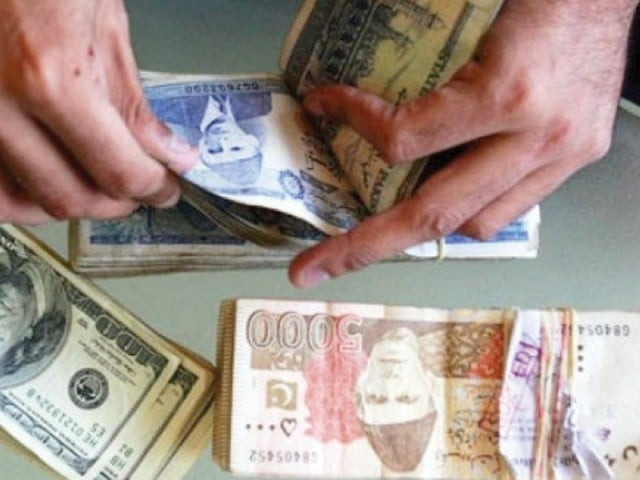
The government raised more than Rs1.03 trillion on Wednesday through auctions of treasury bills, Pakistan Investment Bonds (PIB) and the Government Ijara Sukuk (GIS). The State Bank of Pakistan (SBP) conducted the three auctions, which attracted strong investor participation across conventional and Islamic instruments.
In the T-bill auction, the SBP targeted Rs650 billion but received an overwhelming response as bids totalled Rs1.803 trillion. It accepted Rs749 billion across all four tenors. The one-month paper attracted the highest bids of Rs648 billion against the target of Rs100 billion, though only Rs61 billion was accepted at a cut-off yield of 10.89%, slightly lower than the previous auction. The three-month T-bill saw bids of Rs211 billion against the target of Rs150 billion, with Rs251 billion accepted at a stable cut-off yield of 11%.
For the six-month tenor, bids amounted to Rs177 billion versus the target of Rs200 billion, but acceptance was restricted to Rs69 billion, also at 11% cut-off yield. The 12-month paper received a substantial Rs767 billion in bids, of which Rs368 billion was accepted at a cut-off yield of 11.27%.
Yields across all tenors registered minor downward adjustments compared to the previous auction and the secondary market, indicating continued confidence in short-term government securities. In the PIB segment, the government raised Rs28 billion through the 10-year Pakistan Floating Rate Semi-Annual (PFL-SA) bond against total bids of Rs524 billion and the target of Rs50 billion. The cut-off price was 95.4, reflecting a cut-off rate of 11.70% with a spread of 0.80% over the benchmark.
Separately, the SBP conducted the outright purchase of the Government Ijara Sukuk (GIS) VRR-22 on a deferred payment (Bai Muajjal) basis. Against the offered face value of Rs176.43 billion, the government accepted Rs175.16 billion at a Bai Muajjal cut-off price of 144.97. The total deferred payment obligation amounted to Rs253.93 billion. The Sukuk continued to draw strong demand from Sharia-compliant investors.
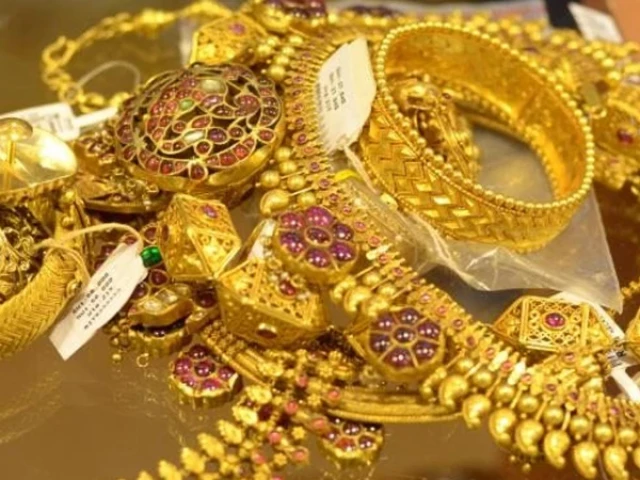
The Pakistani rupee edged up slightly against the US dollar, closing at 280.56 in the inter-bank market, a gain of Rs0.01. The local unit had ended Tuesday at 280.57. Meanwhile, gold prices in Pakistan rose, tracking gains in the international market. The price per tola increased by Rs2,300 to Rs438,862, while 10-gram gold climbed Rs1,972 to Rs376,253, according to the All-Pakistan Gems and Jewellers Sarafa Association. International prices were up $23 at $4,165 per ounce.





Savers across the UK are being offered a record number of accounts and products and with interest rates still well above 4 per cent on the most competitive options, should make sure their cash is working hard.
Data from Moneyfacts shows the number of savings accounts has risen to 2,486, including ISAs, the highest number on record. Cash ISAs alone, meanwhile, also saw the largest monthly rise since May 2024 and, with 712 offers in total, is the most since Moneyfacts started recording.
Both numbers come as the final tax year gets underway in which all savers are able to deposit a full £20,000 annual allowance into a cash ISA.
Starting from April 2027, under-65s will only be able to save a maximum of £12,000 into the tax-free savings wrappers, with the additional £8,000 reserved for investment purposes, such as a stocks and shares ISA.
That’s as part of a wider push from the government to encourage more people to invest, to build future wealth.
High interest rates are important not only to earn a good return on cash, but to ensure money doesn’t lose its value, or buying power, when measured against rising prices; in other words, inflation, which currently sits at around 3 per cent and is set to rise.
That means consumers should whenever possible look to be beating that rate as a minimum when it comes to their saving accounts, and plenty of places are still offering 4.5 per cent and even higher right now.
“This year the competition around ISA season was particularly strong, fuelled by the fact that for savers under 65 it’s the final year for them to utilise their full £20,000 allowance. Providers have been enticing new deposits with attractive deals,” said Caitlyn Eastell, personal finance analyst at Moneyfacts.

Get a free fractional share worth up to £100.
Capital at risk.
Terms and conditions apply.
ADVERTISEMENT
Get a free fractional share worth up to £100.
Capital at risk.
Terms and conditions apply.
ADVERTISEMENT
“Savers should be taking advantage of this all-time high, and it may be especially timely as the new tax-year is the perfect window to review their current deal and switch to ensure they can maximise their returns before thresholds tighten.
“The number of savings deals paying above the Bank of England base rate has surged to its highest level since December 2021. While this could largely be driven by base rate remaining unchanged several months, providers have also been proactively adjusting rates in response to shifting interest rate expectations.
“Fixed rates reflect this change, with the average one-year ISA rising to over 4 per cent, reaching its highest point since May 2025, while its non-ISA counterpart saw its biggest increase since September 2023. Savers may enjoy more competitive returns in this environment; however, it can be a tricky balancing act because sharp spikes to household bills and inflation could quickly catch up, meaning savers may be left out of pocket.”
Meanwhile, thisbank has pointed to growing evidence showing that many households have multiple money accounts, but no clear overview of their true financial position.
Reviewing accounts – including joint and old current accounts – can turn up unexpected cash reserves, help families realise which subscriptions they are paying for but are no longer using and aid better budgeting, the bank says, giving a better understanding of where income and expenses match up.
“For many households, financial stress is exacerbated by complexity. By taking a simple, step-by-step approach, people can implement structure and clarity in their everyday financial management,” said Chris Waring, CEO of thisbank, while recommending each savings account has a particular role, such as everyday spending, long-term emergency buffer or fixed-term saver accounts with strong rates for predictable returns.
Underlining the need to be aware of where consumers are choosing to put their cash, analysis by savings app Spring shows that a huge majority of premium, paid-for accounts come with poorer returns, tiered interest rates or withdrawal restrictions.
Under a quarter (23 per cent) of easy access savings accounts on premium current accounts on the market are free of additional restrictions, their research showed, which included lower returns after £4,000 in an account with one, a paltry 1.35 per cent on balances under £100,000 elsewhere and nearly a third (30 per cent) having withdrawal limits.
The FTSE 100 started the week on the back foot on Monday as hopes for a peace deal in the Middle East once more hung in the balance.
“Just when you think it is safe to go back in the water, the alarm is sounded again,” said Tom Stevenson, investment director, Fidelity International.
The FTSE 100 closed down 58.55 points, 0.6%, at 10,609.08. The FTSE 250 ended 265.71 points lower, 1.2%, at 22,940.21, and the AIM All-Share fell 1.77 points, 0.2%, to 808.34.
Friday’s optimism gave way to renewed fears that hostilities could resume in the Middle East war after Iran closed the Strait of Hormuz following its brief reopening.
“The market mood is very different at the start of the week compared to Friday,” said Kathleen Brooks, research director at XTB.
The price of crude oil had plunged Friday after Iran said it would again allow ships to pass through the key shipping route, the Strait of Hormuz.
But prices rose once more on Monday as Iran closed the waterway and said the US blockade and seizure of an Iranian cargo ship breached the two-week ceasefire.
Brent oil traded higher at 94.45 dollars a barrel on Monday afternoon, compared with 89.15 dollars at the time of the equities close in London on Friday.
Ms Brooks said the jump in oil prices and pull-back in stocks is a reminder that the current ceasefire that expires on Wednesday is “fragile”.
On Monday, Iran insisted it has no plan to attend a new round of negotiations with the US, although US President Donald Trump said he was sending negotiators to Pakistan for talks.
In European equities on Monday, the CAC 40 in Paris ended down 1.1%, and the DAX 40 in Frankfurt fell 1.2%.
In New York, the Dow Jones Industrial Average was down 0.1%, the S&P 500 was 0.3% lower, and the Nasdaq Composite declined 0.5%.
Strategists at HSBC and UBS remained bullish on equity markets despite the latest market unease.
“Our view remains that we have passed peak geopolitical risk. Both sides have a strong incentive to find a deal. That said, we have been urging investors to expect a bumpy road to a lasting peace,” said Mark Haefele at UBS.
While, Max Kettner at HSBC said: “Despite the recent rally across the risk asset spectrum our sentiment and positioning framework still sends a buy signal. In short: be quick.”
The yield on the US 10-year Treasury stretched to 4.26% on Monday compared with 4.24% on Friday. The yield on the US 30-year Treasury widened to 4.89% from 4.88%.
The pound eased to 1.3535 dollars on Monday afternoon from 1.3556 dollars on Friday. Against the euro, sterling firmed to 1.1486 euros from 1.1481 euros.
The euro traded lower against the greenback, falling to 1.1786 dollars on Monday from 1.1805 dollars on Friday. Against the yen, the dollar was trading higher at 158.58 yen, up from 158.08 yen.
On London’s FTSE 100, oil majors BP and Shell benefited from the rising oil price, up 2.9% and 2.5%, recouping some of Friday’s heavy falls, while British Airways owner IAG fell 2.2%.
On the FTSE 250, Renishaw led the risers, up 6.2%, as it raised full-year guidance reflecting buoyant demand and a further “substantial expansion of our order book”.
The Gloucestershire-based supplier of manufacturing technologies, analytical instruments and medical devices now expects revenue in the financial year to June of £775 million to £805 million, raised from guidance of £740 million to £780 million provided in February.
It projects adjusted pre-tax profit of £145 million to £165 million, lifted from £132 million to £157 million.
Plus500 gained 3.8% as it said customer income reached a five-year record high in the first quarter of 2026 as it forecast full-year revenue and earnings ahead of market expectations.
Reflecting a strong first quarter of 2026, the Israel-based trading platform operator said it expects 2026 revenue and Ebitda to be ahead of current market expectations which it put at 779.3 million dollars and 360.4 million dollars respectively.
Chief executive David Zruia said: “The group delivered an excellent performance in the quarter, with strong growth across key financial and operational metrics.”
Elsewhere, bid interest drove shares of Evoke and Advanced Medical Solutions higher.
William Hill owner Evoke jumped 4.1% after it said it is in discussions with US casino operator Bally’s Intralot regarding a possible all-share takeover offer worth more than £200 million.
Back in December, Evoke kicked off a strategic review, which it said could include a sale of the company, after the UK Government budget which the gambling firm warned would lift yearly duty costs by up to £135 million.
Meanwhile, Advanced Medical Solutions rose 16% as it confirmed it is in talks regarding a possible offer for the company, little more than 12 months after another potential suitor failed to secure a deal with the firm.
On Saturday, Sky News reported that Boston-based private equity firm TA Associates was preparing an offer for AMS worth around 280 pence per share, or £600 million in total.
On Monday, the Cheshire-based surgical dressings company confirmed the talks with TA Associates, but stressed there can be no certainty that a firm offer will be made.
In March 2025, AMS was the subject of bid interest from London-based mid-market private equity firm Montagu Private Equity LLP, although no formal offer materialised.
AJ Bell investment director Russ Mould noted the latest takeover talks mean that 20 firms on the UK stock market are already involved in bid discussions this year.
“Even though the would-be buyers are yet to set a price tag for five of the proposed transactions, the total value of bids on the table is already £29.3 billion, equivalent to the aggregate reached across all successful bids in 2025, and the largest sum at this stage for any year this decade,” he pointed out.
Mr Mould said the level of interest “suggests that would-be buyers still believe the UK stock market offers value”.
Gold traded at 4,806.14 dollars an ounce on Monday, down from 4,869.13 dollars at the same time on Friday.
The biggest risers on the FTSE 100 were Centrica, up 6.90p at 204.30p, BP, up 15.90p at 556.90p, Shell, up 78.50p at 3,274.50p, British American Tobacco, up 82.00p at 4,224.00p and SSE, up 47.00p at 2,516.50p.
The biggest fallers on the FTSE 100 were Metlen Energy & Metals, down 1.88p at 33.70p, Antofagasta, down 175.50p at 3,783.50p, Barratt Redrow, down 11.10p at 268.00p, Rolls Royce, down 48.20p at 1,262.40p and Fresnillo, down 120.00p at 3,662.00p.
Tuesday’s global economic calendar has UK unemployment and average earnings data at 7am, followed by US retail sales figures.
Tuesday’s local corporate calendar has a trading statement from miner Rio Tinto and half-year results from Primark owner Associated British Foods.
Contributed by Alliance News
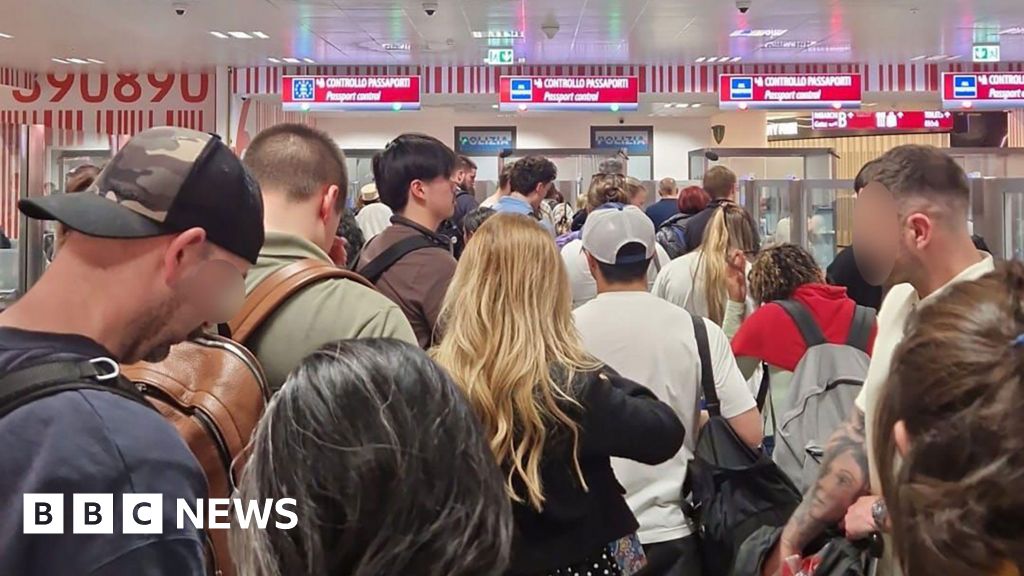
New European border rules have caused delays at airports across the continent, affecting flights.
Source link


Jennifer Hudson shares more details about ‘American Idol’ comeback

Greg Olsen on Travis Kelce returning to Chiefs for 14th season: ‘League is better off with him playing’

A Humanoid Robot Set a Half-Marathon Record in China

-

 Fashion5 days ago
France’s LVMH Q1 revenue falls 6%, shows resilience amid Iran war
-

 Sports1 week ago
The case for Man United’s Fernandes as Premier League’s best
-

 Entertainment1 week ago
Palace left in shock as Prince William cancels grand ceremony
-
 Business1 week ago
UK could adopt EU single market rules under new legislation
-

 Entertainment5 days ago
Is Claude down? Here’s why users are seeing errors
-

 Fashion1 week ago
Energy emerges as biggest cost driver in textile margins
-
 Business1 week ago
Delta Air Lines unveils first new Delta One suite in premium cabin arms race
-

 Tech1 week ago
A Lot of Shops Won’t Fix Electric Bikes. Here’s Why