

Business
Why Pakistan’s governance model is failing its youth | The Express Tribune

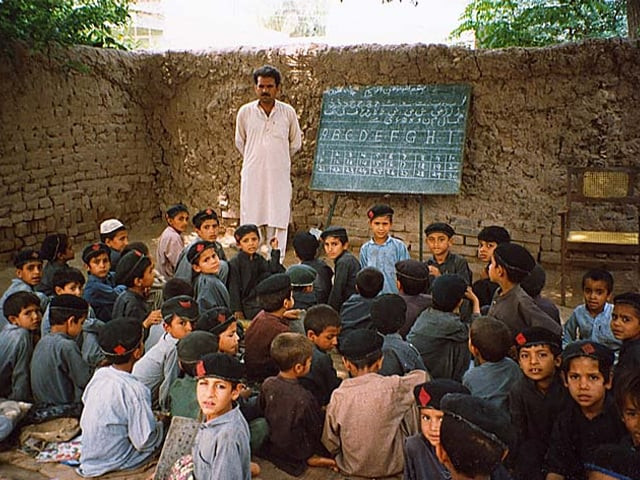
Unemployed young people pose challenges, can become positive force if governance system is fair and inclusive
ISLAMABAD:
What is a state? Why do people give up their rights to the state? How does it function? What are the responsibilities of a state? These are questions that have always been asked and debated throughout human history. A state aims to restrict, control, and eliminate injustice, external threats, and social injustice. But how?
The state establishes a fair governance system that upholds human equality, dignity, and liberty. Through this system, the state aims to provide basic needs, skills for growth, education to promote morality and values, and a peaceful living environment. It ensures that everyone – government, institutions, and individuals – is governed by the rule of law, which unites society.
In essence, a state’s strength depends on its governance system, which should focus on people, be anchored in the rule of law, be dedicated to justice and the fight against injustice, and hold officials accountable for ensuring a prosperous and safe life.
Now, the question is, how do we create such a state, who can undertake the job, and what qualities do those individuals possess? Islam outlined the characteristics of the state and its actors many centuries ago. Islam states that the system and its actors must be pious, transparent, accountable, selfless, and always serve as servants rather than rulers. Islam has provided a practical example of a welfare state, governed by the rule of law, with everyone submitting to it.
The state is always focused on people, giving priority to meeting the needs of its citizens and all creatures within its borders. The state must also provide social justice before seeking justice.
Pakistan was envisioned as a state with these characteristics. It was promised that the state would work to create a fairer social justice system, a welfare economy, respect human dignity, ensure sustainable peace, and operate through a people-centric governance system based on Islamic principles.
It will be ensured through inclusiveness and public participation, achieved by strengthening people’s democracy at the highest level. Quaid-e-Azam Muhammad Ali Jinnah emphasised that a fair and just system of governance would be crucial to achieving these objectives.
Regrettably, after Jinnah’s death, the idea began to fade. The ruling elite could not grasp the Quaid-e-Azam’s vision. Justice and social justice have become the last priorities of the ruling class. The state, which was meant to serve as the guarantor of justice, was unable to do much to protect the vulnerable.
The elite ruling class and its actors exploit the weak with impunity. Those who were brought into the system as servants have become the rulers. They enjoy enormous benefits at the expense of the common man. They have burdened citizens with various taxes and bestowed themselves with extraordinary privileges. The lure of power’s perks and benefits is so strong that no one wants to relinquish it.
As a result, elitism, exploitation, injustice, and social and economic exclusion have become the defining features of the Pakistani system. Rent-seeking and corruption are common practices. Fairness, social justice, and inclusivity, which were meant to be the core principles of the state, have become alien to Pakistanis.
In modern Pakistan, exclusion and injustice are so widespread that they affect all levels of society. The story of exclusion begins with the education system and extends to access to livelihood opportunities, social status, security without discrimination, and growth prospects.
The biggest victims of this unfair and exclusionary system are the youth. On one side, most young people lack access to quality education and skill development, and on the other side, retired individuals prevent them from getting jobs, as they take on post-retirement roles.
The elite class has replaced merit with nepotism and bribery. This forces the youth to remain unemployed. It is a concerning trend, as youth (aged 30 and below) make up 64% of the population. This creates serious challenges for the country, security, and economic growth.
It is well known that youth can be a destructive or constructive force. If the system is fair and inclusive, young people will be a positive force; otherwise, no one can stop them from becoming destructive. Recently, we have seen Gen Z bring down many governments.
Against this backdrop, there is a need to reform the system to ensure it is fair and inclusive. Serious reforms are necessary to safeguard the social and economic interests of ordinary people, protect the life and dignity of every citizen, and guarantee justice and social equity for all without discrimination.
In this context, we have some suggestions for consideration. First, merit should be the guiding principle, not nepotism or any form of discrimination. Merit must consist of two components: 1) field competence and 2) high moral values such as integrity, selflessness, truthfulness, transparency, accountability, and honesty.
Second, the constitution should prohibit post-retirement appointments that favour the elite and are a criminal act. Third, the ruling class must live among ordinary citizens; there should be no gated communities. Fourth, everyone must obey the law, regardless of their situation or status. The ruling class must understand that the rule of law is fundamental to keeping the country united.
It is high time to bring in changes, as Pakistan is undergoing a series of constitutional reforms. Moreover, the much-debated topic of creating new provinces is included in the proposed 28th amendment, making the timing more relevant for enacting and piloting the reforms.
In conclusion, state leaders must understand that selective justice and social injustice are a recipe for failure and go against the teachings of Islam. Fair and accessible justice, along with social justice, is increasingly necessary. Therefore, the government should neither be too soft nor too harsh; it must be just and equitable.
The foundation of the government relies on justice and social justice at all levels. Without these, the government cannot endure, as seen in the example of the USSR. Despite its power, the USSR’s inability to deliver justice and social justice ultimately led to its collapse.
The writer is a political economist and visiting research fellow at Hebei University, China



Business
France Ends Airport Transit Visa Requirement for Indian Travellers | Business – The Times of India

France has lifted the airport transit visa requirement for Indian nationals with effect from April 10, the French Embassy in India announced on Thursday.Indian nationals holding ordinary passports are no longer required to obtain an airport transit visa when passing through the international zone of airports located on French territory during a layover en route to a third country.The change follows a decree amending the 2010 regulations on documents and visas required for the entry of foreigners into French territory. The decree was adopted and published in the French Official Gazette (Journal Officiel) on April 9, 2026.MEA welcomes the moveThe Ministry of External Affairs welcomed the announcement.“We welcome the announcement on the operationalisation of visa-free transit for Indian nationals transiting through French airports,” MEA Spokesperson Randhir Jaiswal said.He recalled that the removal of the transit visa requirement for Indian passport holders was agreed between Prime Minister Narendra Modi and French President Emmanuel Macron during their meeting in Mumbai in February this year.“The government of France has now operationalized this agreement,” Jaiswal added.Who benefitsThe measure applies to Indian nationals transiting through mainland France exclusively by air, remaining in the international airport zone without entering French territory.President Macron had announced during his visit to India in February that measures would be taken to ease travel for Indian nationals via France.
Poll
What do you think is the main advantage of this visa policy change?
The updated procedures have been reflected on the France-Visas platform.

Comcast topped Wall Street’s revenue and earnings estimates for the first quarter on Thursday, lifted by NBC’s sports slate in February and improving broadband customer losses.
The company said it lost 65,000 broadband customers compared with 183,000 losses in the same period last year. Heightened competition from wireless providers like Verizon and T-Mobile has led to quarterly customer losses for Comcast and its cable peers in recent years – which has weighed on these companies’ stocks in particular.
In response, Comcast in the last year has shifted its strategy and introduced more competitive pricing packages in a bid to reduce the broadband losses. The company has also leaned on its mobile business for growth, which added 435,000 new lines during the quarter. In total, Comcast now has 9.7 million mobile customers.
The company also reported 322,000 cable TV customer losses – fewer than the 427,000 in the same period last year.
Revenue for Comcast’s connectivity and platforms unit, which includes its Xfinity-branded broadband, cable TV, and mobile businesses, decreased 2% to $17.32 billion.
The company’s stock climbed as much as 8% in premarket trading.
Here’s how Comcast performed for the period compared with average analyst estimates, according to LSEG:
- Earnings per share: 79 cents adjusted vs. 73 cents expected
- Revenue: $31.46 billion vs. $30.43 billion expected
Comcast’s net income fell nearly 36% to $2.17 billion, or 60 cents per share, compared to $3.38 billion, or 89 cents a share, during the same period last year. Adjusting for one-time items including amortization and investments, Comcast reported earnings per share of $0.79.
Adjusted earnings before interest, taxes, depreciation and amortization were down roughly 17% to $7.93 billion.
Comcast’s overall revenue increased roughly 5% to $31.46 billion for the quarter.
Revenue got a boost from Comcast’s NBCUniversal, which aired a slate of sports – including the Super Bowl, Winter Olympics and NBA All-Star Weekend, during the quarter – that the company coined as “Legendary February.”
The media business, which is made up of NBCUniversal, recorded a nearly 61% increase in revenue to $7.28 billion during the quarter. Excluding the Olympics and Super Bowl – which provided significant boosts to advertising sales – revenue for the unit was up about 13%.
Live sports remains the highest rated programming on traditional TV and streaming, and beckon the most advertising dollars. The Super Bowl, in particular, breaks records annually when it comes to its pricey commercial spots. NBC received an average $8 million per 30-second ad, CNBC reported.
Domestic advertising for the media unit was up 135% to $3.45 billion for the quarter. Excluding the Super Bowl and Winter Olympics, it was up 4.7% to $1.54 billion.
NBC’s sports roster also helped lift streaming service Peacock during the quarter. Peacock subscribers increased 12% year over year to 46 million. Peacock nearly doubled revenue to $2.1 billion compared to the same period last year. The streamer recorded a quarterly loss of $432 million compared to a loss of $215 million in the prior year period.
Adjusted EBITDA for the media segment decreased to a loss of $426 billion due to higher operating expenses related to the costs associated with the Winter Olympics and Super Bowl, as well as the cost of the NBA rights.
NBCUniversal is part of the overall content and experiences segment, which also includes the film studio and theme parks – each of which saw sales climb year-over-year.
Revenue for the film studio was up 21% to $3.43 billion, while Universal theme parks revenue increased 24% to $2.33 billion. The theme parks were boosted by the opening of Epic Universe last May.

Across the UK, shopfronts are being exploited by criminal gangs pushing illegal drugs, experts say.
Source link


‘Summer House’ is going to get cancelled? details revealed

UK’s SwitchDye gets investment to scale eco-friendly dyeing

Prince William tries to squeeze into Formula E car on Louis’ birthday

-

 Fashion1 week ago
France’s LVMH Q1 revenue falls 6%, shows resilience amid Iran war
-

 Entertainment1 week ago
Is Claude down? Here’s why users are seeing errors
-

 Sports1 week ago
PSL 11: Peshawar Zalmi win toss, opt to field first against Quetta Gladiators
-

 Tech1 week ago
The Deepfake Nudes Crisis in Schools Is Much Worse Than You Thought
-

 Politics1 week ago
Iran in continuous message exchange with mediator Pakistan after US talks: Report
-
 Business1 week ago
Standard Life buys rival in £2b deal to create savings giant
-

 Tech1 week ago
CYBERUK ’26: UK lagging on legal protections for cyber pros | Computer Weekly
-

 Sports1 week ago
World Cup kit ranking: Which teams will look best in 2026?