

Business
Why Pakistan’s governance model is failing its youth | The Express Tribune

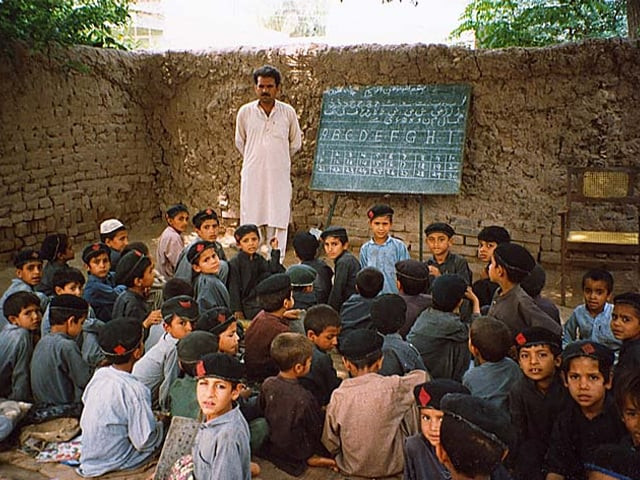
Unemployed young people pose challenges, can become positive force if governance system is fair and inclusive
ISLAMABAD:
What is a state? Why do people give up their rights to the state? How does it function? What are the responsibilities of a state? These are questions that have always been asked and debated throughout human history. A state aims to restrict, control, and eliminate injustice, external threats, and social injustice. But how?
The state establishes a fair governance system that upholds human equality, dignity, and liberty. Through this system, the state aims to provide basic needs, skills for growth, education to promote morality and values, and a peaceful living environment. It ensures that everyone – government, institutions, and individuals – is governed by the rule of law, which unites society.
In essence, a state’s strength depends on its governance system, which should focus on people, be anchored in the rule of law, be dedicated to justice and the fight against injustice, and hold officials accountable for ensuring a prosperous and safe life.
Now, the question is, how do we create such a state, who can undertake the job, and what qualities do those individuals possess? Islam outlined the characteristics of the state and its actors many centuries ago. Islam states that the system and its actors must be pious, transparent, accountable, selfless, and always serve as servants rather than rulers. Islam has provided a practical example of a welfare state, governed by the rule of law, with everyone submitting to it.
The state is always focused on people, giving priority to meeting the needs of its citizens and all creatures within its borders. The state must also provide social justice before seeking justice.
Pakistan was envisioned as a state with these characteristics. It was promised that the state would work to create a fairer social justice system, a welfare economy, respect human dignity, ensure sustainable peace, and operate through a people-centric governance system based on Islamic principles.
It will be ensured through inclusiveness and public participation, achieved by strengthening people’s democracy at the highest level. Quaid-e-Azam Muhammad Ali Jinnah emphasised that a fair and just system of governance would be crucial to achieving these objectives.
Regrettably, after Jinnah’s death, the idea began to fade. The ruling elite could not grasp the Quaid-e-Azam’s vision. Justice and social justice have become the last priorities of the ruling class. The state, which was meant to serve as the guarantor of justice, was unable to do much to protect the vulnerable.
The elite ruling class and its actors exploit the weak with impunity. Those who were brought into the system as servants have become the rulers. They enjoy enormous benefits at the expense of the common man. They have burdened citizens with various taxes and bestowed themselves with extraordinary privileges. The lure of power’s perks and benefits is so strong that no one wants to relinquish it.
As a result, elitism, exploitation, injustice, and social and economic exclusion have become the defining features of the Pakistani system. Rent-seeking and corruption are common practices. Fairness, social justice, and inclusivity, which were meant to be the core principles of the state, have become alien to Pakistanis.
In modern Pakistan, exclusion and injustice are so widespread that they affect all levels of society. The story of exclusion begins with the education system and extends to access to livelihood opportunities, social status, security without discrimination, and growth prospects.
The biggest victims of this unfair and exclusionary system are the youth. On one side, most young people lack access to quality education and skill development, and on the other side, retired individuals prevent them from getting jobs, as they take on post-retirement roles.
The elite class has replaced merit with nepotism and bribery. This forces the youth to remain unemployed. It is a concerning trend, as youth (aged 30 and below) make up 64% of the population. This creates serious challenges for the country, security, and economic growth.
It is well known that youth can be a destructive or constructive force. If the system is fair and inclusive, young people will be a positive force; otherwise, no one can stop them from becoming destructive. Recently, we have seen Gen Z bring down many governments.
Against this backdrop, there is a need to reform the system to ensure it is fair and inclusive. Serious reforms are necessary to safeguard the social and economic interests of ordinary people, protect the life and dignity of every citizen, and guarantee justice and social equity for all without discrimination.
In this context, we have some suggestions for consideration. First, merit should be the guiding principle, not nepotism or any form of discrimination. Merit must consist of two components: 1) field competence and 2) high moral values such as integrity, selflessness, truthfulness, transparency, accountability, and honesty.
Second, the constitution should prohibit post-retirement appointments that favour the elite and are a criminal act. Third, the ruling class must live among ordinary citizens; there should be no gated communities. Fourth, everyone must obey the law, regardless of their situation or status. The ruling class must understand that the rule of law is fundamental to keeping the country united.
It is high time to bring in changes, as Pakistan is undergoing a series of constitutional reforms. Moreover, the much-debated topic of creating new provinces is included in the proposed 28th amendment, making the timing more relevant for enacting and piloting the reforms.
In conclusion, state leaders must understand that selective justice and social injustice are a recipe for failure and go against the teachings of Islam. Fair and accessible justice, along with social justice, is increasingly necessary. Therefore, the government should neither be too soft nor too harsh; it must be just and equitable.
The foundation of the government relies on justice and social justice at all levels. Without these, the government cannot endure, as seen in the example of the USSR. Despite its power, the USSR’s inability to deliver justice and social justice ultimately led to its collapse.
The writer is a political economist and visiting research fellow at Hebei University, China


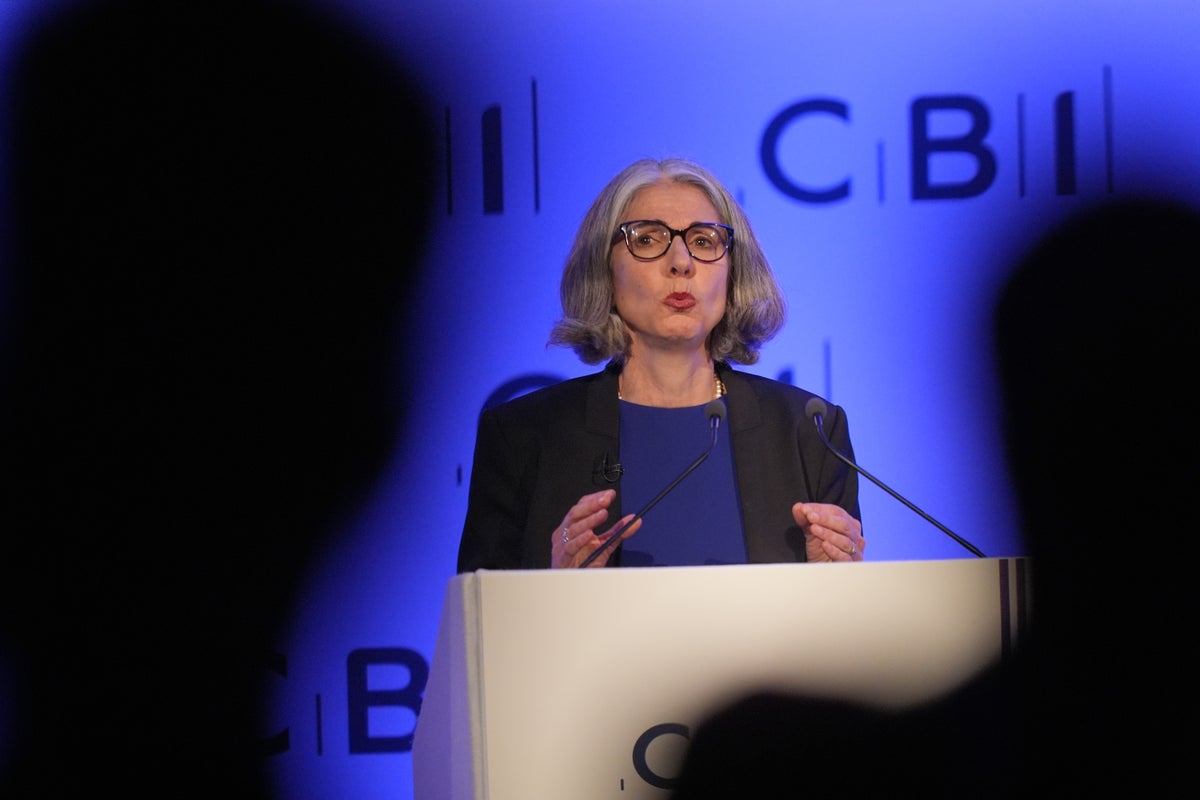
The UK must not “cut ourselves off” from trade opportunities in China despite security and business risks, the head of the Confederation for British Industry has warned.
CBI chief Rain Newton-Smith highlighted that British businesses see increased trade with Chinese firms as an opportunity to drive growth.
Her remarks came as business leaders were questioned by MPs on Parliament’s Business and Trade Select Committee regarding the UK’s economic relationship with China.
Last December, Prime Minister Sir Keir Starmer admitted China poses security threats to the UK but urged for greater business ties.
Ms Newton-Smith, chief executive of one of the UK’s largest business groups, was positive about the Government’s engagement with China.
“You can’t have a growth strategy without a strategy for China,” she said.
“China has the biggest contribution to global growth, is the third largest trading partner, and the world’s largest consumer market.
“The UK is second largest exporter of trade and services.
“We are mindful as all businesses are of security risks but it is really important that we have a strategy towards China.
“This Government has increased the economic engagement with China and including business within this does help us as a country.”
She added: “If we think about the future economy, there is a huge market in China and I think we mustn’t cut ourselves off from some of the opportunities there, even if in some areas there are difficult conversations and negotiations that need to be had.”
Peter Burnett, chief executive of the China-Britain Business Council, told the committee: “There are risks associated with technology advancement, AI, industrial development that they need to assess.
“Increasingly you will find them saying that they need to engage more in China to understand those risks and to develop some of the technologies along some of those risks themselves.”
Business
Trump says he’d be disappointed if Fed pick doesn’t cut rates; Warsh vows to be ‘independent actor’ – The Times of India
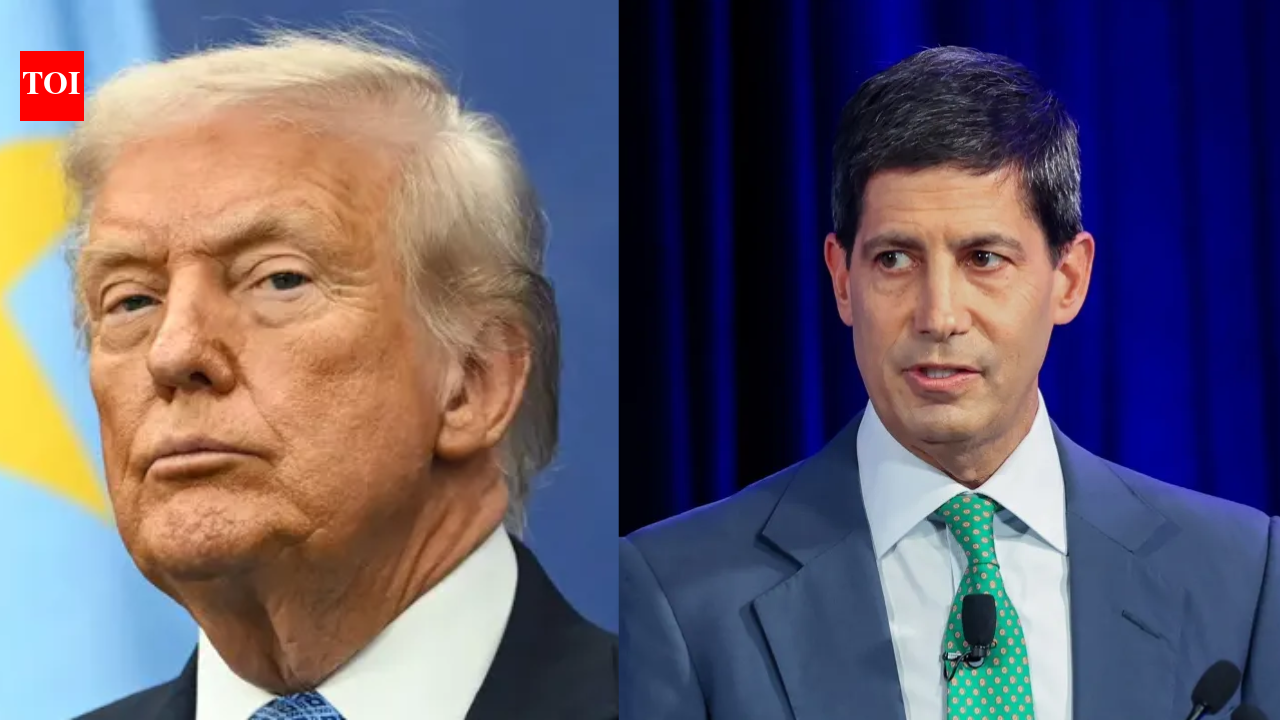
US President Donald Trump on Tuesday said he would be disappointed if his nominee for Federal Reserve chair, Kevin Warsh, does not cut interest rates right away after taking office if confirmed by the Senate. Trump, during an interview with CNBC’s “Squawk Box,” also said “we have to find out” about the construction costs of the new Federal Reserve building.Warsh, a former Federal Reserve official and financier, is currently facing Senate confirmation hearings where he has stressed his independence from political pressure.“The president never once asked me to commit to any particular interest rate decision, and nor would I agree to it if he had,” Kevin Warsh said under questioning by the Senate Banking Committee, as quoted by LA Times. “I will be an independent actor if confirmed as chair of the Federal Reserve.”Warsh told lawmakers that fighting inflation would be one of his main priorities if confirmed.“Congress tasked the Fed with the mission to ensure price stability, without excuse or equivocation, argument or anguish,” Warsh said. “Inflation is a choice, and the Fed must take responsibility for it.”The comments come as investors closely watch his confirmation hearing, with inflation remaining at 3.3% annually and global tensions, including the war in Iran pushing up gas prices, adding pressure on the economy. Higher inflation typically leads the Federal Reserve to keep interest rates steady or raise them rather than cut them, as rate changes affect mortgages, auto loans, and business borrowing.Democrats on the Senate Banking Committee accused Warsh of shifting his stance on interest rates over time, supporting higher rates under Democratic presidents and lower rates during Trump’s presidency.Warsh, if confirmed, would take over at a time when inflation pressures make it difficult for the Federal Reserve to cut rates, even as Trump continues to push for lower borrowing costs. Trump has repeatedly urged rate cuts and has long clashed with current Fed chair Jerome Powell over monetary policy. Powell has also been the subject of a Department of Justice criminal probe after refusing Trump’s requests for faster rate cuts. Trump told CNBC that he does not plan to pressure the Justice Department to end that probe.

The consultancy Teneo says airspace restrictions caused by the conflict have forced airlines to reroute many flights.
Source link


Ranking the Top 20 Players in the Men’s College Basketball Transfer Portal

NATO jets intercept Russian bombers over Baltic Sea

FIFA to put more World Cup tickets on sale for all games

-

 Fashion5 days ago
France’s LVMH Q1 revenue falls 6%, shows resilience amid Iran war
-

 Sports1 week ago
The case for Man United’s Fernandes as Premier League’s best
-

 Entertainment1 week ago
Palace left in shock as Prince William cancels grand ceremony
-
 Business1 week ago
UK could adopt EU single market rules under new legislation
-

 Entertainment6 days ago
Is Claude down? Here’s why users are seeing errors
-

 Fashion1 week ago
Energy emerges as biggest cost driver in textile margins
-
 Business1 week ago
Delta Air Lines unveils first new Delta One suite in premium cabin arms race
-

 Fashion1 week ago
Asia claims largest share of markets on Kearney FDI Confidence Index