

Business
Indian Railways 2025 Milestones To Set Stage For 2026

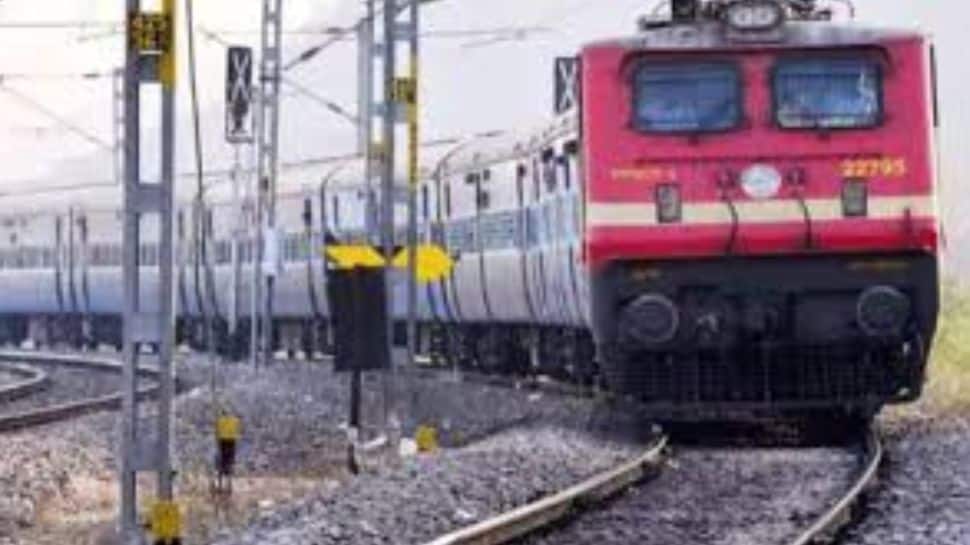
New Delhi: As many as 42 projects of the Indian Railways, including innovation, indigenisation, track renewals, electrification works, and “airport-like facilities” at redeveloped stations to redefine rail travel, worth over Rs 25,000 crore, were commissioned in 2025 to make passenger and freight trains safer and faster in the country, an official statement said on Sunday.
The New Year is all set to offer comfortable sleeper journeys in long-distance travels through Vande Bharat & Amrit Bharat trains, cutting short the journey time, as well as giving travellers the branded food & beverage options at railway stations, according to a year-end review released by the Ministry of Railways.
During the calendar year 2025, Indian Railways introduced 15 Vande Bharat Express trains. As on December 26, a total of 164 Vande Bharat train services are running across the Indian Railways network. Looking ahead, the upcoming Vande Bharat Sleeper is set to transform overnight travel. It will combine speed, comfort, and modern amenities for long-distance passengers.
Another 13 Amrit Bharat Express trains, which are fully non-AC trains, have also been introduced. A total of 30 Amrit Bharat train services are now running across the Indian Railways network to provide quality services to the common man.
Besides, Namo Bharat Rapid Rail Services are designed for high-frequency and regional connectivity, strengthening short and medium-distance mobility in high-demand corridors.
Landmark projects completed during the year include opening the country’s first vertical-lift rail bridge at Pamban, bolstering Kashmir connectivity with all-weather rail links (including the world’s highest Chenab bridge), and extending rail access into the Northeast with the new Bairabi–Sairang line.
Between April 1 and November 30, Indian Railways commissioned over 900 kilometres of new track lines. Besides laying the new tracks, the focus is to renew the existing rail tracks to ensure safer, faster and more comfortable travel. Track renewal works have been carried out across 6,880 track km, rails renewed with new rails, and complete track renewal for 7,051 track km has been done during the year, the statement said.
During the period 2014–25, a total of 34,428 km of new track was laid at an average of 8.57 km/day, which is more than twice the average daily commissioning (4.2 km/day) during the period 2009–14.
These modernisation efforts are complemented by the raising of sectional speeds to improve train operations and passenger convenience. Sectional speed has been increased to 130 kmph over 599 track km, covering parts of the Golden Quadrilateral, Golden Diagonal, and other B routes. Further, speeds of 110 kmph have been achieved over 4,069 track km, combining infrastructure upgrades with advanced track machinery to ensure faster, safer, and more efficient train operations.
Electrification of the railway network has been taken up in mission mode. So far, about 99.2 per cent of the Broad Gauge (BG) network has been electrified. Electrification in the remaining network has been taken up. This achievement is significantly higher than the electrification levels of the UK (39 per cent), Russia (52 per cent) and China (82 per cent). A total of 14 Railway Zones and 25 states/Union Territories have now achieved 100 per cent electrification.
In FY 2025-26 (up to November 2025), more than 4,224 hi-tech LHB coaches were also produced, 18 per cent higher than the corresponding period last year. Between 2014-25, production increased 18-fold compared to 2004-14, ensuring safer, smoother and more comfortable journeys.
Indian Railways has made a major leap in modernisation by manufacturing over 42,600 LHB coaches in the last 11 years. LHB coaches are known for higher safety standards, lower maintenance costs and superior operational efficiency.
The Railways have also achieved remarkable progress in safety performance. Consequential Train Accidents during the period 2004-14 was 1711 (average 171 per annum), which has declined to 31 in 2024-25 and further to 11 in 2025-26 (up to November 2025). The safety budget has nearly tripled, rising from Rs 39,463 crore in FY 2013-14 to Rs 1,16,470 crore in the current financial year. Fog safety devices increased from 90 in 2014 to 25,939 in 2025. In the last four months alone, Centralised Electronic Interlocking and Track Circuiting have been completed at 21 stations, the statement said.
Kavach Version 4.0, the latest indigenously developed Automatic Train Protection (ATP) system, has also been commissioned over 738 route kilometres. The safety system assists the Loco Pilot in operating trains within prescribed speed limits by automatically applying brakes in case of human failure and also enables safe train operations during adverse and inclement weather conditions.
Meanwhile, the 508 km Mumbai-Ahmedabad High Speed Rail (MAHSR) Project has achieved physical progress of 55.63 per cent as on November 30, while overall financial progress has touched 69.62 per cent with an expenditure of Rs 85,801 crore, the statement added.








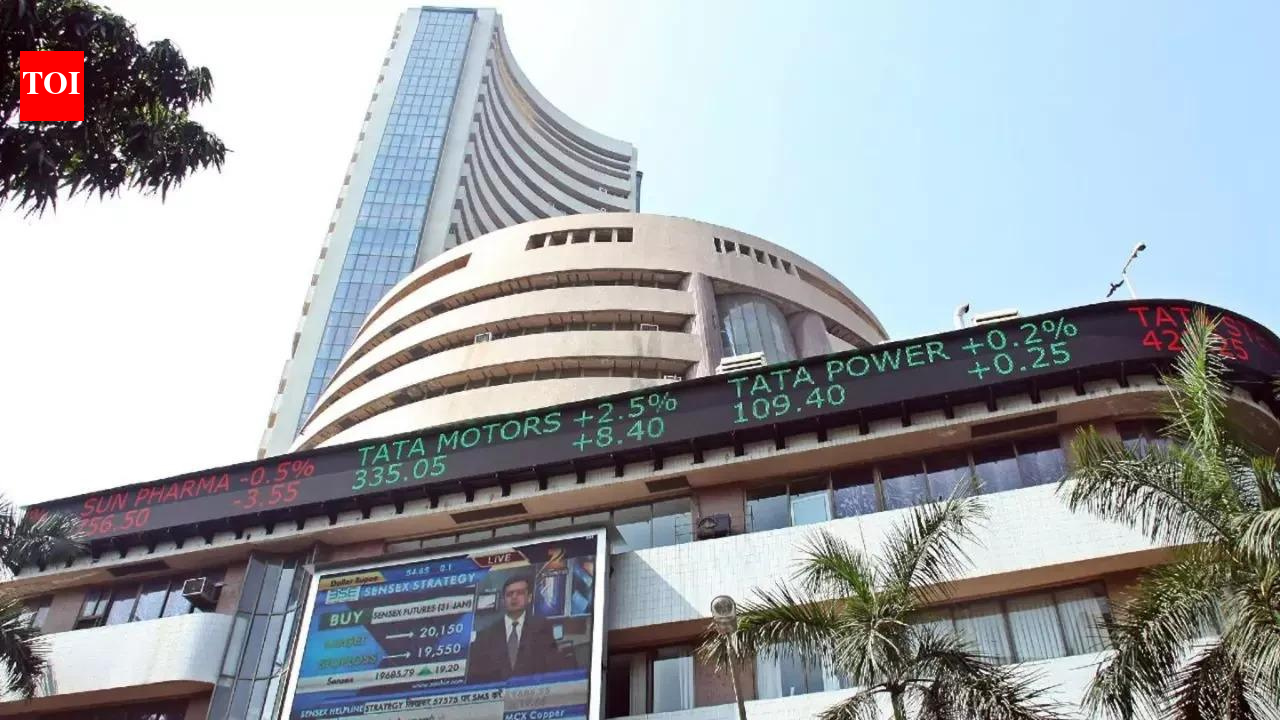
Stock market rallied sharply on Monday, with the Sensex soaring more than 1,000 points and the Nifty reclaiming the 24,000 mark, as easing geopolitical tensions in West Asia and falling crude oil prices boosted investor sentiment globally.The 30-share BSE Sensex jumped 1,073.61 points, or 1.42 per cent, to close at 76,488.96, while the NSE Nifty 50 surged 312.40 points, or 1.32 per cent, to settle at 24,031.70.The rally came after optimism grew around a possible agreement between the United States and Iran, following remarks by US President Donald Trump over the weekend that a deal was “largely negotiated”.
Nifty50 top gainers
| Company Name | Current Price (Rs) | Price Change | % Change |
|---|---|---|---|
| Eicher Motors | 7,414 | 433.00 ↑ | 6.20% ↑ |
| Adani Ent. | 2,850 | 132.00 ↑ | 4.88% ↑ |
| Bajaj Finance | 941.90 | 25.40 ↑ | 2.77% ↑ |
| Tata Motors PV | 373.25 | 9.90 ↑ | 2.73% ↑ |
| L&T | 4,033 | 107.00 ↑ | 2.72% ↑ |
| HDFC Bank | 786.85 | 20.10 ↑ | 2.62% ↑ |
| Eternal | 247.67 | 5.72 ↑ | 2.37% ↑ |
| Bajaj Finserv | 1,807 | 41.40 ↑ | 2.35% ↑ |
| Kotak Bank | 392.85 | 8.71 ↑ | 2.27% ↑ |
| Shriram Finance | 961.95 | 21.00 ↑ | 2.23% ↑ |
Sensex top gainers
| Company Name | Current Price (Rs) | Price Change | % Change |
|---|---|---|---|
| Bajaj Finance | 941.90 | 25.40 ↑ | 2.77% ↑ |
| L&T | 4,033 | 107.00 ↑ | 2.72% ↑ |
| HDFC Bank | 786.85 | 20.10 ↑ | 2.62% ↑ |
| Eternal | 247.67 | 5.72 ↑ | 2.37% ↑ |
| Bajaj Finserv | 1,807 | 41.40 ↑ | 2.35% ↑ |
| Kotak Bank | 392.85 | 8.71 ↑ | 2.27% ↑ |
| ICICI Bank | 1,292 | 27.50 ↑ | 2.18% ↑ |
| SBI | 969.60 | 20.40 ↑ | 2.15% ↑ |
| Axis Bank | 1,311 | 25.80 ↑ | 2.01% ↑ |
| Titan Company | 4,159 | 79.40 ↑ | 1.95% ↑ |
Nifty50 top losers
| Company Name | Current Price (Rs) | Price Change | % Change |
|---|---|---|---|
| Max Healthcare | 1,001 | -22.40 ↓ | -2.19% ↓ |
| ONGC | 284.95 | -5.06 ↓ | -1.75% ↓ |
| Hindalco | 1,100 | -9.61 ↓ | -0.87% ↓ |
| Nestle India | 1,414 | -9.50 ↓ | -0.67% ↓ |
| Bajaj Auto | 10,491 | -58.50 ↓ | -0.56% ↓ |
| Infosys | 1,169 | -6.00 ↓ | -0.52% ↓ |
| TCS | 2,308 | -9.11 ↓ | -0.40% ↓ |
| Tata Consumer | 1,187 | -4.60 ↓ | -0.39% ↓ |
| HUL | 2,197 | -7.10 ↓ | -0.33% ↓ |
| Sun Pharma | 1,841 | -4.00 ↓ | -0.22% ↓ |
Sensex top losers
| Company Name | Current Price (Rs) | Price Change | % Change |
|---|---|---|---|
| Infosys | 1,169 | -6.00 ↓ | -0.52% ↓ |
| TCS | 2,308 | -9.11 ↓ | -0.40% ↓ |
| HUL | 2,197 | -7.10 ↓ | -0.33% ↓ |
| Sun Pharma | 1,841 | -4.00 ↓ | -0.22% ↓ |
| Kwality Wall’s | 26.33 | -0.06 ↓ | -0.19% ↓ |
Oil prices tumble as Iran deal hopes rise
Investor confidence improved as markets increasingly priced in the possibility of a diplomatic breakthrough between Washington and Tehran, which could lead to the reopening of the Strait of Hormuz and ease global energy supply concerns.According to news agency ANI, market expert Ponmudi R said optimism surrounding a potential US-Iran agreement revived risk appetite across global markets.“Investor sentiment improved significantly after Donald Trump stated over the weekend that a deal was ‘largely negotiated’, encouraging markets to increasingly price in the possibility of a near-term diplomatic resolution,” he said.He added that markets would look for the “successful implementation of a lasting peace agreement and the credible reopening of the Strait of Hormuz”.Brent crude prices dropped sharply below the $100 per barrel mark and were trading around $98 per barrel, down more than 5 per cent during the session.The Indian rupee also recovered strongly, gaining 48 paise to trade at Rs 95.21 against the US dollar after recent weakness.
Banking stocks lead market rally
Financial stocks led the gains on Dalal Street. Bajaj Finance, Larsen & Toubro, HDFC Bank, Eternal, Bajaj Finserv and Kotak Mahindra Bank emerged among the top Sensex gainers.Sectorally, Nifty PSU Bank rose 2.73 per cent, while Nifty Private Bank advanced 2.02 per cent, as per ANI. Nifty Auto climbed 1.66 per cent and Realty gained 1.54 per cent.However, FMCG stocks remained under pressure. Infosys, Tata Consultancy Services, Sun Pharma and Hindustan Unilever were among the laggards.
Global markets gain amid improving sentiment
Asian markets also ended higher on Monday amid improving global risk appetite. Japan’s Nikkei 225 surged 2.76 per cent, while Taiwan’s weighted index jumped 3.15 per cent.European markets were trading in positive territory, while US markets had settled higher on Friday.Meanwhile, Foreign Institutional Investors (FIIs) offloaded equities worth Rs 4,440.47 crore on Friday, according to exchange data.
Business
PSX gains over 2,500 points as US-Iran peace hopes fuel bullish rally | The Express Tribune

KSE-100 surges past 170,000 intraday on strong institutional buying, easing geopolitical tensions
KARACHI:
The Pakistan Stock Exchange (PSX) extended strong bullish momentum on Monday as the benchmark KSE-100 Index hovered around 170,423.30 points at 1:24pm, up 2,579.06 points or 1.54% in intraday trade.
During the session, the benchmark index touched an intraday high of 171,519.26 points, while the day’s low was recorded at 170,161.66 points. Market participation remained strong, with traded volume reaching 125.96 million shares and total traded value standing at Rs11.75 billion.
Read: PSX gains 2,248 points in mixed week
Investor sentiment remained upbeat amid reports of a likely peace agreement between the United States and Iran, which boosted confidence across regional markets and improved risk appetite among investors.
Analysts said the rally was driven by aggressive institutional buying and renewed optimism over easing geopolitical tensions following progress in US-Iran negotiations.
The previous close of the KSE-100 index was 167,844.24 points.
Trump said on Saturday that an agreement would include the reopening of the Strait of Hormuz, without giving further details.
Source link


Financial conditions, oil prices concerns for India: RBI Bulletin

US govt formally implements extension of AGOA till 2026 end
Stock market today: Which are top gainers and losers on NSE & BSE on May 25? Check list

-

 Entertainment1 week ago
Where Pete Davidson, Elsie Hewitt stand after breakup: Details revealed
-

 Tech1 week ago
Why Is Your Grill So Dumb? The Best Grills Set Temp Like an Oven
-

 Tech1 week ago
This Solar-Powered Smart Sprinkler Keeps My Lawn Watered Without Any Power Cables
-

 Fashion5 days ago
US cotton planting advances to 41%, concerns persist in Texas
-
 Fashion7 days ago
Turkiye’s current account deficit expected to widen in 2026: Minister
-

 Fashion4 days ago
ICE cotton sees mixed trend as rain forecasts weaken sentiment
-

 Fashion1 week ago
India’s Pearl Global’s FY26 revenue crosses $521 mn milestone
-
 Fashion6 days ago
Nigeria Kwara Garment Factory, KWS Garment Production Village ink pact