

Business
Why more CEOs are sharing the top job


MaryLou CostaTechnology Reporter
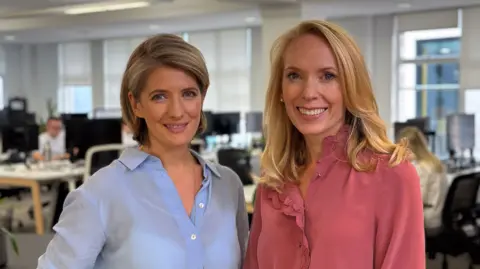 Board Intelligence
For almost 16 years, Pippa Begg ran Board Intelligence as co-chief executive with Jennifer Sundberg.
Together they grew the business, which provides analysis and services for company boards, and today it employs 200 staff and has big big name clients, including Nationwide, Rolls-Royce and Reckitt.
“We are quite different people – very much yin and yang – but I think decisions are better made with two brains rather than one as it stops hubris,” says Begg, who is London-based.
Begg and Sundberg are part of a trend, that’s seen more companies experimenting with a co-CEO leadership structure.
In 2015, there were 11 companies with co-CEOs in the Russell 3000 group of the biggest public companies in the US, while in 2024, this had more than doubled to 24, according to an analysis by public company intelligence firm MyLogIQ.
A raft of major companies also made such appointments in 2024, such as Oracle, Comcast, and Spotify. Netflix, meanwhile, has had co-CEOs since 2020.
Top corporate executives are well rewarded – a report from last year showed that chief executives at the UK’s biggest firms are paid, on average, 122 times the salary of the average full-time, UK worker.
However, there are downsides to being in charge.
According to a survey by leadership advisory firm ICEO, 56% of top executives felt burnt out in 2024.
A co-CEO model divides responsibility, accountability, and, ultimately, the burden between two people.
Leadership coach Audrey Hametner has observed that co-CEOs can take time out that sole CEOs might otherwise feel they can’t do. She recalls a CEO client who had not taken a holiday in five years, but was finally able to have a family holiday once he found a co-CEO partner.
Hametner says it also allows bosses to play to their strengths.
She gives the example of a previous client where one co-CEO worked more closely with the marketing and product departments, and the other mainly with finance, government regulatory bodies and legal.
“You may have co-CEOs where one is an outgoing and high-level thinker, who may find it more challenging to focus on all the small tasks, and the other CEO is more detail-oriented and loves to speak to the data and the nuances,” she says.
Sharing the workload may also give the co-CEOs more time with their family. That’s something they might be lacking – 60% of CEOs report spending too little time with their family, according to a study by executive search firm Russell Reynolds.
Begg took three maternity leaves of around six months in the space of five years, returning to work each time in a four-day week capacity.
Similarly, Sundberg took two maternity leaves in that period.
Begg notes that it’s unusual for a CEO on both counts.
Some female CEOs have been public about taking minimal maternity leave, with 71% of women in leadership positions taking less than six months’ leave for fear of jeopardising their jobs, according to data from That Works For Me.
The same study reveals a 32% drop in women at managerial level after having children.
Begg credits her co-CEO partnership for not turning her into another statistic.
“Without the co-CEO structure, the trade off would have either been too great for the business, or too great for the way that we wanted to have our children and have maternity leave,” she reflects.
“If we hadn’t had the co-CEO model, we probably would have felt that we needed to find a new CEO, or even sell the business, which are things that happen to so many female-run businesses because they don’t see how it’s going to work. Our experience was that this can really work.”

 Anything
It’s been the case for Dhruv Amin and Marcus Lowe, the co-founders and co-CEOs of Anything, a startup focused on “vibe coding”, which allows anyone to create an app without knowing how to code.
Thanks to the set up, Amin was able to take two paternity leaves of three weeks each in 2024 and 2025.
“Marcus has covered for me twice. We’ve both had times when we’re gunning hard for the company, and times we’re not. The structure gives us permission to be human without everything falling apart,” says Amin, who is based in San Francisco.
In Finland, Denise Johansson was able to take three weeks away from work when her father died suddenly in 2024. She has been co-CEO and co-founder of payment processing platform Enfuce with Monika Liikamaa since 2016.
“It was not only a huge emotional shock, it also came with a lot of unexpected responsibility as I inherited another business at the same time,” says Johansson, who is based in Mariehamn, in the Åland Islands.
“Monika stepped in without hesitation, took on more of the day-to-day load, and created the space I needed to deal with both grief and practical issues.”
With six children between them, Johansson and Liikamaa are also able to take time with family while the other one holds the fort.
“If my kids need me, I will be off with them – no question. We coordinate so that key moments for our children are protected, while the company still has a steady hand on the wheel,” says Johansson.
 Piranha Photography
Yet a co-CEO model has yet to become a mainstream, long-term solution. Salesforce, SAP and Marks and Spencer all appointed co-CEOs in the early 2020s, lasting no more than two years.
Tierney Remick is a Chicago-based vice chairman and co-leader of the global board and CEO practice at business consultancy Korn Ferry.
She’s observed that co-CEOs tend to work best at independent companies without complex structures, and with two people that have already worked together.
Otherwise, there can be power struggles, misalignment in vision, and confusion amongst the wider company.
“Leaders trying to establish their partnership, as well as drive the business and evolve the strategy – and doing it in a way that doesn’t create confusion in the organisation – is usually very difficult if they don’t know each other,” says Remick.
Co-CEO pairings can also be used as a type of succession planning to see if one will ultimately become the sole, core CEO, she adds.
“There’s a tremendous amount of succession planning happening at the moment. And there is the reality that the pipeline of ‘ready-now’ CEOs has decreased over the last several years,” she says.
“So we are seeing boards find different ways to expand the roles and responsibilities of high potential leaders, to see how they accelerate and grow in a market that is creating a lot of change and ambiguity every day.”
For Begg, her co-CEO days came to an end in 2024 when Board Intelligence acquired private equity backers, which became a natural point for Sundberg to stand down. Sundberg remains on the company’s advisory board.
Now Begg is the sole CEO, she acknowledges she has less time to spend with family, so her husband left his job to be more present at home.
After their youngest child started school last September, he set up a consultancy that he works on during school hours.
“He carries the load of home and family life. It still probably raises an eyebrow when he’s called into a meeting and he says it has to be between 10am and 3pm. They’ll be shocked that a man has said that,” says Begg.
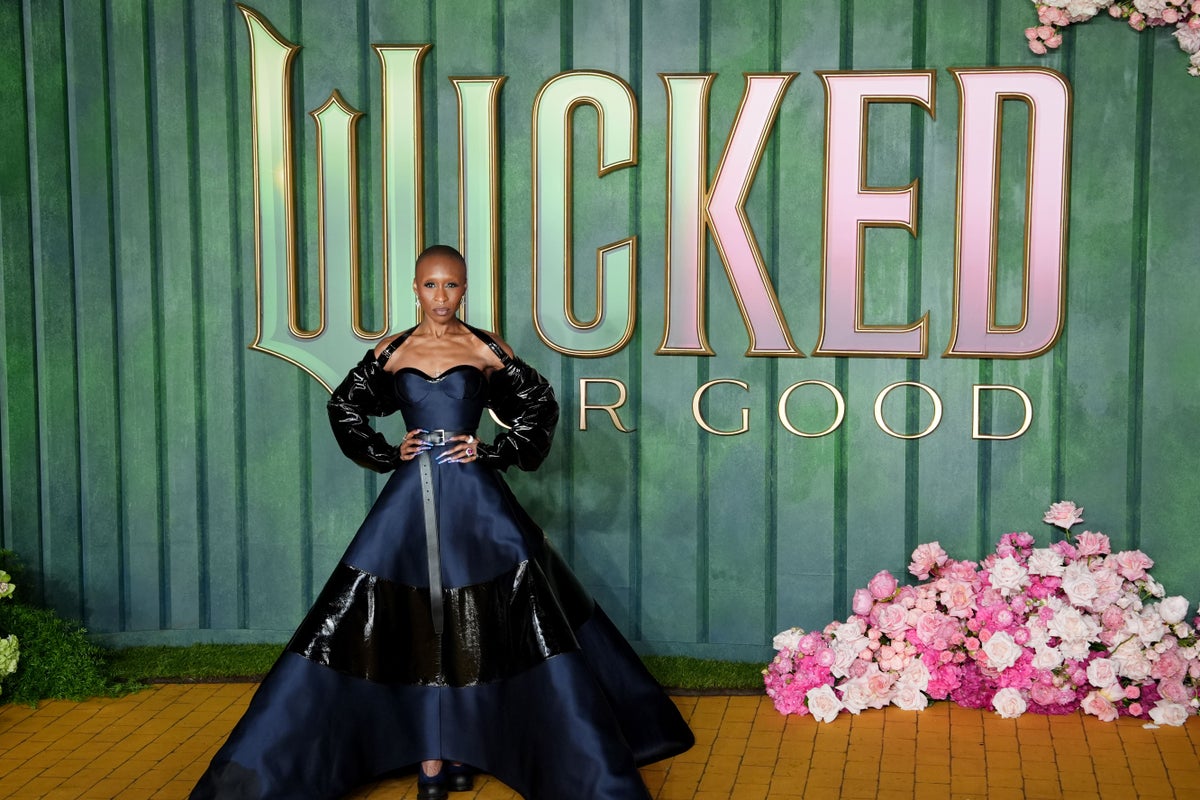
People buying, streaming and renting TV shows and films led the value of the home entertainment market to rise by 10% last year, fuelled by the popularity of Wicked and its sequel, which were both filmed in the UK.
Figures released by the British Association for Screen Entertainment (Base) in association with the Official Charts Company reveal that the value of the UK home entertainment sector rose to £5.7 billion in 2025 – an all-time high.
They said the total value of the UK media and entertainment industry last year reached £34 billion, up 8% from £30 billion in 2024.
Describing Wicked as the hit of the year, with sales and rentals totalling £17.7 million, they said its sequel, Wicked: For Good which also starred British actors Cynthia Erivo and Jonathan Bailey, was also among the top five films of the year on the Official Video Chart.
Conclave, based on the novel by British author Robert Harris and starring British actor Ralph Fiennes, was the top rental title of 2025, worth £4 million, while Gladiator II, directed by Briton Sir Ridley Scott and partly filmed in the UK, was in second place on the Official Video Chart.
Bridget Jones: Mad About The Boy, based on the best-selling book by British writer Helen Fielding, also placed highly among the most sold and rented films.
Streaming remains the audience’s top choice for watching at home, with 20.5 million homes using at least one service in the UK, and 69.5% of the population watching.
Netflix is the most popular service for UK consumers with 17.6 million subscribers in the autumn, bolstered by the success of titles such as the multi-award winning Adolescence and animated hit K-Pop Demon Hunters.
Amazon Prime Video was the second biggest channel, present in 13.6 million homes, while Disney+ was in 7.5 million UK homes.
Smaller streaming channels also saw growth, with Discovery growing to 3.2 million homes, Apple TV to 2.8 million homes, and Now in two million homes last year.
The figures show that more titles than ever were released fresh from cinemas, meaning they are available for a higher price.
There were 79 in 2025 compared with 62 in 2024.
As well as consuming TV shows and films digitally, the numbers also include data for DVD and Blu-ray sales, and show that Blu-ray and DVDs are still the first choice for many customers.
Downton Abbey: The Finale enjoyed huge DVD sales success at the end of the year with 56,500 units sold in just two weeks to secure the third top-selling spot on the end-of-year Official DVD Chart.
Meanwhile Superman was the number one title on the Blu-ray chart, contributing to the value of the Blu-ray market rising by 3.2% in 2025.
Liz Bales, Base chief executive, said: “The UK entertainment industry is a globally admired powerhouse of talent and innovation that has excelled in 2025.
“Whether it is buying, renting, streaming or in cinemas, UK-supported and created film and TV shows continue to deliver for audiences.
“The strength of the UK entertainment industry is bolstered by the diversity of channels and choices for consumers who, alongside the array of streaming services being embraced, are flocking to buy and rent options, in growing numbers.
“As we move to embrace exciting new partnerships across the industry, and welcome Government’s recognition and support for the economic contribution of the creative industries, 2026 is set to offer exciting change, further growth and a wealth of brilliant and beautiful new stories for audiences to embrace in all the ways they know and love.”

US President Donald Trump on Monday said he had imposed a 25% tariff on goods from countries with commercial ties to Iran, a move that could put pressure on Tehran as anti-government protests enter a third week.
Trump said on social media that the tariff was “effective immediately”, without offering details of what constituted “doing business” with Iran.
China is Iran’s largest trading partners, followed by Iraq, the United Arab Emirates, Turkey and India.
The new tariff comes after Trump threatened to intervene militarily if Tehran killed protesters. White House spokeswoman Karoline Leavitt said on Monday that military options including air strikes were still “on the table”.
“Any Country doing business with the Islamic Republic of Iran will pay a Tariff of 25% on any and all business being done with the United States of America,” Trump wrote on Truth Social on Monday.
“This Order is final and conclusive,” he added.
The White House did not share additional information about the tariffs, including which countries’ imports will be hit hardest.
Anger over the plummeting value of the Iranian currency, the rial, sparked protests in late December, which have grown into a crisis of legitimacy for Iran’s Supreme Leader, Ayatollah Ali Khamenei.
The US-based Human Rights Activist News Agency (HRANA) says it has verified the deaths of nearly 500 protesters and 48 security personnel in Iran, while sources tell the BBC the death toll could be much higher. Thousands more have reportedly been arrested.
However, an internet blackout since Thursday evening has made it difficult to obtain and verify information. The BBC and most other international news organisations are unable to report from inside Iran.
Trump has threatened to intervene, and said on Sunday that Iranian officials had called him “to negotiate” – but added “we may have to act before a meeting”.
International sanctions over Iran’s nuclear programme have had a severe impact on the country’s economy, which has also been weakened by government mismanagement and corruption.
On 28 December shopkeepers took to the streets of Tehran to express their anger at another sharp fall in the value of the rial against the US dollar on the open market.
Iran’s currency has sunk to a record low over the past year while inflation has soared to more than 40%, resulting in sharp price rises for everyday items like cooking oil and meat.
Business
Indias Net Direct Tax Collections In FY26 Rise, Grow 8.82% To Rs 18.38 Lakh Crore Till Jan 11

New Delhi: India’s net direct tax collections for the financial year 2025–26 recorded strong growth of 8.82%, reaching Rs 18.38 lakh crore as of January 11, 2026, compared with Rs 16.89 lakh crore collected during the same period last year, according to official data released by the Income Tax Department on Monday.
Gross direct tax collections stood at Rs 21.50 lakh crore, marking a 4.14% increase over the Rs 20.64 lakh crore collected in the corresponding period of FY25. Corporate tax collections rose modestly to Rs 10.47 lakh crore, while non-corporate tax collections—which include taxes paid by individuals and other entities—increased to Rs 10.58 lakh crore.
Refunds issued during the period declined sharply by 16.92% to Rs 3.12 lakh crore from Rs 3.75 lakh crore in the previous year, contributing to higher net collections. Net corporate tax collections rose to Rs 8.63 lakh crore, while net non-corporate tax collections increased significantly to Rs 9.30 lakh crore. Securities Transaction Tax (STT) collections remained stable at around Rs 44,867 crore, while collections from other taxes were marginal during the period.
The Union Budget 2026 will be presented on February 1. Earlier, in an email interview with ANI, Sonal Badhan, Economist at Bank of Baroda, said the Union Budget 2026 is likely to target 8.5–9% growth next year and increase capital expenditure to Rs 12–12.2 lakh crore.
“We expect the government to meet its fiscal deficit target of 4.4% for FY26. For next year, we estimate the deficit ratio will be lowered by 30–40 basis points to 4–4.1%. Capital expenditure allocation will be of key interest. In the ongoing fiscal year, the government has already met around 60% of the budgeted target till November 2025,” the BoB economist said.


Louis Vuitton marks 10 years of Unicef partnership with limited-edition Silver Lockit

College watchdog group nixed 500-plus NIL deals

Chelsea Handler roasts Tom Brady: ‘So boring’

-

 Politics5 days ago
UK says provided assistance in US-led tanker seizure
-
 Entertainment1 week ago
Minnesota Governor Tim Walz to drop out of 2026 race, official confirmation expected soon
-

 Sports1 week ago
VAR review: Why was Wirtz onside in Premier League, offside in Europe?
-

 Entertainment5 days ago
Does new US food pyramid put too much steak on your plate?
-
 Business1 week ago
8th Pay Commission: From Policy Review, Cabinet Approval To Implementation –Key Stages Explained
-

 Entertainment5 days ago
Why did Nick Reiner’s lawyer Alan Jackson withdraw from case?
-
 Business5 days ago
Trump moves to ban home purchases by institutional investors
-

 Sports1 week ago
FACI invites applications for 2026 chess development project | The Express Tribune