

Business
Reviving Pakistan’s seafood industry, a path to economic self-sufficiency | The Express Tribune


With corruption curbed, sustainable practices, seafood industry can once again be a foreign exchange earner
Due to illegal and overfishing by trawlers within the 12-nautical-mile zone, the fisherfolk and their children are dying of hunger and are being burdened by heavy loans from loan sharks that they may never be able to pay throughout their lifetime. Photo: file
KARACHI:
The days are remembered when seafood was exported to the US, Japan, South Korea, Europe, etc where the prices fetched were much higher than where the seafood is being exported at this time.
Each and every factor leads to the dent in the economy of the country where the urge to earn foreign exchange continues. The leaders are frequently travelling seeking a few million or billion USD as loan to keep up with the need of meeting the inevitable financial demands but least attention is being given to overcome this dilemma and crisis.
Why then a country blessed by the Creator of every means available begs. The saying goes, “The intelligent learn from other’s mistakes while the fools learn from their own”, can the policymakers be worse than the fools to repeatedly commit the same mistakes rendering the country to fall in a deep financial quagmire?
In the need for short-term benefits, the hen that laid the golden eggs has been eaten and now without any golden eggs, the only option left, leads to begging for just enough to keep the country going, it’s so pathetic.
Seafood, once a major source of foreign exchange earnings, can be revived to its former prominence, provided corruption is curtailed to an extent as it may be impossible to curtail it one hundred per cent. There is still a short time left to protect coastal fish and marine life to benefit the fisherfolk and the country’s financial wealth to generate foreign exchange earnings. It is imperative to focus on these high-impact actions before it is too late and the matter reaches a point of no return:
Individual actions
1-Restrict the use of fermented sardines/small fish for poultry feed.
2-Choose sustainable seafood: Use guides like Monterey Bay Aquarium’s Seafood Watch to avoid overfished species.
3-Reduce chemical runoff: Use non-toxic garden products and minimise fertilisers; excess nutrients cause “dead zones” in coastal waters.
4-Eliminate plastic: Single-use plastics entangle marine life and degrade into harmful microplastics.
5-Fish responsibly: Adhere to local size and bag limits to ensure juvenile fish reach breeding age.
Community & policy efforts
1-Protect key habitats: Advocate for the preservation of mangroves, seagrass beds, and coral reefs, which serve as vital nurseries for 25% of all marine life.
2-Support marine protected areas (MPAs): These “underwater parks” allow fish populations to recover and spill over into fishing zones with full participation of the local fisherfolks.
3-Participate in cleanups: Removing debris from beaches prevents waste from entering the food chain.
4-Restrict fishing by trawlers within 12 nautical miles of the coast with the participation of the local fisherfolk by legally empowering them.
5-Restrict the use of illegal nets that should be punishable by serious consequences.
6-For the provincial governments to empower the Pakistan Marine Security Agency and the Coast Guard to ensure compliance with fishing policies as the governments of Sindh and Balochistan seemed to have miserably failed in this matter.
Due to illegal and overfishing by trawlers within the 12 nautical mile zone, the fisherfolk and their children are dying of hunger and are being burdened by heavy loans from loan sharks that they may never be able to pay throughout their lifetime. Small boats take their diesel and rations on credit and spend days in the ocean under the open sky. They return with hardly enough fish to sell and pay back the loans against expenses incurred and this cycle burdens them more and more reaching a point, where it becomes impossible for them to cater for their basic expenses.
Over and above that the trawlers are illegally fishing within the restricted 12 nautical mile range, they are now using search lights at night to lure the small fish from the bottom and around sweeping them by using illegal fishing nets. The coastal belt can be seen lit with lights at night but the government functionaries fail to take any action and look the other way.
Furthermore, the fish wealth has depleted and is further depleting while reducing the export of good quality/species to earn the much-needed foreign exchange for the country. Furthermore, due to the dilapidated hygienic conditions, many high-paying countries have banned import of seafood from Pakistan.
This article is written to awaken all those at the helm of affairs that this is not a small issue and warrants immediate action and cognizance to save the fish wealth in the best interest of the country. Improving the fish wealth can be a step towards breaking the beggar’s bowl.
The writer is an enthusiast angler and independent director on the board of Saindak Metals, Ministry of Energy
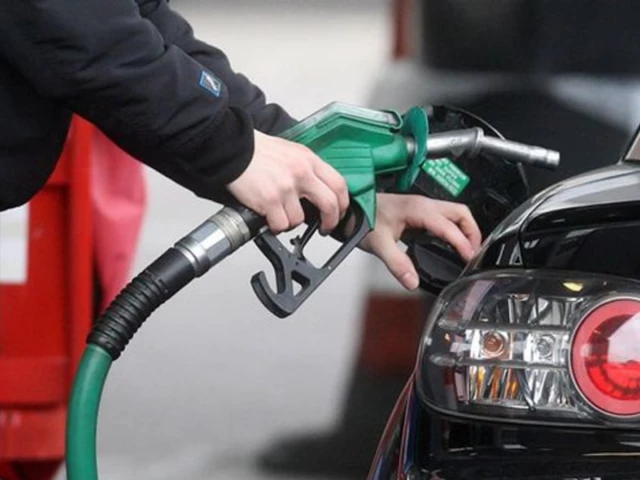



NEW DELHI: The West Asia conflict is pushing govt to look at a faster transition towards renewable energy, including the possibility of increasing ethanol blending in petrol from 20-25%, although in a calibrated manner. This will come along with increased refining capacity within the country, so that there is a buffer in the system and greater domestic resilience, those familiar with the discussions said, pointing out that sustaining refineries at 100% capacity is not sustainable.While Barmer refinery has begun operations, expansion at Numaligarh is underway and work on integrated refineries on the west coast is also under focus. Apart from a mega refinery in Maharashtra, a new facility in Gujarat is also planned.Officials said rising use of renewables, biofuels and hydrogen in the energy mix was no longer just an environmental issue, but a strategic necessity in a situation like the present one, where the military conflict in West Asia has disrupted global energy supplies, triggering a supply crisis and a surge in oil and gas prices.According to officials, 20% ethanol blending has helped India save 4.5 crore barrels of crude annually and reduce foreign exchange outflow by around ₹1.5 lakh crore so far. Given the concerns over fuel efficiency and impact on vehicles, govt is expected to take a gradual approach that addresses the anxiety on ethanol blending. The third pillar on energy is expanding the strategic petroleum reserves.

A cup of coffee and strawberry frosted donut with sprinkles at a Dunkin’ Donuts location in Los Angeles, Sept. 6, 2017.
Patrick T. Fallon | Bloomberg | Getty Images
Dunkin’ and Buffalo Wild Wings owner Inspire Brands has confidentially filed for an initial public offering, the company announced on Friday.
If Inspire goes public, it will be one of the biggest-ever restaurant offerings. Private equity firm Roark Capital, which backs Inspire, is reportedly seeking a valuation of roughly $20 billion.
Inspire was founded in 2018 through a merger between Arby’s and Buffalo Wild Wings. Acquisitions followed: Sonic Drive-In later in 2018 and Jimmy John’s in 2019. And in 2020, Inspire took Dunkin’ and its sister chain Baskin Robbins private in an $11 billion deal.
Across those six chains, Inspire has more than 33,300 restaurants worldwide and $33.4 billion in annual sales, according to the company’s website.
Inspire isn’t the only restaurant company pursuing an IPO. Last month, Jersey Mike’s also announced that it had confidentially filed with the Securities and Exchange Commission.
The market for initial public offerings has been tepid, although that could change later this year. Market volatility, economic uncertainty and recent poor performance among IPO stocks has led to a backlog of listings.
However, several blockbuster IPOs, such as the SpaceX offering that could value the company at more than $1 trillion, are anticipated in the coming months.
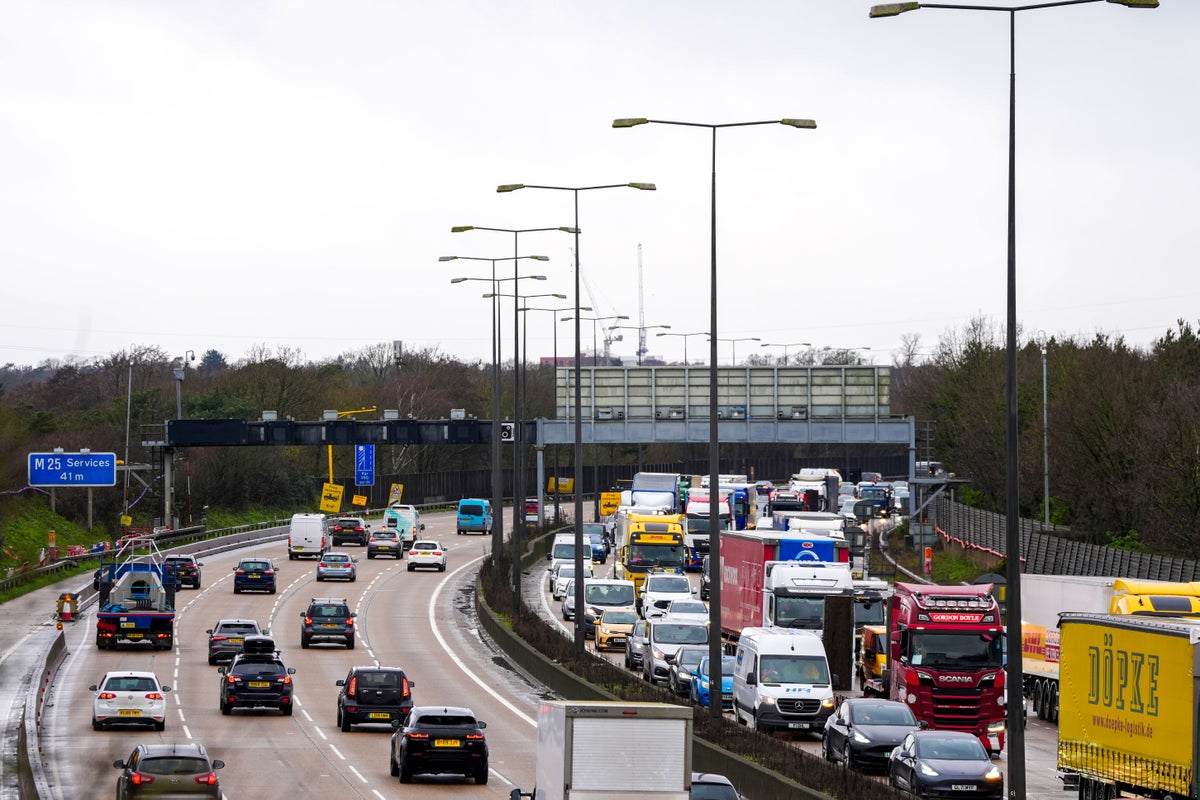
Millions of car finance payouts are in jeopardy after the UK’s financial watchdog indicated its compensation scheme faces significant delays, changes, or even collapse.
This uncertainty stems from four legal challenges against the Financial Conduct Authority (FCA).
The FCA has advised motor finance firms to prepare for the possibility that its redress scheme, which could see an average payout of £829, may not proceed.
The regulator stated that while a hearing date is unclear, these cases are unlikely to be heard before October.
In the meantime, it is in discussions about the “possibility of suspending some elements” of its compensation scheme, while still urging lenders to prepare for payouts.
But the regulator said it was also considering its options should parts of the scheme be quashed by the courts, including proceeding with a revised version or asking lenders to plan for a scenario where “there would be no scheme”.
This could mean lenders need to be ready to respond to complaints from car finance customers individually, rather than under the rules of an industry-wide programme set by the FCA.
“Many people will be frustrated that the legal action will delay payouts due to begin this year,” the FCA said.
“We remain committed to ensuring consumers receive any compensation owed as promptly as possible.”
The FCA set out the final details of its compensation scheme in March, which it estimated could cost the industry about £9.1 billion in total.
It had been expecting millions of claims to be paid out this year and the vast majority settled by the end of 2027.
The financial services arms of carmakers Volkswagen and Mercedes-Benz and the car finance arm of French bank Credit Agricole, as well as Consumer Voice, a group representing consumers, are asking the courts to quash the scheme, arguing the rules are unlawful.
“Between the four separate legal challenges, it is claimed in effect that the FCA’s approach to establishing the schemes has been both unduly favourable to consumers and unduly favourable to lenders,” the watchdog said.
At least one claim alleges that the FCA has breached the rights of lenders under the 1998 Human Rights Act, according to the watchdog.
Despite the uncertainty of the legal cases, the watchdog is still advising consumers to complain directly to their lender if they think they might be owed compensation, which they can do for free using a template letter on its website.


Timberwolves’ coach Finch blasts Tony Brothers for ‘unprofessional’ conduct

Top Sri Lankan Buddhist monk arrested over alleged sex abuse

Romeo Beckham shares loved up moment with girlfriend Kim Turnbull

-

 Politics6 days ago
Iran weighs US reply delivered via Pakistan as Trump signals opposition to deal terms
-

 Tech1 week ago
Almost half of UK businesses hit by cyber attacks | Computer Weekly
-

 Tech1 week ago
This Indigenous Language Survived Russian Occupation. Can It Survive YouTube?
-

 Fashion1 week ago
Canada’s Lululemon appoints Esi Eggleston Bracey to board of directors
-

 Fashion1 week ago
US’ J.Jill, Inc. appoints Kimberly Wallengren as CMO
-

 Entertainment1 week ago
David Allan Coe, country singer who wrote “Take This Job and Shove It,” dies at age 86
-
 Business1 week ago
Government hikes jet fuel prices by 5% for international airlines – The Times of India
-

 Fashion1 week ago
US’ Gap partners with Victoria Beckham on timeless wardrobe essentials