

Business
PSX plunges over 1,100 points in early trading | The Express Tribune

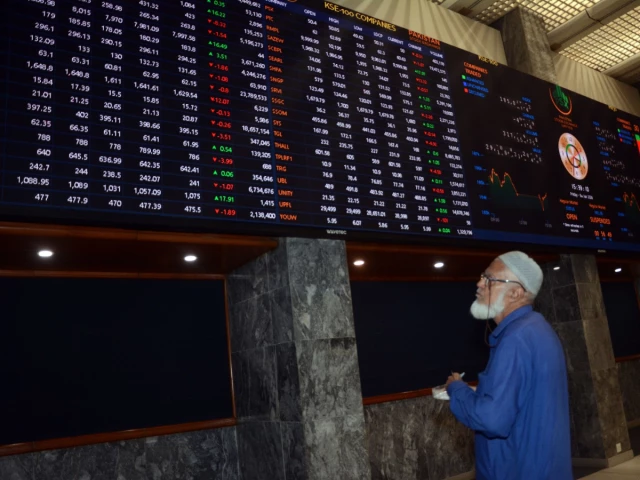
Overall market participation was strong, as 1,066 million shares were traded with a total value of Rs. 49 billion. KEL led the volume chart, with 195.8 million shares..Photo: Express
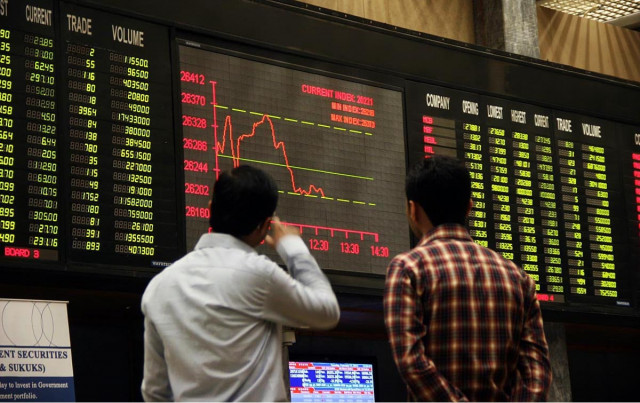
The Pakistan Stock Exchange (PSX) broke a positive streak during early trading on Friday, with the benchmark KSE-100 Index dropping more than 1,100 points before trading was suspended.
As of the latest available data, the index stood at 171,728.22, reflecting a loss of 1,166.05 points or 0.67% from Thursday’s closing of 172,894.27. The market touched an intraday high of 172,048.16 but fell sharply to a low of 170,393.12, showing significant volatility within the first hour of trading.
Trading volume remained robust, with over 176.29 million shares changing hands, generating a total value of approximately Rs12.45 billion.
Market analysts attribute the decline to multiple factors, including profit-taking after recent gains, concerns over macroeconomic indicators stemming from the Israel-US war on Iran, and possible foreign selling pressure.
Rising global oil prices and uncertainty in regional markets may also have contributed to the bearish sentiment.
The broader market saw widespread selling, though specific sectoral performances could not be immediately detailed due to the suspension. Blue-chip stocks appeared under pressure, dragging the index lower.
Read: PSX stays bullish, nears 173,000
On Thursday, PSX maintained its bullish momentum as investor sentiment strengthened amid easing geopolitical tensions in the Middle East, pushing the benchmark KSE-100 index higher by 1,190 points to close just below the 173,000 level.
Strong buying in banking, cement, oil and fertiliser stocks kept the market firmly in positive territory despite mid-session profit-taking that triggered temporary volatility.
“Sentiment remained positive throughout the day, with strength emerging from cement, oil & gas, power, and commercial bank stocks, keeping the benchmark comfortably in the green,” said Ahmed Sheraz of KASB KTrade.
Arif Habib Limited (AHL) noted that the Pakistan Stock Exchange extended its gains, with the benchmark KSE-100 index climbing 1,189.5 points to close at 172,894.3 after touching an intra-day high of 173,275.
Market sentiment remained upbeat as investors responded positively to easing geopolitical concerns surrounding the Strait of Hormuz and expectations of reduced regional tensions.




Lake Oswego in Oregon.
Bradleyhebdon | Istock Unreleased | Getty Images
A version of this article first appeared in CNBC’s Inside Wealth newsletter with Robert Frank, a weekly guide to the high-net-worth investor and consumer. Sign up to receive future editions, straight to your inbox.
A wave of states deciding to take aim at a tax incentive for investors and startup founders could sway some high-net-worth residents to relocate, lawyers to the wealthy told Inside Wealth.
The One Big Beautiful Bill Act turbocharged the tax breaks on qualified small business stock, better known as QSBS. However, some states, including Maine and Oregon, have targeted the tax incentive in response to federal funding cuts.
“Tax policy has consequences, both good and bad, and I think that the states need to figure out what makes the most sense for them,” said David Blum, partner and chair of Akerman’s national tax practice group. “Someone looking for a substantial exit could have multiple homes already.”
Blum noted that several billionaires have made high-profile departures from California as a state billionaire tax proposal gains steam. Google co-founder Sergey Brin, who has bought mansions in Nevada and Florida, is funding two ballot initiatives that take aim at the wealth tax measure.
The QSBS exemption, introduced during the Clinton administration, was designed to encourage investing and creating small companies. The federal carve-out allows investors and founders to reduce their capital gains taxes when selling stock directly acquired from a qualifying C corp.
In order to claim the full exemption, the stock must be held for more than five years. Prior to the OBBBA, the maximum exemption from capital gains taxes was $10 million or 10 times the original basis of the investment, whichever is greater. The OBBBA raised the exclusion to $15 million. The bill also raised the maximum size of qualifying “small businesses” from $50 million to $75 million in gross assets.
Last month, Maine and Oregon passed legislation to decouple from the federal QSBS exemption, meaning that taxpayers will have to pay state income taxes on startup exits. Similar efforts in New York and Washington state failed to pass. The District of Columbia Council voted to decouple from several provisions of the OBBBA, but Congress passed a resolution to block that move.
Four states already tax gains on QSBS: Alabama, Mississippi, Pennsylvania and, most notably, California, the nation’s venture-capital center.
Proponents of QSBS reform argue that the regime primarily benefits the wealthy. Research by the Department of Treasury found that taxpayers who earn more than $1 million account for nearly 75% of gains excluded.
Lawyer Steve Oshins told Inside Wealth that QSBS laws and other tax proposals aimed at the wealthy encourage high earners to move to other states.
The tax burden depends on where the shareholder lives when they sell their stock, which gives clients time to plan. Oshins said it is possible in some states to use trusts to avoid state income taxes on QSBS. Delaware, Nevada and Wyoming are popular jurisdictions for establishing these trusts.
For instance, he said, a resident of Oregon could transfer stock to an incomplete non-grantor trust set up in a state that doesn’t tax trust income, like Nevada. As long as the trust is not administered in Oregon and none of the trustees live there, the trust’s capital gains would not be subject to Oregon income taxes.
But other states, including Maine, have more stringent rules, he said. Non-grantor trusts are subject to state income if funded by a Maine resident or created by the will of one, according to Oshins.
That said, the most straightforward course of action is to move.
“Let’s say a client is about to hire me and says, ‘I have a summer ho me in Florida, I’m thinking of moving there,'” Oshins said. “I’ll say, ‘Let’s wait a few months. Move there. Then let’s set up your trust.'”
But changing your domicile is easier said than done, Blum said. To pass muster with state tax authorities, clients have to do more than change their voter registration and and spend at least 183 days in another state.
“When it comes to changing residency and your domicile, you really have to move and uproot your life,” he said.
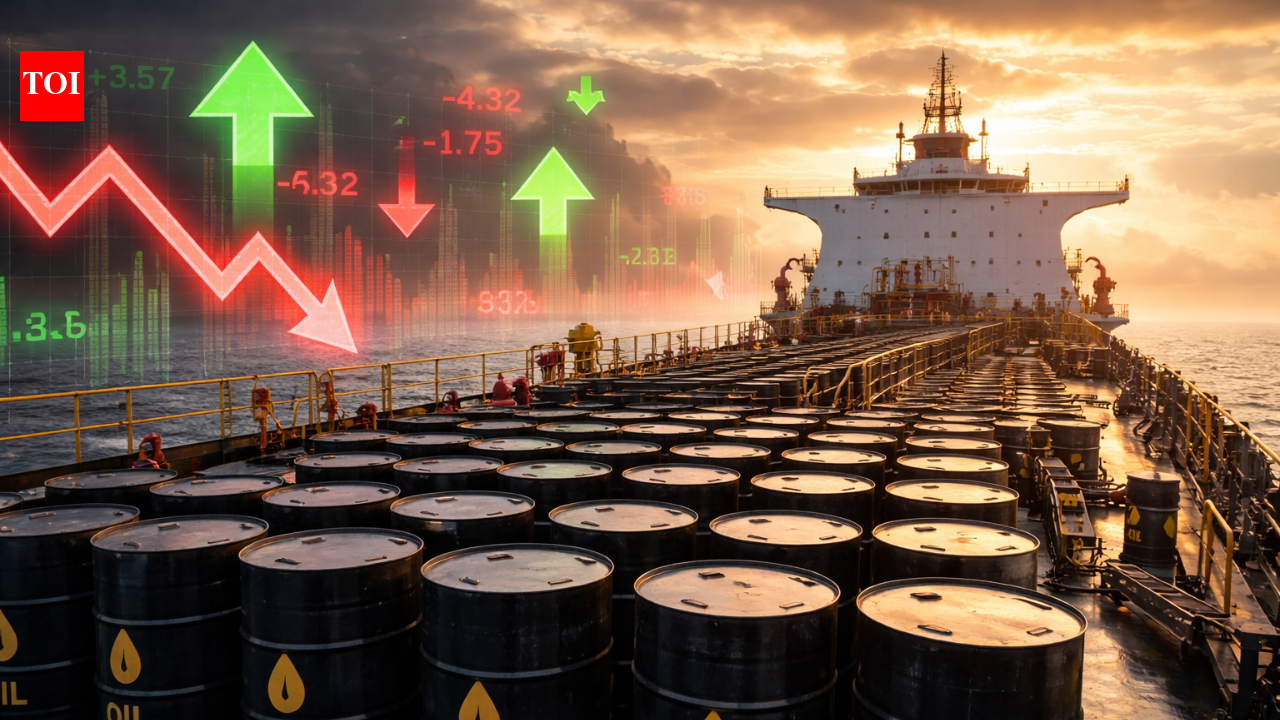
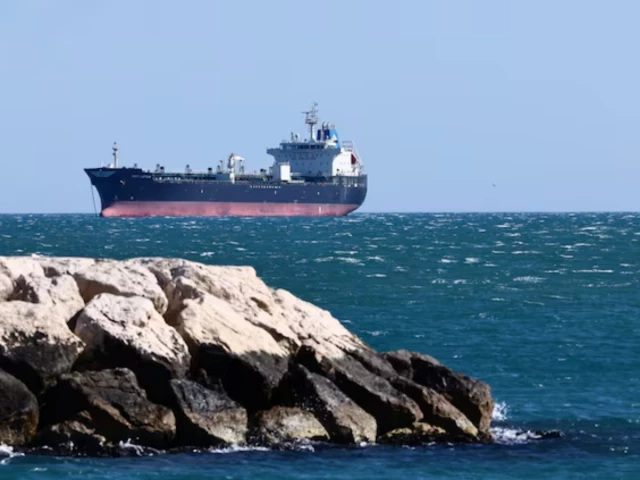
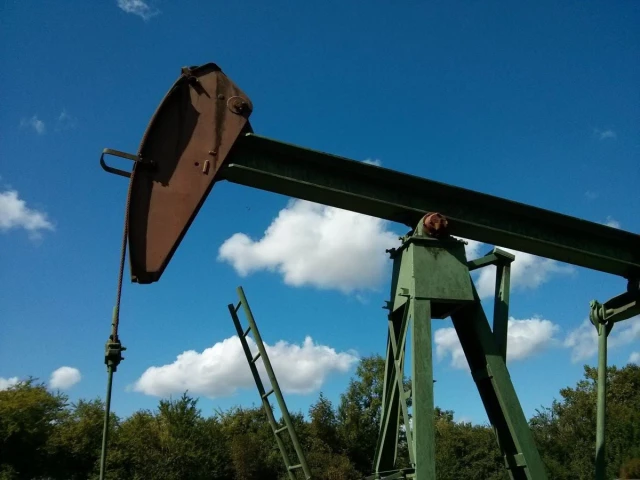
The world’s busiest oil supply passage is in a chokehold, and the ripple effects are being felt across nearly every corner of the globe. The pressure is already showing up everywhere: at petrol stations, in grocery bills, and along global trade routes. The conflict, which has continued to intensify since February 28, has already pushed crude prices beyond the $100 mark, but experts warn a far steeper surge may lie ahead, with prices potentially soaring past a whoppping $167 per barrel and even to $200.With war tensions escalating in the Middle East, economists and energy experts are warning that if the Strait of Hormuz remains closed through September, the fallout could trigger one of the worst energy and trade shocks in modern history.According to projections from the Federal Reserve Bank of Dallas, cited by The Washington Post, a prolonged closure of the Strait could send oil prices soaring above $167 a barrel. However, some analysts are warning of an even darker scenario with some believing crude prices could surge to $200 a barrel if disruptions intensify. A recent note from Australian investment bank Macquarie Group suggested that if the conflict continues through June, oil prices could briefly surge above $200 per barrel.However, Vikas Dwivedi, global oil and gas strategist at Macquarie, told CNN earlier that the probability of such a scenario is around 29%. At the same time, the expert also noted that even if the war ends, oil could still climb to $200 a barrel if the Strait of Hormuz remains largely closed, a possibility that US President Donald Trump also raised.
Biggest crisis in history
Fatih Birol, head of the International Energy Agency, had already described the current oil supply turmoil as “indeed the biggest crisis in history” in an interview with France Inter radio. But the fallout from the Middle East conflict spills far beyond soaring fuel prices, with its impact threatening to disrupt global trade, strain supply chains, and deepen economic uncertainty worldwide.An analysis by independent trade monitoring body Global Trade Alert, reported by the Financial Times, suggests that prolonged conflict-driven oil market instability could significantly weaken global commerce. Using models based on earlier shocks such as the Covid-19 pandemic and the 2008 commodity crash, the study found that continued fuel price volatility could reduce global trade growth by 1.75% by the end of next year, a steep drop from prewar expectations.Simon Evenett, founder of Global Trade Alert and trade expert at IMD Business School in Lausanne, warned that world merchandise trade may prove far less resilient than early signals suggest. He said sustained fuel price volatility slows global trade growth, with the full economic impact often taking up to 19 months to materialise. His warning was stark: “The worst may be ahead of us.”Such a downturn could seriously dent the World Trade Organization’s March forecast, which had projected global goods trade growth of 1.9% in 2026 before improving to 2.6% in 2027. The WTO had already estimated that sustained high oil prices could shave 0.5 percentage points off 2026 growth, but the latest worst-case scenarios suggest the hit could be far deeper.From surging fuel costs and strained supply chains to slowing trade and recession fears, the Middle East conflict is no longer just a regional war story. If the Strait of Hormuz remains trapped in crisis, the shockwaves may reshape the global economy long after the headlines fade.
Middle East continues to boil
Meanwhile, the Middle East crisis has shown occasional signs of cooling, every peace push so far has ended in a stalemate. The latest standoff came on Thursday when US President Donald Trump claimed that three American naval destroyers were fired upon while passing through the Strait of Hormuz, though none of the vessels sustained damage. Trump also issued a fresh warning to Iran, threatening stronger military action if Tehran does not move quickly to sign a deal.In a post on Truth Social, Trump said the three “world class” US destroyers had transited the Strait successfully despite coming under attack, adding that while the American ships were unharmed, Iranian attackers and several small boats were “completely destroyed.”The conflict began on February 28, when US and Israel launched joint attacks on Iran, after which Tehran tightened its noose on the crucial Strait of Hormuz. Since then, oil supplies across the globe have been disrupted and crude prices have continued to swing beyond $100 per barrel, even touching $126 per barrel mark.
Oil prices rose and stock markets pulled back slightly on Friday after the US and Iran exchanged fire in the Strait of Hormuz, although Asian markets remained on course for their strongest weekly performance in years on the back of an AI-driven rally.
Brent crude rose 1.3 per cent to $101.60 per barrel as the renewed Middle East hostilities unsettled markets that had spent much of the week pricing in a negotiated resolution.
Iran targeted three US destroyers with missiles, drones and small boats in the strait on Thursday, according to the US military, which said the attacks were successfully intercepted and none of the warships were damaged. Strikes were then carried out against Iranian military facilities, including launch sites and command and control centres, it claimed.
Iranian state media said the army and the navy exchanged fire with “the enemy” near Qeshm Island in the strait, while explosions were reported elsewhere.
President Donald Trump branded Iran’s leaders “lunatics” and warned that the US would “knock them out a lot harder, and a lot more violently” if they did not sign a deal to end the conflict “fast”.
“A normal country would have allowed these destroyers to pass, but Iran is not a normal country,” he posted on Truth Social. He nevertheless told reporters that the ceasefire was still in effect.
“They trifled with us today. We blew them away,” he said. “They have to understand – if it doesn’t get signed, they’re going to have a lot of pain.”
“It could happen any day,” the US president claimed when asked how close an agreement was, “and it might not happen.”
A further complication emerged this week when Lloyd’s List Intelligence reported that Iran had set up an agency, called the Persian Gulf Strait Authority, as the only valid authority to provide permission to vessels transiting the strait, and had begun emailing shipping firms an application form for passage. The firm said the move could be designed to ratchet up pressure on Washington.
The US and its Gulf allies are now seeking backing at the United Nations for a resolution condemning Iran’s stranglehold on the strait, though it faces a likely veto from Russia and China.
In spite of renewed hostilities in the Middle East, Asian stock markets enjoyed a good week, driven by surging demand for AI-linked chipmakers.
South Korea’s Kospi was heading for a weekly gain of 12 per cent, its largest since 2008, as Samsung and SK Hynix surged. Taiwan’s benchmark index was up 6.9 per cent for the week and Japan’s Nikkei 4.5 per cent, having hit a record intraday high on Thursday.
On Friday, however, MSCI’s broadest index of Asia-Pacific shares outside Japan fell 0.8 per cent and the Kospi slipped as traders locked in profits, while the Nikkei was 0.4 per cent lower, dragged down by a fall in SoftBank shares after Arm Holdings warned of trouble securing supply for its new AI chip. S&P 500 futures rose 0.2 per cent.
“Despite ongoing hostilities and still-elevated oil prices, markets are pricing a limited duration,” Marija Veitmane, head of equity research at State Street Markets, told Reuters, noting that Asia and America were attracting the most buying at Europe’s expense.
European stock futures fell 0.7 per cent.
Investors are watching Friday’s non-farm payrolls report in the US, where jobs are expected to have increased by 62,000 in April after rebounding 178,000 in March. Local government elections across Britain are also in focus, with poor results expected for the ruling Labour Party.
“Gilts are already under scrutiny due to inflation risks and adding political uncertainty to the mix could further push global investors to look elsewhere,” ING analysts said.
Sterling held steady at around $1.36. The yen was at 156.9 per dollar, having struggled to sustain gains beyond 155 after suspected Japanese intervention to the tune of nearly $70 billion since last Thursday. The euro bought $1.1731 and the Australian dollar $0.7210. China’s yuan, Asia’s best-performing currency since the war broke out, was on the cusp of strengthening past 6.8 to the dollar, near the strongest level since 2023. The 10-year US Treasury yield held at 4.39 per cent, while Bitcoin was inching towards a sixth straight consecutive weekly gain at $79,460.

States crack down on tax break for wealthy investors

New orders in German manufacturing up 5% MoM in Mar 2026: Destatis

We Asked Coffee Pros to Blind Test Coffee Machines. The Results Were Surprising

-
 Business1 week ago
PSX plunges over 4,800 points | The Express Tribune
-
 Politics5 days ago
Iran weighs US reply delivered via Pakistan as Trump signals opposition to deal terms
-

 Tech1 week ago
Almost half of UK businesses hit by cyber attacks | Computer Weekly
-
 Business1 week ago
Apollo Sports Capital and Tom Dundon make landmark $225 million investment in pickleball
-

 Tech1 week ago
This Indigenous Language Survived Russian Occupation. Can It Survive YouTube?
-

 Entertainment1 week ago
David Allan Coe, country singer who wrote “Take This Job and Shove It,” dies at age 86
-
 Business1 week ago
Government hikes jet fuel prices by 5% for international airlines – The Times of India
-

 Fashion7 days ago
US’ Gap partners with Victoria Beckham on timeless wardrobe essentials