

Politics
Turkiye’s Erdogan visits Saudi Arabia as ties between two nations warm

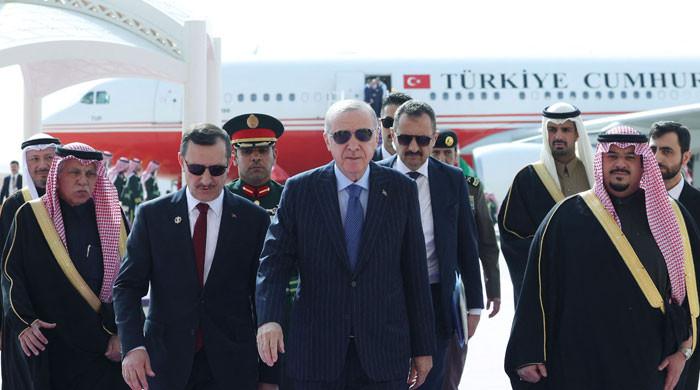
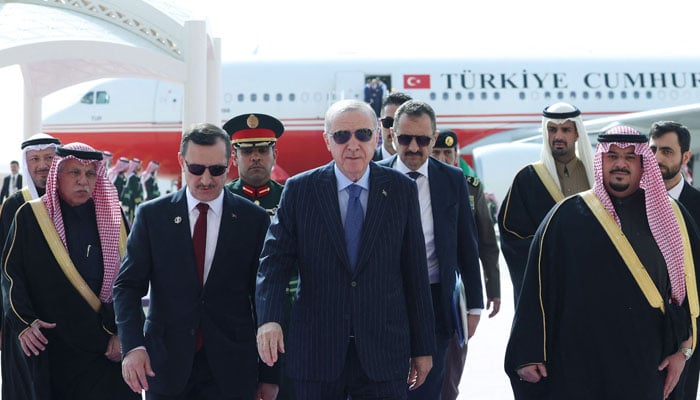
RIYADH: Turkish President Recep Tayyip Erdogan arrived in Riyadh on Tuesday, Saudi media said, his first visit to the kingdom in over two years.
Ties between Turkiye and Saudi Arabia have steadily recovered in recent years, with the countries cooperating on a range of diplomatic issues.
This includes support for Gaza and backing Syria’s new government in the wake of the overthrow of Bashar al-Assad in 2024.
Erdogan is set to meet Saudi Crown Prince Mohammed bin Salman during the visit — his first to the kingdom since July 2023, which was part of a Gulf trip aimed at drumming up investments.
There was no official indication of what the two sides would discuss.
But Turkish state-run news agency Anadolu reported that they would discuss the “deepening cooperation” between the countries, as well as regional and global developments.
It added that Erdogan would then travel to Cairo on Wednesday.
The meeting in Riyadh comes days ahead of a potential round of talks in Turkiye between the United States and Iran on February 6, an Arab official told AFP early Tuesday, after Tehran called for the restart of nuclear talks and Washington warned of consequences if a deal was not reached.
Erdogan has emerged as one of the key mediators leading a diplomatic push to find a resolution between the long-time foes to head off open conflict between the two sides.
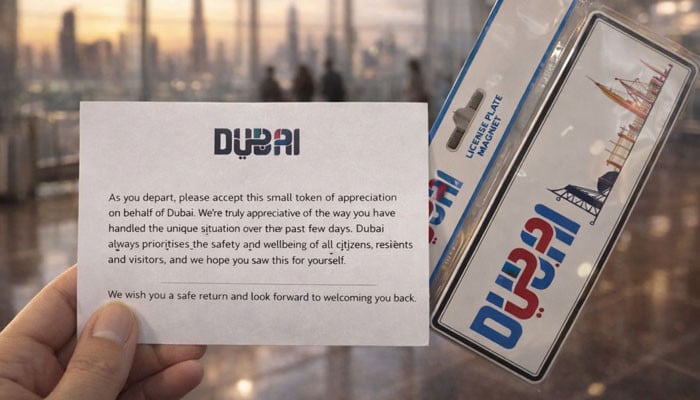
Dubai: Dubai has introduced a thoughtful gesture to express care and appreciation for travellers, offering departing passengers souvenir gifts and thank-you messages as regional tensions continue.
Dubai authorities said the initiative reflects gratitude for visitors’ patience and cooperation during a period of heightened security concerns, while reaffirming the emirate’s commitment to safety and well-being.
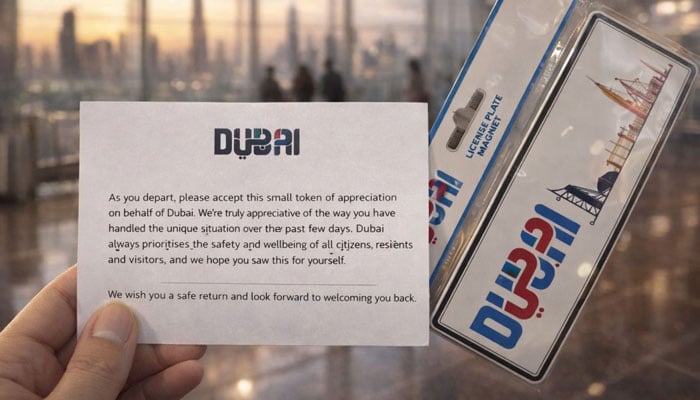
At Dubai Airports, passengers leaving the city are being handed small tokens of appreciation along with printed cards thanking them for their understanding and wishing them a safe journey home, while expressing hope to welcome them back soon.
Although no formal statement has been issued, the move appears aimed at maintaining traveller confidence and reinforcing Dubai’s image as a reliable global hub.
Airport operations have continued with some disruption despite the regional situation, supported by contingency planning and enhanced safety measures for residents and international travellers alike.
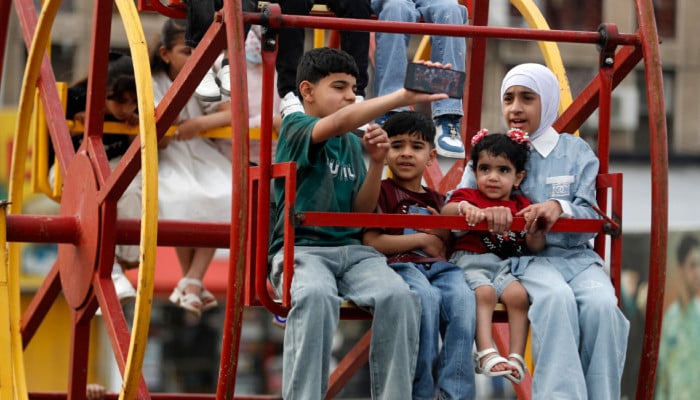
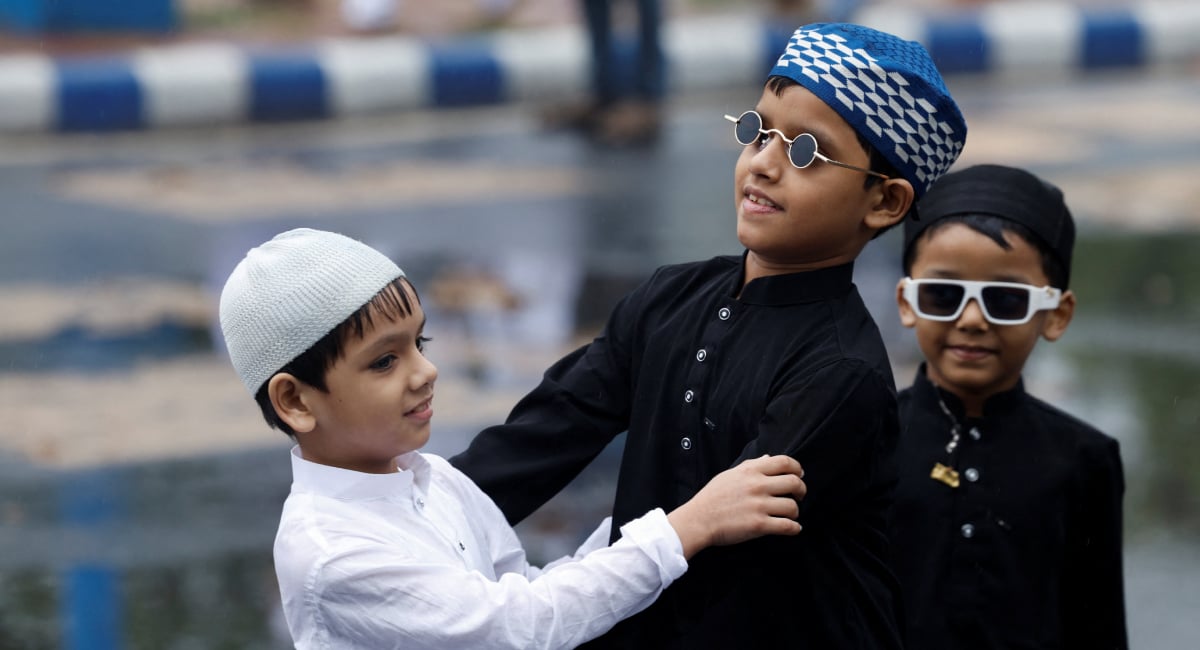
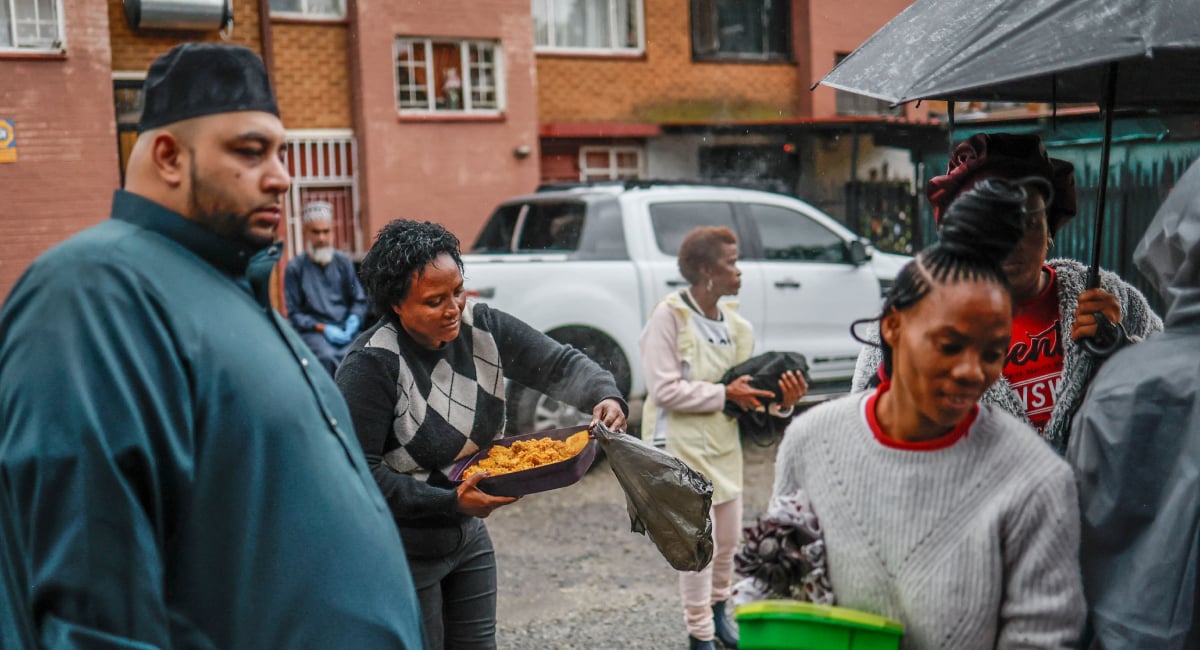
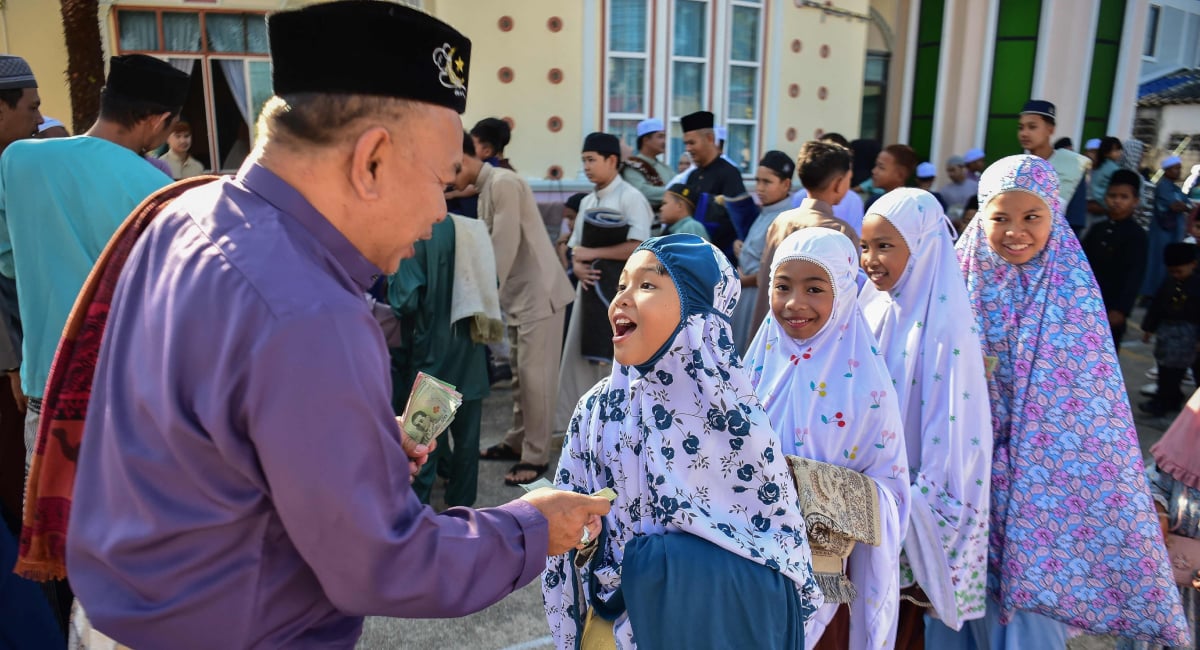
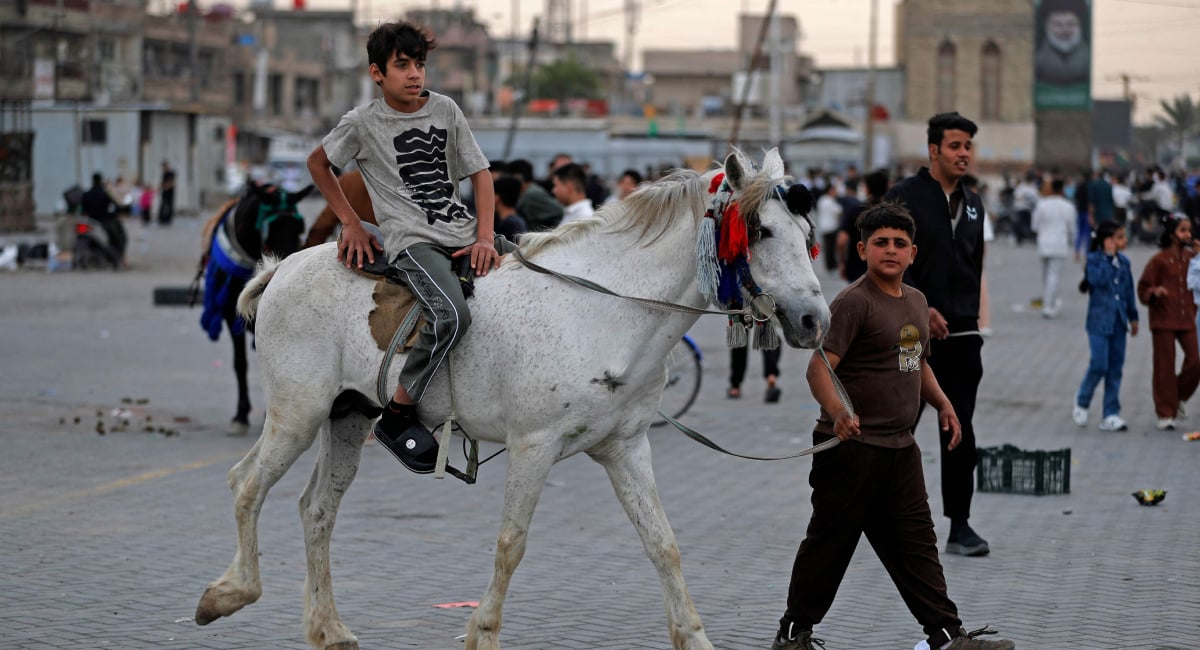
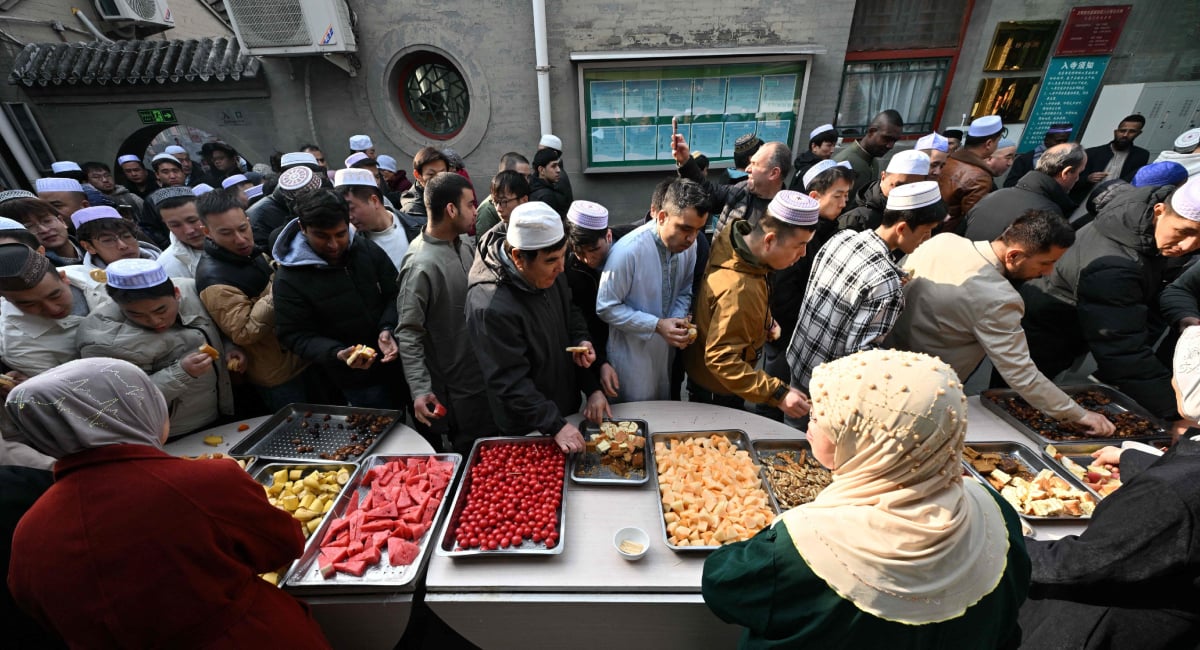
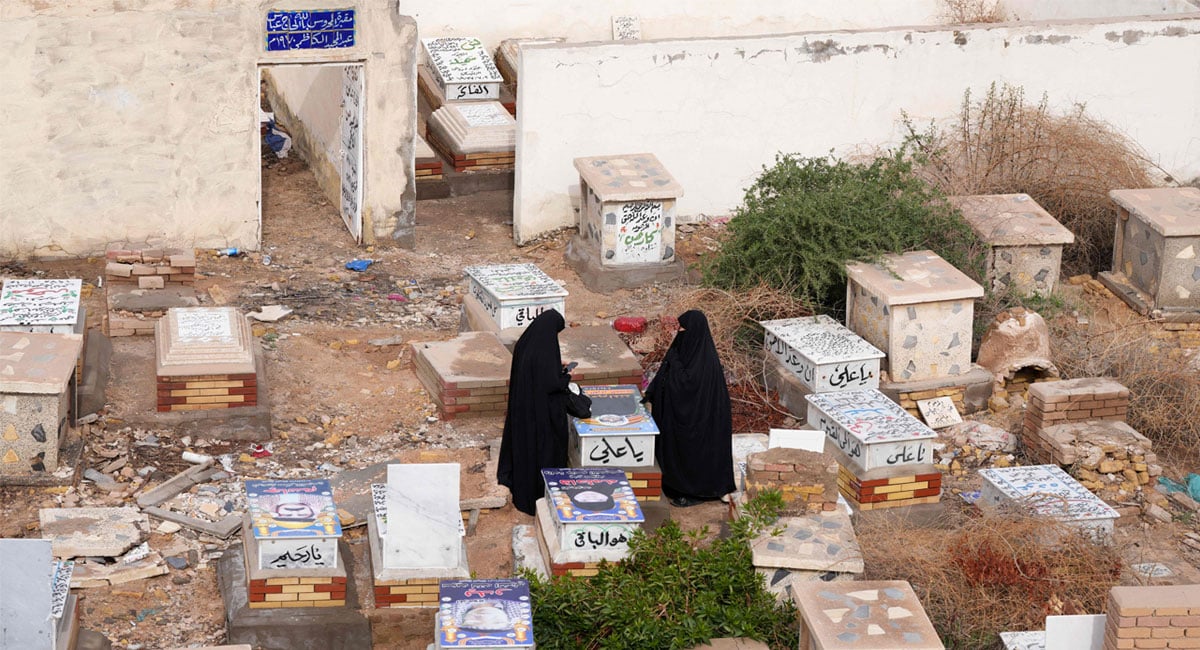
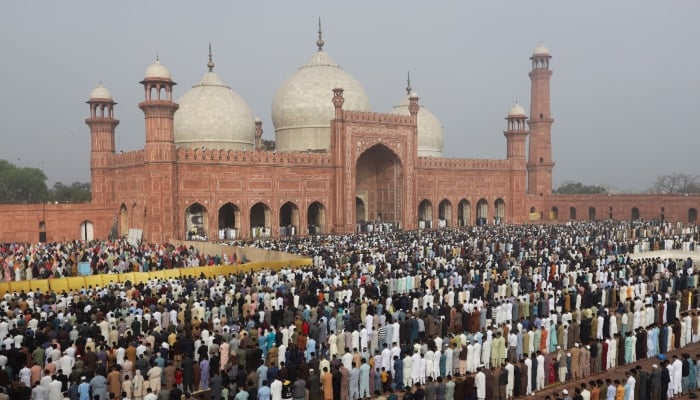
Muslims across the world are celebrating Eid ul Fitr with traditional zeal and fervour, marking the end of the holy month of Ramadan.
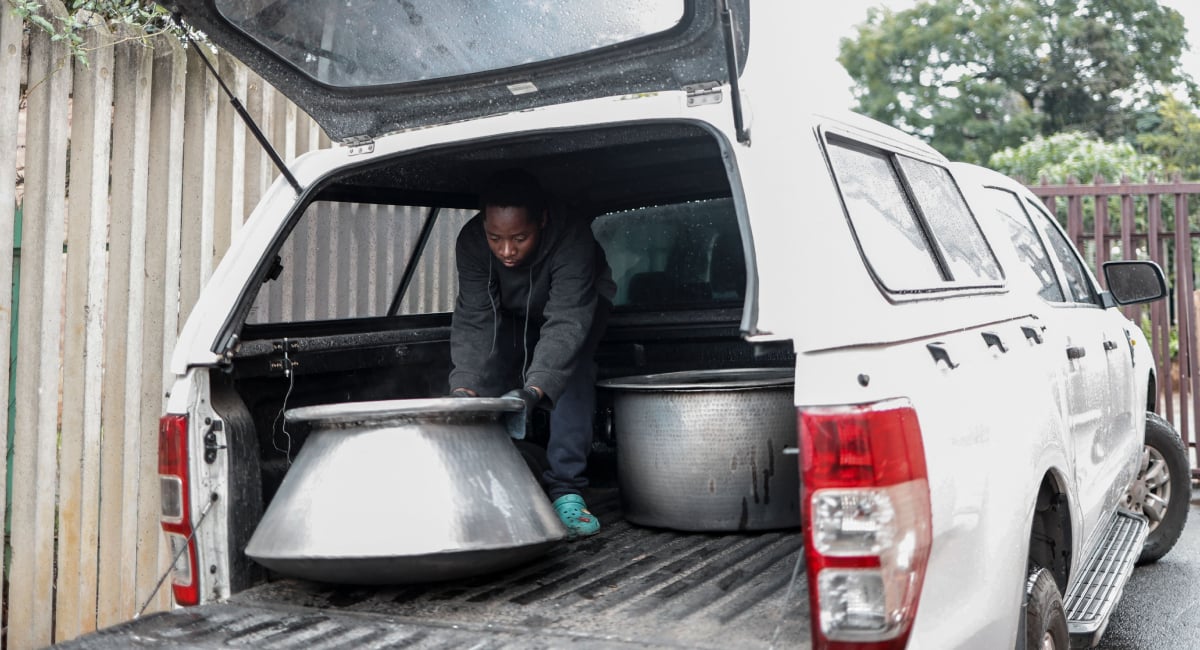
Families and communities are coming together for prayers, feasts, and charitable giving, reflecting on a month of fasting, spiritual reflection, and devotion. The celebrations are filled with joy, greetings of “Eid Mubarak,” and acts of kindness that highlight the essence of the festival.


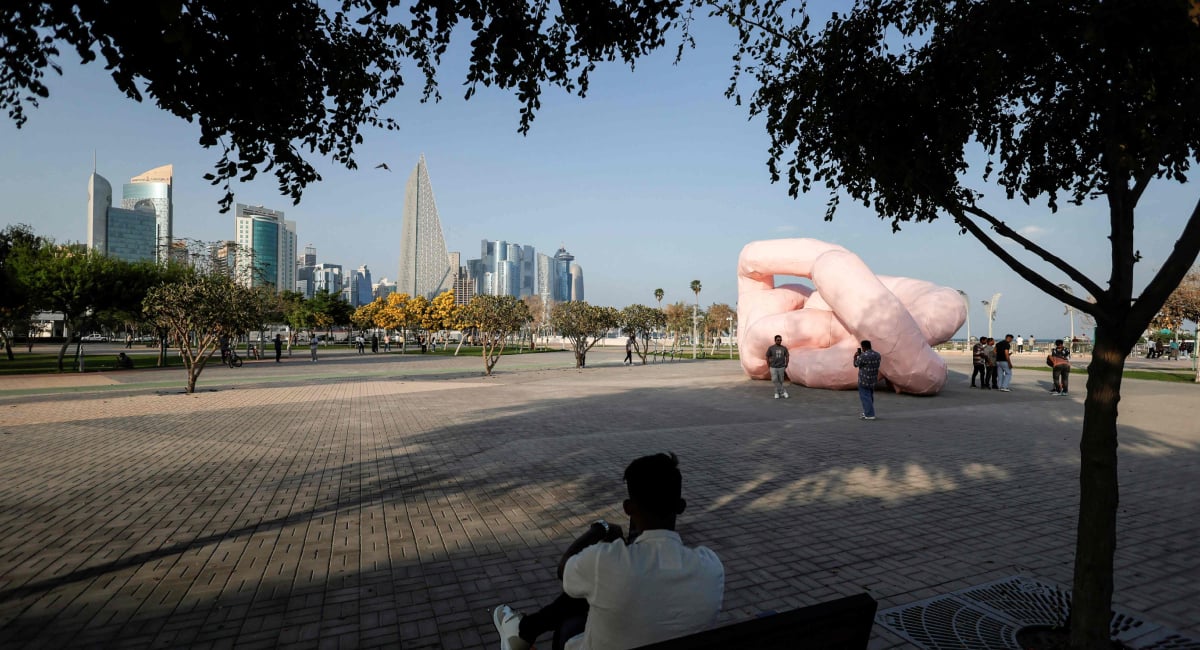
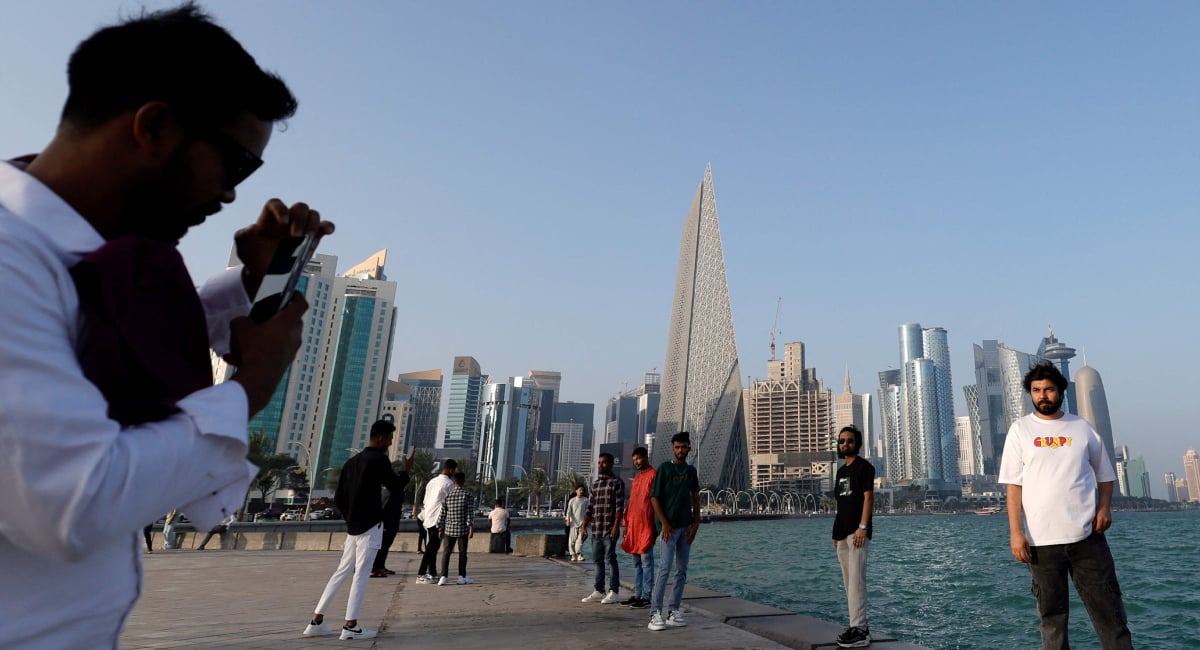
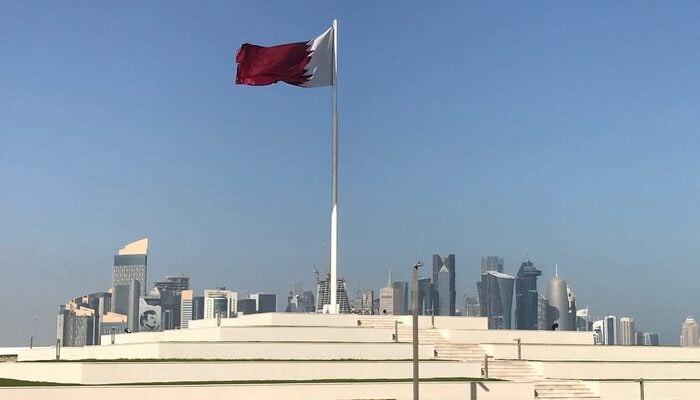
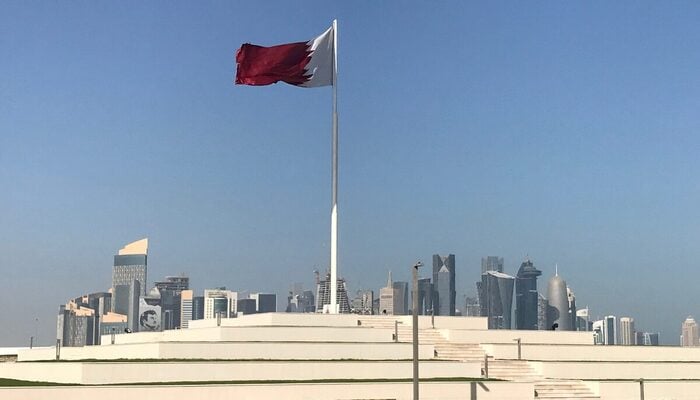
Rescuers were searching for the crew and passengers of a Qatari military helicopter that crashed in the Gulf state´s waters after a “technical malfunction”, the government said early Sunday.
“A Qatari helicopter had a technical malfunction during a routine duty, which led to its crash in the regional waters of the State,” Qatar’s defence ministry said in a statement posted to X. “Searching operation for its crew members and passengers is in progress.”
The interior ministry said that several specialised teams have been deployed.
Qatar has not specified where the helicopter was flying or the number of people on board.
While Qatar has been targeted by several strikes since the start of the Middle East war, no connection has been made between this chopper and the conflict triggered by US-Israeli attacks on Iran.


EU regulatory tsunami hits war-distracted textile industry now

MAC entices staff to transform into TikTok live shopping hosts

Imran Khan undergoes third eye procedure at Pims

Tips and Advice for Buying Used or Refurbished Electronics

UAE savings strategies 2026 explained: Best apps, tools, budget rules and smart money hacks to beat rising cost of living in emirates – The Times of India

Iran threatens US-linked oil facilities after Kharg Island bombed

-
 Tech1 week ago
Tips and Advice for Buying Used or Refurbished Electronics
-
Business1 week ago
UAE savings strategies 2026 explained: Best apps, tools, budget rules and smart money hacks to beat rising cost of living in emirates – The Times of India
-
 Politics1 week ago
Iran threatens US-linked oil facilities after Kharg Island bombed
-

 Sports1 week ago
Japan suffers shocking collapse to Venezuela in World Baseball Classic
-
 Politics1 week ago
How can US get out of Iran war?
-

 Entertainment1 week ago
Strategic oil stocks to be released ‘immediately’ in Asia and Oceania: IEA
-
 Entertainment1 week ago
Iran at war
-

 Entertainment1 week ago
Meet one of the last true paparazzi