

Business
Estée Lauder sues Walmart alleging ‘despicable’ sale of counterfeit beauty products


Walmart Inc. signage during the company’s listing at the Nasdaq MarketSite in New York, US, on Tuesday, Dec. 9, 2025.
Michael Nagle | Bloomberg | Getty Images
Estée Lauder sued Walmart in California federal court over allegations the big-box retailer sold counterfeit beauty products on its website and didn’t do enough to ensure only authorized and authentic merchandise was offered to consumers.
Estée Lauder said it purchased, inspected or tested a number of products sold on Walmart.com that used the Le Labo, La Mer, Clinique, Aveda, Tom Ford and Estée Lauder trademarks but were determined to be fakes, according to the suit, filed Monday.
The products include counterfeit versions of Estée Lauder’s Advanced Night Repair serum, a Le Labo fragrance, a Clinique eye cream, a La Mer lotion, an Aveda hair brush and a Tom Ford fragrance.
xemplars of the Estée Lauder Accused Products
U.S. District Court Complaint
It’s unclear when Estée Lauder bought and tested the products but the suit comes several months after CNBC published an investigation into counterfeit beauty products and fraud on Walmart.com.
Two of the counterfeit products cited in CNBC’s investigation — Estee Lauder Advanced Night Repair serum and Clinique Smart Clinical Repair Wrinkle Correcting Eye Cream — were also mentioned in Estée Lauder’s lawsuit. It’s unclear if the products cited in the suit are the same counterfeits CNBC provided to Estée Lauder.
In response, Walmart initially told CNBC in a statement it requires “all sellers to offer only authentic, lawful merchandise” and it doesn’t tolerate “bad actors” on its platform. It then recalled the message and sent an abbreviated statement to CNBC two hours later that removed that language.
“We are aware of the complaint and have zero tolerance for counterfeit products,” the revised statement read. “We will respond appropriately with the court when we are served.”
Estée Lauder didn’t return a request for comment.
Exemplars of the Clinique Accused Products
U.S. District Court Complaint
While the products were sold by third-party sellers on Walmart’s online marketplace, Estée Lauder said the company played an active role in facilitating those sales to shoppers in its suit. The legacy beauty company called Walmart’s conduct “extreme, outrageous, fraudulent … despicable and harmful.”
The counterfeit products were promoted and advertised to shoppers on the platform, Estee Lauder’s trademarks were used in search engine optimization tools to drive traffic to the listings and Walmart profited from the sales, the complaint stated.
Further, “a person shopping on Walmart.com would have reasonably believed that Walmart, and not third-party sellers, was the seller” of the item, which could have caused confusion among shoppers, the complaint states.
At the heart of CNBC’s investigation into Walmart’s online marketplace was the steps the company took, or didn’t take, to vet its third-party sellers and the products they were offering to prevent fraud and the sale of fakes on the platform.
Exemplars of the La Mer Accused Products.
U.S. District Court Complaint
In its complaint, Estée Lauder said Walmart promoted the “reputation and professionalism” of the sellers permitted to operate on the platform but said the retailer actually does “very little to ensure that only authorized and authentic products are available” for sale.
“This is readily apparent given the [counterfeits] were permitted to be sold on Defendants’ website despite their stated careful selection process in who they choose as a Marketplace seller/partner,” the complaint states. “Accordingly, Defendants know or had reason to know that the sellers they partnered with and ‘regularly review[ed]’ were selling products which infringe upon the Estée Lauder Marks.”
Walmart’s online marketplace has become a key part of its strategy to grow profit faster than sales and better compete against its longtime rival, Amazon. The rapid growth of the online platform helped fuel Walmart’s ascent to a $1 trillion market cap last week, putting it in an exclusive club made up almost entirely of technology companies.
However, the strategy has come with risks, CNBC’s investigation revealed. Offering counterfeit, potentially dangerous, products to shoppers through third-party sellers on the marketplace opens Walmart up to liability and could erode the customer trust at the core of its brand.
Exemplars of the Le Labo Accused Products
U.S. District Court Complaint
Ever since a 2010 court ruling that arose after Tiffany sued eBay over counterfeit products on the platform, it can be tough for brands to hold platforms accountable for their role in selling counterfeit goods. Sometimes, they avoid lawsuits unless the conduct is extreme or particularly flagrant, experts previously told CNBC.
The Shop Safe Act, a bipartisan federal bill that aims to curb the sale of fakes on online marketplaces, is designed to address some of the issues posed by the Tiffany v. eBay ruling by incentivizing platforms to better vet sellers and the products they’re offering. When platforms comply with certain anti-counterfeiting measures, they could be shielded from liability if a seller offers a fake product.
Brands widely supported the legislation, but it has so far failed to pass at least three times. That’s partially because Walmart and other online marketplaces like Amazon, Etsy and eBay have lobbied against aspects of it, two U.S. Senate aides, who spoke on the condition of anonymity because the discussions were private, previously told CNBC.


Business
India opposes China-led IFD pact’s inclusion; flags risks to WTO framework and core principles – The Times of India
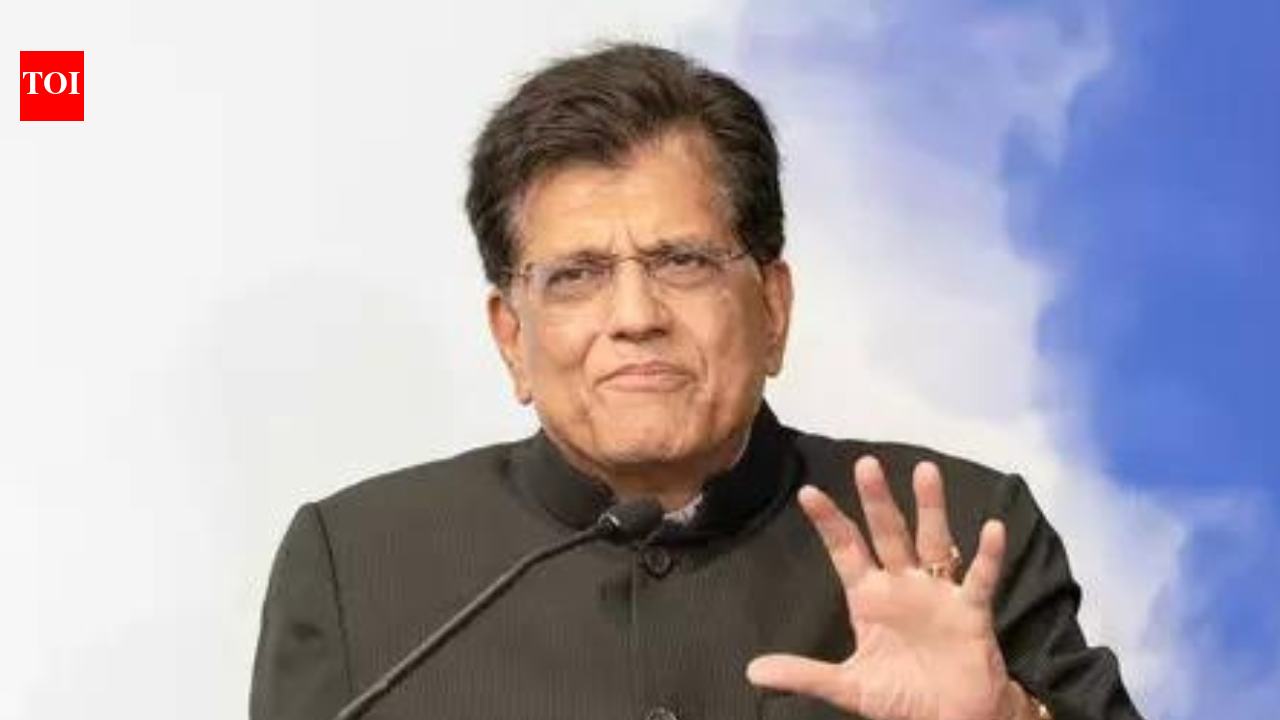
India on Saturday said it has strongly opposed the China-led Investment Facilitation for Development (IFD) Agreement being incorporated into the World Trade Organisation (WTO) framework, flagging concerns over its systemic implications, PTI reported.The issue was raised at the ongoing 14th ministerial conference (MC14) of the WTO in Yaounde, Cameroon, where Commerce and Industry Minister Piyush Goyal said such a move could weaken the institution’s foundational structure.“Incorporation of the IFD agreement risks eroding the functional limits of the WTO and undermining its foundational principles,” Goyal said in a social media post.“At #WTOMC14, drawing inspiration from Mahatma Gandhi ji’s philosophy of Truth prevailing over conformity, India showed the courage to stand alone on the contentious issue of the IFD Agreement and did not agree to its incorporation into the WTO framework as an Annex 4 Agreement,” he said.Annex 4 of the WTO Agreement contains Plurilateral Trade Agreements that are binding only on members that have accepted them, unlike multilateral agreements which apply to all members.Goyal said that as part of WTO reform discussions, members are deliberating on guardrails and legal safeguards for plurilateral agreements before integrating any such outcomes into the framework.“In view of the systemic issue at hand, India showed openness to have good faith, comprehensive discussions and constructive engagement under the WTO Reform Agenda,” he added.India had also opposed the pact during the WTO’s 13th ministerial conference (MC13) in Abu Dhabi.The Investment Facilitation for Development proposal was first mooted in 2017 by China and a group of countries that rely significantly on Chinese investments, including those with sovereign wealth funds. The agreement, if adopted, would be binding only on signatory members.
Business
Middle East crisis: Jubilant FoodWorks reports some Domino’s outlets affected by LPG shortage – The Times of India

Jubilant FoodWorks Ltd (JFL), which operates Domino’s Pizza and Dunkin Donuts in India, has reported constraints in LPG cylinder supplies across parts of its store network due to the ongoing West Asia war, according to ET.In a filing to the BSE, the company said, “Operational impact at this stage is limited and being actively managed. The company is taking several steps to conserve LPG and working overtime to move to alternate energy sources like electricity and piped natural gas (PNG).”It added that it is in continuous touch with oil marketing companies to track developments and respond to the evolving situation. “The company is in constant engagement with oil marketing companies (OMCs) to remain apprised of the latest developments and plan operational responses accordingly, given the rapidly evolving nature of the situation,” the filing said.The company noted that it is closely monitoring the situation as supply disruptions persist.The impact is being felt across the restaurant industry, with several chains facing similar challenges due to LPG shortages.On March 10, the National Restaurant Association of India (NRAI) had advised its five lakh members to consider shorter operating hours, reduce items requiring long cooking times or deep frying, and adopt fuel-saving measures such as using lids while cooking, in view of supply constraints linked to the Gulf war.
Business
Russia sells reserve gold for first time in 25 years to fund Ukraine war deficit: Report – The Times of India
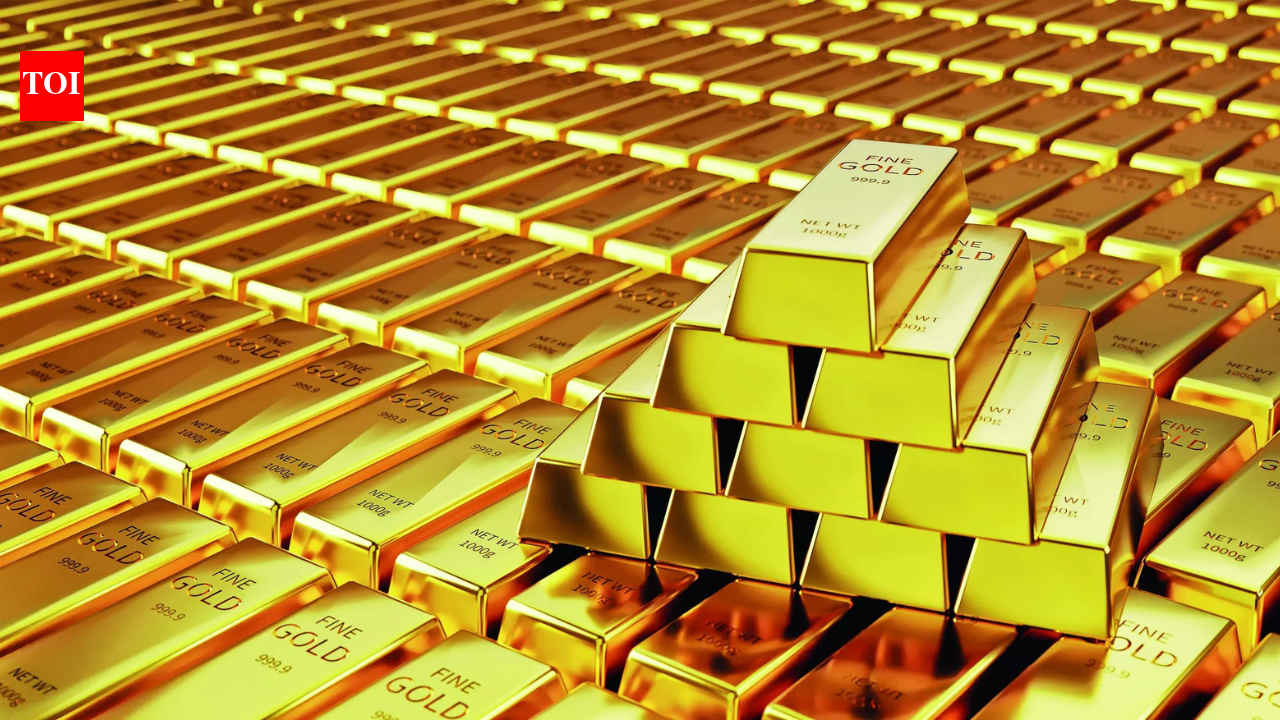
Russia has begun selling physical gold from its central bank reserves for the first time in 25 years, as the government seeks to plug a widening budget deficit driven by sustained military expenditure, according to a report by Berlin-based news outlet bne IntelliNews.Regulatory data show that between 2022 and 2025, Russia sold gold and foreign currency worth over RUB 15 trillion ($150 billion), followed by an additional RUB 3.5 trillion ($35 billion) in just the first two months of 2026, the report noted. In January alone, the Central Bank of Russia sold 300,000 ounces of gold, followed by another 200,000 ounces in February.The move marks a significant shift in reserve management. Earlier, gold transactions were largely notional, involving transfers between the Ministry of Finance and the central bank without physical movement of bullion. In recent months, however, the central bank has started selling actual gold bars into the market.As a result, Russia’s gold holdings have declined to 74.3 million ounces, the lowest level in four years. The disposal of 14 tonnes in January and February is the largest two-month sale since the second quarter of 2002, when 58 tonnes were offloaded in a single tranche.The sales come as Russia’s fiscal position comes under increasing strain. The government ended 2025 with a budget deficit of 2.6 per cent of GDP, compared to an initial projection of 0.5 per cent, Berlin-based bne IntelliNews report noted. Economists estimate the actual deficit could be closer to 3.4 per cent, with some payments deferred to 2026 to limit the reported gap.Pressure on the budget has intensified as oil prices weakened in the second half of the year and US sanctions tightened, reducing the contribution of oil and gas tax revenues to about 20 per cent of total revenues — roughly half of pre-war levels.The decision to sell gold has also been influenced by the sharp rise in bullion prices to above $5,000 per ounce. This surge has pushed Russia’s international reserves to over $809 billion as of February 28, including around $300 billion of assets frozen in the West, according to the Central Bank of Russia. Of this, gold reserves alone are valued at about $384 billion.Russia currently holds more than 2,000 tonnes of gold, making it the world’s fifth-largest sovereign holder, according to World Gold Council data. The country had built up these reserves over the years to reduce dependence on dollar-denominated assets, especially after sanctions imposed following the annexation of Crimea in 2014 and further tightened after the invasion of Ukraine in 2022.Since 2022, the Ministry of Finance has relied on multiple funding channels to manage budget pressures. These include drawing from the National Welfare Fund, which still holds around RUB 4 trillion, increasing issuance of domestic OFZ treasury bonds, and raising value-added tax rates, which account for about 40 per cent of government revenues.The shift to selling physical gold suggests that Russia is now tapping its liquid reserve buffers more directly, underlining the growing fiscal strain as the conflict in Ukraine continues into its fourth year.


The unlikely rise of Iowa’s Ben McCollum, Bennett Stirtz: Division II to Elite Eight

Anti-Trump protests launch on ‘No Kings’ day in US
India opposes China-led IFD pact’s inclusion; flags risks to WTO framework and core principles – The Times of India

-
 Business1 week ago
Flipkart group CFO to leave co amid IPO plans – The Times of India
-

 Fashion1 week ago
China’s textile & apparel exports surge 17% to $50 bn in Jan-Feb 2026
-

 Sports1 week ago
Rating Adidas’ 2026 World Cup away shirts: Argentina, Spain, Mexico and more
-

 Sports1 week ago
American Conference Commissioner Tim Pernetti thanks Trump for Army-Navy game executive order
-
Tech1 week ago
The Corsair 4000D RS PC Case Keeps Your System Cool
-

 Tech1 week ago
Gamers Hate Nvidia’s DLSS 5. Developers Aren’t Crazy About It, Either
-

 Tech1 week ago
‘Uncanny Valley’: Nvidia’s ‘Super Bowl of AI,’ Tesla Disappoints, and Meta’s VR Metaverse ‘Shutdown’
-
 Business4 days ago
Property Play: Home flippers see smallest profits since the Great Recession, real estate data firm says