

Business
How the Iran war could start to impact U.S. retail prices


The Iran war could soon mean higher prices on store shelves for consumers.
Iran’s effective closure of the Strait of Hormuz passage has significantly disrupted the global supply chain, affecting goods from fertilizers to metals to gas and fuel. The passage is a critical point, funneling tens of millions of barrels of oil daily along with other exports as one of the world’s most important shipping routes.
And the tensions with the strait are showing no signs of changing. On Thursday, Iran’s new supreme leader, Mojtaba Khamenei, said the closure should be continued as a “tool to pressure the enemy” in his first public statement since being appointed. Defense Secretary Pete Hegseth on Friday downplayed concerns about the strait, saying at a Pentagon press briefing, “We have been dealing with it, and don’t need to worry about it.”
In a Friday statement, logistics provider C.H. Robinson said it’s continuing to monitor updates and urged shippers to plan for continued variability.
“While cargo is moving, carriers are managing constrained capacity, selective acceptance, and fuel‑related cost impacts, resulting in pricing volatility and variable service conditions,” the statement read.
Though it’s still early to determine what the exact impact on retail may be, Coresight Research President Max Kahn said the disruption to the global supply chain may already be pushing the industry near its limits.
“Retailers have become much better at building flexibility in their supply chains, and that got accelerated a lot last year with tariffs,” Kahn told CNBC. “The bigger worry is if this continues to last.”
Prices at the grocery store may be hit first, Kahn said, since food items tend to have less flexible supply chains, while apparel retailers can likely afford to slow production and bulk it up again later without disrupting inventory.
As retailers navigate the geopolitical landscape, Kahn said they’ll likely be facing two factors: input cost pressure and demand pressure.
“Retailers are going to have to play that,” he said. “One of the reasons how retail stayed resilient in 2022 and 2023 was they were able to raise prices, and that raising of prices sort of offset some weakening in units, so our sense would be that that could be very similar this time around.”
Retail hasn’t just been affected by shipping changes, either. Shipments of garments for Zara owner Inditex, along with other clothing retailers, were stranded last week as flights in the Middle East were canceled, according to Reuters.
Kahn said retailers’ potential struggles could have broader economic implications, too. Though companies have learned to be somewhat adaptable to the changing macroeconomic environment over the past few years, he noted that the overall growth for retail has been “so-so,” and while the industry continues to navigate the war, that uncertainty will also begin to affect GDP growth.
Still, as the chaos persists, Kahn said he expects value retailers like Walmart and Kroger and dollar stores like Dollar General and Dollar Tree to have an easier time because shoppers will be looking for more value-priced items.
In addition to impacting the global supply chain, consumer confidence is already taking a hit from the war. Though Wednesday’s consumer price index came in as expected, industry experts have said higher gas prices will likely affect discretionary spending as consumers pull back to cover costs at the pump, affecting the retailers that may already be reeling from supply chain impacts.
In a Sunday note, Wolfe Research analysts wrote that discretionary-heavy retailers are likely to be among the largest losers from the war.
“Retailers with a bigger discretionary mix, like Five Below and Target, also face headwinds as consumer confidence comes under pressure and they mix down,” they wrote.
Still, some retailers may have other factors helping them out of the war fallout. Retailers that appeal to higher-income consumers or who have specialty offerings, like Costco, may be able to escape the squeeze.
“Costco should benefit as their price leadership on gas becomes more important, and consumers are more willing to wait 20+ minutes for gas,” the analysts added.
UBS analysts wrote in a Monday note that the war is adding uncertainty to an already weakened consumer dealing with the changing macroenvironment and the K-shaped economy, where those at the high end continue to do well while lower-income consumers struggle.
“The rise in oil prices should add a meaningful burden to household budgets and intensify strains already visible across the consumer landscape,” they wrote.
While some retailers like Ulta and Costco have historically seen same store sales increase alongside oil inflation, companies that serve lower-income shoppers like Ollie’s Bargain Outlet and Dollar General are likely to see sales decrease as consumers face budget restraints, the UBS analysts said.
“All in, the rise in oil prices could create a layered and persistent drag on consumer health,” they wrote. “It increases fixed household expenditures, puts upward pressure on grocery prices, reshapes retail traffic patterns and introduces operational challenges for retailers across multiple segments.”






Business
LPG crisis hits restaurants: Staff face salary cuts, layoffs as eateries struggle to keep kitchens running – The Times of India
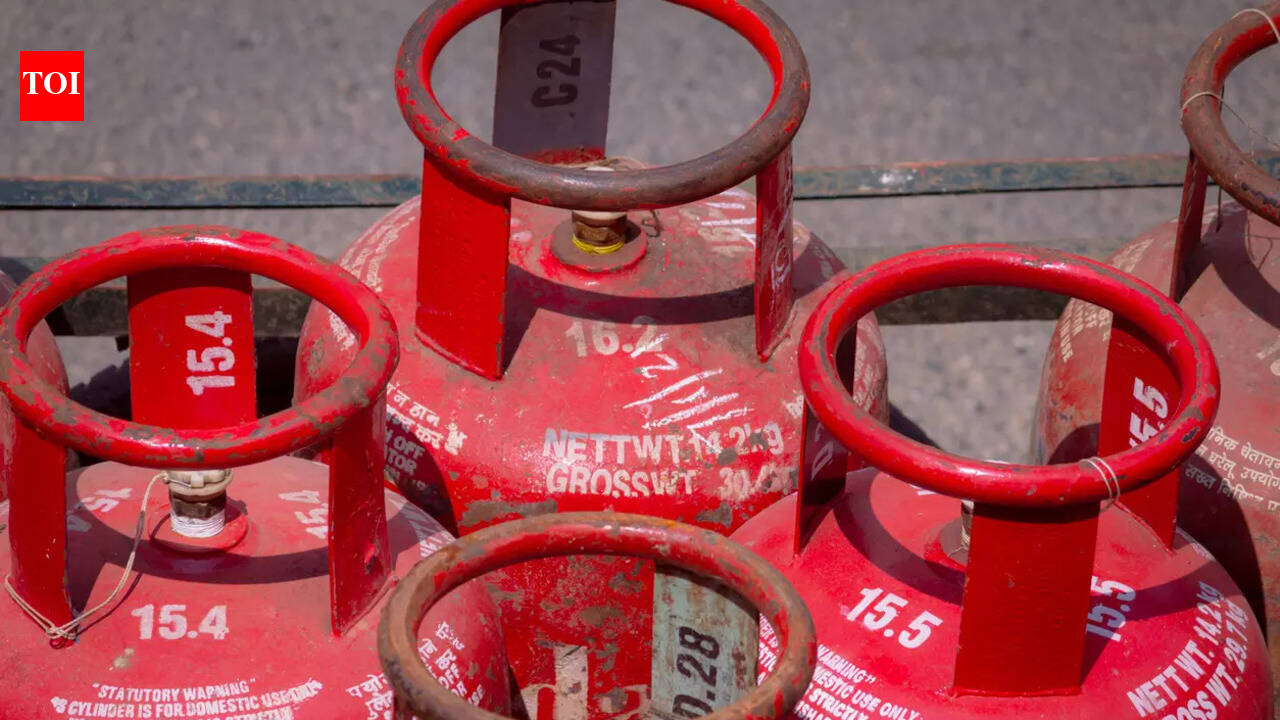
The Middle East crisis continues to boil and the ripples have triggered an operational stress for India’s food services sector. As LPG supply flows are disrupted amid the Strait of Hormuz transit issues, industry voices have warned of layoffs, salary cuts and widespread business impact if the situation drags on. Despite assurances from the government on boosting availability, restaurant owners and caterers have flagged that access to commercial LPG remains inconsistent, leaving many scrambling to keep operations afloat. Several described the situation as unpredictable, with little clarity on when normal supply will resume.Anjan Chatterjee, founder of Speciality Restaurants pointed to the growing distress across the sector. Highlighting the uncertainty of the situation, Chatterjee told ET that people are running from pillar to post. The founder further cautioned that the worst-hit would be workers at the lower end of the chain. “If restaurants and eateries are unable to do business, the first ones to get hit will be people down below.”
Impact on businesses, especially smaller players
Smaller restaurants, street-side eateries, caterers and cloud kitchens are the worst affected, with many already shutting or scaling down. Anjan Chatterjee of Speciality Restaurants described the chaos, saying people are running from pillar to post, and warned, “If restaurants and eateries are unable to do business, the first ones to get hit will be people down below.” He added, “While we hope supplies improve soon, currently, the situation is dynamic and we don’t know how things will pan out. At the ground level, particularly for local and street-side eateries, things are much worse.”Kirit Budhdev of the Federation of All India Caterers flagged worsening delays, “Suppliers are telling us to wait for 15 days. The on-ground situation is very challenging and it’s actually worsening for a lot of our members.”
Financial strain and risk of layoffs
The shortage is hitting profitability, menus and operating hours. Sagar Daryani of the National Restaurant Association of India said, “Smaller players which cannot bear the loss will see job cuts and the bigger players may bear the brunt for a while,” adding that multiple aspects of operations will be impacted.The strain is cascading to workers, especially those at the lower end. Aditya Narayan Mishra of CIEL HR explained, “For instance, if a restaurant has to close shop or run for fewer days in a week, they will not be employing helpers, local delivery boys, etc., who typically get paid Rs 500-700 daily. This segment, which accounts for the largest number of people employed, is already seeing an impact.”In Pune, Ganesh Shetty said, “Our members are still being told by agencies and suppliers that the supply is not for them but for other priority sectors like hospitals. Smaller restaurants have already shut down and they are not operational in Pune.Meanwhile, street food vendors in Madhya Pradesh are facing mounting pressure as a shortage of commercial gas cylinders disrupts operations, particularly for pani puri stalls and similar snack sellers. The impact is clearly visible across key markets such as Kolar, Jawahar Chowk and the BHEL area, where several carts remain closed or operate only during limited peak evening hours. Vendors who once catered to regular crowds are now struggling to secure enough fuel even for basic preparation.
Turning towards alternatives
Cloud kitchens are also under pressure, with FreshMenu’s Rashmi Daga noting, “At a central level, we are trying to move to firewood cooking, bring in induction, electric stoves, etc. But one can’t just move seamlessly to electric equipment given that summer months will also see power cuts.” At the same time in MP, two villages, Bandarkol in Jabalpur district and Baghuwar in neighbouring Narsinghpur, remain largely unaffected, with kitchen stoves continuing to run smoothly. In these villages, residents have turned to biogas instead of LPG cylinders. In Bandarkol, several households have installed small biogas plants that convert cattle dung into cooking fuel. Villagers say the system requires only a few minutes of daily effort while ensuring a steady supply of fuel for use throughout the day.
Uncertainty and outlook
Industry stakeholders say the situation remains volatile, with no clear timeline for recovery. While there has been slight easing compared to earlier days, supply gaps persist, and businesses continue to operate under uncertainty as they brace for prolonged disruption. Chatterjee added that while there is hope for improvement, conditions on the ground remain volatile. “While we hope supplies improve soon, currently, the situation is dynamic and we don’t know how things will pan out. At the ground level, particularly for local and street-side eateries, things are much worse,” he said. Speaking to ET, Rashmi Daga also highlighted the uncertainty ahead, saying, “One can’t even plan for perishables without knowing if gas is available the next day. Right now, the industry is bracing for 40-60 days of pain, but who knows, it could continue for months, too. If this happens, we will have no choice but to send some workers home.” The All Assam Restaurant Association (AARA) has called on the state government to urgently ensure a dedicated supply of commercial LPG cylinders for the hospitality sector, cautioning that continued shortages could force restaurants and hotels across the state to shut down operations entirely. The association has appealed to CM Himanta Biswa Sarma to step in, describing the situation as an “escalating commercial LPG crisis” impacting the restaurant industry in Assam. Members said that eateries across the state are grappling with an abrupt disruption in the supply of commercial LPG cylinders, leaving many struggling to function.
Business
After Anthropic hit, Infosys, TCS & other Indian IT stocks tank on Nvidia’s new AI system news; what’s happening – The Times of India

Indian IT shares tank! Shares of Indian IT companies dropped by as much as 6% on Tuesday after fresh artificial intelligence announcements from global chipmaker Nvidia, which reignited concerns about AI-driven disruption in the technology services sector. Investor caution also remained high ahead of the US Federal Reserve’s FOMC meeting scheduled for later this week.Indian IT stocks had already experienced a notable drop earlier this year after Anthropic introduced plug-ins for its Claude Cowork agent, capable of automating tasks across departments such as legal, sales, marketing and data analysis. Some analysts had then warned that IT services firms may eventually need to reduce their workforce as more affordable and efficient AI tools begin to replace certain functions.
What Nvidia has announced
At its annual GTC developer conference in San Jose, California, Nvidia said the potential revenue opportunity for its artificial intelligence chips could reach at least $1 trillion by 2027. During the event, CEO Jensen Huang introduced a new central processor along with an AI system built using technology from Groq, a chip startup whose technology Nvidia licensed for $17 billion in December.“The inference inflection has arrived,” Huang said. “And demand just keeps on going up,” he added.Wall Street closed higher after Nvidia’s announcements. The S&P 500 rose 1% to finish at 6,699, marking its strongest single-day gain in more than a month. The tech-heavy Nasdaq advanced 1.22%, while the Dow Jones Industrial Average climbed 0.83%.Investors are also closely watching the outcome of the US Federal Reserve’s FOMC meeting scheduled later this week. The decision is expected to influence sentiment toward IT stocks, as Indian technology companies generate a large share of their revenue from the US market.
Indian IT shares take a hit
Shares of Coforge fell about 6%, while major companies such as Wipro, Infosys, Mphasis, LTI Mindtree and Persistent Systems each declined by more than 2%. Several of these stocks touched fresh 52-week lows during the session, according to an ET report.Earlier, brokerage Nuvama said in a note that the sharp correction in IT stocks since the start of the year, triggered by fears of AI-driven disruption following successive AI tool launches by Anthropic, has made valuations in the sector more appealing.“Reports of my death are greatly exaggerated,” Nuvama said, quoting Mark Twain to describe what it believes reflects the current situation in the IT industry.“Given the advent and adoption of Gen AI, obituaries of the Indian IT services industry are being written all around. The concerns have been amplified by the sharp stock reactions, first with global SaaS and now with IT services companies,” the note said according to ET.Nuvama added that it does not view generative AI as an existential threat to the sector. The brokerage said companies will continue to require system integrators capable of customising plug-and-play enterprise software inputs and outputs to meet specific organisational needs.(Disclaimer: Recommendations and views on the stock market, other asset classes or personal finance management tips given by experts are their own. These opinions do not represent the views of The Times of India)(Disclaimer: Recommendations and views on the stock market, other asset classes or personal finance management tips given by experts are their own. These opinions do not represent the views of The Times of India)

Joe Morris believes heating oil should have had a price cap introduced like energy and electricity.
Source link


Nine African players to watch at March Madness on ESPN in Africa and Disney+

Tennessee minors sue Musk’s xAI, alleging Grok generated explicit images of them
LPG crisis hits restaurants: Staff face salary cuts, layoffs as eateries struggle to keep kitchens running – The Times of India

Stock market crash today (March 12, 2026): Nifty50 opens below 23,600; BSE Sensex down over 900 points on continuing US-Iran war – The Times of India

Intertextile Shanghai 2026: Fringe events spotlight market trends

2026 NCAA Tournament Berth Tracker: Automatic Bids, Championship Game Times, and Defending Champs

-
Business5 days ago
Stock market crash today (March 12, 2026): Nifty50 opens below 23,600; BSE Sensex down over 900 points on continuing US-Iran war – The Times of India
-
 Fashion1 week ago
Intertextile Shanghai 2026: Fringe events spotlight market trends
-
 Sports1 week ago
2026 NCAA Tournament Berth Tracker: Automatic Bids, Championship Game Times, and Defending Champs
-

 Entertainment7 days ago
What time will NASA’s 600 kg satellite crash to Earth today— 14 years after launch?
-
 Business1 week ago
Gulf war risks global economic shock | The Express Tribune
-

 Fashion1 week ago
German brand Adidas posts 13% revenue growth in 2025
-

 Fashion6 days ago
UK’s Topshop unveils Tolu Coker capsule collection
-
 Business6 days ago
8th Pay Commission: How Much Will Central Govt Employees’ Salaries Rise? What We Know So Far