

Business
Nvidia adds Hyundai, BYD and other automakers to self-driving tech business


Nvidia CEO Jensen Hwang gives the keynote address at the company’s annual GTC developers conference at the SAP Center in San Jose, California, on March 16, 2026.
Josh Edelson | Afp | Getty Images
Nvidia is expanding deals for its autonomous vehicle development business to Hyundai Motor, Nissan Motor and Isuzu, as well as Chinese automakers BYD and Geely, the software and chip giant announced Monday.
The new tie-ups are for Nvidia’s Drive Hyperion platform for AVs. The system helps companies develop and deploy driver-assist and autonomous driving capabilities for Level 4 AVs, which are capable of driving without human intervention under predefined areas or circumstances.
“We’ve been working on self-driving cars for a long time. The ChatGPT moment of self-driving cars has arrived,” Nvidia CEO Jensen Huang said Monday during the company’s GTC conference. “We now know we could successfully autonomously drive cars, and today, we are announcing four new partners for Nvidia’s robotaxi-ready platform. … The number of robotaxi-ready cars in the future are going to be incredible.”
No vehicles on sale to consumers today are capable of driving themselves without human monitoring or intervention, but some companies, such as Alphabet’s Waymo, offer ride-hailing fleets with Level 4 self-driving vehicles, also known as robotaxis. Most vehicles on sale today are considered Level 2, with drivers needing to continually monitor the systems.
Drive Hyperion is part of what Nvidia calls its “end-to-end” AV platform that includes data center training, large-scale simulations and in-vehicle computing. The company does not produce or sell AVs or many of the components needed to operate such vehicles.
Current Nvidia customers for Drive Hyperion include many self-driving companies such as Aurora and Nuro, as well as other more consumer-facing businesses such as Sony Group, Uber Technologies, Jeep parent Stellantis and electric vehicle maker Lucid Group.
AVs are important to Nvidia, as self-driving cars remain one of the primary areas where the chipmaker can show growth outside of artificial intelligence.
Many believe AI could be key to the proliferation of AVs, which Wall Street analysts and automotive executives have targeted as a multitrillion-dollar growth industry.
The new companies add to a growing list of such tie-ups for Nvidia, as the chipmaker and the automotive and technology industries try to capitalize on and proliferate AVs after years of failed ventures for robotaxis.
Waymo has led the AV industry for years, while others such as Tesla, Uber and Amazon’s Zoox attempt to catch up.
General Motors-backed Cruise, which was previously viewed as a leader alongside Waymo, disbanded amid controversies after a pedestrian was dragged by one of its vehicles in San Francisco. GM spent more than $10 billion on Cruise before ending the robotaxi operations in 2024.
— CNBC’s Katie Tarasov contributed to this report.


Business
Gross GST collections hit record high of Rs 2.43 lakh crore in April 2026 despite US-Iran war concerns – The Times of India

GST collections: The gross Goods and Services Tax (GST) collections touched a new high in April, reflecting continued strength in economic activity even in the midst of the ongoing Middle East conflict.According to government data released on Friday, gross GST revenue for the month reached a record Rs 2.43 lakh crore, registering an 8.7% increase over Rs 2.23 lakh crore collected in April last year.After accounting for refunds, net GST collections stood at Rs 2.11 lakh crore, up 7.3% from the corresponding period a year earlier.Refund disbursements during the month rose sharply, climbing 19.3% year-on-year to Rs 31,793 crore.As a result, net GST revenue for April 2026 came in at Rs 2,10,909 crore.Robust revenues from imports played a major role in driving GST collections during the month. Gross receipts from imports climbed sharply by 25.8% to Rs 57,580 crore, while gross domestic GST collections recorded a comparatively moderate increase of 4.3%, reaching Rs 1.85 lakh crore.The net GST revenue from imports surged 42.9%, significantly outpacing the marginal 0.3% rise in net domestic collections.The April performance follows a strong showing in March, when net GST collections stood at Rs 1.78 lakh crore, up 8.2% from a year earlier. Gross collections in that month had also crossed the Rs 2 lakh crore mark.For the full financial year 2025-26, gross GST revenue increased 8.3% year-on-year to Rs 22.27 lakh crore. Net GST collections for the year rose 7.1% to Rs 19.34 lakh crore.Major contributors such as Maharashtra, Karnataka and Gujarat continued to account for a substantial share of total collections.
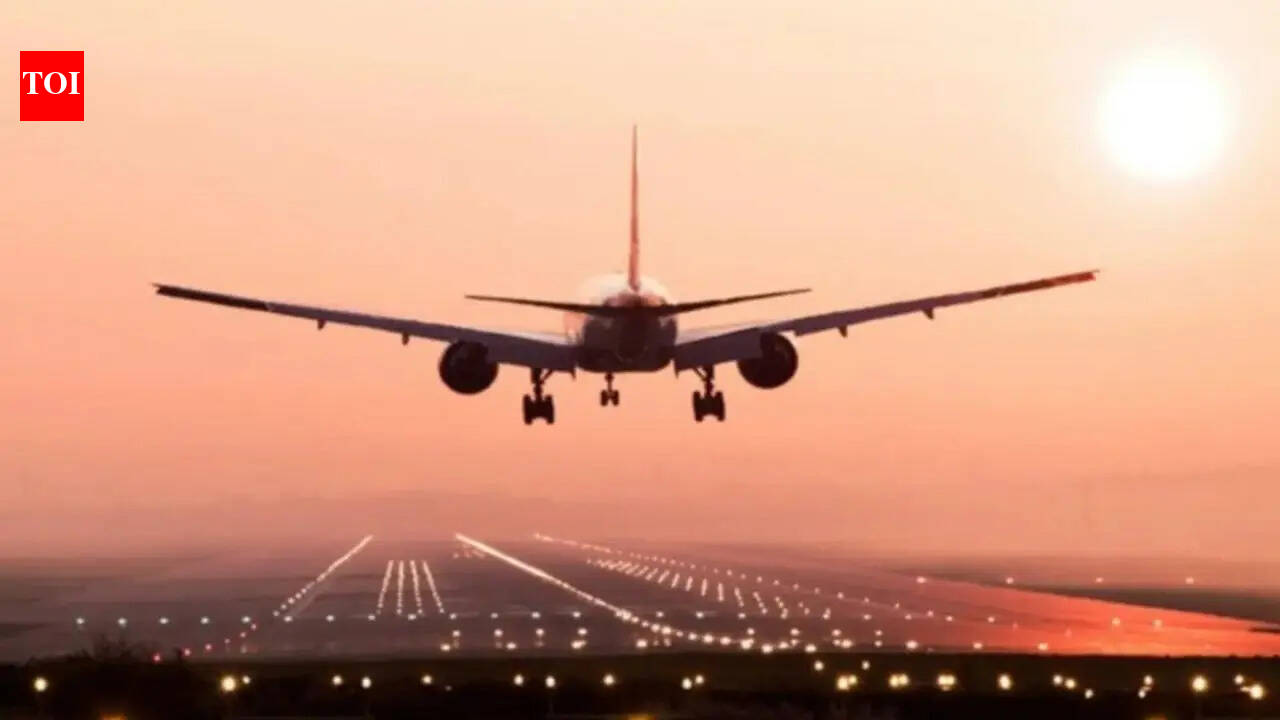
NEW DELHI: Government on Friday increased the price Aviation Turbine Fuel for international airlines by 5 per cent.This is the second straight monthly rise amid the global energy crisis.However, there is no change in the ATF price for domestic airlines.ATF prices have been increased by USD 76.55 per kilolitre, or 5.33 per cent, to USD 1511.86 per kl in Delhi, home, according to state-owned oil firms.Under this mechanism, foreign airlines and other carriers will pay market-linked rates, while prices for domestic airlines have been moderated, new agency PTI reported, citing sources.Earlier on April 1, rates for domestic airlines were hiked by 25 per cent to Rs 104,927.18 per kl.Jet fuel prices were deregulated more than two decades ago and have since been linked to international benchmark rates under a written understanding with airlines.However, a surge in global energy prices triggered by the West Asia crisis led to what sources described as the steepest-ever hike in ATF rates, prompting the government and state-run oil companies to take a calibrated approach.Jet fuel prices were deregulated more than two decades ago and have since been linked to international benchmark rates under a written understanding with airlines.
Business
Windfall gains tax cut: Excise duty on diesel exports down to Rs 23/litre, ATF exports to Rs 33/litre – The Times of India
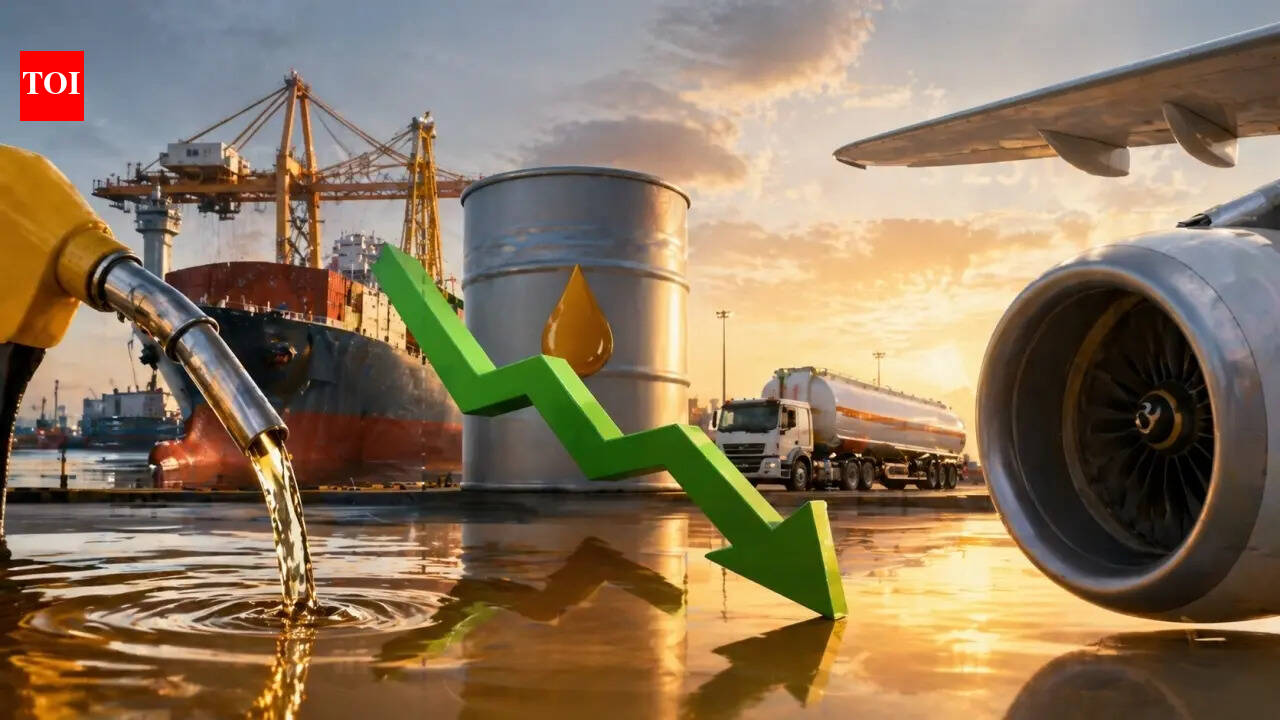
The windfall tax on exports of diesel and aviation turbine fuel (ATF) has been lowered effective May 1, 2026. The excise duty on petrol and diesel sold in the domestic market will remain unchanged. The levy on diesel exports has been reduced to Rs 23 per litre from Rs 55.5 per litre, while the duty on ATF exports has been cut to Rs 33 per litre from the earlier Rs 42 per litre.In a statement, the Finance Ministry also announced that the road and infrastructure cess on diesel exports will be waived for the next fortnight starting May 1. Meanwhile, the export duty on petrol will continue to remain at zero.Earlier, on March 26, the government had imposed export duties of Rs 21.50 per litre on diesel and Rs 29.5 per litre on ATF. These rates were subsequently increased during a review on April 11 to Rs 55.5 per litre for diesel and Rs 42 per litre for ATF.The windfall tax was introduced to ensure that adequate domestic supplies of petroleum products remain available amid supply disruptions arising from the conflict involving the United States, Israel and Iran. It was also intended to prevent exporters from profiting excessively from the widening gap between domestic and international fuel prices as global crude markets rallied sharply.According to the ministry, the export duty framework is aimed at discouraging excessive overseas shipments during the ongoing West Asia crisis, thereby safeguarding domestic fuel availability.Following military strikes by the United States and Israel on Iran on February 28, Tehran responded with extensive retaliation, escalating tensions across the Middle East. India’s oil supply through the Strait of Hormuz remains affected, but its diversified procurement basket and the availability of millions of barrels of Russian crude on water have helped ease the supply bottlenecks for now.Since the outbreak of the conflict, crude oil prices have climbed steeply, rising from around $73 a barrel to a four-year high of $126 a barrel.


Iran war redraws sea routes with Africa as the pivot

This Indigenous Language Survived Russian Occupation. Can It Survive YouTube?

Germany’s Adidas posts strong Q1 on DTC momentum, broad demand

-

 Sports1 week ago
PSL 11: Hyderabad Kingsmen opt to field after winning toss against Multan Sultans
-
 Business1 week ago
Trump administration in advanced talks for a rescue package for Spirit Airlines, source says
-

 Entertainment1 week ago
Anne Hathaway shares major news about ‘Princess Diaries 3’
-
 Business1 week ago
Gold prices in Pakistan Today – April 23, 2026 | The Express Tribune
-

 Entertainment1 week ago
Mike Vrabel to miss Patriots’ final NFL draft day —here’s why
-

 Fashion1 week ago
Canada forms new advisory committee to strengthen US trade relations
-

 Fashion1 week ago
US CBP to soon launch electronic system for importers to claim refunds
-
 Business1 week ago
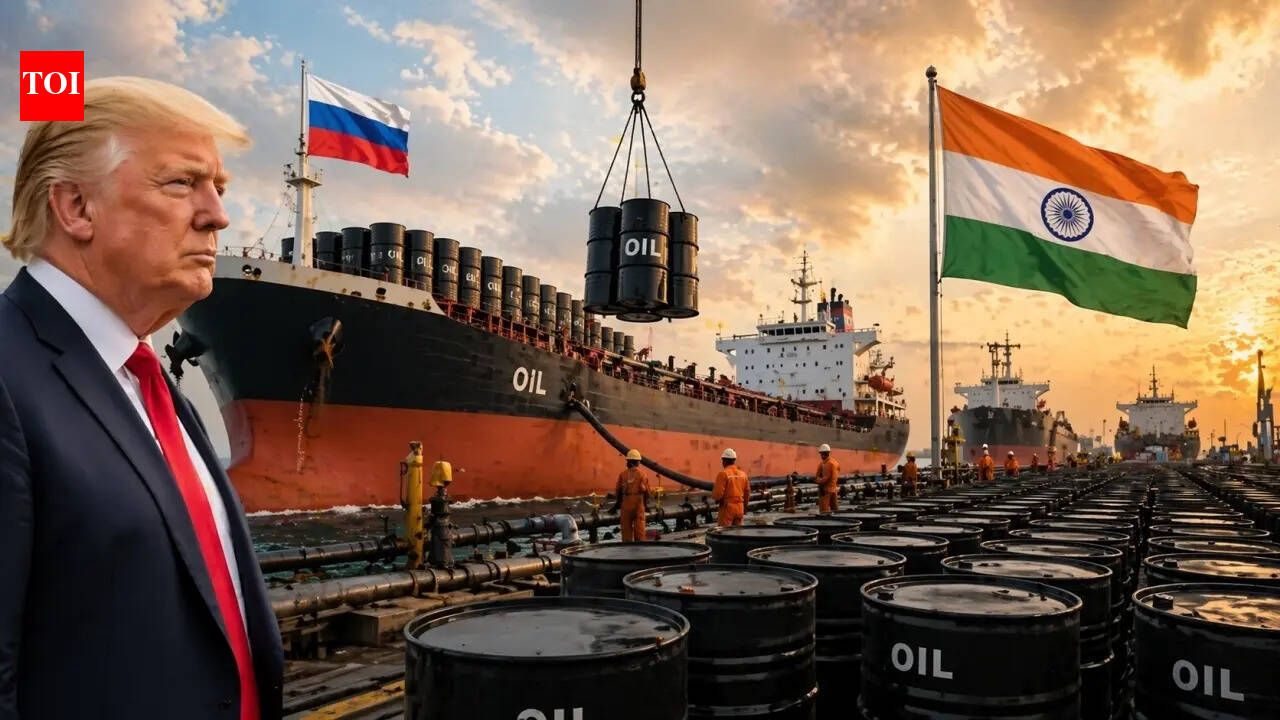
Iran war: Trump sanctions waiver or not – why India continues to buy Russian oil – The Times of India