

Fashion
Bernard Arnault bets on LA’s Rodeo Drive with new Tiffany, Louis Vuitton flagship

By
Bloomberg
Published
August 31, 2025
Bernard Arnault is pressing ahead with two major developments on Rodeo Drive in Beverly Hills, tightening his grip on one of the world’s most exclusive retail corridors.
Arnault’s luxury conglomerate, LVMH Moët Hennessy Louis Vuitton SE, is planning a new Tiffany & Co. flagship store on the site of the old Luxe Hotel, which will be demolished, according to city filings reviewed by Bloomberg.
Just a block away, LVMH has submitted plans for a big new Louis Vuitton store and cultural campus designed by architect Frank Gehry – a pivot from the company’s original plan to build a hotel, which was rejected by voters in 2023. The new proposal would be the company’s largest project yet in the tony Los Angeles-area enclave.
LVMH is deepening its bet on Rodeo Drive as it contends with headwinds including higher US tariffs on European goods and what it described in July as softening demand in key markets such as China and Japan. Despite that weakness, Rodeo Drive still draws a steady flow of wealthy visitors from Asia, the Middle East and the Americas, offering a palm-tree-lined stage and selfie backdrop that few other shopping venues can match.
Rodeo Drive is in a league with shopping high streets such as Madison Avenue and Fifth Avenue in Manhattan and the Miami Design District, said Milton Pedraza, chief executive officer of Luxury Institute, a consulting firm. “There are some places and spaces that are iconic, and they are some of the most pleasant and desirable places to be.”
LVMH declined to comment for this article. Executives have previously named Rodeo Drive on a select list of places where it makes more sense to own than rent.
“You can mention Paris, London, New York and Fifth Avenue and probably Rodeo Drive in Los Angeles and that’s about it,” Jean-Jacques Guiony, LVMH’s chief financial officer at the time, said on a 2023 earnings call.
The Paris-based company already has spent more than $900 million on 12 leased or owned boutiques on Rodeo Drive over the years. That includes a new three-floor Bvlgari boutique opening in October.
Its plans to invest more underscore the strength of high-end luxury in the Los Angeles area even as the regional economy struggles in the aftermath of the deadly wildfires in January, a downturn in Hollywood and US immigration raids backed up by a temporary military deployment.
LVMH bought the Luxe Hotel site for $200 million in 2021. Plans for the Tiffany project, the most recent version of which was filed Aug. 4 with the Beverly Hills planning commission, haven’t been publicly announced.
Designs filed with the city call for a three-story building on Rodeo Drive spanning 30,466 square feet (2,830 square meters), featuring a rooftop indoor-outdoor space for very important clients and a restaurant. The plans by architect Peter Marino are wending their way through the planning department. The plan is occurring as LVMH renovates its Tiffany stores, a process that’s about 30% complete, CFO Cecile Cabanis said in July.
The campus proposed for Louis Vuitton calls for about 100,000 square feet in two buildings connected by pedestrian bridges and an underground tunnel, according to an application with the planning commission. The development, which LVMH disclosed earlier this year, would include luxury retail, a cafe, restaurant, open-air terrace, exhibition space and a garden rooftop. If approved by the city, construction could start in 2026 and finish by 2029.
Pedraza likened the concept to a theme park, with LVMH “becoming more like Disney or Universal Studios than they are just purveyors of luxury goods.”
LVMH originally planned a Cheval Blanc hotel for the same corner of Rodeo Drive and South Santa Monica Boulevard, a proposal rejected by Beverly Hills voters after a contentious fight over zoning and public benefit.
This time, the company’s proposal doesn’t require changes in zoning rules. Darian Bojeaux, an attorney who led opposition to the hotel, said she doesn’t personally like what’s being proposed — but she isn’t campaigning against it either, saying it’s her understanding that the project complies with local codes.
For Beverly Hills City Councilmember John Mirisch, who also opposed the hotel plan, the earlier fight wasn’t over luxury itself but whether the development gave enough back to the community. While he hasn’t taken a position on the Louis Vuitton campus, Mirisch said the project could offer a civic benefit if it draws from LVMH’s art holdings.
“If they use that to feature the amazing LVMH world-class art collection and bring that to Beverly Hills, that would be a tremendous community benefit,” he said.
LVMH’s latest plans cap a buying spree on the street that began more than a decade ago, mirroring its approach in other global hot spots such as New York and Paris, where it paid $1 billion in 2023 for a retail property on the Champs-Elysees.
In 2012, LVMH paid $85 million for a site on Rodeo Drive now being developed into a Dior flagship opening later this year. Between 2018 and 2020, the company spent another $465 million to piece together four parcels for the planned Cheval Blanc hotel.
“There’s these hubs where people go and they have expectations of what stores are there — and if you’re not there, then the money flows to competitors,” said Justin Mateen, a tech and real estate investor who co-founded Tinder.
Mateen and his brother Tyler paid $211 million in 2024 for a building on the corner of Rodeo and Wilshire Boulevard they plan to rebrand as One Rodeo, a new deluxe retail venue.
Prime real estate on Rodeo Drive typically commands annual rents of between $960 and $1,200 a square foot, while store sales often top $10,000 per square foot, said Houman Mahboubi, a broker with CBRE Group Inc.
“That limited supply creates urgency for groups like LVMH to buy rather than lease,” said Mahboubi, who was involved in the sale of the Luxe Hotel site.
Beverly Hills trailed only New York in new luxury openings from July 2023 to July 2024, with Rodeo Drive accounting for more than 40% of all new luxury space in the Los Angeles market, according to a report from Jones Lang LaSalle Inc.
Strong demand illustrates the willingness of high-end brands to splurge on one of the areas that make up the “absolute core” of global glamor, said Jay Luchs, vice chairman at Newmark Group Inc. and a longtime broker on Rodeo Drive. It’s not just about securing space on the street, he said. It’s about appearing on the feeds of influencers who flock to Rodeo Drive.
“People that have hundreds of millions of followers on Instagram — those are very important in fashion and in influence in the world,” he said.










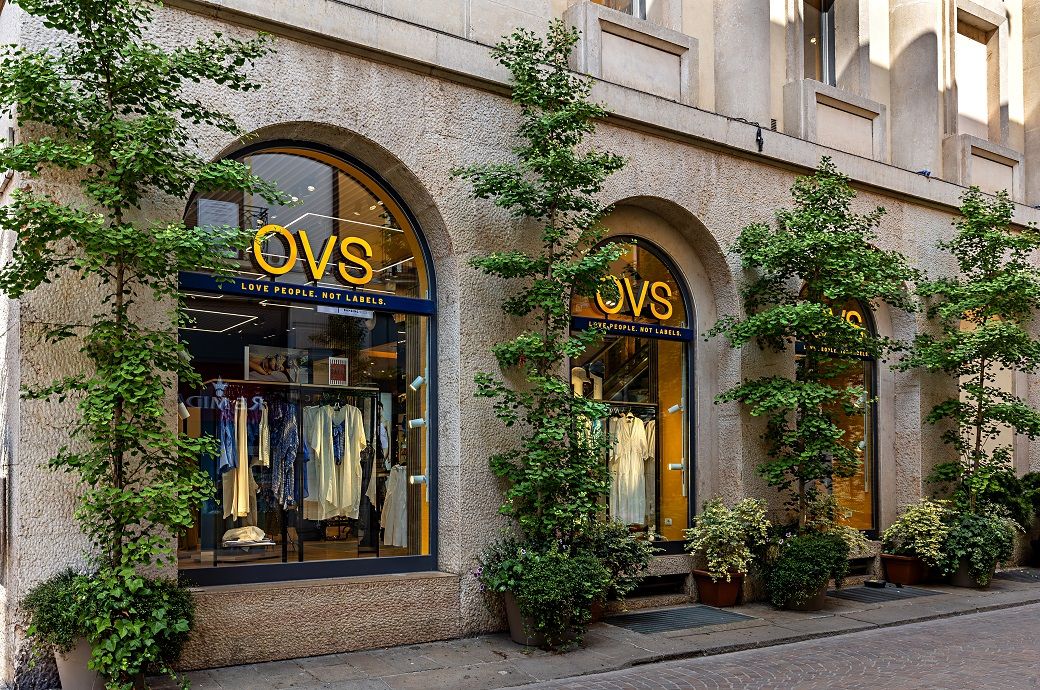
This opening will mark OVS’ second store in India, following its flagship debut in New Delhi in October 2025, and underscores the brand’s long-term commitment to the Indian market.
OVS will launch its first Mumbai store on March 14 at Sky City Mall, Borivali, expanding its India presence after debuting in New Delhi in October 2025.
The 11,000 sq ft outlet will feature womenswear, menswear and kidswear, including premium labels such as PIOMBO and Les Copains.
The move reflects strong early performance and OVS’ long-term growth plans in India.
Spanning approximately 11,000 sq. ft., the Mumbai store will introduce customers to OVS’ latest global retail concept, designed to deliver a modern and seamless shopping experience. Reflecting Mumbai’s diverse fashion sensibilities, where style ranges from everyday comfort to trend-forward dressing, the store offers a versatile mix across womenswear, menswear and kidswear, making Italian style affordable to all. The assortment spans accessible everyday fashion from OVS alongside premium and contemporary collections, including PIOMBO, Les Copains, B.Angel, Altavia, and OVS Kids, designed to meet the style needs of a wide spectrum of consumers.
Sharing his thoughts on the Mumbai launch, Sundeep Chugh, Managing Director at OVS India, said: “The response to our New Delhi launch has been highly positive and has validated our belief that Indian consumers are seeking global fashion that delivers both style and value. Mumbai is a natural next step for us, given its strong fashion consciousness and retail maturity. Our vision is to establish OVS as a trusted destination for the entire family, offering a distinctive Italian aesthetic at democratic price points while maintaining high standards of quality and sustainability.”
Carmine Di Virgilio, Global Chief Retail Officer at OVS S.p.A, added: “India represents an important growth market in our international strategy and Mumbai is among the country’s most influential retail destinations. This opening will allow us to further strengthen our global footprint while introducing consumers to a retail experience that reflects our heritage, the contemporary Italian design philosophy and commitment to responsible fashion. We are very satisfied with our Delhi debut and the enthusiastic response from a wide range of customers, particularly younger generations. At the same time, we are actively evaluating additional expansion opportunities across the Indian market to support our long term growth strategy.”
Globally, OVS operates over 2,200 stores across multiple markets and has built a strong position in accessible, everyday fashion by combining Italian design excellence with quality materials and affordable pricing. Sustainability remains central to the brand’s approach, with responsible sourcing, recyclable materials, water-efficient processes and transparency.
Note: The headline, insights, and image of this press release may have been refined by the Fibre2Fashion staff; the rest of the content remains unchanged.
Fibre2Fashion News Desk (RM)
India’s GDP growth for Q3 FY26 was 7.8 per cent, following high growth of 8.4 per cent in Q2, as per the revised GDP series.
Care Ratings recently projected India’s FY27 GDP growth at 7.2 per cent.
Favourable impact of the GST rate rationalisation and past central bank rate cuts are expected to remain supportive of the consumption scenario, it noted.
On the investment front, the central government’s continued emphasis on capital expenditure-led growth and some signs of revival in private capex are positives.
Favourable impact of the goods and services tax (GST) rate rationalisation and past central bank rate cuts are expected to remain supportive of the consumption scenario.
On the investment front, the central government’s continued emphasis on capital expenditure-led growth and some signs of revival in private capex are positives.
On the external front, the recently announced trade deals with several countries are favourable developments for India’s export performance, Care Ratings said in a release.
However, the external economic conditions remain volatile. It will be critical to monitor the evolving geopolitical situation and trade policy shifts.
Furthermore, the rise in probability of El Nino in 2026 remains a key watchout as it poses risks for agriculture and inflation outlook.
According to the second advance estimate, the full-year growth for FY26 has been revised higher to 7.6 per cent from the earlier estimate of 7.4 per cent. This follows high growth of 7.1 per cent in FY25.
Fibre2Fashion News Desk (DS)
Data from *fashion.com/market-intelligence/texpro-textile-and-apparel/” target=”_blank”>sourcing intelligence platform TexPro showed that trousers and shorts led the import basket at $*.*** billion, accounting for **.** per cent of total shipments. T-shirts followed at $***.*** million (**.** per cent), while jerseys, shirts and coats contributed $***.*** million (**.** per cent), $***.*** million (**.** per cent) and $***.*** million (*.** per cent) respectively. The composition highlights Mexico’s strong demand for everyday and casual wear categories, which dominate mass retail assortments.
By product construction, knitwear maintained a clear lead at $*.*** billion, representing **.** per cent of imports, compared with woven garments at $*.*** billion (**.** per cent). The preference for knitted apparel aligns with global trends favouring comfort-driven, athleisure-inspired and casual lifestyles, particularly in urban markets.

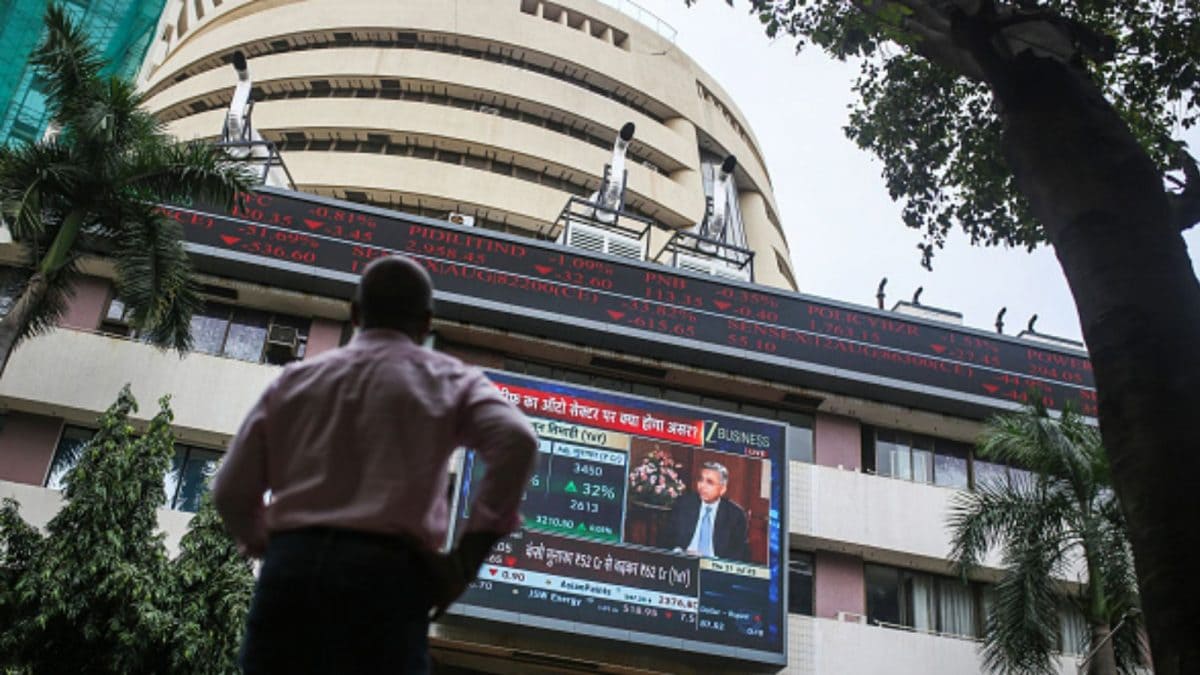
Stock Market Updates: Sensex Tanks 1,100 Points, Nifty Tests 24,450; India VIX Jumps Over 11%

OVS brings Italian fashion to Mumbai retail scene

US Justice Dept releases Epstein documents with claims against Trump

-
 Business1 week ago
Attock Cement’s acquisition approved | The Express Tribune
-

 Politics1 week ago
What are Iran’s ballistic missile capabilities?
-
 Business1 week ago
India Us Trade Deal: Fresh look at India-US trade deal? May be ‘rebalanced’ if circumstances change, says Piyush Goyal – The Times of India
-

 Fashion1 week ago
Policy easing drives Argentina’s garment import surge in 2025
-

 Politics1 week ago
US arrests ex-Air Force pilot for ‘training’ Chinese military
-
 Business7 days ago
Greggs to reveal trading amid pressure from cost of living and weight loss drugs
-

 Sports7 days ago
LPGA legend shares her feelings about US women’s Olympic wins: ‘Gets me really emotional’
-

 Fashion1 week ago
Texwin Spinning showcasing premium cotton yarn range at VIATT 2026