

Tech
China’s electric vehicle influence expands nearly everywhere, except the US and Canada


In 2025, 1 in 4 new automotive vehicle sales globally are expected to be an electric vehicle—either fully electric or a plug-in hybrid.
That is a significant rise from just five years ago, when EV sales amounted to fewer than 1 in 20 new car sales, according to the International Energy Agency, an intergovernmental organization examining energy use around the world.
In the U.S., however, EV sales have lagged, only reaching 1 in 10 in 2024. By contrast, in China, the world’s largest car market, more than half of all new vehicle sales are electric.
The International Energy Agency has reported that two-thirds of fully electric cars in China are now cheaper to buy than their gasoline equivalents. With operating and maintenance costs already cheaper than gasoline models, EVs are attractive purchases.
Most EVs purchased in China are made there as well, by a range of different companies. NIO, Xpeng, Xiaomi, Zeekr, Geely, Chery, Great Wall Motor, Leapmotor and especially BYD are household names in China. As someone who has followed and published on the topic of EVs for over 15 years, I expect they will soon become as widely known in the rest of the world.
What kinds of EVs is China producing?
China’s automakers are producing a full range of electric vehicles, from the subcompact, like the BYD Seagull, to full-size SUVs, like the Xpeng G9, and luxury cars, like the Zeekr 009.
Recent European crash-test evaluations have given top safety ratings to Chinese EVs, and many of them cost less than similar models made by other companies in other countries.
What’s behind Chinese EV success?
There are several factors behind Chinese companies’ success in producing and selling EVs. To be sure, relatively low labor costs are part of the explanation. So are generous government subsidies, as EVs were one of several advanced technologies selected by the Chinese government to propel the nation’s global technological profile.
But Chinese EV makers are also making other advances. They make significant use of industrial robotics, even to the point of building so-called “dark factories” that can operate with minimal human intervention. For passengers, they have reimagined vehicles’ interiors, with large touchscreens for information and entertainment, and even added a refrigerator, bed or karaoke system.
Competition among Chinese EV makers is fierce, which drives additional innovation. BYD is the largest seller of EVs, both domestically and globally. Yet the company says it employs over 100,000 scientists and engineers seeking continual improvement.
From initial concept models to actual rollout of factory-made cars, BYD takes 18 months—half as long as U.S. and other global automakers take for their product development processes, Reuters reported.
BYD is also the world’s second-largest EV battery seller and has developed a new battery that can recharge in just five minutes, roughly the same time it takes to fill a gas-powered car’s tank.
Exports
The real test of how well Chinese vehicles appeal to consumers will come from export sales. Chinese EV manufacturers are eager to sell abroad because their factories can produce far more than the 25 million vehicles they can sell within China each year—perhaps twice as much.
China already exports more cars than any other nation, though primarily gas-powered ones at the moment. Export markets for Chinese EVs are developing in Western Europe, Southeast Asia, Latin America, Australia and elsewhere.
The largest market where Chinese vehicles, whether gasoline or electric, are not being sold is North America. Both the U.S. and Canadian governments have created what some have called a “tariff fortress” protecting their domestic automakers, by imposing tariffs of 100% on the import of Chinese EVs—literally doubling their cost to consumers.
Customers’ budgets matter too. The average price of a new electric vehicle in the U.S. is approximately $55,000. Less expensive vehicles make up part of this average, but without tax credits, which the Trump administration is eliminating after September 2025, nothing gets close to $25,000. By contrast, Chinese companies produce several sub-$25,000 EVs, including the Xpeng M03, the BYD Dolphin and the MG4 without tax credits. If sold in America, however, the 100% tariffs would remove the price advantage.
Tesla, Ford and General Motors all claim they are working on inexpensive EVs. More expensive vehicles, however, generate higher profits, and with the protection of the “tariff fortress,” their incentive to develop cheaper EVs is not as high as it might be.
In the 1970s and 1980s, there was considerable U.S. opposition to importing Japanese vehicles. But ultimately, a combination of consumer sentiment and the willingness of Japanese companies to open factories in the U.S. overcame that opposition, and Japanese brands like Toyota, Honda and Nissan are common on North American roads. The same process may play out for Chinese automakers, though it’s not clear how long that might take.
This article is republished from The Conversation under a Creative Commons license. Read the original article.
Citation:
China’s electric vehicle influence expands nearly everywhere, except the US and Canada (2025, September 3)
retrieved 3 September 2025
from https://techxplore.com/news/2025-09-china-electric-vehicle-canada.html
This document is subject to copyright. Apart from any fair dealing for the purpose of private study or research, no
part may be reproduced without the written permission. The content is provided for information purposes only.











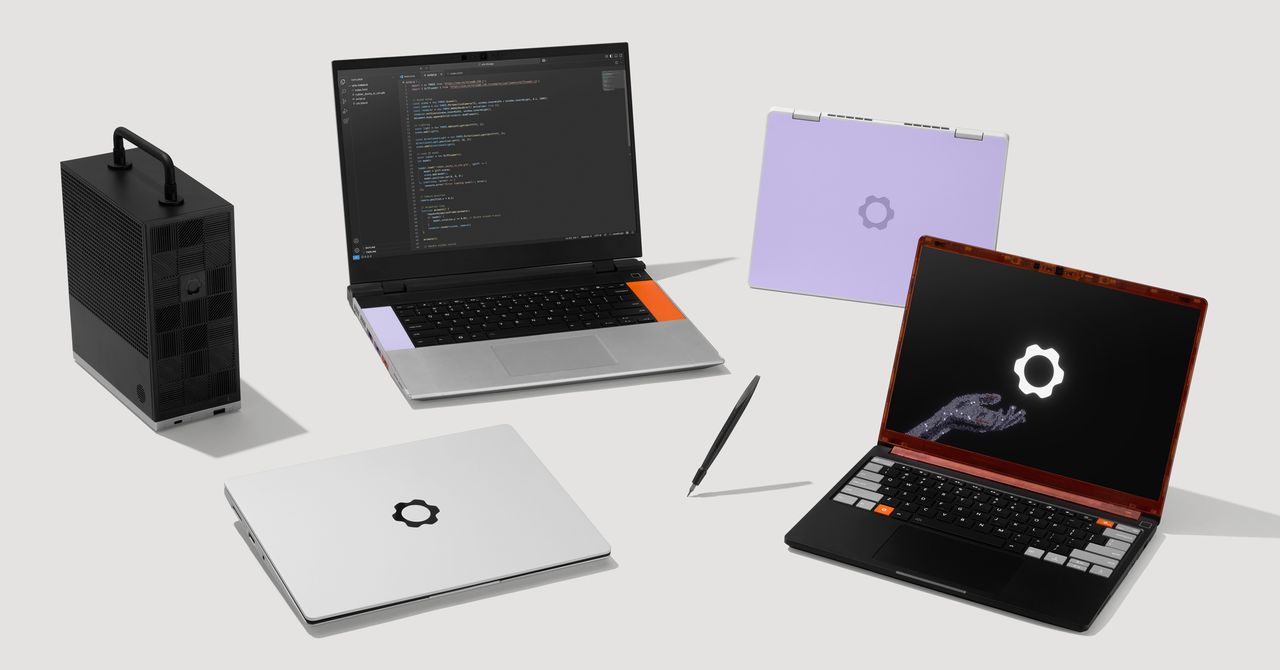
Framework, the company that makes laptops designed for optimal repairability, announced a new version of its main product, a 13-inch screen laptop. It’s called the Framework Laptop 13 Pro, and it has far better battery life, a touchscreen, a haptic touchpad, and is fitted with Intel processors.
At an event in San Francisco today, Framework CEO Nirav Patel showed off the company’s new tech, opening with a joke about making Framework AI—something the company is very much not doing. Framework’s whole thing, after all, is aiming to give users control over the physical tech they use.
“That industry is fighting for you to own nothing, and they own everything,” Patel said about the AI industry. “We’re fighting for a future where you can own everything and be free.”
Framework used the event to detail other updates coming to its 16-inch laptop. It also showed off previews of an official developer kit and a wireless keyboard for controlling your rig from the couch.
Framework 13 Pro
As the name implies, the 13 Pro is a step up from the company’s last version, the Framework 13. It’s also pricier, starting at $1,199 for a DIY Edition that requires assembling the computer yourself. Pre-built units start at $1,499 but can be upgraded with more features. Framework says it will start shipping the 13 Pro in June.
Framework’s signature move for its products is the ability to take the thing apart. The 13 Pro is made with that ethos in mind, so its parts can be easily swapped out, upgraded, or replaced. Four Thunderbolt 4 interfaces let you pick which ports (USB-C, HDMI, etc.) you want and then choose where to place them. Framework says it planned the laptop with cross-generation compatibility in mind, so current Framebook 13 laptop owners will be able to use new 13 Pro parts like the mainboard, display, and battery, and put them into their existing machine.
The big changes in the guts of the 13 Pro come from Framework’s shift away from using an AMD processor to Intel’s Core Ultra Series 3 processors, which Framework described in its press release as “just insanely efficient.” That efficiency, along with a bigger battery, translates to more than 20 hours of battery life while streaming 4K Netflix videos, at least that’s the claim. That’s almost 12 hours longer than the Framework 13.

Courtesy of Framework

Courtesy of Framework

OpenAI launched a new image generation AI model on Tuesday, dubbed ChatGPT Images 2.0. This model can generate more than one image from a single prompt, like an entire study booklet, as well as output text, including in non-English languages, like Chinese and Hindi. This release is available globally for ChatGPT and Codex users, with a more powerful version available for paying subscribers.
When any major AI company releases a new image model, it can revive interest and boost usage, especially if social media users adopt a meme-able trend, transforming images of themselves. Last year, Google’s launch of the Nano Banana model was a major moment for the company, especially when users started posting hyperrealistic figurines of themselves online. Earlier this year, ChatGPT Images made waves on social media as users shared AI-generated caricatures.
What’s Different?
Since the new model can tap into ChatGPT’s “reasoning” capabilities, Images 2.0 can search the internet for recent information and generate more than one image at a time. In essence, the bot can use additional steps to output more thorough generations from a single prompt. Images 2.0 also has a more recent knowledge cutoff date: December 2025.
This also means that outputs from the new model are more granular. For example, I generated an infographic with San Francisco’s weather forecast for the next day, as well as activities worth doing. The image ChatGPT generated included accurate weather details for the rainy day, along with accurate-looking drawings of the Ferry Building, Castro Theater, Painted Ladies houses, and Transamerica Pyramid.
Additionally, Images 2.0 is more customizable for users who want unique aspect ratios for image outputs. The new model can generate images, ranging from 3:1 wide to 1:3 tall, and users can adjust the image’s size as part of their prompt to the AI tool.
First Impressions
After a few hours of generating images with the new model, I was generally impressed with the text rendering capabilities, in English at least. Not that long ago, image outputs featuring text, from any of the major models, often included numerous malformed characters or words with errant extra letters. ChatGPT struggled to label images accurately two years prior, so the cleaner, more complex outputs from Images 2.0 are a sign of continued improvement. Google has also focused on improving image outputs featuring text in its recent iterations of Nano Banana.

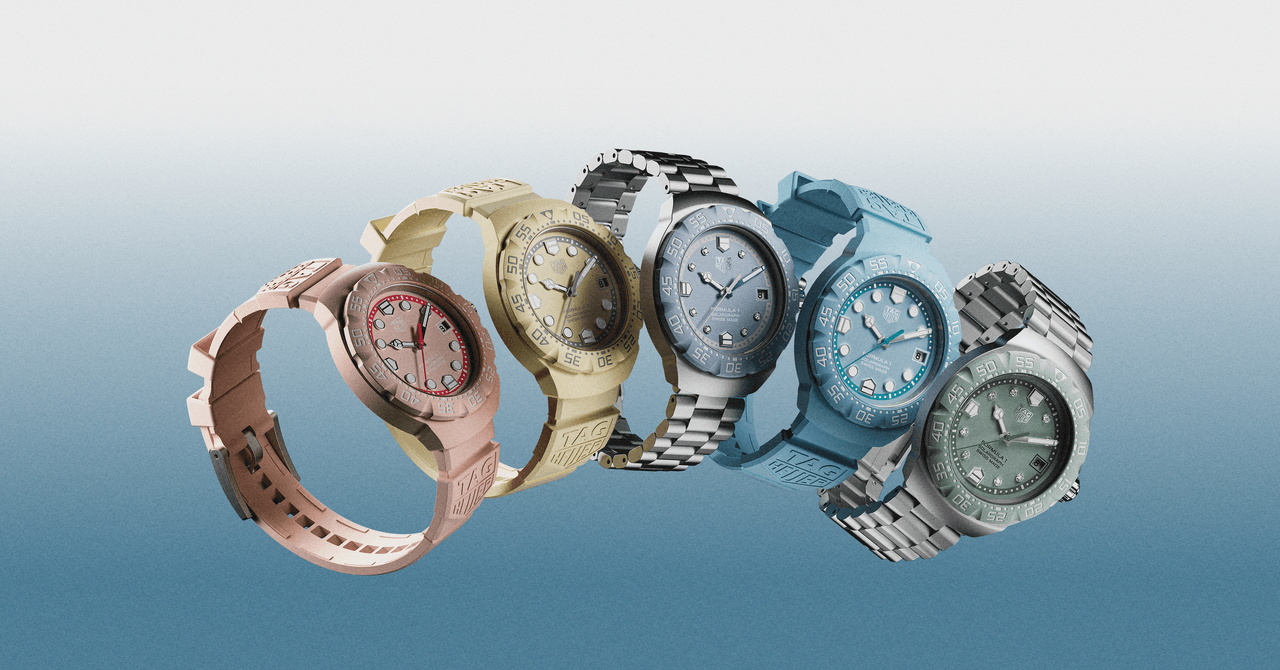
No doubt looking to find some breathing space after the hubbub of Watches and Wonders last week, TAG Heuer has dropped an update to its 2025 revamped collection of the brand’s iconic plastic-cased 1980s watch, the “Formula 1.”
The five new pieces are called the “pastel collection” by TAG, and all are built on the same solar-powered Formula 1 Solargraph 38 mm that launched in March last year. Two models feature a sandblasted stainless steel case, while the remaining three have cases made from TAG’s proprietary bio-polamide plastic, Polylight.
It’s these Polylight versions that, for WIRED, are the stars of the new mini collection. Coming in pastel blue, beige, and pink, and sporting case-matching rubber straps and bidirectional-rotating Polylight bezels, they reference classic F1 designs that made the line iconic in the first place.

The stainless steel models have a 3-link sandblasted steel bracelet and either a “pastel green” or “lavender blue” dial with matching Polylight bezels. The dials on both watches also see eight diamonds replace the circular hour markers. TAG says these models add “a touch of refinement for those seeking sophistication,” but considering these “luxury” F1s will retail at $2,800, as opposed to the already punchy $1,950 full Polylight versions, our pick is most definitely the plastic pieces.
Not only do these blue, beige, and pink versions pleasingly hark back to vintage F1 designs—though now 38 mm in size instead of the original 35 mm—but also, just like all F1 Solargraphs, they come equipped with screw-down crowns and casebacks, making for 100 meters of water resistance and ensuring these will serve well as dive and sports watches. My recommendation? Go for the pink, it looks superb on the wrist. The beige is a very close second.



Museum heist mystery ends as Romania’s 2,500-year-old Golden Helmet returns home

Ranking the Top 20 Players in the Men’s College Basketball Transfer Portal

NATO jets intercept Russian bombers over Baltic Sea

-

 Fashion6 days ago
France’s LVMH Q1 revenue falls 6%, shows resilience amid Iran war
-

 Sports1 week ago
The case for Man United’s Fernandes as Premier League’s best
-

 Entertainment1 week ago
Palace left in shock as Prince William cancels grand ceremony
-

 Entertainment6 days ago
Is Claude down? Here’s why users are seeing errors
-
 Business1 week ago
UK could adopt EU single market rules under new legislation
-

 Fashion1 week ago
Energy emerges as biggest cost driver in textile margins
-
 Business1 week ago
Delta Air Lines unveils first new Delta One suite in premium cabin arms race
-

 Fashion1 week ago
Asia claims largest share of markets on Kearney FDI Confidence Index