

Tech
Chill Out With the Best Coolers We’ve Tried










Food handling is an area of work that still relies heavily on humans. Fruit, vegetables, meat, and other foods need to be handled quickly but gently. It is also hard to automate because no two pieces of fruit, vegetables, or chicken nuggets look exactly the same.
Eka’s demos suggest that the company may be onto something big. I found myself mentally comparing their robots to GPT-1, OpenAI’s first large language model, developed four years before ChatGPT. GPT-1 was often incoherent but showed glimmers of general linguistic intelligence.
The robots I saw seem to have a similar kind of nascent physical intelligence. When I watched a video of one reaching for a set of keys in slow motion, I noticed it did something that seemed remarkably human: It touched the tips of its grippers to the table and slid them along the surface before making contact with the keys and securing them between its digits. Eka’s algorithms seem to know instinctively how to recover from a fumble. This kind of thing is difficult for other robots to learn, unless the humans training them deliberately make a wide range of mistakes.
Unlike with any other robot I can think of, it’s almost possible to imagine what the world is like for the robot. Its sensors seem to feel the weight of its arm, the inertia as it sweeps toward the keys and slows down. Once it has the keys in its grasp, it seems to sense the weight of them dangling from its claw.
I don’t know if Eka’s approach really is the route to a ChatGPT-like breakthrough in robotics. Some very smart experts believe that mixing human demonstration with simulation will yield better results than simulation alone. Maybe some combination of the two approaches will ultimately be necessary? But it does seem clear that robots will eventually need to have the kind of tactile, physical intelligence that Eka is working on if they are to obtain humanlike dexterity.
Agrawal tells me that the same general approach should work for finer manipulation. The fiddly dexterity required to build an iPhone, for instance, could be achieved by building different actuators and sensors and practicing the task in simulation.
After spending a few hours at Eka, I decide to stop by the restaurant downstairs. I watch from the counter as the staff prepare food and make coffee. A descendant of the machine upstairs may be able to do these things just as well, if not better. But given how much I enjoy chatting with the people who work there, I think I would pay extra to keep humans around. Unless, that is, my hands get automated away too.
Let us know what you think about this article. Submit a letter to the editor at [email protected].
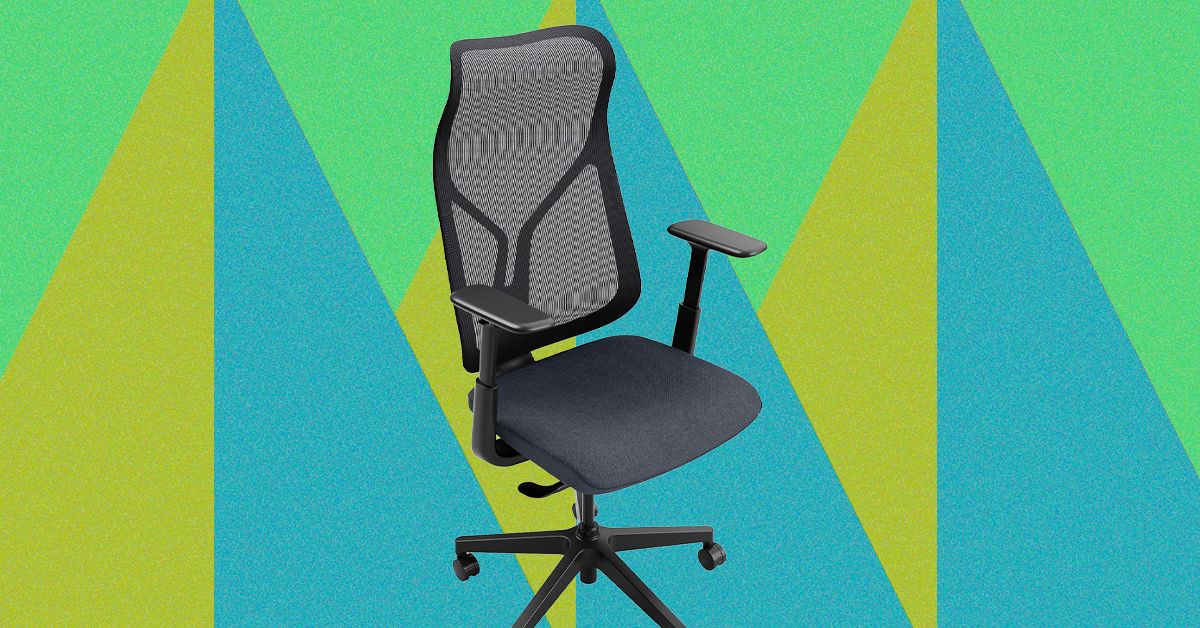
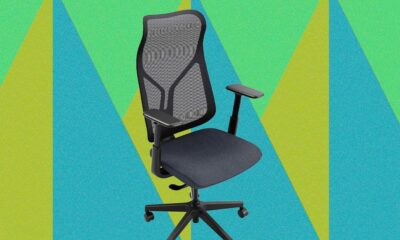
Like the brand’s easy-to-assemble desks, the Align chair has a deceptive simplicity with relatively few parts. The chair required less than 15 minutes and only three screws to put together, using an Allen wrench that came in the box. (While the QR code, on a chair released in March, did not yet link up to the right URL for the assembly instructions, I mostly didn’t need them.)
The simplicity stems mostly from the decision to limit the chair’s components: a cushion atop the wheels and casters and a single-piece mesh top held aloft by a suspension system that allows for a quite generous lean.
The chair’s spec sheet says one can lean back about 20 degrees, but I found there to be significantly more play on my large frame: I could lean back closer to 45 degrees while still feeling full support and no tipping danger. This makes for a lot of room to stretch.
Customization Concerns
Video: Matthew Korfhage
Even though the chair is constructed from minimal parts, Vari has managed to trundle in a surprising amount of adjustability. The seat can be moved about four inches up and down, shifted forward and back, and the lumbar support tilted to your liking using a five-position adjustable ratchet behind the chair. The effect isn’t dramatic visually, but it leads to vastly different degrees of pressure at the lower back.
The armrests can also be pivoted inward or outward and moved forward or back, though these positions cannot be locked. If you’re prone to fiddling, you may find yourself playing with the position of the armrests in idle moments. The armrests are also only lightly padded, and while I didn’t feel any discomfort, those who like a feeling of plushness might look elsewhere.
Note that while the armrests can pivot in place, their width cannot be adjusted. The seat cushion is also on the wide side, about 20 inches across. This means that while the chair accommodates wide frames handily, those who are a more petite may find the armrests too far apart. I loved the high-backed support, as a tall and long-bodied man. But smaller people may feel like they’re swimming in the chair, with its 27-inch-tall back.
Overall, I was impressed by the chair’s somewhat ingenious simplicity, which has the welcome side effect of keeping the price low. This balanced mix of breathability, support, value, and customizability makes the Align a very strong contender in the mid-price range—and the integrated headrest represents a serious step up from the company’s previous-generation Vari Task Chair. My one worry about the Align is that I’ll actually fall asleep in it.
Power up with unlimited access to WIRED. Get best-in-class reporting and exclusive subscriber content that’s too important to ignore. Subscribe Today.

HSBC has collaborated with quantum middleware developer Haiqu and a team of academic researchers on an efficient way to run financial models on commercially available quantum computing hardware. The publication of joint research in Physical Review Research discussed an approach to encoding real-world probability distributions into quantum circuits.
HSBC is among the financial institutes looking at how to secure financial transactions as quantum computing evolves into commercially viable products, such as protecting financial systems using post quantum cryptography. Quantum computers also offer banks such as HSBC a way to run more powerful financial market simulations.
The research team – which included experts from HSBC, Haiku, Czech Technical University, University of Zurich, the Akhiezer Institute for Theoretical Physics and Karazin Kharkiv National University in Ukraine, and Greece’s Athena Research Center – looked at Lévy distributions, which are used when modelling extreme variations of stock markets indexes worldwide.
“By developing methods to efficiently work with Lévy distributions on a quantum computer, we pave the way for more precise modeling of market behaviours, particularly in capturing heavy tails, skewness and volatility clustering,” the researchers stated in the paper.
According to Haiqu, while quantum computing can be used in derivative pricing, portfolio optimisation, fraud detection and machine learning, these applications need realistic financial distributions. This means data must first be loaded into a quantum computer. The process of encoding classical data into quantum states is widely recognised as a major bottleneck when implementing many quantum algorithms on hardware. The challenge is particularly relevant for applications such as financial risk modelling and simulation, where complex probability distributions must be loaded onto quantum devices.
Haiqu said that the number of required quantum operations in conventional algorithms can scale exponentially with the number of qubits, making it a significant bottleneck on today’s noisy, depth-limited hardware. To address this problem, the company has developed compact quantum circuits with linear, rather than exponential, scaling.
“One of the biggest practical barriers is getting realistic financial data onto today’s quantum hardware,” said Mykola Maksymenko, co-founder and CTO of Haiqu. “This work shows a scalable path around that barrier and helps move quantum finance workflows from theory toward execution.”
The researcher uses matrix product state (MPS) methods to construct shallow quantum circuits that encode smooth functions, including probability distributions, directly into quantum states.
Using a 25 qubit IBM quantum computer, the research paper stated that accuracy of the machine was sufficient to pass quantitative statistical tests, even on current noisy quantum computing devices. “The results on distribution loading may have importance to various domains of financial risk analysis, risk management and decision-making that include series of financial data,” the researchers noted.
They used a sampling-based workflow, running on 64-qubit hardware, which they said demonstrates the feasibility of their approach when running at larger scales. In the paper, they stated that similar behaviour was observed in simulations up to 156 qubits, which they claimed means the approach could extend to substantially larger problem sizes.
“Preparing complex probability distributions efficiently is a key step in many quantum algorithms,” said Philip Intallura, group head of quantum technologies at HSBC. “This work shows how they can be implemented with much shallower quantum circuits, bringing practical applications such as financial risk modelling closer.”


US-Iran war pushes India denim prices up by $0.66/metre

UAE dismantles drug ring worth over Dh3m

Stock market today (April 29, 2026): Sensex jumps 609 points, Nifty nears 24,200-Check top gainers and losers today – The Times of India

-

 Politics1 week ago
UK’s Starmer seeks to deflect blame over Mandelson appointment
-
 Business1 week ago
How Trump’s psychedelics executive order could unlock stalled cannabis reform
-

 Entertainment1 week ago
Lee Anderson, Zarah Sultana kicked out of UK Parliament for calling PM ‘liar’
-
 Business1 week ago
Us-India Trade Talks: US–India trade deal: Where do talks stand & what to expect – explained – The Times of India
-

 Fashion1 week ago
India, US to resume BTA talks today
-
 Tech1 week ago
A Humanoid Robot Set a Half-Marathon Record in China
-
 Business1 week ago
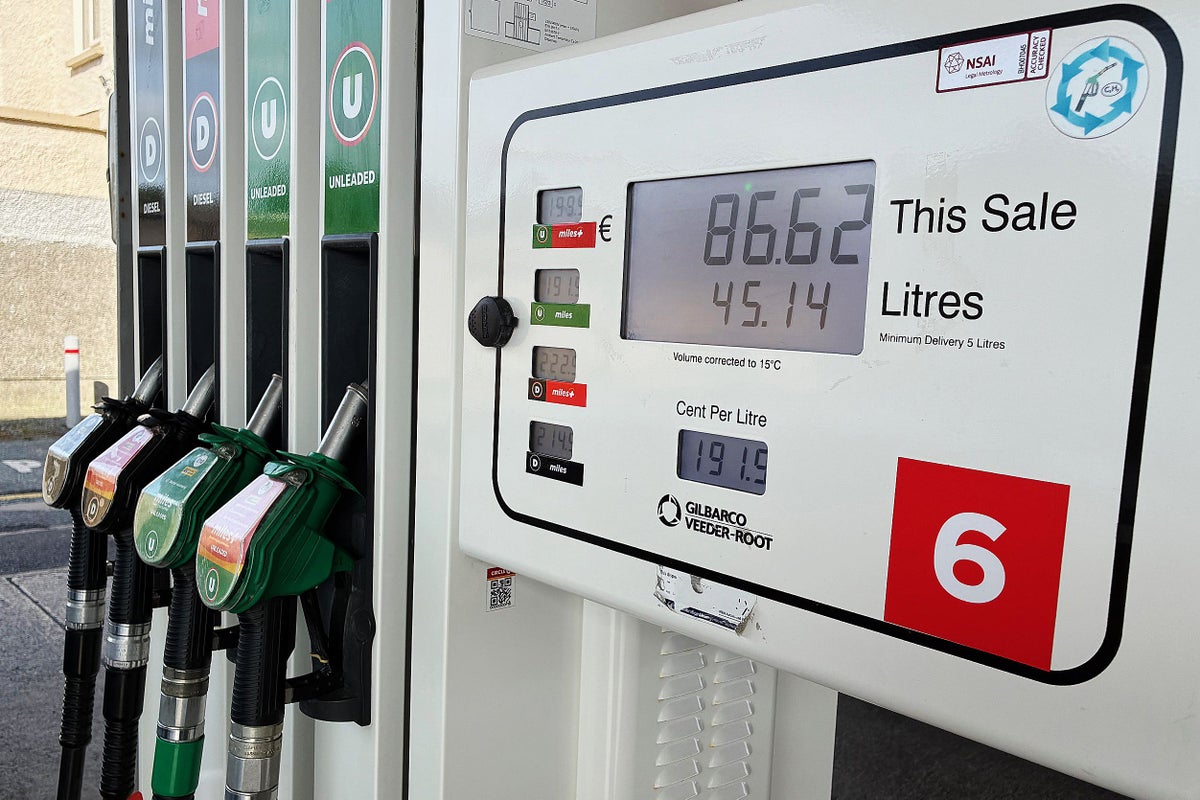
UK inflation accelerates after Iran war drives sharp rise in fuel prices
-

 Sports1 week ago
‘It’s his superpower’: Inside Fernando Mendoza’s extraordinary rise to No. 1