

Business
Charlie Kirk death: Report those who celebrate the shooting to employers, Vance says

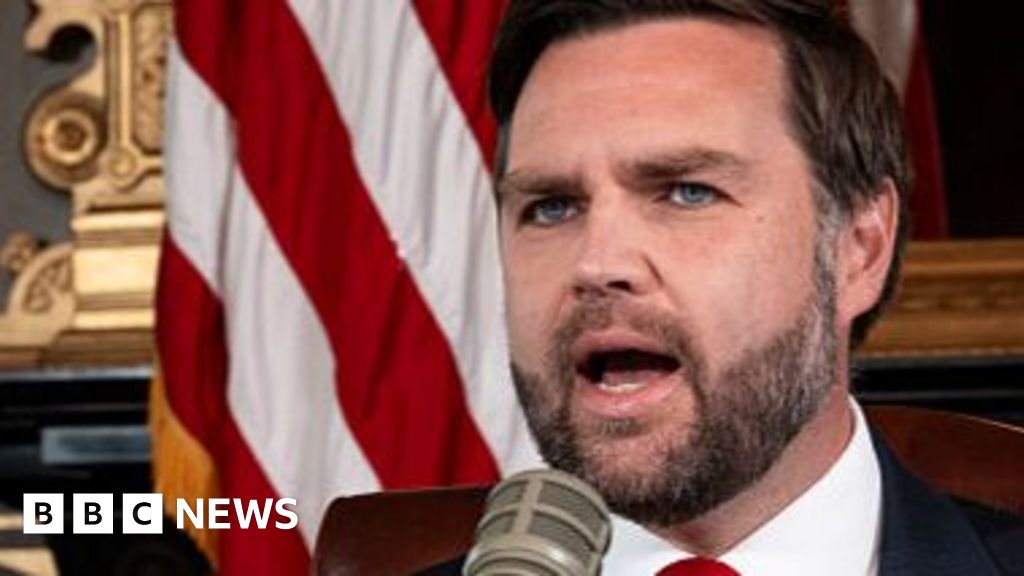
People who celebrate the killing of conservative influencer Charlie Kirk should be held accountable, US Vice-President JD Vance has said.
“Call them out, and hell, call their employer,” Vance said as he guest-hosted an episode of the Charlie Kirk Show. “We don’t believe in political violence, but we do believe in civility.”
Pilots, medical professionals, teachers and one Secret Service employee are among those who have been suspended or sacked for social media posts that were deemed inappropriate about Kirk’s death.
Critics have argued the firings threaten free speech and employee protections, although US companies have wide latitude to terminate employees.
Vance’s comments aired on Monday in an episode of the Charlie Kirk Show, a daily podcast that Kirk hosted before he was shot in the neck last Wednesday while hosting a debate at Utah Valley University.
He was joined by the White House deputy chief of staff, Stephen Miller, who vowed to dismantle the left-wing “terrorist networks” he said were responsible for the killing. Police have said the 22-year-old suspect in custody acted alone.
In the episode, the vice-president said that left-wing Americans “are much likelier to defend and celebrate political violence”, and added that “there is no civility in the celebration of political assassination”.
A recent YouGov poll found liberal Americans were more likely than conservatives to defend feeling joy about the deaths of political opponents.
However a poll conducted by the Public Religion Research Institute in 2023 – when Democrat Joe Biden was in the White House – found that a third of Republicans agreed with the statement: “Because things have gotten so far off track, true American patriots may have to resort to violence in order to save our country.”
Just 13 percent of Democrats in the survey agreed.
Vance’s remarks come as other Republican US lawmakers echoed calls for those publicly celebrating Kirk’s death to be punished.
“I will demand their firing, defunding, and license revocation,” said Florida congressman Randy Fine in a post on X on Sunday, as he called for such people to “be thrown out of civil society”.
Critics have highlighted previous comments from Fine, including calling Muslim members of Congress “terrorists” and proposing a bill allowing people to run over peaceful protesters who block traffic, an initiative he dubbed the “Thump Thump Act”.
South Carolina congresswoman Nancy Mace urged the Department of Education to “cut off every dime to any school or university” that refuses to retaliate against employees making insensitive posts about Kirk.
Kirk, a devout Christian, professed viewpoints on gender, race and abortion that drew backlash from many liberals, especially on the campuses he toured.
In some cases, those who took to social media to gloat over his death or post comments that caused offence have been fired or placed on leave by employers.
Among them is Anthony Pough, a US Secret Service employee who wrote on Facebook that Kirk “spewed hate and racism on his show… at the end of the day, you answer to GOD, and speak things into existence”.
He has had his security clearance revoked.
Secret Service Director Sean Curran wrote in a memo to staff that politically motivated attacks are on the rise and members of the protective detail should not be exacerbating the issue.
“The men and women of the Secret Service must be focused on being the solution, not adding to the problem,” Curran wrote.
Americans employed by private companies have also come under scrutiny. Office Depot fired employees at a Michigan branch after a viral video showed staff refusing to print posters for a Kirk vigil, the company confirmed to the BBC in a statement.
A spokesperson for Office Depot said the employees’ behaviour “was completely unacceptable and insensitive”, and violated the company’s policies.
Professors and journalists, too, are facing punishment for their comments, provoking a debate over so-called cancel culture.
Karen Attiah, a long-time columnist for the Washington Post, wrote in a Substack post that the newspaper had fired her after a series of posts she made on social media platform Bluesky following Kirk’s death.
In South Carolina, Clemson University said in a statement on Monday that it had fired one employee and placed two professors on leave for what it called “inappropriate” social media posts related to Kirk’s killing.
The repercussions have reached beyond the US.
In Canada, University of Toronto professor Ruth Marshall was placed on leave after appearing to write in a social media post that “shooting is honestly too good for so many of you fascists”.
US employers generally have broad discretion to fire workers for any reason, as most staff are hired under “at-will” contracts.
Steven Collis, a law professor at the University of Texas Austin, said the right to free speech under the US Constitution does not cover private employers.
Rather, it applies to government actions restricting citizens’ free speech, he said.
But Risa Lieberwitz, head of the Worker Institute at Cornell University, said public figures could be infringing on free speech rights if they call for accountability over posts about Kirk.
She said the spate of firings was not surprising, given the current heated political rhetoric in the US.
“I think it reflects the kind of fear that exists now in the United States from retaliation by the Trump administration for not adhering to their political agenda,” she said.
Some have criticised the firings, like the American Association of University Professors, who said in a statement on Monday that academic freedom should be protected and “not curtailed under political pressure”.

Tiger Woods of Jupiter Links Golf Club looks on before the match against the Los Angeles Golf Club at SoFi Center in Palm Beach Gardens, Florida, March 24, 2026.
Adam Glanzman | TGL Golf | Getty Images
Tiger Woods’ future in professional golf remains unclear as he seeks treatment after a rollover car crash last week.
Woods was arrested for a DUI after the accident in Jupiter Island, Florida, his second rollover in five years, and said in a statement on X that he would be stepping back from golf “to return to a healthier stronger, and more focused place.”
Woods did not provide a timeline for his return, only that he would be stepping away for a “period of time.”
On Wednesday, the PGA of America announced that Woods will no longer serve as captain of the 2027 U.S. Ryder Cup Team.
“We support his decision,” the PGA of America said in a statement on X. “We commend Tiger for prioritizing his long-term health and deeply respect the courage it takes to make such a personal decision.”
The latest developments leave Woods at least temporarily at the fringes of the sport that made him a household name. The golf community has rallied around the sport’s biggest star as he vows to “focus on his health,” and the PGA Tour said in a statement that Woods has the organization’s full support.
“Tiger Woods is a legend of our sport whose impact extends far beyond his achievements on the course. But above all else, Tiger is a person, and our focus is on his health and well‑being,” the tour said.
Off the course, Woods has been serving as chairman of the PGA Tour’s Future Competition Committee since August. That group has been responsible for creating a vision for the future of professional golf.
A PGA Tour spokesperson said that Woods will return to that role when he is ready to do so.
Golf Channel analyst and former tour pro Brandel Chamblee suggested it could be time for Woods to consider retirement following his latest accident. Woods, 50, has been recovering from various injuries sustained in his car crash in 2021.
“Why would he need to play golf anymore?” Chamblee asked Friday on the Golf Channel’s “Golf Central.” “I think he should probably ask himself that. Consider not playing golf anymore.”
Until Friday’s accident, Woods held onto hope that he would compete in the upcoming Masters Tournament this month.
Augusta National Golf Club Chairman Fred Ridley confirmed this week that Woods would not play.
“Although Tiger will not be joining us in person next week, his presence will be felt here in Augusta,” Ridley said. “Augusta National Golf Club and the Masters Tournament fully support Tiger Woods as he focuses on his well-being.”
TGR, Woods’ education foundation, said it remains committed to serving its students and communities.
“Our thoughts are with our founder as he takes the time needed to focus on his health,” its CEO Hrag Hamalian said in a statement.
Woods’ apparel brand, Sun Day Red, also voiced its support this week.
“He is not just our partner, he is our friend. We are here for him and we remain focused on the work we are building together,” the company said in a post on the Meta-owned Threads platform.
TGL, the indoor golf league founded by Woods and Rory McIlroy, declined to comment about Woods’ hiatus and potential return.
Woods made his first TGL playing appearance of the season for the Jupiter Links team last week in front of a notable audience. ESPN said nearly 1 million viewers tuned in to watch Woods’ return, making it the largest audience this season.

A Sam’s Club in Miami, July 7, 2025.
Joe Raedle | Getty Images
Walmart-owned Sam’s Club said Wednesday it will raise its annual membership fee by $10.
Starting on May 1, the warehouse club — which directly competes with Costco and BJ’s Wholesale Club — will charge $60 per year for basic membership and $120 for its higher-tier option. It currently charges $50 for club members and $110 for Plus members and last raised annual fees in October 2022.
In a statement, Sam’s Club said it has “adjusted our membership pricing to support the things our members love,” citing perks including its assortment, expanded hours and better curbside pickup and delivery options.
Still, those new fees will be below those of rival Costco, which charges $65 per year for its basic membership and $130 per year for its higher-tier option. Costco hiked its fees in 2024. The fees bring Sam’s Club in line with BJ’s, which charges $60 per year for its basic membership and $120 per year for its higher-tier membership.
Sam’s Club is hiking membership fees as its annual sales and membership grow. Net sales for Sam’s Club in the U.S. grew by about 3.1% to $93 billion last fiscal year, according to Walmart’s fourth-quarter earnings report. That growth has come in part from an expanding digital business: In the holiday quarter, the warehouse club’s e-commerce sales increased by 23% year over year. Store and website visits increased, too, with transactions rising 5.3% year over year in the same quarter.
Higher gas prices, driven by the Iran war, have drawn more attention to one of warehouse clubs’ key perks: cheaper prices at the pump. Gas prices hit a nationwide average of $4.018 this week, according to travel association AAA. That’s the highest price since August 2022, when the Russia-Ukraine war drove up energy prices.
Sam’s Club does not disclose its membership count, but said that it hit a record high in the three-month quarter that ended Jan. 31. Membership for the retailer is estimated to be more than 30 million, with a similar proportion of members opting into the higher-tier level as at Costco, according to David Bellinger, a retail analyst for Mizuho Securities.
Based on the equity research firm’s estimate, the membership fee increase could bump up annual income from the subscriptions by more than $200 million. That would translate to a 2 cent annual earnings per share lift for parent company Walmart.
Membership fee increases for current members will take effect when they renew at the end of their billing cycle. Sam’s Club said it emailed members about the fee increase on Tuesday.
As part of the fee change, Sam’s Club said members of its higher-tier level, called “Plus,” will be able to earn up to $750 per year in Sam’s Cash rewards on eligible purchases, up from $500 per year.
European stocks rallied on Wednesday as comments from both sides of the Middle East war gave some conviction for a near-term end to hostilities.
“The market appears increasingly optimistic that an end to the war in Iran is in the offing as big gains in the US and Asia were matched in Europe,” said AJ Bell investment director Russ Mould.
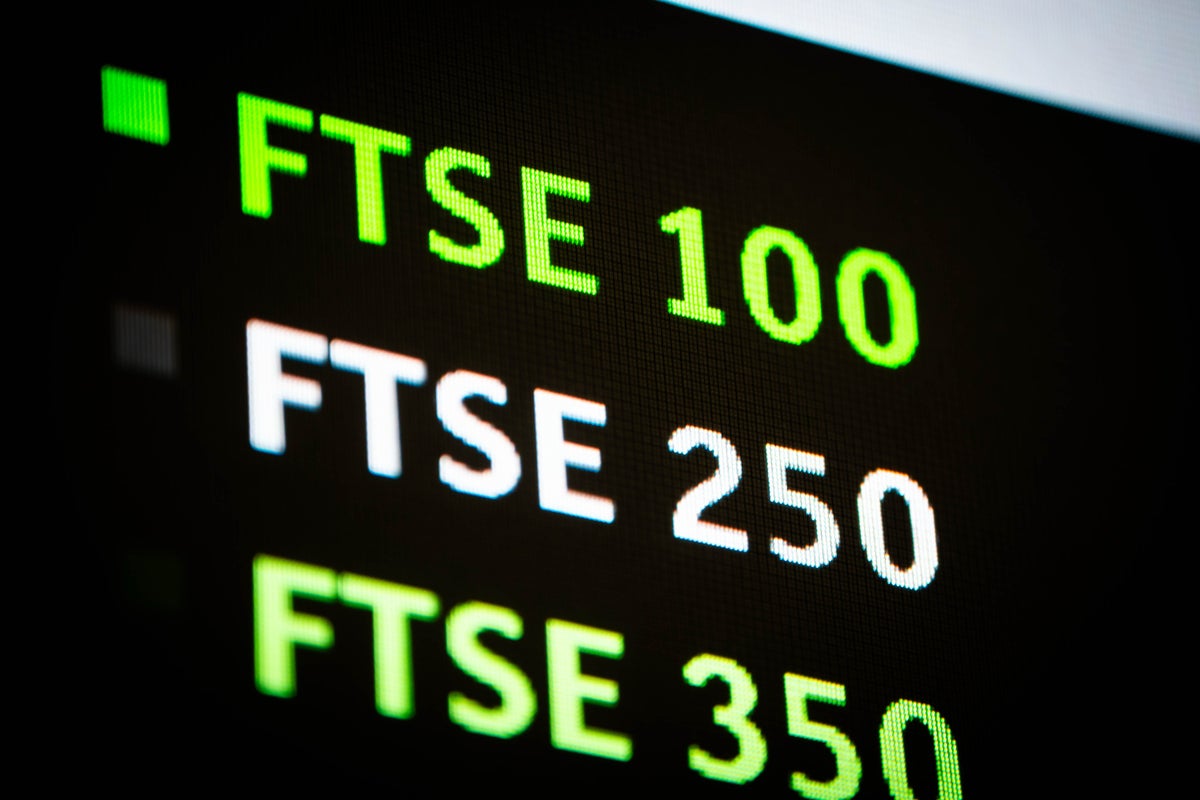
The FTSE 100 closed up 188.34 points, 1.9%, at 10,364.79. The FTSE 250 ended up 484.48 points, 2.3%, at 21,688.19, and the AIM All-Share advanced 22.13 points, 3.1%, at 739.25.
On Wednesday, US President Donald Trump said that Iran had asked for a ceasefire but that the US would only consider this once the Strait of Hormuz, the vital oil and gas shipping route which Iran has effectively closed for most exports, is clear for shipping.
This came after Mr Trump told reporters on Tuesday the US would end operations in Iran “very soon”, perhaps within “two weeks, maybe three”.
The US president is due to make a televised address later on Wednesday.
Meanwhile, Iranian President Masoud Pezeshkian said the Islamic republic had the “necessary will” to end the war, provided its enemies guaranteed it would not flare up again.
But Israeli Prime Minister Benjamin Netanyahu insisted that Israel would press ahead with its military campaign and that “we will continue to crush the terror regime”.
Brent oil traded lower at 101.83 dollars a barrel on Wednesday afternoon, from 107.38 dollars late on Tuesday.
In European equities on Wednesday, the CAC 40 in Paris closed up 2.1%, while the DAX 40 in Frankfurt rose 2.7%.
Stocks in New York were higher, extending Tuesday’s bumper gains. The Dow Jones Industrial Average was up 0.9%, as was the S&P 500 index, and the Nasdaq Composite advanced 1.3%.
Michael Brown, senior research strategist, at Pepperstone pointed out that amid the “euphoria, exuberance, and relief” which has driven a rebound in risk appetite over the last day or so, the surge in energy prices means that a rise in headline inflation over the next few months is, essentially, “baked in”.
“Added to which, considerably higher energy prices, and continued supply chain disruption, are likely to bring with them substantial growth headwinds, in turn amounting to a notable negative demand shock, which will likely weaken what is already very anaemic economic momentum, most notably in Europe,” he said.
Mr Brown does not think financial markets have “ignored” these risks, but are essentially “parking these worries, to be dealt with on some other day in the future”.
Reflecting these concerns, the Bank of England said the Middle East war had caused “a substantial negative supply shock to the global economy”, increasing risks to the financial system.
The central bank said the fallout will also weigh on economic growth and tighten financial conditions, such as restricted lending by banks.
“Adverse impacts on the global macroeconomy increase the likelihood that multiple vulnerabilities could crystallise at the same time, amplifying their effect on financial stability,” the Bank said in a quarterly update on identifying risks to financial stability.
Bank governor Andrew Bailey sought to dampen expectations of interest rate hikes.
In an interview with Reuters, Mr Bailey responded to market expectations for higher rates by commenting “that is a judgment markets have to make but I think they’re getting ahead of themselves”.
Prime Minister Sir Keir Starmer said the UK could weather the economic storm caused by the Iran conflict but acknowledged the crisis will “affect the future of our country” as households faced higher fuel costs now and the prospect of energy bill hikes later this year.
The UK is leading a diplomatic initiative to reopen the Strait of Hormuz, but restoring the flow of global trade will not be easy, Sir Keir admitted.
Foreign Secretary Yvette Cooper will host an international meeting on Thursday to “assess all viable diplomatic and political measures” to reopen the strait, after 35 countries signed up to a statement expressing willingness to contribute to efforts to ensure safe passage for shipping.
The yield on the US 10-year Treasury narrowed to 4.31% on Wednesday from 4.33% on Tuesday. The yield on the US 30-year Treasury ebbed to 4.89% from 4.91%.
The pound rose to 1.3324 dollars on Wednesday afternoon from 1.3205 dollars at the equities close on Tuesday. Against the euro, sterling firmed to 1.1476 euro from 1.1463 euro.
The euro stood higher against the greenback at 1.1608 dollars from 1.1523 dollars. Against the yen, the dollar was trading lower at 158.66 yen compared to 159.02 yen.
On the FTSE 100, the risk-on mood saw gains for banks Lloyds, up 5.8%, NatWest, up 5.4%, and Barclays, up 5.1%.
British Airways owner, International Consolidated Airlines, flew 5.7% higher, budget airlines easyJet and Wizz Air soared 5.0% and 6.2% respectively.
But housebuilder Berkeley Group plunged 9.7% as its decision to halt land buying amid the uncertainty sparked by the Iran war sparked significant profit downgrades.
In an unscheduled trading update, the Surrey-based housebuilder said its fears, expressed in a recent trading statement, that the economic consequences of the conflict in the Middle East could reduce confidence in a near-term market recovery has “now become a reality”.
The builder said it is reducing work in progress investment to match current sales levels and will not acquire new land.
Berkeley anticipates delivering above £1.4 billion of pre-tax profit, over financial 2027 to 2030, which analysts at RBC Capital Markets said was 29% below Visible Alpha consensus of £1.98 billion.
Mr Mould said Berkeley has a “long-standing reputation for being adroit at calling the ups and downs of the property market”.
“In that context, the moves the company has announced today will make others sit up and take notice,” he said.
Rightmove fell 1.4% as it said it will “defend vigorously” a proposed class action claim filed against it, as estate agents accuse the firm of charging excessive fees.
The London-based online property portal confirmed it is aware of reports that an application to commence collective proceedings has been filed with the UK’s Competition Appeal Tribunal.
On the FTSE 250, Trustpilot climbed 7.3% as Panmure Liberum upgraded to “buy” from “hold”, while Raspberry Pi extended Tuesday’s bumper gains with a further 13% rise.
Gold traded at 4,781.92 dollars an ounce on Wednesday, up from 4,613.15 dollars at the same time on Tuesday.
The biggest risers on the FTSE 100 were Babcock International, up 110.0p at 1,268.0p, Rolls Royce, up 75.0p at 1,207.0p, 3i Group, up 146.0p at 2,584.0p, Endeavour Mining, up 260.0p at 4,720.0p and Fresnillo, up 192.0p at 4,720.0p.
The biggest fallers on the FTSE 100 were Berkeley Group, down 332.0p at 3,104.0p, BP, down 30.3p at 576.0p, Shell, down 139.5p at 3,443.5p, Rightmove, down 6.0p at 422.9p and British American Tobacco, down 58.0p at 4,313.0p.
Thursday’s global economic calendar has trade figures in the US and Canada, and US weekly jobless claims.
Thursday’s domestic corporate calendar has half year results from Baillie Gifford Japan Trust.
– Contributed by Alliance News


US remains high-value market for China apparel exports

ICE cotton declines on profit booking & higher acreage

Vanessa Trump supports boyfriend Tiger Woods after DUI arrest

-

 Politics1 week ago
Afghanistan announces release of detained US citizen
-

 Sports1 week ago
Broadcast industry CEO says consolidation is ‘essential’ to compete for NFL soaring media rights prices
-

 Entertainment1 week ago
UN warns migratory freshwater fish numbers are spiralling
-

 Tech1 week ago
Can a Home Appliance Fix the Problem of Soft-Plastic Waste?
-
 Business1 week ago
Property Play: Home flippers see smallest profits since the Great Recession, real estate data firm says
-
 Business1 week ago
Gold prices soar in Pakistan – SUCH TV
-
 Business1 week ago
More women are entering wealth management, but few are in advisory roles, study finds
-

 Fashion1 week ago
ICE cotton slips on weaker crude, profit booking