

Business
Relying Just On EPF? Here’s How To Achieve Rs 1.5 Crore Before Retirement


Last Updated:
The EPFO offers 8.25% annual compound interest, while SIPs are market-linked with higher potential returns but also risk. Proper planning ensures a secure retirement

The key benefit of EPF investments is that up to Rs 1.50 lakh is tax exempt per financial year. (Representative/Shutterstock)
As the concern for retirement looms large over every employed individual, the question of financial security post-retirement is a pressing one. Without a job, expenses remain unchanged, and relying solely on the Employees’ Provident Fund (EPF) may not suffice.
Here’s how individuals can prepare for old age while still working:
What Is EPF?
The Employees’ Provident Fund (EPF), managed by the EPFO, is a retirement investment plan where employees contribute up to 12% of their basic salary and DA monthly. Employers match this contribution, with a minimum of Rs 1,800 and a maximum of 12% of the employee’s basic salary and DA.
Of this 12 percent, 8.33 percent goes to the EPF, while the remaining 3.67 percent is allocated to the Employees’ Pension Fund (EPS), which provides a monthly pension upon retirement.
The EPFO offers an annual compound interest rate of 8.25 percent on these contributions. Employees also have the option to exceed the 12 percent contribution limit, with the excess amount being credited to the Voluntary Provident Fund (VPF). The key benefit of EPF investments is that up to Rs 1.50 lakh is tax exempt per financial year under Section 80C of the Income Tax Act, 1961, and the interest earned and maturity amount are tax-free.
EPF falls under the exempt-exempt-exempt (EEE) category. However, in VPF, tax exemption applies only up to 12 percent of the basic salary and DA, with returns on contributions above this amount being taxable. Given these significant tax benefits, experts often recommend investing up to the 12 percent limit.
Understanding SIP
Another investment option to consider is a Systematic Investment Plan (SIP) in mutual funds. SIPs allow individuals to invest a predetermined amount daily, monthly, quarterly, or annually. The investment amount can be increased annually through top-up SIPs. SIPs offer rupee-cost averaging, where the net asset value (NAV) fluctuates with market conditions.
When the market is high, fewer SIPs are purchased, but the investment value increases; when the market is low, more NAVs are acquired, but the investment value decreases. Additionally, SIP investments benefit from compounded growth, allowing investments to grow exponentially over time.
Investors who prefer smaller, regular contributions over lump sum investments often choose SIPs.
EPS vs SIP: How To Reach Rs 1.5 Crore Target Faster
Comparing EPF and SIP, if one aims to reach a retirement goal of Rs 1.50 crore, it’s essential to note that EPF offers guaranteed returns in the form of interest, whereas SIP is market-linked with potentially higher returns but also risks of negative returns if the market falls.
Since the exact returns of a SIP are uncertain, a standard 12% return is assumed for calculation purposes.
If one starts contributing at the age of 25, continuing until 60, EPF will require a monthly investment of Rs 6,350 to achieve a corpus of Rs 1.50 crore, yielding Rs 1,50,29,133.18 after 35 years.
Conversely, with SIPs, a monthly investment of Rs 6,350 starting at age 25 can reach the Rs 1.50 crore goal in 27 years, with an investment amount of Rs 20,57,400 and long-term capital gains of Rs 1,34,15,875, totalling Rs 1,54,73,275.
September 23, 2025, 18:32 IST
Read More






Business
India opposes China-led IFD pact’s inclusion; flags risks to WTO framework and core principles – The Times of India
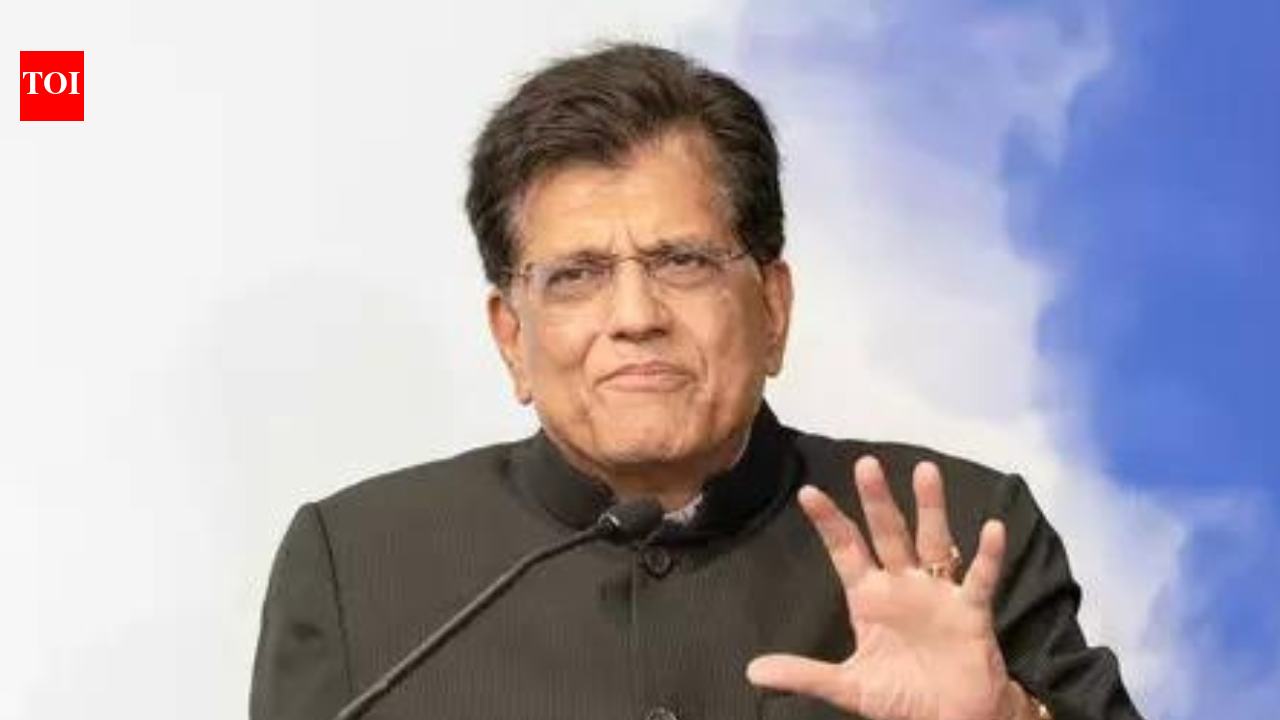
India on Saturday said it has strongly opposed the China-led Investment Facilitation for Development (IFD) Agreement being incorporated into the World Trade Organisation (WTO) framework, flagging concerns over its systemic implications, PTI reported.The issue was raised at the ongoing 14th ministerial conference (MC14) of the WTO in Yaounde, Cameroon, where Commerce and Industry Minister Piyush Goyal said such a move could weaken the institution’s foundational structure.“Incorporation of the IFD agreement risks eroding the functional limits of the WTO and undermining its foundational principles,” Goyal said in a social media post.“At #WTOMC14, drawing inspiration from Mahatma Gandhi ji’s philosophy of Truth prevailing over conformity, India showed the courage to stand alone on the contentious issue of the IFD Agreement and did not agree to its incorporation into the WTO framework as an Annex 4 Agreement,” he said.Annex 4 of the WTO Agreement contains Plurilateral Trade Agreements that are binding only on members that have accepted them, unlike multilateral agreements which apply to all members.Goyal said that as part of WTO reform discussions, members are deliberating on guardrails and legal safeguards for plurilateral agreements before integrating any such outcomes into the framework.“In view of the systemic issue at hand, India showed openness to have good faith, comprehensive discussions and constructive engagement under the WTO Reform Agenda,” he added.India had also opposed the pact during the WTO’s 13th ministerial conference (MC13) in Abu Dhabi.The Investment Facilitation for Development proposal was first mooted in 2017 by China and a group of countries that rely significantly on Chinese investments, including those with sovereign wealth funds. The agreement, if adopted, would be binding only on signatory members.
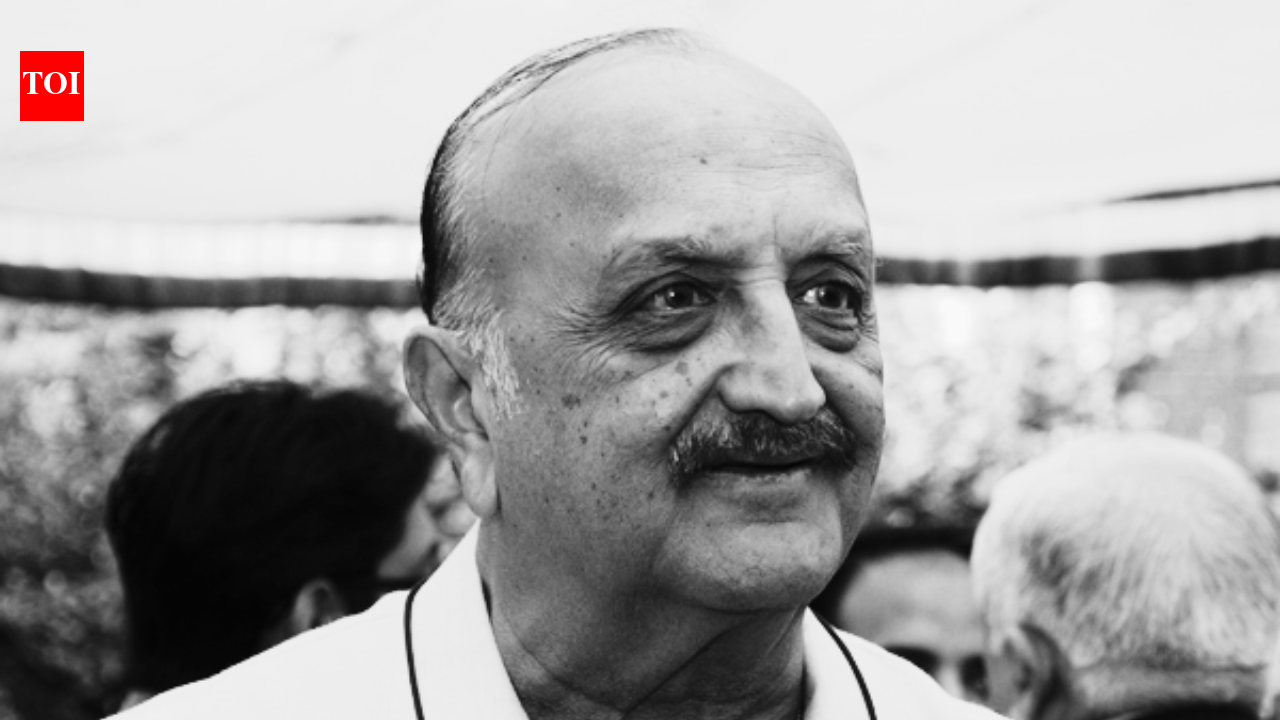
Vijaypat Singhania, former Raymond chairman, Padma Bhushan awardee and noted aviator, has passed away.He died in Mumbai at the age of 87.His son Gautam Singhania, chairman and managing director of the Raymond Group, announced the death on microblogging platform X.A company spokesperson said Singhania passed away “peacefully” and his last rites will be performed on Sunday, reported PTI.A recipient of the Padma Bhushan, Vijaypat Singhania was known not only for his leadership at Raymond but also for his passion for aviation. He held a world record for achieving the highest altitude in a hot air balloon.He led Raymond as chairman for around two decades until 2000, after which he handed over the reins of the company to Gautam Singhania. He had also transferred his entire 37 per cent stake in the company to his son.Vijaypat Singhania and Gautam Singhania were later involved in legal disputes, which were subsequently resolved.
Business
Middle East crisis: Jubilant FoodWorks reports some Domino’s outlets affected by LPG shortage – The Times of India

Jubilant FoodWorks Ltd (JFL), which operates Domino’s Pizza and Dunkin Donuts in India, has reported constraints in LPG cylinder supplies across parts of its store network due to the ongoing West Asia war, according to ET.In a filing to the BSE, the company said, “Operational impact at this stage is limited and being actively managed. The company is taking several steps to conserve LPG and working overtime to move to alternate energy sources like electricity and piped natural gas (PNG).”It added that it is in continuous touch with oil marketing companies to track developments and respond to the evolving situation. “The company is in constant engagement with oil marketing companies (OMCs) to remain apprised of the latest developments and plan operational responses accordingly, given the rapidly evolving nature of the situation,” the filing said.The company noted that it is closely monitoring the situation as supply disruptions persist.The impact is being felt across the restaurant industry, with several chains facing similar challenges due to LPG shortages.On March 10, the National Restaurant Association of India (NRAI) had advised its five lakh members to consider shorter operating hours, reduce items requiring long cooking times or deep frying, and adopt fuel-saving measures such as using lids while cooking, in view of supply constraints linked to the Gulf war.


USMNT handed reality check by Doku, Belgium ahead of World Cup

Hubert Kós leads Texas men to second straight NCAA swim title

Pakistan rejects India’s remarks on Shia community, calls them ‘cynical, diversionary’

-
 Business1 week ago
Flipkart group CFO to leave co amid IPO plans – The Times of India
-

 Fashion1 week ago
China’s textile & apparel exports surge 17% to $50 bn in Jan-Feb 2026
-

 Sports1 week ago
Rating Adidas’ 2026 World Cup away shirts: Argentina, Spain, Mexico and more
-

 Sports1 week ago
American Conference Commissioner Tim Pernetti thanks Trump for Army-Navy game executive order
-
Tech1 week ago
The Corsair 4000D RS PC Case Keeps Your System Cool
-

 Tech1 week ago
Gamers Hate Nvidia’s DLSS 5. Developers Aren’t Crazy About It, Either
-
 Business5 days ago
Property Play: Home flippers see smallest profits since the Great Recession, real estate data firm says
-
 Business1 week ago
‘Marriage penalty’ in Washington state’s new millionaire tax stirs debate