

Business
ADB investment puts Pakistan Railways back on track | The Express Tribune

KARACHI:
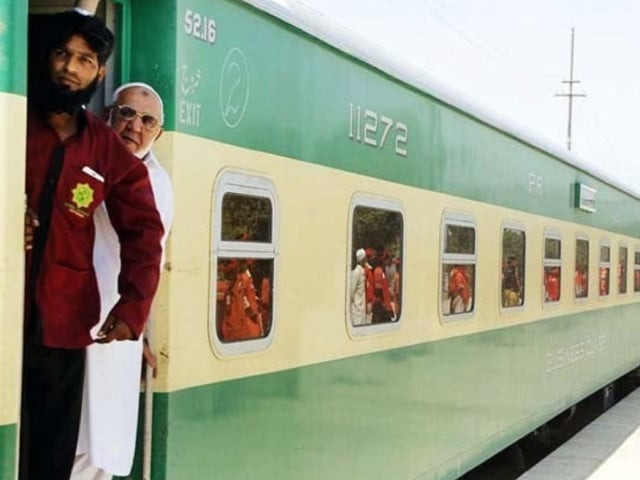
Pakistan’s railway sector, long described as the backbone of national connectivity, is again moving to the forefront of policy debates as the government turns to the Asian Development Bank (ADB) for support.
Years of underinvestment, safety lapses, and the stalling of promised Chinese funds have left Pakistan Railways in a precarious state, forcing policymakers to look elsewhere. Officials confirm that Islamabad is seeking a $2 billion package from the ADB to begin long-awaited modernisation works, most notably on the Karachi-to-Peshawar Main Line-1 (ML-1) route.
The development comes at a time when fiscal pressures, declining freight revenues, and growing competition from road transport have left the railways struggling to perform their role as a cost-effective logistics provider.
Once considered a symbol of national pride, Pakistan Railways now carries around 70 million passengers annually but operates on outdated tracks and antiquated signaling systems. The freight side of operations, which used to generate the bulk of revenue in the 1960s, has collapsed to less than a tenth of overall business, pushing industry and traders onto highways.
This shift has come at a steep cost: logistics expenses in Pakistan are estimated to be about 35% higher than the South Asian regional average, eroding export competitiveness and putting pressure on sectors such as textiles and agriculture. The decaying system has also reduced safety, with derailments and breakdowns becoming more common, further weakening public trust in rail travel.
The ML-1 project has been on the table for years under the China-Pakistan Economic Corridor (CPEC), initially tagged at $6.8 billion but now estimated to exceed $9 billion due to repeated delays and cost escalations. China had long been expected to bankroll the project as part of its Belt and Road Initiative, but its disbursements have slowed dramatically amid Pakistan’s worsening fiscal situation and Beijing’s own economic recalibrations.
The ADB’s decision to intervene, therefore, represents more than just a financial transaction. It reflects Islamabad’s growing reliance on multilateral lenders at a time when bilateral commitments have become uncertain. Analysts suggest the shift also diversifies Pakistan’s options and reduces overdependence on a single source of funding.
The proposed ADB package would target three areas: rehabilitation of ML-1 to allow faster and safer travel, development of a dedicated freight corridor to take pressure off highways, and the introduction of digital systems to monitor and secure railway operations. If executed properly, these changes could enable passenger trains to run at up to 160 kilometres per hour, cut travel time on key routes nearly by half, and encourage a revival of rail-based logistics.
Exporters, especially in the textile sector that accounts for nearly 60% of Pakistan’s exports, see in this a chance to reduce delays and cut costs associated with moving goods to Karachi Port. Improved connectivity between port cities and inland hubs such as Faisalabad and Multan could also enhance Pakistan’s role as a trade corridor linking South Asia with Central Asia.
Economists argue that the benefits go far beyond efficiency. Infrastructure investment of this scale has a multiplier effect, which generates tens of thousands of construction jobs and stimulates industries such as steel, cement, and services. A stronger railway backbone would also reduce the environmental toll of excessive trucking, lowering fuel consumption and emissions.
In a country where energy imports weigh heavily on the balance of payments, the savings could be significant. For passengers, meanwhile, modernised trains and safer systems would restore confidence in a service many have abandoned in favour of buses or private transport.
Pakistan’s external debt now exceeds $130 billion, much of it owed to multilateral lenders, and the repayment capacity remains a concern. While ADB loans are typically concessional, offering softer terms than commercial borrowing, they still require discipline in implementation.
Critics note that past railway projects have often been marred by inefficiency, corruption, and bureaucratic inertia. Without proper oversight and reform, there is a risk that even low-cost financing could add to the country’s debt burden without delivering transformative results. Transparency advocates are calling for the independent monitoring of funds to ensure they are not wasted.
China’s sidelined role also adds a geopolitical dimension. Over the past decade, Beijing has invested more than $25 billion in Pakistan, largely in energy and infrastructure, but its pace of financing has slowed markedly. Analysts attribute this partly to Pakistan’s fragile fiscal position, which increases repayment risks, and partly to China’s shifting global priorities as its own economy faces headwinds.
Some experts argue that China has not abandoned CPEC altogether but is recalibrating its involvement, focusing on selective projects while encouraging Pakistan to diversify its financing sources. In this context, the ADB’s re-emergence as a key financier could be seen less as a replacement and more as a complement to future Chinese investments.
There are lessons to draw. Bangladesh and India have both secured ADB support for rail and metro upgrades, with visible success in enhancing efficiency and safety. Pakistan has lagged behind, partly because of political instability and partly due to a centralised management structure that has resisted reform.
The ADB’s involvement might serve as leverage for Islamabad to introduce governance changes, open space for private sector participation, and embrace technology-driven solutions. Without such reforms, financial injections alone may not lead to the desired turnaround.
The writer is a member of PEC and holds a Master’s in Engineering




Business
Pakistan considering buying LNG on spot market to offset supply disruptions caused by Iran war: petroleum minister – SUCH TV
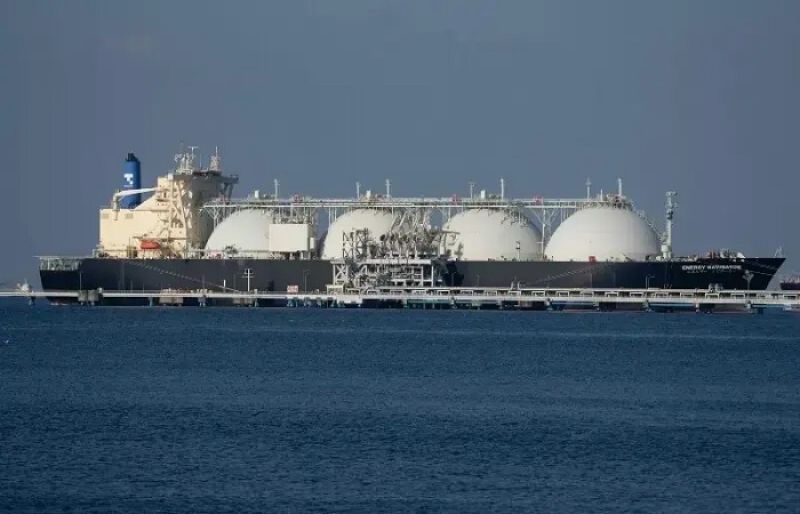
Pakistan is considering buying liquefied natural gas (LNG) on the spot market to offset supply disruptions caused by the Iran war, but would favour government-to-government deals to avoid having to pay steep premiums, Petroleum Minister Ali Pervaiz Malik has told Reuters.
Qatar’s force majeure forced Pakistan to make costly spot purchases or find alternative fuels ahead of summer demand.
Spot LNG cargoes have surged to $20 to $30 per mmBtu amid the Middle East conflict, Malik says, adding that purchases would depend on whether prices are acceptable to the power sector, including under existing government-to-government arrangements with Azerbaijan’s Socar.
Pakistan has also been routing some crude supplies via Saudi Arabia’s Red Sea port of Yanbu to bypass the Strait of Hormuz, with Malik saying insurance costs on that route were lower than routes crossing or near Hormuz.
Pakistan imports nearly all of its oil, much of it via the Strait of Hormuz, and remains exposed to supply shocks despite cutting its LNG reliance in recent years, as gas is still needed to meet the country’s peak summer power demand.
It has begun commercial output from its highest-ever producing oil and gas well, as it shores up domestic supply.
“We have arrangements in place to meet domestic and industrial requirements,” Malik said, adding that gas disruptions have not led to major curbs, with eight of 10 fertiliser plants operating.
Officials are also considering the use of costlier fuels such as furnace oil to limit load shedding, although at the expense of higher tariffs. Malik warned that prolonged shortages could threaten food security.
The Baragzai X-01 well in Khyber Pakhtunkhwa is producing about 15,000 barrels of oil per day and 45 million cubic feet of gas, with output expected to rise further, the state-run operator Oil and Gas Development Company Ltd (OGDC) said.
The well could reach up to 25,000 barrels per day and 60 million cubic feet per day of gas, making it Pakistan’s highest-producing well, and may contribute around 10 per cent of crude output while cutting the country’s import bill by about $329 million annually, OGDC said.

The Carnival Miracle cruise ship is anchored in the Pacific Ocean near Kailua Bay during a 15-day cruise, in Kailua-Kona, Hawaii, on Jan. 14, 2024.
Kevin Carter | Getty Images
The global cruise industry is reporting record demand and renewed consumer enthusiasm, but the leaders helming the world’s largest cruise companies say the sector is also facing some of the most complex challenges it has seen in decades.
“We are not an alternative vacation anymore. We are a vacation,” Carnival Corporation CEO Josh Weinstein said during a keynote panel Tuesday at Seatrade Global, a cruise industry conference.
As demand rises, passengers are getting younger; one-third of cruise travelers are now under 40, according to the 2026 State of the Cruise Industry report released by Cruise Lines International Association (CLIA). One-third of trips are multi-generational, often families traveling together. And nearly a third of cruisers take vacations by ship multiple times a year, according to the report.
The cruise industry hosted 37 million passengers worldwide last year and anticipates reaching 42 million annually by 2029, CLIA found.
“That mainstream demand sets us up very well for volatility,” Weinstein said.
A resilient business in an uncertain world
At least six cruise ships remain stranded in the Persian Gulf by the impasse at the Strait of Hormuz. One of them is the MSC Euribia.
Though roughly 1,500 passengers were safely evacuated amid Dubai airport shutdowns and missile warnings after the U.S. and Israel launched an attack on Iran in late February, there are still some crew on board to maintain the vessel.
“Obviously, we live day by day. The situation is very fluid,” said MSC Cruises Executive Chairman Pierfrancesco Vago during the Seatrade Global keynote.
Already the shutdown of marine traffic in the Strait has disrupted itineraries in the Middle East and southern Europe. Threats of blockades, mines on the sea floor and on-and-off-again negotiations are keeping cruise executives guessing about when they can move their ships.
“Morning is one thing, lunchtime is another, dinner is another again,” Vago said of the numerous and often conflicting announcements from government leaders. “We need to stay cool and actually be ready to move out as soon as the possibility and opportunity comes back.”
Despite these challenges, cruise executives argue the industry has never been better positioned to absorb shocks.
“Every crisis we’ve faced — financial, geopolitical or health-related — we adapted,” Carnival’s Weinstein said. “There’s no reason to believe it will be different this time.”
Fuel costs, sustainability and the push to use less
Fuel price volatility has once again put energy strategy front and center for the cruise industry, particularly for Carnival, which does not hedge fuel prices.
“Nobody asks us about hedging when prices are low,” Weinstein said. “But our strategy has been consistent: use less fuel.”
The cruise industry aims to have net zero emissions by 2050, but CEOs agree that they can’t achieve that goal solely by conserving fuel.
Industry leaders see biofuels, green methanol and synthetic liquid natural gas (produced by combining captured carbon with hydrogen) as the most promising solutions to meet their fuel needs.
Royal Caribbean Group CEO Jason Liberty said cruise lines are already investing hundreds of millions of dollars annually in technology and energy innovation, but availability of alternative fuels remains the bottleneck.
“It’s not about what we want to use,” Liberty said. “It’s about what’s scalable and available.”
“We’re going to have heavy competition with other sectors for those fuels as well. There’s no guarantee we get them,” added Bud Darr, president and CEO of Cruise Lines International Association.
Tailwinds for growth
Even as the industry navigates choppy seas, cruise companies are looking for their next avenues for growth.
Technological advances in artificial intelligence are being used to reduce food waste, plot routes and itineraries and increase efficiency. Cruise line executives say the most important application is to reduce friction in the guest experience.
“A more flexible work environment has been a big demand driver for us,” Liberty said. Most Royal Caribbean ships now host a Starlink connection for fast internet aboard.
Private destinations, the exclusive ports or islands owned or controlled by a cruise line, continue to be a priority for investment. Royal Caribbean, for instance, currently has three private destinations on its itineraries but will have eight by 2028.
It’s developing a major land-based hub in Puerto Williams, Chile, to reduce or eliminate the amount of time passengers to Antarctica have to spend transiting the punishing seas of the Drake Passage.
And the luxury segment, though a small percentage of the overall industry, is growing rapidly. Customers are increasingly interested in exploring health, wellness and longevity — and those trends are showing up in their vacation habits, too.
Smaller ships and river cruising accommodate specialized interests in eco-tourism, off-the-beaten path (not yet discovered by social media influencers) locales and culinary or artistic aficionados.
Social-media driven demand in tourism has also sparked backlash from some destinations, overwhelmed by the crowds. The cruise industry is working with destinations on what it calls managed, predictable tourism.
Vago said MSC worked with Dubrovnik, Croatia, for example, to coordinate the flow of visitors to the medieval town, which wants the tourism spending but without destruction of quality of life for residents.
“Many of these coastal communities actually appreciate that. We plan in advance. We create itineraries three years in advance,” Vago said.
“The strength of this industry is its ability to evolve without losing its soul,” Liberty said. “That soul is hospitality.”
Leadership change and fresh perspective
At Norwegian Cruise Line Holdings, the challenge for new CEO John Chidsey is righting the ship.
In his first earnings call, just days after taking the helm, Chidsey acknowledged the company had committed numerous missteps.
Margins are under pressure. Shares have been volatile. Critics have questioned a push to expand cruise itineraries in the Caribbean before Norwegian’s private island was fully completed.
Earlier this year, Elliott Investment Management took an activist stake in Norwegian, which may have provided impetus for the board to make a leadership change.
Chidsey told CNBC Elliott’s goals align with his own and that he intends to create a culture of accountability and urgency where teams are working together rather than separated into silos.

The Seatrade conference was a cruise industry debut for Chidsey, formerly the CEO of Subway, Burger King and Avis.
When asked what a “sandwich guy knows about cruising,” Chidsey didn’t miss a beat, insisting he’s a “turnaround guy not a sandwich guy.”
“I knew nothing about fast food when I went there. I think having a fresh set of eyes is really what Norwegian needs. And it’s all about execution,” he said.
Business
India rejects US Section 301 allegations, seeks termination; calls for resolution via talks – The Times of India

India has strongly pushed back against the United States’ Section 301 investigations, rejecting allegations of unfair trade practices and seeking immediate termination of the probes.In its submission to the US Trade Representative (USTR), India “firmly denies all allegations made in the initiation notice” related to claims of excess structural capacity and production in manufacturing sectors, PTI reported. “The initiation Notice is premised on aggregate macroeconomic indicators, without identifying any specific act, policy or practice of the Government of India that could be considered ‘unreasonable or discriminatory’ and that ‘burdens or restricts United States commerce’ as required by Section 301(b) of the Act,” the submission said. India said the notice provides no “cogent rationale” or prima facie evidence to support allegations that the country has structural excess capacity leading to a trade surplus with the US. “India submits that the present investigation does not satisfy the requirements for the initiation of this investigation pursuant to Sections 301 and 302 of the Trade Act of 1974. India calls upon the USTR to make a negative determination and terminate the investigation forthwith,” it said. The government also urged that trade concerns be addressed through ongoing bilateral negotiations rather than unilateral measures, noting that both countries are engaged in discussions for a Bilateral Trade Agreement. “India remains willing to constructively engage with the United States in the underlying investigation, including any consultation,” it added. Separately, responding to another Section 301 probe launched on March 12 on alleged failure to act against forced labour, India said the investigation does not meet legal requirements for initiation. “India requests the USTR to make a negative determination and terminate the investigation against India. Additionally, India remains willing to constructively engage with the United States in the underlying investigation, including any consultation,” the submission said. The responses have been filed by the commerce and industry ministry on behalf of the government. On March 11, the USTR initiated investigations into policies and industrial practices of 16 economies, including India, China, Japan and the European Union, to examine “unfair foreign practices” affecting American manufacturing. A day later, on March 12, the USTR launched a broader probe covering 60 economies, including India and China, to assess whether their practices related to forced labour imports are unreasonable or discriminatory and restrict US commerce. India said its submissions represent the public, non-confidential summary of its response, while the full version has been filed separately as confidential.


A culinary thriller with explosive star power
Pakistan considering buying LNG on spot market to offset supply disruptions caused by Iran war: petroleum minister – SUCH TV

Pakistan steps in as US enforces naval blockade on Iran

-

 Fashion1 week ago
India’s exports face reset as EU links trade to carbon metrics: EY
-

 Entertainment1 week ago
Queen Elizabeth II emotional message for Archie, Lilibet sparks speculation
-

 Entertainment1 week ago
Lamar Odom shocking response to Khloé Kardashian account of his overdose
-

 Tech1 week ago
Azure customers up in arms over ‘full’ UK South region | Computer Weekly
-
 Tech1 week ago
As the Strait of Hormuz Reopens, Global Shipping Will Take Months to Recover
-

 Fashion1 week ago
CII submits 20-pt agenda to Indian govt to back firms hit by Iran war
-

 Tech7 days ago
This AI Button Wearable From Ex-Apple Engineers Looks Like an iPod Shuffle
-

 Politics6 days ago
Indian airlines hit hardest after Dubai limits foreign flights until May 31