

Tech
After OpenAI’s new ‘buy it in ChatGPT’ trial, how soon will AI be online shopping for us?


Buying and selling online with e-commerce is old news. We’re entering the age of A-commerce, where artificial intelligence (AI) is increasingly able to shop for us.
At the end of September, OpenAI launched its “Buy it in ChatGPT” trial in the United States, using AI agents built to interact with us to do more of people’s browsing and shopping. The technology is known as “agentic commerce,” sometimes shortened to A-commerce.
American shoppers can now ask for shopping suggestions from US Etsy sellers within a ChatGPT chat—then buy a product immediately, without having to navigate away to look at individual shop pages.
Looking ahead, big companies are now spruiking the next phase of “autonomous A-commerce,” which experts predict could see AI checking out for some shoppers within the next few years.
But is handing over more of our shopping decisions to AI a good thing for us as shoppers, for most businesses or for the planet?
What’s possible right now?
For most people using AI to help them shop, the AI agent is still mostly just searching and recommending products. It still has to shift the customer to the retailer’s website to complete the checkout.
For instance, AI can do most steps to order a pizza—though sometimes slower than doing it yourself—apart from paying at the end.
That’s when we step in: we still need to sign in if we’re part of a loyalty program, enter our personal and delivery details, then finally pay.
With the “Buy it in ChatGPT” trial now underway in the US, the customer never leaves the chat, where the checkout is completed.
Shopify has said more than 1 million of its merchants will soon be able to check out within ChatGPT too. Major US retailer Walmart has similar plans.
What’s next?
In May 2025, Google launched “AI mode shopping.” Some features, like using a full body photo of yourself to virtually “try-on” clothes, are still only available for US shoppers, with limited brands.
At the time, Google said its next step will be a new “agentic checkout […] in coming months” for products sold in the US. It would give shoppers the option of tracking a product until its price drops to within a set budget—then automatically prompting them to buy it, using Google Pay. That checkout option is yet to launch.
Credit card giants Visa and Mastercard are also working on ways to make it easier for AI agents to shop for us.
Both the current and coming forms of A-commerce have the potential to spread fast worldwide, because they run largely on the same global digital infrastructure powering today’s e-commerce: identity, payments, data and compliance.
Consultants McKinsey forecast: “We’re entering an era where AI agents won’t just assist—they’ll decide.”
What are the risks and benefits?
Overspending is a big risk.
A-commerce removes many steps of the shopping journey found in e-commerce or physical commerce, leading to fewer abandoned carts and potentially higher spending.
People would need to trust AI systems with their private data and preferences, and ensure they’re not misused. Permitting AI to shop on your behalf means you are responsible for the purchase and can’t easily demand a refund.
AI systems might focus on price or speed, but not always for what you value most: from how sustainable a product is, to the ethics of how it was made.
Fraud could be a real issue. Scammers could set up AI storefronts to trick the AI, collect the money and never deliver.
Banks will need to figure out how to spot fraud, process refunds, and manage consent when it’s not a person pressing “buy,” but an algorithm doing it on their behalf.
Regulators will need to consider A-commerce in their competition, privacy, data, and consumer protection rules.
A-commerce could offer some limited environmental benefits compared to today’s way of shopping, such as fewer missed deliveries—if you’re happy to share your calendar so your AI agent knows your availability.
But greater consumption would also mean greater environmental impacts: from AI’s voracious energy and water use, to the damage done by fast fashion, more deliveries and indirect pollution.
Changing how we shop and do business
If you have even a small business, the way you make your products and services discoverable online will have to change.
Instead of just having websites built for customers and search engines, all businesses will need to build AI accessible online stores. Those will not look like the websites we see today. It will be more like a data-soaked digital catalog, filled with everything an AI agent needs to place orders: product specifications, price, stock, ratings, reviews, through to delivery options.
All those years of bigger brands buying attention and dominating search results might start to matter less, if you’re able to build a good AI accessible online store. It could be a quiet but massive shift in how trade works.
However, each business’s visibility will depend on how AI systems read and rank sellers. If a business’s data isn’t formatted for AI, it may disappear from view. That could give larger players an edge and once again make it harder for smaller businesses to compete.
How much are we happy to delegate our shopping to AI agents? Our individual and collective choices over the next few years will shape how radically shopping is about to change for years to come.
This article is republished from The Conversation under a Creative Commons license. Read the original article.
Citation:
After OpenAI’s new ‘buy it in ChatGPT’ trial, how soon will AI be online shopping for us? (2025, October 25)
retrieved 25 October 2025
from https://techxplore.com/news/2025-10-openai-buy-chatgpt-trial-ai.html
This document is subject to copyright. Apart from any fair dealing for the purpose of private study or research, no
part may be reproduced without the written permission. The content is provided for information purposes only.










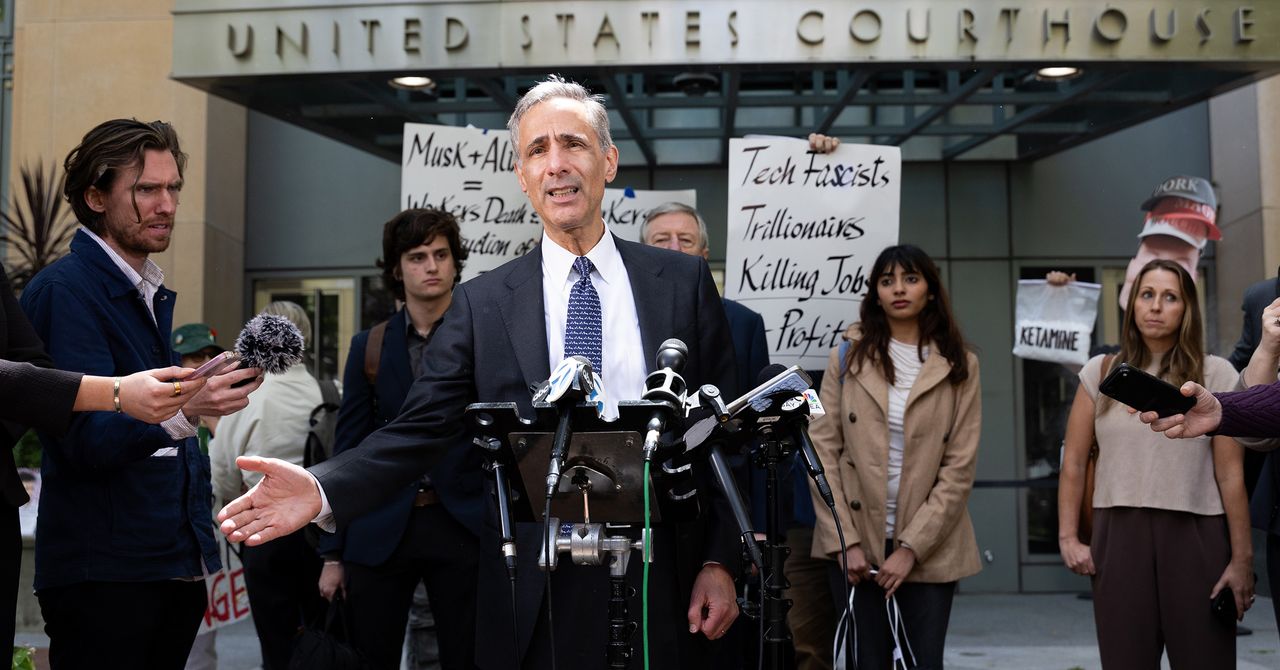
Wednesday’s episode of the Musk v. Altman trial kicked off on Wednesday with a unique proposition: OpenAI wanted to bring its ass into the courtroom, and lay it bare before the jury. It’s a good thing lady justice wears that blindfold.
A lawyer for Sam Altman’s AI behemoth, Bradley Wilson, approached US district judge Yvonne Gonzalez Rogers and handed her a small gold statue with a white stone base. It depicted the rear end of a donkey—with two legs, a butt, and a tail—and was inscribed with the message, “Never stop being a jackass for safety.”
OpenAI lawyers claim a small group of employees presented the gift to chief futurist Joshua Achiam, who started at the company as an intern in 2017 and now leads its work studying how society is changing in response to AI. Wilson said that Achiam interrupted Elon Musk’s parting speech from OpenAI in 2018 to warn that the billionaire’s desire to develop AGI at Tesla could come at the expense of safety. Wilson added that the trophy commemorates some “strong language” that Musk used toward Achiam in response—allegedly, calling him a jackass.
OpenAI requested to present the physical object during Achiam’s testimony on Wednesday, arguing that it adds to their case. While Musk’s team said the statue was irrelevant, Judge Gonzalez Rogers said she will consider allowing it when it’s referenced to corroborate the story. However, she seemed less than thrilled about accepting it as official evidence, which would put it in the court’s possession. “I don’t want it,” she said.
Representatives for Musk and OpenAI did not immediately respond to a request for comment about the ass.
Musk’s lawsuit accuses OpenAI of effectively stealing a charity, misusing his $38 million in donations to build an $850 billion business. In response, OpenAI has argued that Musk has always cared more about controlling a top-tier AGI lab than funding a nonprofit.
Earlier in the trial, Musk lawyer Steven Molo asked him if he ever called an OpenAI employee a “jackass.” Musk said “it’s possible” he did at some point, but that he didn’t mean for it to be offensive. “Sometimes you have to use language that gets people out of their comfort zone, if we’re going in the wrong direction,” Musk said.
OpenAI has long been proud of its jackass. When The Wall Street Journal asked about the statue in 2023, Altman told them, “You’ve got to have a little fun … This is the stuff that culture gets made out of.”

Anxiety over the 2028 presidential election and the Republican ticket has officially hit the White House.
On Monday night, Trump informally polled guests at a dinner held in the White House’s Rose Garden on their preferred candidate. “Who likes JD Vance? Who likes Marco Rubio?” he said, before suggesting a Vance-Rubio ticket would be a “dream team.”
Trump’s Apprentice-style crowdwork was a moment of levity that masked the fact that over the last few days, White House aides have been confronting the difficult—and still faraway—question of who will be the Republican nominee.
The president has actually done several snap polls in recent weeks, a source familiar with the matter tells WIRED. The results have been notable, they say: When Trump polled donors at Mar-a-Lago, they favored Rubio. But when Trump recently polled a group of law enforcement officers that the White House thinks are perhaps more representative of regular voters, they favored Vance.
Vance remains the presumptive nominee, White House sources tell me, but he has not been taking anything for granted. In fact, the vice president’s top advisers started the week huddled at a retreat to discuss political strategy, the sources said.
He has also taken steps to bolster his political team, which has remained largely the same since his days as a US senator, ahead of what could be a bruising midterms for Republicans as they grapple with the politically toxic fallout of the Iran war and a House GOP spending package that earmarks $1 billion for Trump’s ballroom project, among other issues.
Vance started discussing changes to his team, including the addition of Cliff Sims as his new national security adviser and elevating Will Martin to be his deputy chief of staff, back in January, according to two sources familiar with the matter.
Sims, whose new position was announced yesterday, is widely regarded in Washington as a ruthless political operator who could bolster the vice president through his long experience in Trumpworld and close relationships with a crop of top administration officials.
Chief among them are his ties to CIA director John Ratcliffe—for whom Sims has spent the past year as an external adviser, according to multiple sources familiar with the arrangement. The sources tell me they expect Vance and Ratcliffe to work more closely together and thereby dramatically increase the vice president’s influence on national security policy.
Sims, who is not expected to start for several weeks, is also likely to start shaping the vice president’s political messaging. He previously served as a White House press aide and, later, as communications director for the office of the director of national intelligence.
Of course, the person heading up the National Security Council is none other than Rubio, who holds the title of Trump’s national security adviser in addition to secretary of state.
Chatter about Rubio’s potential as a 2028 candidate was turbocharged last week when he filled in for press secretary Karoline Leavitt to brief reporters on the Iran war. His appearance reignited a slew of news stories about whether he might run for the presidency.
“There is no secret plan to make Rubio president,” said one Rubio ally who spoke on the condition of anonymity, adding that the secretary of state did not volunteer to do the briefing, which instead came at the behest of the White House.
Still, Rubioworld has been quietly pleased about the positive coverage his briefing generated, according to people familiar with the matter. The White House then posted a clip of Rubio describing his vision for America on X, which almost resembled a presidential stump speech.

As passengers return to the US from the cruise that saw a rare hantavirus outbreak, much of the country is lacking a basic public health tool: a test to diagnose the illness in the earliest stages of infection. Nebraska may be the first state with the ability to do so.
In just a few days, a lab at the University of Nebraska Medical Center in Omaha developed its own diagnostic test for the Andes virus in anticipation of receiving 16 American passengers from the ship.
“I believe we might be the only lab in the nation that has this test available at the moment,” Peter Iwen, director of the Nebraska Public Health Laboratory tells WIRED, referring to polymerase chain reaction (PCR) testing, which was important during the Covid-19 pandemic. Its ability to detect tiny quantities of the virus before patients have full-blown symptoms makes it crucial for identifying cases quickly, getting patients prompt medical treatment, and preventing the spread of disease.
The university’s medical center is home to a highly specialized biocontainment unit designed to care for patients with severe infectious diseases that lack vaccines or treatments. Staff members previously treated patients during the 2014 Ebola outbreak and cared for some of the first Americans diagnosed with Covid in 2020.
When Nebraska was notified that it would be receiving some of the passengers, Iwen contacted the US Centers for Disease Control and Prevention to see if it had tests on hand. He learned that the CDC has the ability to run a serological test, which looks for the presence of hantavirus antibodies. But people don’t develop antibodies until they are actively sick and their body has had time to mount an immune response.
Andrew Nixon, a spokesperson for the US Department of Health and Human Services, told WIRED that the CDC has a PCR test for the Andes virus but that it’s a research test that cannot be used for patient management. Research tests are used in scientific experiments, while diagnostic tests that are meant to confirm or rule out a disease in patients need to be rigorously tested, or validated, to make sure they are capable of producing consistent results. Nixon said the agency is working on validating its PCR test.
Iwen’s lab mobilized quickly to track down the materials needed to build and validate a PCR test from scratch. They called a lab in California—a state that has previously seen hantavirus cases—but their test was for a specific strain found in the US. Andes virus has previously only been detected in South America and isn’t found in rodents native to the US.
“Tests that we have available in the US will not detect that virus that’s found in South America,” he says, noting that the Andes virus is very different genetically from the primary hantavirus strain found in the US, known as the Sin Nombre virus.
The Nebraska team reached out to Steven Bradfute, a hantavirus scientist at the University of New Mexico. Frannie Twohig, a graduate student in Bradfute’s lab, had developed an Andes virus PCR test for research purposes as part of her PhD work. Bradfute’s lab also has genetic material of the Andes virus that’s not capable of causing disease which the Nebraska lab would need to validate its test.
On Friday, Bradfute shipped the genetic material and a box of chemical reagents needed to detect the virus in blood samples overnight to Nebraska. By Saturday morning, Iwen’s team had what it needed to start assembling and validating its test.
It was enough to run about 300 tests, which took all day Saturday and Sunday, Iwen says. His team added Andes genetic material in various concentrations to samples of healthy human blood to see if their test could detect it. Then, they compared the results to control samples. The team used up about a third of its tests on the validation process and now has the capacity to conduct a few hundred tests on patient samples.


OpenAI Brings Its Ass to Court

Christopher Nolan explained Travis Scott casting in ‘The Odyssey’

Gunshots fired in standoff at Philippine Senate over ICC suspect

-

 Tech5 days ago
A new frontier: Identity stack evolves for agentic systems | Computer Weekly
-

 Tech5 days ago
‘Orbs,’ ‘Saucers,’ and ‘Flashes’ on the Moon: Pentagon Drops New UFO Files
-

 Tech5 days ago
Nick Bostrom Has a Plan for Humanity’s ‘Big Retirement’
-
 Business1 week ago
India among most resilient large EMs, better placed for future global shocks; policy reforms & strong buffers help: Moody’s – The Times of India
-

 Sports5 days ago
Shaheen Afridi achieves landmark feat during opening Test against Bangladesh
-

 Tech6 days ago
What Microsoft Executives Really Thought About OpenAI in 2018
-

 Fashion5 days ago
New orders in German manufacturing up 5% MoM in Mar 2026: Destatis
-

 Tech6 days ago
The Canvas Hack Is a New Kind of Ransomware Debacle