

Tech
Airbus climbs in industrial digitisation with private 5G deployment | Computer Weekly


As part of its objective to migrate all of its industrial networks to 5G to ensure unified, “ultra-reliable” connectivity from its workstation to the aircraft cabin, Airbus is advancing its factory digitisation programme through the deployment of high-performance private 5G connectivity from Ericsson.
Through this strategic partnership, Airbus and Ericsson are accelerating the digital transformation of the aerospace industry, laying the foundation for the next generation of smart factories – fully connected, scalable and sharply focused on innovation across Europe and the world. The private 5G technology is being installed at the Airbus production site in Hamburg, with another deployment underway in Toulouse.
With a fully operational private 5G network now live in Hamburg, and a deployment at Toulouse underway, to be completed by 2026, this roll-out is part of a broader roadmap to extend private 5G across Airbus’s strategic sites in Europe – including further locations in Spain, the UK and internationally, with projects in the US and Canada pending.
The initiative forms part of the Airbus digitisation strategy, which is aimed at strengthening manufacturing automation, traceability and operational efficiency, while meeting what the leading aircraft manufacturer assured will be the sector’s strictest safety and security standards.
Moreover, the private 5G network will form the backbone of Airbus’s strategic transformation projects, enabling high-value industrial use cases such as internet of things (IoT) integration, intelligent management of critical equipment, real-time quality control and collaborative robotics.
Commenting on the installation, Airbus 5G expert Hakim Achouri said: “This deployment accelerates projects involving 3D simulation, augmented reality, improved traceability for parts, and predictive maintenance for our assets. The standardisation and scalability made possible by this architecture allow us to replicate the solution easily across further sites in Europe and worldwide.”
Airbus and Ericsson’s partnership in industrial connectivity also features advanced 5G standalone (SA) technology and deployment models, which are further attributed with accelerating 5G usage in office environments. Joint research and development efforts are also focusing on connected cabins, 6G, and non-terrestrial networks (NTNs) to enhance the connectivity ecosystem for aerospace and smart manufacturing applications.
The tech provider stated that with full site coverage with private 5G, machines and operators on the production floor are set to gain true mobility, boosting productivity, process agility and end-to-end industrial control, all of which are regarded as key to realising the full potential of Industry 4.0. The private 5G solution’s built-in infrastructure automation is designed to enable rapid deployment across Airbus operations with the intended result of “significantly” shortening implementation timelines compared with traditional setups.
Ericsson believes this automation has already allowed Airbus to scale connectivity quickly and securely across multiple sites. Collaboration with the Ericsson product team has enhanced application integration, with the technology tailored to Airbus’s IT tooling and cyber security requirements. The design’s modular architecture and application programming interface (API)-driven interfaces are said to have simplified onboarding into Airbus’s existing systems, accelerating time-to-value and reinforcing robust security controls.
“Our collaboration with Airbus embodies the alliance between technological innovation and industrial excellence,” said Manish Tiwari, head of enterprise 5G and enterprise wireless solutions at Ericsson. “[We are] proud to support Airbus’s digitisation ambitions through Ericsson private 5G, offering best-in-class, secure connectivity at scale.”

Margaret Thatcher, who was known for sleeping only four hours a night, is often credited with saying “Sleep is for wimps!” But sleep is actually work. Putting down the phone, setting aside personal or political worries—these require discipline. True relaxation calls for training.
Sleep coaches used to treat mainly newborns (and their exhausted parents). But recently, as anxieties about sleep have spiked, grown-ups have found they need help with their habits too. A Gallup poll from 2023 found that 57 percent of Americans think they would feel better with more sleep, up from just 43 percent in 2013. Only about a fourth of those surveyed reported getting the commonly recommended eight or more hours per night—down from 34 percent 10 years prior.
Sleep professionals are seizing the opportunity to help adults realize their dream of waking up rested. WIRED spoke to a sleep consultant who, after years of working with kids, tapped into that underserved population. She says it’s entirely possible to transform daytime and nighttime habits to optimize for good sleep. Why not start tonight?
Usually, an adult comes to me with one of two things: First, a major life event—work stress, having a baby, losing a parent, a relationship ending—that destabilizes their system. Sleep is always the first thing to go. The second is that they have a chronic pattern. There are people who’ve really struggled with sleep since childhood, and then it becomes a part of how they see themselves. They’ve tried everything, and then they say, “I’m an insomniac.”
In both cases, they’re exhausted. I always laugh, because when I’m cornered at a dinner party it’s like, “Oh, I just have a quick question. I haven’t slept through the night in 19 years.”
I’ve been a sleep consultant for over 20 years. I started my child sleep practice after getting my master’s in clinical psychology. I was working with a lot of parents, and I really started to notice a common issue: Their children’s sleep issues were literally pushing them to the brink of divorce.
Even once I got their kids to be fabulous sleepers, the parents were still struggling due to long-standing habits from way before their kids arrived. That’s when I realized I needed to help the adults too.
There are camps: trouble falling asleep or trouble waking up at night—or both. So that’s my job: to unravel that mystery of what’s keeping someone up at night. Some of the toughest cases are people who come in only focusing on their nighttime habits and don’t disclose things happening during the day.
One of my clients had trouble sleeping through the night for years. We realized that they consumed most of their calories at night, and nothing during the day. So they kept waking up to eat, and that completely dysregulated their system.
Another client, a woman who exercised all the time and drank 200 ounces of water a day, never made the connection that she was getting up to pee literally every hour. We had to diminish the amount of water she drank and have her stop drinking at a certain hour.
Sometimes people actually just stop functioning. I’m thinking about a mom who says, “I just forgot to clip my child’s seatbelt on in my car.” “I put my keys in the refrigerator.”
I start with the basics. Of course, we’re doing sleep hygiene, but that’s anything that you can Google: Get blackout shades, have a sleep sanctuary. Most people think they have a good setup, but their habits or their environment are working against them. That’s where coaching helps, because I can spot what they’re missing.
People have these stories that they’ve told themselves, like, “If I sleep, then I’m not working hard enough” or “I’m young and I don’t need that much sleep.” What’s the new story that you can tell yourself about sleep? From there, I use a lot of journaling, cognitive behavioral therapy techniques, mindset work, breath work.

New Year’s resolution season is in full swing, and you’ve officially made it past Quitter’s Day (the second Friday in January, when many people have given up on their resolutions). Maybe you want to exercise more often, or keep better track of your schedule, or hit a certain step goal, or drink more water. Whatever the habit you’re making or breaking, we’ve found some deals on WIRED-tested gear that can help you on your journey.
For more recommendations, check out our many buying guides, like the Best Reusable Water Bottles, the Best Fitness Trackers, and the Best Paper Planners.
WIRED Featured Deals:
Beats Powerbeats Pro 2 for $200 ($50 off)
The Beats Powerbeats Pro 2 are the best workout earbuds you can buy. This price matches the best deal we’ve seen, and every color (orange, lavender, black, and beige) is discounted. The design is supremely comfortable, they have great noise canceling and a transparency mode, and they last up to 10 hours depending on your noise-cancellation settings. There’s also a built-in heart rate monitor. These sleek buds have punchy sound and are compatible with iOS and Android devices.
Garmin Vivoactive 6 for $250 ($50 off)

The Garmin Vivoactive 6 recently earned the top spot in our fitness tracker buying guide. It looks great on your wrist, and it plays well with both Android and iOS devices. Moreover, it’s accurate, and it has onboard satellite connectivity and a bright, easy-to-read AMOLED display. You’ll get a spate of fitness features, including blood oxygen monitoring, sleep tracking, heart rate and step counts, and fall detection. There’s an optional Connect+ subscription that costs $70 per year, but we don’t think you need it.
Apple Watch Series 11 for $300 ($100 off)


The Apple Watch Series 11 finally has a full 24 hours of battery life, which makes it worth consideration if you’ve been in the market for an upgrade. It is both an excellent fitness tracker and smartwatch. It can track all sorts of stats, from the basics like steps and workouts to sleep, hypertension, and blood oxygen. It has been on sale at this price since the holiday shopping season, but it does tend to fluctuate back and forth, and we haven’t seen it sell for less than it is right now. For more recommendations, check out our Apple Watch Buying Guide.
Optimum Nutrition Gold Standard 100 Percent Whey Protein Powder for $32 ($18 off)
-
Photograph: Boutayna Chokrane
-
Photograph: Boutayna Chokrane


Optimum Nutrition
Gold Standard 100 Percent Whey Protein Powder
Optimum Nutrition was having a “Quitter’s Day” sale this week, but the powder is also on sale at Amazon. This is the best protein powder overall. It delivers 24 grams of protein per serving, and it’s available in more than 20 flavors, so you should be able to find one that you like. (My favorite is Banana Cream, which tastes like a yellow Laffy Taffy, and WIRED editor Kat Merck’s favorite is Delicious Strawberry, but there are less adventurous options as well.) If you’re working on your gains this year, this is a solid deal worth considering.
Day Designer Daily Planner for $57 ($21 off)


Day Designer
Daily Planner
This planner has space for a typical calendar and a daily to-do list. Half of each page has blocks of time from 5 am to 9 pm, and you’ll also get a to-do list section and a “three most important things” section. It’s a bulky planner, but if you’re looking for space to fine-tune the minutiae of your day-to-day life, there’s room.
Power up with unlimited access to WIRED. Get best-in-class reporting and exclusive subscriber content that’s too important to ignore. Subscribe Today.
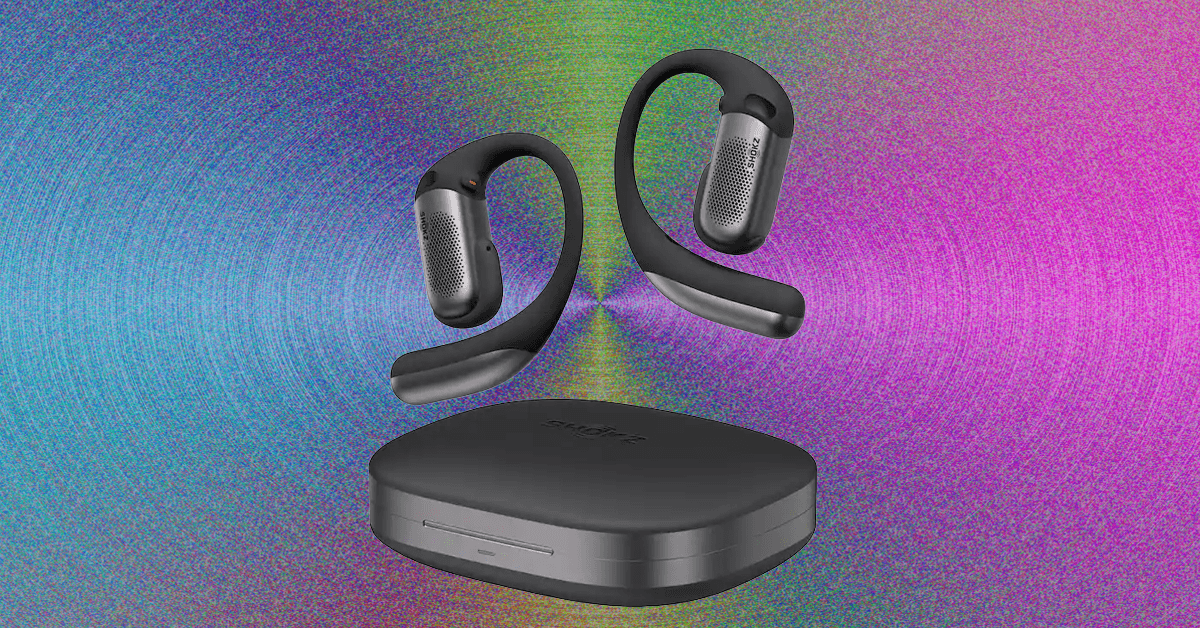
Like all open-ear earbuds, the OpenFit Pro have an airy and open soundstage that delivers a more natural listening experience than regular earbuds — it’s closer to the experience of listening to speakers. You can make them sound even more immersive by activating the confusingly named Optimized for Dolby Atmos mode. I say confusing because this mode is neither a replacement for Dolby Atmos nor is it strictly for use with existing Dolby Atmos content. It is essentially Dolby’s best earbud-based audio software, which combines spatial audio processing (for a wider and deeper soundstage) with optional head tracking. Both of these features will work with any content; however, Dolby claims it works best when you’re listening to Dolby Atmos content.
It’s the first time Dolby’s tech has been employed on a set of open-ear earbuds, and it’s a great match. It boosts the perceived width and height of the space, and does so without negatively affecting dynamic range or loudness, something that often plagues similar systems. And yes, the effect is more pronounced when listening to Atmos than when playing stereo content. I’ve used Dolby’s spatial tech on several products, including the LG Tone Free T90Q, Jabra Elite 10, and Technics EAH-Z100, and this is the first time I’ve enjoyed it enough to leave it enabled for music listening.
Still, it’s not as effective as Bose’s Immersive Audio on the Bose Ultra Open Earbuds. Bose’s head tracking is smoother—particularly noticeable when watching movies—and its spatial processing is more convincing and immersive for both music and movies.
Where Shokz enjoys a big leg up on Bose is the OpenFit Pro’s call quality. The OpenFit Pro’s mics do a great job of eliminating noises on your end of the call. You could be walking down a busy street, hanging out in a full coffee shop, or even passing by an active construction site, and your callers probably won’t have a clue you aren’t sitting on a quiet park bench. As with all open-ear earbuds, being able to hear your own voice naturally (without the use of a transparency mode) eliminates the fatigue normally associated with long calls on regular earbuds.
Comfortable Design
Photograph: Simon Cohen
Comfort is a key benefit of Shokz’s OpenFit series, and the OpenFit Pro, with ear hooks that are wrapped in soft silicone, are no exception. Unlike previous OpenFit models, which position speakers just outside your ear’s concha, the Pro’s speaker pods project directly into your ears, and in my case, they make contact with the inner part of that cavity. This significantly increases stability, but over time, I became aware of that contact point.
They never became uncomfortable, but it’s not quite the forget-you’re-even-wearing-them experience of the OpenFit/OpenFit 2/+ models. As someone who wears glasses, I tend to prefer clip-style earbuds like the Shokz OpenDots One, and yet the OpenFit Pro’s ear hook shape was never an issue. Shokz includes a set of optional silicone support loops, presumably for folks with smaller ears or who need a more stable fit. They didn’t improve my fit, but then again, I’ve got pretty big ears.
As with all hook-style earbuds, the OpenFit Pro charging case is on the big side. It’s got great build quality thanks to the use of an aluminum frame, and you get wireless charging (not a given with many open-ear models), but it’s still way less pocketable than a set of AirPods Pro.
Easy to Use

Photograph: Simon Cohen
For the OpenFit Pro, Shokz has finally abandoned its hybrid touch/button controls in favor of just physical buttons, and I think it’s the right call. You can now decide exactly which button press combos control actions like play/pause, track skipping, volume, and voice assistant access, a level of freedom that wasn’t available on previous versions.


Bears lose key defensive player for rest of playoffs after brutal injury

“Enough”: Oprah Winfrey on her weight-loss lessons

Trump delivers oil warning, suggesting Cuba should strike deal with US

-

 Sports6 days ago
VAR review: Why was Wirtz onside in Premier League, offside in Europe?
-

 Entertainment4 days ago
Does new US food pyramid put too much steak on your plate?
-

 Politics4 days ago
UK says provided assistance in US-led tanker seizure
-

 Entertainment4 days ago
Why did Nick Reiner’s lawyer Alan Jackson withdraw from case?
-

 Politics6 days ago
China’s birth-rate push sputters as couples stay child-free
-

 Sports6 days ago
Steelers escape Ravens’ late push, win AFC North title
-
 Business6 days ago
8th Pay Commission: From Policy Review, Cabinet Approval To Implementation –Key Stages Explained
-

 Entertainment6 days ago
Minnesota Governor Tim Walz to drop out of 2026 race, official confirmation expected soon