

Tech
Are bridges near you safe? This MRI-like scan may prevent disaster


Suyun Ham can’t take his eyes off a scanner. “Lower the sensors a little bit more,” Ham urges an assistant. Then a barrage of data floods in, filling computer screens for a diagnosis.
But Ham isn’t a medical doctor. Nor is his “patient” a living creature. An engineering professor from the University of Texas at Arlington, he is experimenting with a novel approach in bridge inspection.
Ham’s mobile-scanning system is part of efforts to make US infrastructure more heat-resilient. Unlike floods and tornados that can quickly destroy bridges, extreme heat is a silent killer that harms them over time, experts say.
“If temperatures are out of range, bridges can get damaged unexpectedly,” says Ham, who lives in the Dallas-Fort Worth area, where summer temperatures can exceed 100F (38C). “With our “MRI,” we can see what’s inside a bridge quickly.”
Bridge materials expand and contract in response to temperature fluctuations. While most are equipped with features to accommodate that movement, they were designed to withstand historically cooler temperatures, says Paul Chinowsky, a professor emeritus of civil engineering at the University of Colorado Boulder.
When temperatures hit a record high, bridges might behave in ways that engineers didn’t intend them to, he adds.Heat-swollen steel joints can impair the mobility of a swing bridge, making it unable to open or close—at least temporarily. Concrete also expands under heat. Once its expansion goes beyond a bridge’s original design limit, the concrete can crack, exposing it to moisture that can corrode internal metal components.
That’s an increasingly common scene around the world. In China, a concrete bridge broke in half because of brutal heat in 2022. That same year, London wrapped Hammersmith Bridge in giant pieces of foil to prevent it from overheating. And when the blistering sun baked Chicago’s DuSable drawbridge in 2018, its steel joints expanded and got stuck until firefighters hosed the bridge with cold water.
“Bridges are very susceptible,” Chinowsky says. “The hotter it gets compared to what typically it is, the more danger you have.”
‘A lot of headaches’
Hotter temperatures are baking US bridges at a time when their health is already deteriorating. The country has more than 600,000 bridges, almost half of which have exceeded their designed lifespan of 50 years, according to a 2025 report by the American Society of Civil Engineers.
With proper maintenance, many can last much longer, potentially exceeding 100 years, the industry group says. Still, about one in three bridges requires repair or replacement, according to an analysis published this year by the American Road and Transportation Builders Association.
Hussam Mahmoud, a professor at Vanderbilt University who has evaluated the structural integrity of about 90,000 steel-girder bridges across the US, found that many have aged prematurely, due in large part to the heat-accelerated malfunction of their expansion joints.
As the frequency and severity of heat waves increase with climate change, expansion joints, which connect two bridge spans, expand more often. That, coupled with the strain caused by debris or dirt accumulated in the joints over time, adds pressure to the structure, elevating the risk for a bridge to crack or buckle, Mahmoud says.
Although those defects don’t put a bridge in immediate danger of collapse, they need to be fixed to avoid further damage, which can be “a lot of headaches,” says Mahmoud.
With more than 4.9 billion trips taken across US bridges on any given day, bridge closures can take a toll on commerce and the economy, Mahmoud says. More damage also means higher maintenance costs. The US is already facing a $373 billion funding gap over the next 10 years to repair bridges properly, according to the American Society of Civil Engineers.Heat-induced damage can also cause bridges to malfunction at a time when the free movement of people is needed the most.
In June, a swing bridge in South Carolina got stuck for hours due to sweltering temperatures and was unable to open for ships to go through, delaying rescue efforts for a fatal boating accident.
Drive-by inspections
For Ham, better bridge monitoring is key. “Just like it is difficult to heal a human patient with stage-four cancer, it’d be too late to repair a bridge when there are a lot of defects,” he says.Ham, who spent a big chunk of his college time inspecting bridges, learned the limitations of the conventional method firsthand. He used to tap the bridge surface with a hammer and listen for hollow sounds that could indicate problems.
That hammer later evolved into more advanced devices, yet the time-consuming nature of manual inspection remains largely unchanged, Ham says. The conventional method also requires a bridge to shut down some of its lanes for inspection, a big ask for places such as Texas, which has 56,000-plus bridges.
While federal mandates typically require highway bridges to be inspected every two years, Ham and others at the University of Texas’s Smart Infrastructure and Testing Laboratory in Arlington want to help increase that frequency by introducing a new solution: a drive-through inspection.
Ham’s machine—a trailer loaded with dozens of electronics—is hauled by a pickup truck. On a sizzling afternoon in July, as the vehicle pulled the machine across a concrete bridge over a stream bed on the university campus, the tools generate mechanical waves that can propagate through concrete.
Sensors pick up the resulting bridge vibration signals, while a GPS device pins down where each signal comes from. Meanwhile, ground-penetrating radars emit pulses to create images of the structure under the bridge’s deck, and GoPros videotape the surface condition. The end goal, according to Ham, is to collect a wide range of data that enables engineers to identify cracks, voids and other anomalies.
The machine scanned the entire 5-feet-long bridge within seconds. By contrast, it would take hours for inspectors to complete the same job using the conventional method, according to Ham.
“There’s a lot of surface damage,” Ham says, pointing to a number of bright orange dots and stripes scattered across the dark blue background of one computer image generated from the onsite scanning. He also spots a cluster of tiny cracks, highlighted by a red rectangle.
Ham and his team then use artificial intelligence to refine the analysis and filter out “noises”—irregular vibration signals caused by a car driving by during the inspection, for instance. The engineers report their findings to bridge overseers for safety assessment and future repair work.
“It is better for time and efficiency,” says Mark Burwell, a bridge inspection coordinator at the Texas Department of Transportation whose agency has deployed Ham’s technology to inspect dozens of bridges since 2019. As inspectors no longer have to work next to moving traffic on a bridge, the automated inspection also helps put humans out of harm’s way, he adds.
For now, Ham’s “portable MRI” is only available for bridge inspection in the Lone Star state. Ham aims to scale up its deployment. To make that happen, the engineers will have to first perfect the innovation.
There have been many learning moments, Ham recalls. Once, a rough ride knocked off sensors, cutting an inspection mission short. (The machine is now equipped with a lift that lowers and raises it to avoid obstacles on the road.) On another occasion, the software grappled with the complexity of decoding signals from a concrete bridge covered with asphalt patches.
To help the AI better interpret signals, Ham and his team have turned their laboratory into a manufacturing hub of artificial defects. There, engineers soak metal sticks in brine to emulate corrosion. They also drill holes in concrete slabs to mimic cracks. By applying sensors and radars to examine those artificial defects, the engineers can pair different signals with different types of damage.
Even so, the machine is unlikely to catch all the heat-induced problems, according to Ham. For instance, searing temperatures can stress a bridge, but the machine can’t detect it until physical damage occurs.
But data collected from damaged bridges may pave a way for future protection, Ham says. That’s because, by comparing the number of cracks in bridges built with different methods and materials, the technology plays a role in helping regulators determine how to design structures more suitable for a hotter world.
“We’re like a medical doctor,” Ham says. “We can help them make a decision.”
2025 Bloomberg News. Distributed by Tribune Content Agency, LLC.
Citation:
Are bridges near you safe? This MRI-like scan may prevent disaster (2025, September 1)
retrieved 1 September 2025
from https://techxplore.com/news/2025-09-bridges-safe-mri-scan-disaster.html
This document is subject to copyright. Apart from any fair dealing for the purpose of private study or research, no
part may be reproduced without the written permission. The content is provided for information purposes only.











The best iPhone charger depends on several factors. Are you topping off your battery on the go? Do you want to charge your iPhone as quickly as possible? Are you charging it overnight on your nightstand? The best gear recommendation is going to change with the situation. Luckily, the WIRED Reviews team tests iPhone chargers in the field all year long. There’s not a day that goes by that at least one of us is not assessing at least one iPhone charger. I’ve gathered up our favorite picks for every scenario.
Be sure to check out our related buying guides, like the Best Power Banks, the Best 3-in-1 Chargers, and the Best Wireless Chargers.
Table of Contents
The Best iPhone Chargers
Best Wall Charger for iPhone
This Anker charger is slick and has folding prongs so it’s easy to travel with, but the best part is that it can charge your phone at 40 watts (average is 20 to 27 watts). That means you can get up to 50 percent battery life in only 20 minutes. Not all iPhone models support charging this fast—it’s limited to iPhone 17, iPhone 17 Pro, and iPhone 17 Pro Max—but you may as well future-proof your gear if you’re shopping for a wall charger, even if your phone can’t take full advantage of those speeds yet.
Best Power Bank for iPhone
-Portable-Charger-Reviewer-Photo-(no-border)-SOURCE-Simon-Hill.jpg)
We do recommend the Anker Laptop Power Bank as our top-pick power bank, but if you’re only trying to top off your iPhone, this is a very reliable and neat-looking power bank. It’s svelte, smaller than a deck of cards, and can deliver 20 watts to two devices at once. Nimble also makes a slightly larger version, which has a larger capacity and can charge at up to 65 watts. Aside from the cool design featuring speckled colors and a lanyard loop, Nimble also uses bioplastics, recycled materials, and minimal packaging. A USB-C charger is included in the box.
Best MagSafe Portable Charger for iPhone
.jpg)
Anker
MagGo Power Bank (10K) (Qi2)
This 10,000-mAh power bank can charge your device at up to 15 watts, but it’ll also charge older devices at a slower rate. It has a built-in kickstand and an LED display that lets you know how much power is left at a glance. It works in portrait or landscape modes. Be aware that it won’t be able to charge most phones fully more than once, but it’s hard to beat if you’re seeking wireless charging on the go. If you want a bigger capacity or faster charging, you don’t want MagSafe.
Best 3-in-1 Charger for iPhone

Belkin
3-in-1 Qi2 Charging Stand
The Belkin 3-in-1 can charge your compatible iPhone at 15 watts, plus your AirPods and your Apple Watch at the same time. The charging pad can be tilted to your preferred angle, including in landscape orientation if you want to watch a video or put your phone in StandBy mode. The USB-C cable is permanently attached, which you may or may not like. Check our best 3-in-1 chargers buying guide for additional picks.
Best 2-in-1 Charger for iPhone

Photograph: Louryn Strampe
Mophie
2-in-1 Wireless Charging Stand
I love a 3-in-1 charger as much as the next tech nerd, but sometimes they’re overkill. My Apple Watch battery usually lasts all day long, but I can chew through my older AirPods battery before my lunch break hits, and my iPhone battery might be depleted too, depending on whether or not I’m streaming Max Velocity off to the side. This 2-in-1 charger has been my steadfast desktop companion. Mophie makes another version that tops off your Apple Watch and iPhone instead of your headphones, which might be what you want if you’re rocking wired headphones or you’re making intense use of a walking pad throughout the day. There’s a 40-watt wall charger in the box—a rarity these days!—plus a USB-C cable that winds neatly into the base. It’s easy to adjust the angle of your iPhone as well, and I’ve found the base very sturdy. If you want to charge, but not necessarily all of the possible devices simultaneously, these might be what you seek.

Anker
Prime USB-C to USB-C Cable
This braided nylon USB-C cable has a durable exterior made from recycled plastic. The cable is rugged, with Anker promising that it can operate in temperatures ranging from negative 40 degrees to 176 degrees Fahrenheit. It’s backed by a lifetime warranty. It’s got a built-in cable management loop. It’s more than enough cable for your iPhone. Read our guide to the Best USB-C Cables for more picks.

Ugreen
USB-C to Lightning Cable
If your iPhone is still rocking the Lightning cable, this is gonna be way better than whatever shoddy cable Apple sent you. It’s durable and is Made for iPhone-certified, so you won’t have any problems getting it to work. It comes in 3-, 6-, or 10-foot lengths with a two-year warranty. Best of all, the exterior casing will stay intact, unlike what you’d probably get with Apple’s cables.
Government figures for projected carbon footprint for datacentres have been miscalculated. New figures for the likely carbon output resulting from electricity use by datacentres published last week have been revised upwards by around 100x for the minimum and maximum projected.
Last July, the Department for Science, Innovation & Technology (DSIT) published its Compute evidence annex, which set out the future for AI, compute demand and implications for carbon footprint. The DSIT has since unpublished the original report, but it can still be found here.
The document said: “We estimate that by 2035, the UK’s greenhouse gas emissions from AI compute could range from 0.025 to 0.142 MtCO₂ [millions of tonnes of CO₂] – this is below 0.05% of the UK’s projected total emissions.”
But in a correction to that document, the DSIT said last week: “The UK’s cumulative 10-year greenhouse gas emissions from AI compute could range from 34 to 123 MtCO₂ – this is around 0.9-3.4% of the UK’s projected total emissions over the 10-year period.”
The figures were miscalculated to a staggering degree. The earlier numbers appear to have been annual and the recent revision a 10-year figure, which makes an increase in the estimate of around 100x.
Meanwhile, analysis by climate change science and policy research group Carbon Brief suggests even those figures might be optimistic. Core to that belief is that the government aim is for 50gCO2/kWh by 2030. That figure is what can be achieved by “clean” sources of energy, such as wind, nuclear, hydro and solar.
But figures from last month – researched by Carbon Brief and published with environmental campaigners Foxglove – suggest that is a wildly optimistic estimate if any of that power generation needs to be powered by gas, as gas-powered electricity generation comes with a carbon intensity of around 10x that of clean sources.
Carbon Brief has calculated that emissions could in fact be somewhere between 3.4 MtCO₂ using 5% gas, and 68.1 MtCO₂ if electricity was 95% gas-generated. The higher figure – not far off the annual carbon emissions of Sweden – comes from an estimate based on a recent Ofgem projection of 20GW of future datacentre electricity demand. The same document illustrated the scale of demand by reference to actual peak demand in February 2026 of 45GW.
Ofgem’s 20GW is a projection based on National Energy System Operator research that asked customers about future grid connection requirements.
Foxglove head of strategy Tim Squirrell said: “The government has a legally binding commitment to reach net zero by 2050. This already sat awkwardly alongside its hell-for-leather embrace of a hyperscale AI datacentre buildout, which unchecked could double the electricity consumption of the entire country.
“The situation has now been revealed to be much, much worse, given the fact the government doesn’t seem to have done even the most basic arithmetic needed to measure the potential new carbon emissions of these datacentres. The government urgently needs to confront the reality that it can’t rubber stamp hundreds of new datacentres, whilst keeping its manifesto promise to the country – and legal obligation – to combat the climate crisis.”
Computer Weekly has calculated that there is currently around 1.6GW of datacentre capacity in the UK, with just over 8GW currently in planning or under construction.

Almost 90% of women choose to leave their tech career within 10 years of starting it, according to research from Akamai.
The tech services provider found that more than half of women leave their tech roles within the first five years of their career, and almost 90% within 10, making the average career length for a woman in tech in the UK six years. But the research also found that women would be willing to return to their tech career under the right circumstances.
Natalie Billingham, EMEA managing director at Akamai, said: “These insights illustrate that the UK tech industry has a window of opportunity to impact the choices of women in tech – from the past and present, and in the future.
“By providing opportunities for progression, flexible work and appropriate remuneration, tech leaders on the precipice of technological innovation have the chance to create impactful change on the tech workforce, fostering longer-lasting tenures, diverse leadership and an environment where women can thrive.”
The stagnant number of women in the UK’s technology sector is nothing new, with previous research finding multiple reasons why the tech industry cannot retain women workers even when it has succeeded in the equally difficult task of attracting them.
As well as a lack of visible and accessible role models, poor opportunities for career progression and lack of flexibility are reasons women often cite for opting out of the tech industry. The top reason women gave for quitting their tech roles was a lack of inclusive culture.
More than 50% said they left because they didn’t feel as though they belonged, 40% said it was because of a lack of gender diversity in leadership positions, and 10% said gender bias played a role in their exit from the technology sector.
Nearly three-quarters of women cited a lack of career progression as playing a part in their decision to leave the sector, while 19% stated it was their definitive reason for moving away from tech.
Flexible working has been an ongoing challenge for women in the technology sector, who often leave because they cannot balance working in an inflexible workplace when they often carry a disproportionate amount of the care burden at home.
More than half of women who have left the sector said they did so because of stringent working hours, with 15% outlining that there was no ability to work flexibly and more than 40% stated there was a lack of work-life balance. This could tie in with the 19% of women who said their main reason for leaving tech was due to burnout and a negative impact on their mental health.
Out of the large number of women who have left the technology sector, 15% are currently not working, while 13% moved into finance, 13% moved into teaching, and 12% chose to work in healthcare.
Just over 30% said they left the technology industry of their own volition and prefer their new employment situation, while many said they had no plans to return to tech.
But almost 40% claimed they would be willing to come back to their technology career under the right circumstances, of which pay, career progression and better flexibility were key factors. Just under 20% said better opportunities for career progression could entice them back to tech, while 48% said a higher salary would be the defining factor in their decision to return, and 38% would come back for better flexibility.
Out of those who have come back to the sector after having left, more than half did so because of an increase in pay, and 43% did so because of renewed opportunities for career progression.
Over 40% also claimed they returned to their tech career because they were given better work-life balance, and 37% of women who have left tech said they would consider returning to the industry if they were able to work flexibly, such as working part-time, job sharing or hybrid working. Those who have returned 90% said they’re likely to stay at least two more years if not more.
Hazel Little, CEO of Career Returners, said: “The findings provide a valuable picture of what mid‑career women are looking for to return to tech, and it’s encouraging to see that the majority could be persuaded to come back under the right conditions.
“Progression pathways are crucial for retaining talent, but equally important is ensuring that women who want to return have clear, supported ways to re-enter the sector in the first place. When employers build both return pathways and progression pathways, they create an environment where women can come back, grow and stay.”


Araghchi arrives in Russia for close consultations on regional, international issues

SBP raises policy rate by 100bps to 11.5% citing ‘risks to macroeconomic outlook – SUCH TV

‘Devil Wears Prada 2′ Meryl Streep reacts to surprise from on‑screen daughter

-

 Sports1 week ago
NCAA men’s gymnastics championship: All-time winners list
-

 Sports1 week ago
WWE WrestleMania 42 Night 2: Live match results and analysis
-

 Fashion1 week ago
UK’s Sosandar returns to profitability amid robust FY26 performance
-

 Politics6 days ago
UK’s Starmer seeks to deflect blame over Mandelson appointment
-

 Entertainment7 days ago
Lee Anderson, Zarah Sultana kicked out of UK Parliament for calling PM ‘liar’
-
 Business1 week ago
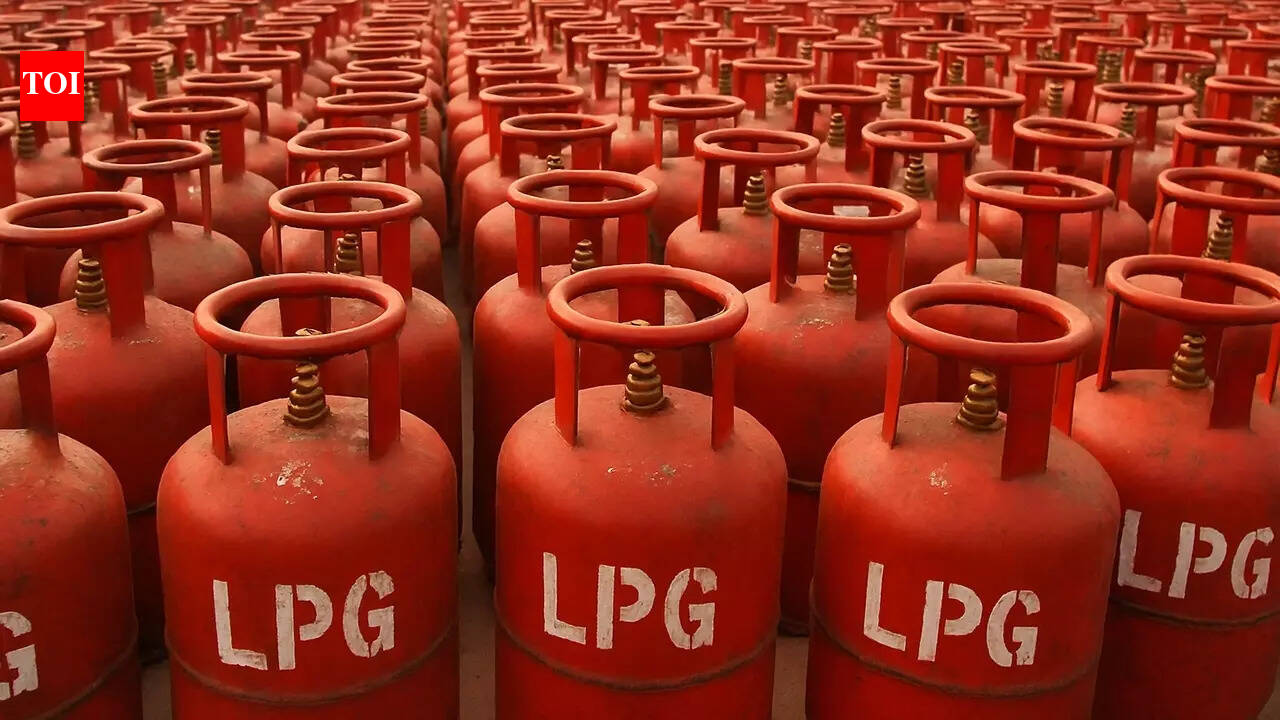
No fuel shortage: Govt assures 100% domestic LPG, PNG, CNG supply amid Hormuz energy crunch – The Times of India
-
 Business7 days ago
How Trump’s psychedelics executive order could unlock stalled cannabis reform
-
 Business6 days ago
Us-India Trade Talks: US–India trade deal: Where do talks stand & what to expect – explained – The Times of India