

Tech
Artificial intelligence can better predict future risk for heart attack patients


A landmark study led by University experts has shown that artificial intelligence can better predict how doctors should treat patients following a heart attack.
The study, conducted by an international team of researchers, led by the University of Leicester’s Honorary fellow, Doctor Florian Wenzl working closely with Professor David Adlam, both from the Department of Cardiovascular Sciences, has been published in The Lancet Digital Health.
Doctors caring for patients with the most common form of heart attack caused by a partial blockage, known as non-ST-elevation acute coronary syndrome (NSTE-ACS)—typically rely on the GRACE score to estimate a patient’s risk of dying or having another cardiovascular event. It is used to guide treatment decisions but has long been recognized as being unable to capture the full complexity of each patient.
However, the newly created GRACE 3.0 score is an advanced, AI-based risk assessment tool for patients with acute coronary syndromes. It is able to predict the probability of in-hospital and 1-year mortality by looking at nine widely available variables: age, sex, heart rate, systolic blood pressure, troponin level, ST-deviation, creatinine level, cardiac arrest, and heart failure symptoms.
Dr. Wenzl said, “GRACE 3.0 represents the next evolution of the GRACE score, bringing AI methods into one of the most widely used risk tools in cardiology. It was trained and externally validated on data from hundreds of thousands of patients from multiple countries, which gives it a very strong evidence base. Unlike traditional risk scores, GRACE 3.0 captures complex and non-linear relationships that conventional approaches often miss.”
“Another key improvement is that GRACE 3.0 is sex-specific and tailored precisely for patients with a partial blockage in their coronary artery, rather than being applied more broadly across those with other types of heart attacks caused by complete blockage in their coronary artery.
“In addition, the GRACE 3.0 score enables physicians to better predict whether or not patients will benefit from early invasive treatment such as angioplasty (to open the artery with a balloon and typically place a stent).”
Professor Adlam, an interventional cardiologist at the University, working within the Leicester NIHR Biomedical Research Center, added, “This newly developed score, using artificial intelligence, helps tailor treatment for patients by better detecting future risk and therefore guiding which health interventions they would benefit from.
“The GRACE 3.0 score is now increasingly being incorporated into international guidelines and may inform the design of future clinical trials.”
More information:
Florian A Wenzl et al, Extension of the GRACE score for non-ST-elevation acute coronary syndrome: a development and validation study in ten countries, The Lancet Digital Health (2025). DOI: 10.1016/j.landig.2025.100907
Citation:
Artificial intelligence can better predict future risk for heart attack patients (2025, October 19)
retrieved 19 October 2025
from https://techxplore.com/news/2025-10-artificial-intelligence-future-heart-patients.html
This document is subject to copyright. Apart from any fair dealing for the purpose of private study or research, no
part may be reproduced without the written permission. The content is provided for information purposes only.











Chirp reinvented the wheel—or at least one type, the yoga wheel. Chirp Wheels are effective in relieving upper and lower back pain, sciatica, and tension headaches. WIRED contributor Hannah Singleton has said the Chirp Wheel XR-3 Pack has even helped undo her tech neck and alleviate her brain fog.
Recently, the wellness brand has expanded beyond its flagship wheels into recovery gear. The lineup now includes powered rolling massagers (which I’ve been using a lot lately for back pain relief), TENS units, and even a full massage table (Chirp Contour) that I’m currently testing (stay tuned for the full review). Where Chirp stands out from heavyweights like Hyperice and Therabody is in its simplicity and value. The products tend to focus on doing one thing well rather than piling on features you may never use. Chirp promos and discounts run frequently on the Chirp website, and we have Chirp discount codes, so you can get an even better deal on recovery gear that’s already reasonably priced.
Save up to 67% on Chirp Products With Daily Deals
I like checking Chirp’s Daily Deals page because the exclusive offers rotate frequently, and you can save as much as 67%. I’ve spotted the Chirp Wheel XR 3-Pack on there, but you’ll also find different versions of the wheel, along with storage accessories. Some wheels skip the pressure-point nodes, which can feel better if you’re focusing on improving spinal mobility and flexibility rather than digging into stubborn knots. If the Chirp RPM Mini pops up at a special discount, it’s worth considering for your first purchase. It’s essentially an electric roller that kneads muscles more gently than most percussive massage guns; it also comes with a carrying case, so you can toss it in a bag and take it with you.
Get a Free Chirp Wheel+ Deep Tissue 2-Pack When You Spend $99 or More
Spend $99 or more, and Chirp will throw in a complimentary Chirp Wheel+ Deep Tissue 2-Pack, which retails for $75. The bundle includes two wheels: a 6-inch Deep Tissue Wheel designed for larger muscle groups and a 4-inch Focus Wheel meant to target trigger points in the neck and other small areas. You’ll need to sign up for the email newsletter to claim the freebie before adding it to your order.
Get Free Shipping on Chirp Orders Over $75
Chirp customers receive free shipping on U.S. orders over $75, and the perk stacks with the brand’s daily deals and most codes. If you time it right, you can shave a decent chunk off the final price. No promo code at checkout required.
Chirp Discount Code: Select Customers Can Get 15% Off
Chirp offers a 15% discount to certain groups through an online verification process. That includes: active-duty military personnel, veterans, and their dependents; first responders and law enforcement officers; medical professionals and healthcare workers; and teachers and academic administrators at any grade level.

Sam Altman’s eyeball-scanning startup, Tools for Humanity, announced last week that a new product called Concert Kit—designed to give verified humans a way to purchase concert tickets—would first roll out on Bruno Mars’ world tour of his latest studio album, The Romantic.
However, Bruno Mars Management and Live Nation, the producer for the Romantic Tour, told WIRED in a joint statement on Tuesday that the partnership “does not exist,” and that Tools for Humanity never even approached them about working together.
The confusion stemmed from a Tools for Humanity event April 17 in San Francisco, where chief product officer Tiago Sada said the company would be joining the Romantic Tour to not just provide access to tickets but also “VIP experiences for verified humans.”
The statement was reiterated in a blog post published by the company, which read: “Concert Kit launches today and will roll out during the Bruno Mars World Tour featuring DJ Pee .Wee (aka Anderson .Paak), where verified humans will have exclusive access to VIP suite experiences at select stops.”
A video of the event, and the company’s blog post, have since been edited and reshared by Tools for Humanity. They now say that Concert Kit will roll out on the 2027 European tour for Jared Leto’s band, Thirty Seconds to Mars.
“To be clear, we were never approached by TFH, nor were we in any discussions regarding a partnership or tour access,” said Bruno Mars’ Management and Live Nation in a joint statement to WIRED. “We first learned that our tour was being used to promote their project after their keynote made those initial claims.” (WIRED had referenced the Bruno Mars partnership in its original story about the event; the story has since been updated to include this new information.)
A spokesperson for Tools for Humanity confirmed to WIRED in a statement Wednesday that the startup “does not have any agreement with Bruno Mars to test or feature Concert Kit, and there is no association or affiliation with the artist or his tour.” Tools for Humanity declined to explain why they announced Mars as a partner for the project in the first place.
Tools for Humanity was cofounded in 2019 by OpenAI CEO Sam Altman and German entrepreneur Alex Blania, with the aim of using blockchain technology to verify people in online environments where scams are prevalent. In 2023, the company launched a physical, iris-scanning orb that works in conjunction with a mobile app.
While Live Nation and Bruno Mars Management say they “have no opinions for or against their products,” it’s possible that Live Nation is feeling prickly about Tools for Humanity for other reasons. The startup is proposing that Concert Kit will help thwart the bot problem that plagues sites like Ticketmaster—which is owned by Live Nation.
In September, Bloomberg reported that the US Federal Trade Commission was investigating Ticketmaster over whether it had done enough to keep bots off its platform. Anderson .Paak made a cameo at the Tools for Humanity event to vouch for this approach, saying to the crowd, “I fucking hate bots … they make everything really shitty. Especially for the fans.” (Anderson .Paak, for what it’s worth, will soon be touring with Bruno Mars under his moniker DJ Pee .Wee. The plot thickens.)
Tools for Humanity also took a jab at Ticketmaster in its press release for last week’s event, saying that “diehard Swifties will never forget the Eras Tour presale, where Ticketmaster faced 3.5 billion system requests in a single day, locking out millions of fans.”
The partnership with Mars was one of many announced at Tools for Humanity’s Lift Off event, which aimed to legitimize the startup’s identity-verifying technology by working with major brands. Executives from Tinder, Zoom, and Docusign said they’d be expanding their work with Tools for Humanity at the event. In the past, Tools for Humanity has struggled to get governments around the world on board with its technology as a safe, privacy-protecting way to identify real humans.
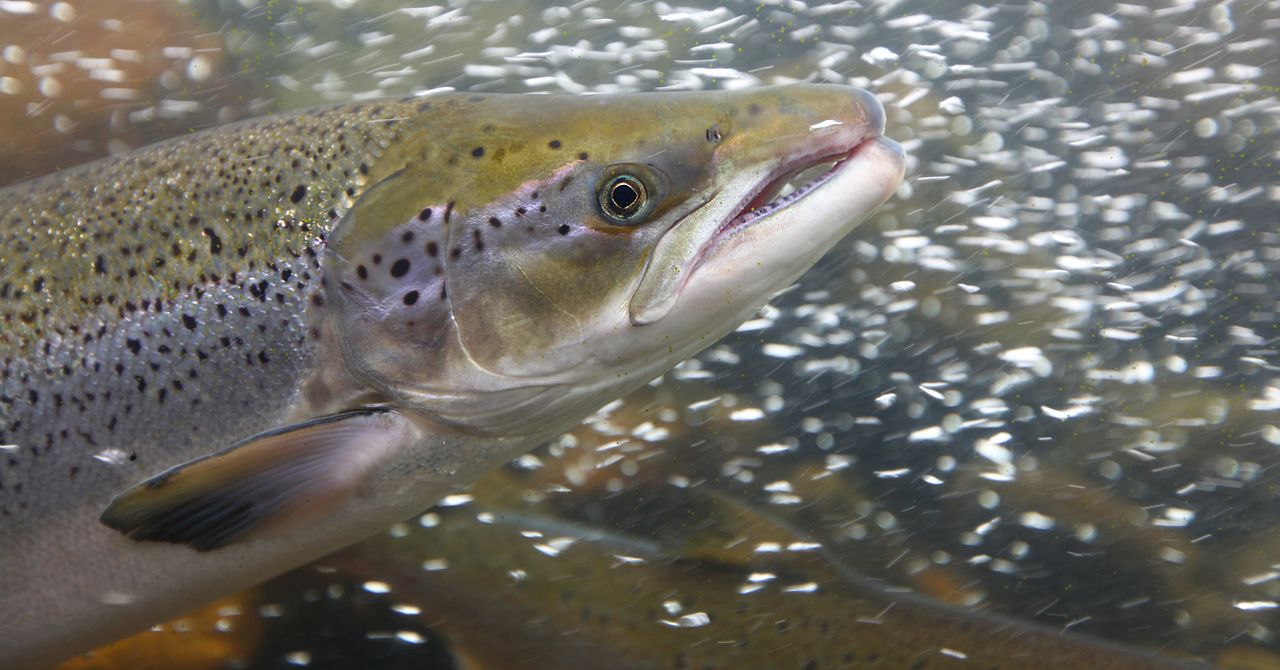
Cocaine pollution can affect the behavior of fish—altering, for example, the way Atlantic salmon move through their environment, prompting them to swim farther and disperse over a wider area.
So finds a recent study by a research team coordinated by Griffith University, the Swedish University of Agricultural Sciences, the Zoological Society of London, and the Max Planck Institute of Animal Behavior and published in the journal Current Biology. The findings provide the first evidence that the effects of cocaine contamination on fish behavior occur not only under laboratory conditions, but also in the wild, where animals are exposed to much more complex environmental conditions.
Cocaine and its metabolites have been detected with increasing frequency in rivers and lakes around the world, entering waterways primarily through wastewater treatment systems. Although previous research has shown that cocaine pollution can affect animal behavior, this evidence was limited to laboratory conditions. A 2024 study by the Oswaldo Cruz Institute in Brazil showed that even sharks are exposed to cocaine, but little is known about its effects on animals in the wild.
To understand more about it, the authors of the new study surgically implanted small devices that slowly release chemicals into 105 juvenile Atlantic salmon in Lake Vättern in Sweden. They were then divided into 3 groups: a control group, which was not exposed to substances; a group exposed to cocaine; and a group exposed to benzoylecgonine, the main metabolite of cocaine that is commonly detected in wastewater. The researchers also attached small tags to the fish so they could monitor their movements over a two-month period. From subsequent analyses, the team found that, compared with the control group, fish exposed to benzoylecgonine swam up to 1.9 times farther, dispersing at the end of the experiment about 20 miles from the release point.
“The location of the fish determines what they eat, what eats them, and how populations are structured,” said co-author Marcus Michelangeli. “If pollution is altering these patterns, it has the potential to affect ecosystems in ways we are only now beginning to understand.”
In addition to showing how cocaine pollution has changed the way salmon use space in a natural ecosystem, the new study found that the most pronounced effect was observed not so much in the group exposed to cocaine itself, but in that exposed to its metabolite. This result has implications for monitoring, since the metabolites are often more common in waterways and current risk assessments generally focus on the main compound, potentially neglecting important biological effects.
“The idea that cocaine might have effects on fish might seem surprising, but the reality is that wildlife is already exposed to a wide range of human-made drugs on a daily basis,” said Michelangeli. The researchers’ next step will be to be able to determine how widespread these effects are, identify which species are most at risk, and test whether alterations in behavior translate into changes in survival and reproduction.
This story originally appeared on WIRED Italia and has been translated from Spanish.


Canada forms new advisory committee to strengthen US trade relations
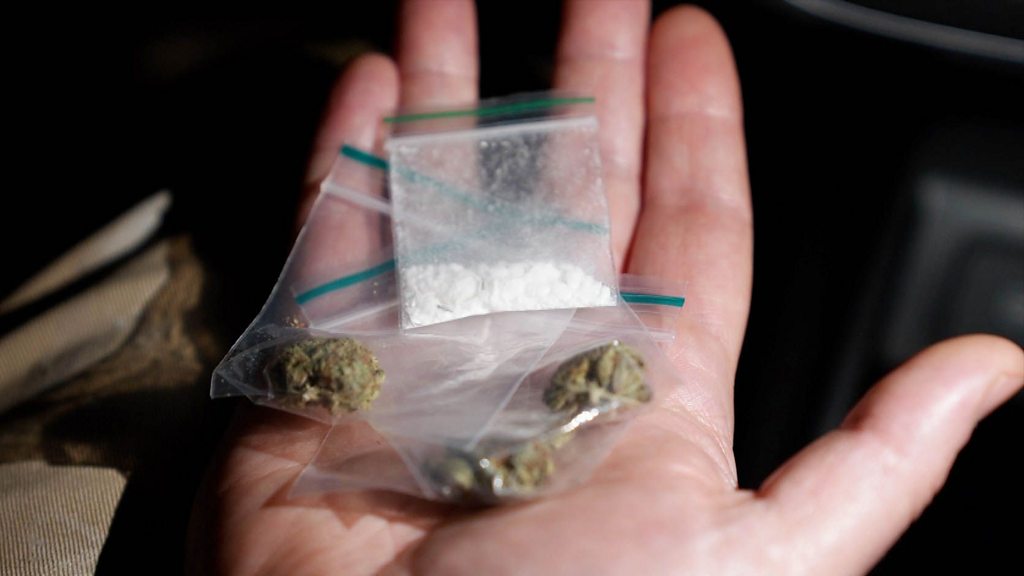
High street drug dealer sells cannabis to undercover reporter

Clearing Hormuz Strait mines could take six months: report

-

 Fashion1 week ago
France’s LVMH Q1 revenue falls 6%, shows resilience amid Iran war
-

 Entertainment1 week ago
Is Claude down? Here’s why users are seeing errors
-

 Tech1 week ago
The Deepfake Nudes Crisis in Schools Is Much Worse Than You Thought
-

 Sports1 week ago
PSL 11: Peshawar Zalmi win toss, opt to field first against Quetta Gladiators
-
 Tech1 week ago
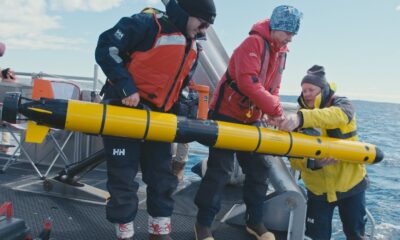
Human-machine teaming dives underwater
-
 Business1 week ago
Standard Life buys rival in £2b deal to create savings giant
-
 Business1 week ago
BP sees ‘exceptional’ oil trading result as Iran war sends crude costs soaring
-

 Fashion1 week ago
What no one is saying about the 2026 apparel slowdown