

Business
Aye Finance IPO Day 2: GMP Remains Zero; Apply Or Not? Check Price, GMP, Financials, Recommendations


Last Updated:
Aye Finance IPO GMP: Unlisted shares of Aye Finance Ltd trade at Rs 129 apiece in the grey market, which is zero premium over the upper IPO price of Rs 129.




Aye Finance IPO GMP.
Aye Finance IPO: The initial public offering (IPO) of non-banking financial company Aye Finance Ltd is witnessing its second day of bidding on Tuesday, February 10. The Rs 1,010-crore IPO, whose price band has been fixed in the range of Rs 122 to Rs 129 apiece, will be closed on February 11. Till 5:50 pm on the second day of bidding on Tuesday, the IPO got a muted 0.16x subscription, receiving bids for 72,85,960 shares as against 4,55,32,785 shares on offer.
Its retail category got a 0.47x subscription. The non-institutional investors (NII) category has received a 0.02x subscription. The qualified institutional buyers (QIBs) category got 0.13x subscription.
Aye Finance IPO GMP Today
According to market observers, unlisted shares of Aye Finance Ltd were trading at Rs 129 apiece in the grey market, which is zero premium over the upper IPO price of Rs 129. It indicates a flat or negative listing. Its listing will take place on February 16, Monday.
The GMP was zero on Tuesday also.
The GMP is based on market sentiments and keeps changing. ‘Grey market premium’ indicates investors’ readiness to pay more than the issue price.
Aye Finance IPO Lot Size
The IPO has a lot size of 116 shares. At the upper end of the price band, a retail investor will need to invest a minimum of Rs 14,964 for one lot. For small non-institutional investors (sNII), the minimum application size is 14 lots, or 1,624 shares, translating into an investment of Rs 2,09,496. Big non-institutional investors (bNII) must apply for at least 67 lots, or 7,772 shares, requiring an investment of Rs 10,02,588.
Aye Finance Mobilises Rs 454 Crore From Anchor Investors
Aye Finance on Friday collected Rs 454.5 crore from anchor investors, ahead of its initial share sale opening for public subscription. The anchor book saw participation from a mix of domestic mutual funds, insurance companies and foreign portfolio investors.
Aye Finance IPO: More Details
The IPO comprises a fresh issue of equity shares worth up to Rs 710 crore and an offer for sale (OFS) of up to Rs 300 crore by current shareholders.
The company proposes to utilise the net proceeds from the fresh issue to strengthen its capital base, supporting future capital requirements arising from the expansion of its business and asset base.
Aye Finance is scheduled to list on the BSE and NSE on February 16.
Classified as a middle-layer NBFC, Aye Finance focuses on lending to micro and small enterprises (MSEs), a segment that remains largely underserved by traditional banks. The company provides small-ticket business loans for working capital and expansion, secured through hypothecation of business assets or property, across manufacturing, trading, services and allied agriculture sectors.
As of September 30, 2025, Aye Finance operated across 18 states and three union territories, serving around 5.9 lakh active customers, with assets under management (AUM) of Rs 6,027.6 crore.
Retail investors can apply for the issue in a lot size of 116 shares and multiples thereof, translating into a minimum investment of Rs 14,964 at the upper end of the price band.
Under the allocation structure, qualified institutional buyers (QIBs) will receive 75 per cent of the issue, while non-institutional investors (NIIs) and retail investors will be allotted 15 per cent and 10 per cent, respectively.
The IPO is being managed by Axis Capital, IIFL Capital, JM Financial and Nuvama Wealth as book-running lead managers, while KFin Technologies is the registrar to the issue.
 Click here to add News18 as your preferred news source on Google.
February 10, 2026, 11:01 IST
Read More
Business
Stock market this week: Middle East tensions, oil prices, FII flows & more — what will guide Dalal Street

Dalal Street is heading into the new trading week with global uncertainty firmly in focus, as investors keep a close watch on the evolving situation in the Middle East, fluctuations in crude oil prices and the behaviour of foreign investors. Analysts said that sentiment is likely to remain fragile and heavily influenced by developments in negotiations between the United States and Iran, while movements in the rupee, global equities and the US dollar are also expected to shape market direction in the days ahead.Trading activity during the week is also expected to be shaped by the rupee’s movement against the US dollar, while investors continue to assess the impact of global uncertainty on risk appetite. Markets will remain closed on Thursday for Bakri Id.A key trigger for sentiment emerged over the weekend after US Secretary of State Marco Rubio said negotiations between Washington and Tehran had shown some progress, raising expectations that the ongoing conflict in West Asia could move closer to resolution.Ajit Mishra, SVP, Research at Religare Broking Ltd, said investors would closely track developments tied to crude oil, global currencies and bond markets. “This week is expected to remain highly sensitive to global macroeconomic developments and currency movements. Investors will also monitor crude oil prices, developments in US-Iran negotiations, and the trajectory of the US dollar and bond yields, all of which are expected to influence foreign flows and overall risk appetite,” he said.Apart from geopolitical developments, the Reserve Bank’s decision to transfer a record Rs 2.87 lakh crore dividend to the government for the year ended March 2026 is also expected to remain in focus. The announcement comes at a time when rising import costs and supply chain pressures linked to the West Asia conflict continue to weigh on the economy.According to Mishra, market participants are expected to evaluate how the RBI payout could affect liquidity conditions, fiscal flexibility and government spending in the months ahead.Ponmudi R, CEO of Enrich Money, said market behaviour in the coming sessions is expected to remain sensitive to fresh headlines surrounding diplomatic negotiations and oil prices. “Markets are expected to remain volatile and heavily headline-driven in the coming week, with investor attention firmly focused on developments surrounding the US–Iran situation, broader diplomatic negotiations and movements in crude oil prices,” he said.“While hopes of a diplomatic breakthrough and easing geopolitical tensions have improved sentiment modestly, investors continue to remain cautious as uncertainty surrounding the final outcome of the negotiations remains elevated,” Ponmudi added.He further said investors are expected to watch institutional flows, global equity trends, macroeconomic indicators and the rupee for further market cues. “With global uncertainty still elevated, market participants are likely to remain selective and cautious despite the recent improvement in sentiment,” he said.Vinod Nair, Head of Research at Geojit Investments Limited, said markets would require stronger support factors to build a more constructive setup. According to him, a meaningful decline in crude oil prices, steady foreign institutional investor flows and stable Q1FY27 earnings expectations without major downgrades would be important for sustained momentum.In the previous week, the BSE benchmark index rose 177.36 points, or 0.23%, while the NSE Nifty advanced 75.8 points, or 0.32%.
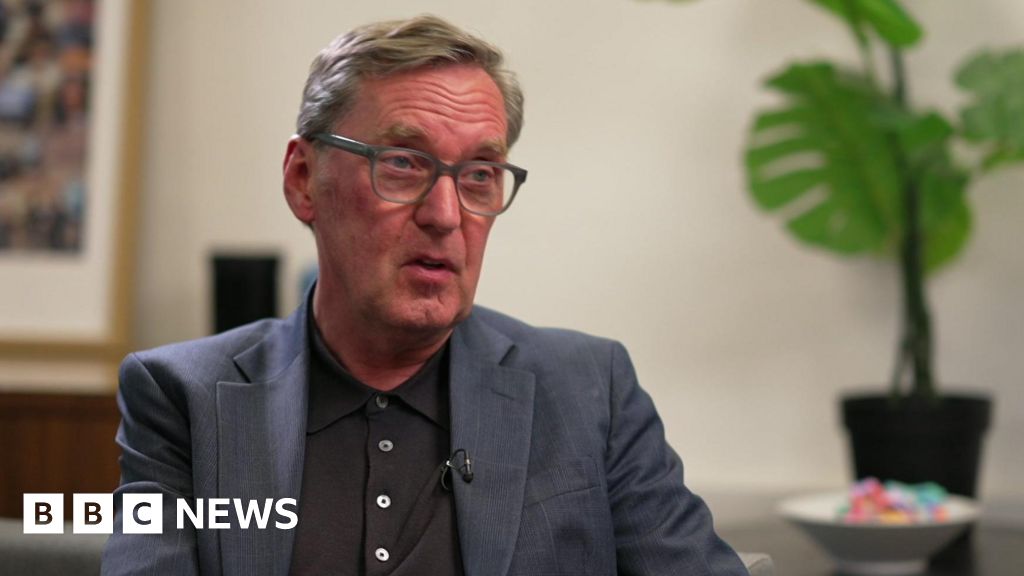
Reforms are needed of the welfare system to tackle the high numbers of young people not in work or education, says Alan Milburn.
Source link
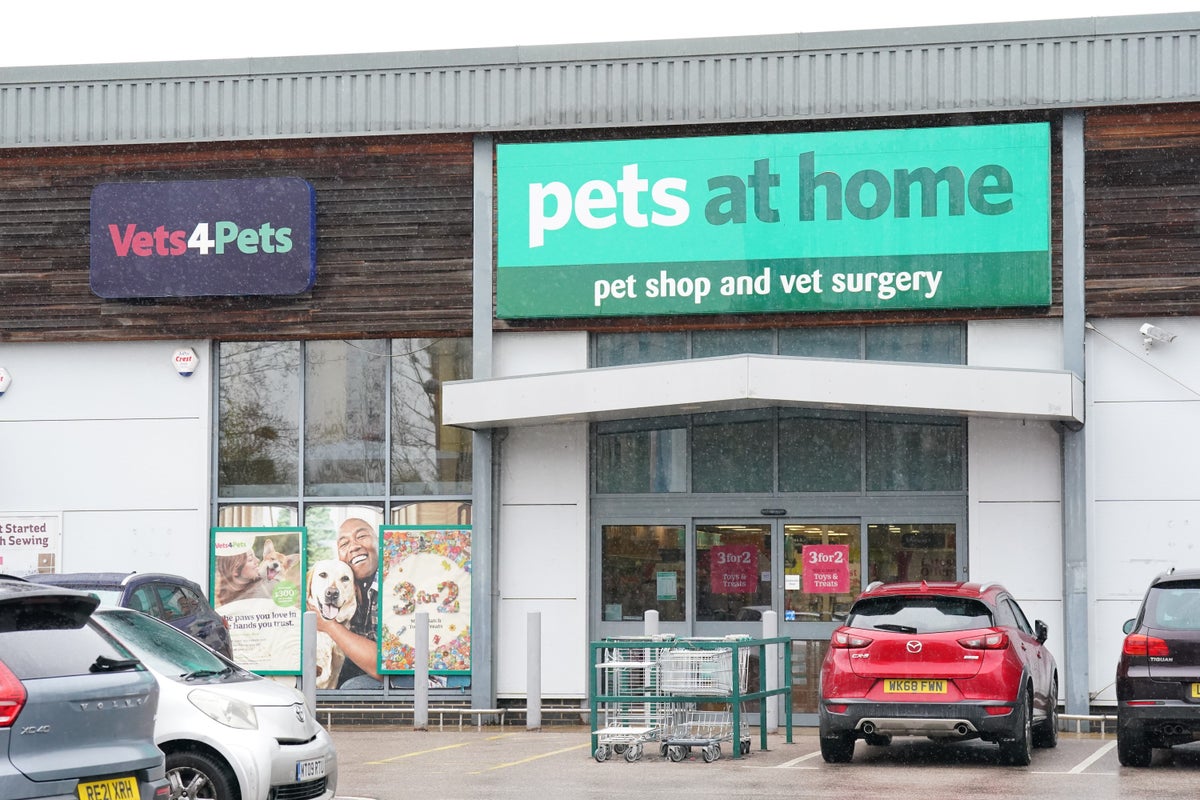
Pets at Home investors will be hoping the retailer’s new boss can lay out a strategy to return it to profit growth despite a challenging consumer backdrop.
Shares in the company currently sit close to its lowest level for almost seven years following a recent downturn in the group’s retail arm.
The dip in the group’s performance contributed to the departure of previous chief executive Lyssa McGowan late last year.
In March, former Waitrose boss James Bailey took the reins in a bid to drive a turnaround in performance.
Shareholders will be hoping the new boss can show early signs of improvement and a long-term strategy to drive growth in Pets at Home’s update on Wednesday May 27.
The pet products retailer and vet chain is expected to report an underlying pre-tax profit of around £93 million for the year to March, according to analysts.
It would represent a roughly 30% fall from last year, after the company came under pressure from weak demand for discretionary products.
Analysts have said investors will be looking at early trading in the current financial year to see how consumer spending is holding up.
AJ Bell’s investment director Russ Mould said: “Pets at Home could badly do with some renewed pep.
“Under executive chair Ian Burke, who has returned to a non-executive role after leading the business on an interim basis, Pets at Home laid out a plan to fix a retail business which has been badly affected by a reduction in discretionary spend on toys and treats for Britons’ furry and feathered friends.
“The country may have a reputation for loving their animal companions but in an environment where households are having to watch their pennies, these nice-to-have items were off the list.”
The group has also seen sales of pet food and similar products face fierce pricing competition from non-specialist retailers, such as supermarkets.
It has since cut prices among around 1,000 products in order to help drive activity, with cash-strapped shoppers looking for value.
Data from the Office for National Statistics (ONS) showed that UK retail sales volumes dropped to an 11-month low in April, with a 1.3% fall for the month.
Pets at Home is predicted to report revenues of £1.47 billion for the past year, just marginally lower than £1.482 billion reported last year.


2026 NASCAR Odds: Denny Hamlin Favored At Coca-Cola 600, Tyler Reddick Second

5/24: Sunday Morning

Lena Dunham reveals rare detail about first interaction with Luis Felber

-

 Entertainment1 week ago
Where Pete Davidson, Elsie Hewitt stand after breakup: Details revealed
-

 Politics1 week ago
Rising diesel costs from Iran war strain US school budgets
-

 Tech1 week ago
Why Is Your Grill So Dumb? The Best Grills Set Temp Like an Oven
-

 Tech1 week ago
This Solar-Powered Smart Sprinkler Keeps My Lawn Watered Without Any Power Cables
-
 Fashion1 week ago
RMG trade bodies seek policy support from Bangladesh PM
-

 Tech1 week ago
Tesla Reveals New Details About Robotaxi Crashes—and the Humans Involved
-
 Fashion6 days ago
Nigeria Kwara Garment Factory, KWS Garment Production Village ink pact
-
 Sports1 week ago
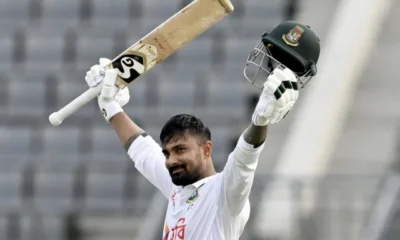
Pakistan steady after Das ton | The Express Tribune