

Business
Brent oil rises 7% on report US considering military options to break Iran deadlock | The Express Tribune

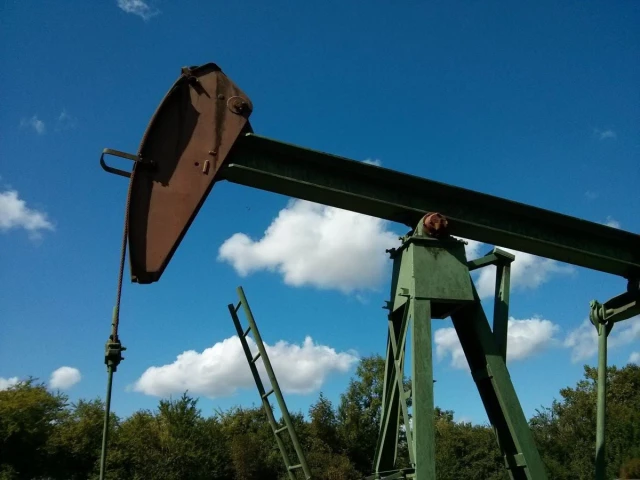
US West Texas Intermediate futures for June were up $2.76, or 2.6%, at $109.64 a barrel
Iran renewed attacks on the United Arab Emirates on Tuesday, causing oil loading at the port of Fujairah to be at least partly halted after the third attack in four days. FILE IMAGE: PIXABAY
Brent oil prices rose as much as 7% on Thursday on a report that the US is considering potential military action against Iran to break the deadlock in negotiations to end the war, increasing concerns of more supply disruptions to already curtailed Middle East exports.
Brent crude futures for June rose $6.81, or 5.8%, to $124.84 a barrel, after gaining 6.1% in the previous session. The June contract, up for a ninth day, expires on Thursday and the more active July contract was at $113.78, up $3.34, or 3%, after gaining 5.8% in the previous session.
US West Texas Intermediate futures for June were up $2.76, or 2.6%, at $109.64 a barrel, after climbing 7% in the previous session, climbing in eight of nine sessions.
Both benchmarks are on track for their fourth month of gains. Since the start of the year, Brent prices have more than doubled, rising to their highest since March 2022 on Thursday, and WTI is up more than 90%.
US President Donald Trump is slated to receive a briefing on Thursday on plans for a series of military strikes on Iran in hopes it will return to negotiations on its nuclear programme, according to an Axios report late on Wednesday.
Read: Trump holds talks on prolonged Iran blockade
The US and Israel began air strikes on Iran on February 28 and it retaliated by closing off almost all shipping through the Strait of Hormuz, a chokepoint for energy supplies from Middle Eastern producers. Amid a ceasefire that has paused combat, the US has imposed a blockade on Iranian ports.
Talks to resolve the conflict, which has killed thousands and caused what analysts say is the world’s biggest energy disruption ever, have deadlocked, with the US insisting on discussing Iran’s alleged nuclear weapons programme and Iran demanding some control over the strait and reparations for damage from the war.
“Prospects for any near-term resolution to the Iran conflict or a reopening of the Strait of Hormuz remain dim,” IG market analyst Tony Sycamore said in a note.
In a sign that the conflict and resulting energy supply disruptions are set to continue for longer, Trump spoke on Wednesday with oil companies about how to mitigate the impact of a possible months-long US blockade, a White House official said.
“In the near term, market participants remain focused on the dynamics of the US-Iran conflict and the risk of a prolonged closure of the Strait of Hormuz. This focus currently outweighs the long-term implications of the potential waning influence of OPEC+ following the UAE’s exit from the cartel,” said OANDA senior market analyst Kelvin Wong.
Read more: UAE leaves OPEC and OPEC+ in huge blow to global oil producers’ group
The OPEC+ grouping of members of the Organisation of the Petroleum Exporting Countries and its allies is likely to agree a small increase of around 188,000 barrels per day in oil output quotas on Sunday, sources told Reuters on Wednesday.
The meeting comes just after the United Arab Emirates’ withdrawal from OPEC, effective May 1, which is expected to deal a blow to the oil producer group’s ability to control prices. Although the Gulf nation’s exit would allow it to raise production after exports restart, analysts say that is unlikely to affect market fundamentals this year, especially with the Hormuz closure and other production disruptions from the war.
Analysts are now considering oil demand destruction to be the most likely way to solve the current tight supply situation.
ING analysts see about 1.6 million bpd of demand lost as consumers and end-users simply stop using oil products in some form because of high prices.
Though significant, “it’s clearly not enough to fill the supply gap we are currently facing,” the analysts said.





Reform UK leader Nigel Farage said in an interview on BBC Breakfast on Wednesday that “most of our gas now comes from Montana in the (US) Midwest”.
It is not the first time that Mr Farage has made a similar claim. Earlier in April he said: “Most of the gas we currently import comes from Montana.”
Evaluation
The US is only the third largest source of the UK’s gas supply, and the second largest foreign supplier. It is the largest supplier of liquid natural gas, the type that is transported by ship, rather than pipeline.
It is unclear why Mr Farage mentioned Montana specifically. Montana is not a major gas producing state.
The facts
Provisional data for 2025 shows that the UK’s own production of gas was 332,444 gigawatt hours (GWh). The country imported 463,692 GWh of gas. Of that, 320,249 GWh came from Norway and 104,360 GWh came from the US.
All the gas imported from the US was liquid natural gas (LNG) – the type that is super-chilled and transported by ship rather than in pipelines. The US was the UK’s largest supplier of LNG.
But it unclear how much – if any – of the UK’s gas comes from Montana specifically.
Data from the US Energy Information Administration (EIA) show that in 2024, the US produced a total of 37.7 trillion cubic feet of dry gas. Of this Montana accounted for around 40.0 billion cubic feet, or 0.1% of the total US production.
EIA data also show that Montana’s gas production was lower than its consumption of gas.
However, this does not mean that the state does not export any of its gas to other states or countries.
A 2023 report from the Montana Department of Environmental Quality said that while “Montana currently consumes more natural gas than it produces” a “significant portion” of the state’s production is exported.
Data from the US Census Bureau show that the US exported 2.8 billion US dollars worth of natural gas to the UK in 2025. This came from four states: Georgia, Louisiana, Maryland and Texas.
The data shows the state that the gas was exported from, not where the gas was actually initially produced. Although they are major LNG exporters, Maryland and Georgia produce little to no natural gas themselves.
The US Census Bureau data also show that Montana exported 525,083 US dollars worth of natural gas in 2025, all of which went to Canada.
A 2021 report from the UK’s Foreign and Commonwealth Office and Department for International Trade said that the UK was the fifth largest export market for Montana in 2019, selling 39 million US dollars worth of goods to the UK.
It listed the main goods exports from Montana to the UK in 2019 as electrical equipment, basic chemicals, navigational and measurement instruments, aerospace products and parts, and miscellaneous general purpose machinery.
There is no mention of gas in that report.
The US Census Bureau does not define Montana as being part of the Midwest.
Links
Facebook video (archived video download)
Gov.uk – Natural gas supply and consumption (archived page and spreadsheet)
Gov.uk – Natural gas imports (archived page and spreadsheet)
EIA – Natural Gas Gross Withdrawals and Production (archived)
EIA – Natural Gas Summary, Montana (archived)
Montana Department of Environmental Quality – Understanding energy in Montana (archived)
US Census Bureau – Foreign Trade (archived page and spreadsheet download)
EIA – Natural Gas Summary, Georgia (archived)
Gov.uk – UK-Montana trade and investment highlights (archived)
US Census Bureau – 12 States Make up the Midwest Region of the Country (archived)
The Bank of England votes for no immediate change to borrowing costs as it monitors the knock-on effects of the Middle East conflict.
Source link
Business
India’s FDI inflow may cross $90 billion in FY26, says DPIIT secretary – The Times of India

India’s total foreign direct investment (FDI) inflows are likely to cross $90 billion in 2025-26 after already surpassing $88 billion during April-February, a top government official said on Thursday.DPIIT Secretary Amardeep Singh Bhatia said the government had undertaken a series of policy measures to attract foreign investments into the country, PTI reported.He said that during April-February 2025-26, inflows had crossed $88 billion and were “hopefully crossing $90 billion” for the full fiscal year.According to Bhatia, reform measures, free trade agreements and India’s fast-growing economy are helping the country attract strong investment flows.This reflects continued momentum in foreign investment inflows amid the government’s push to improve ease of doing business and expand global trade linkages.


EU laws push APAC factories towards data over certificates

David Allan Coe, country singer who wrote “Take This Job and Shove It,” dies at age 86

EU a step closer to extending GSP for 10 more years

Us-India Trade Talks: US–India trade deal: Where do talks stand & what to expect – explained – The Times of India

PSL 11: Hyderabad Kingsmen opt to field after winning toss against Multan Sultans

Trump administration in advanced talks for a rescue package for Spirit Airlines, source says

-
Business1 week ago
Us-India Trade Talks: US–India trade deal: Where do talks stand & what to expect – explained – The Times of India
-
 Sports1 week ago
PSL 11: Hyderabad Kingsmen opt to field after winning toss against Multan Sultans
-
Business1 week ago
Trump administration in advanced talks for a rescue package for Spirit Airlines, source says
-
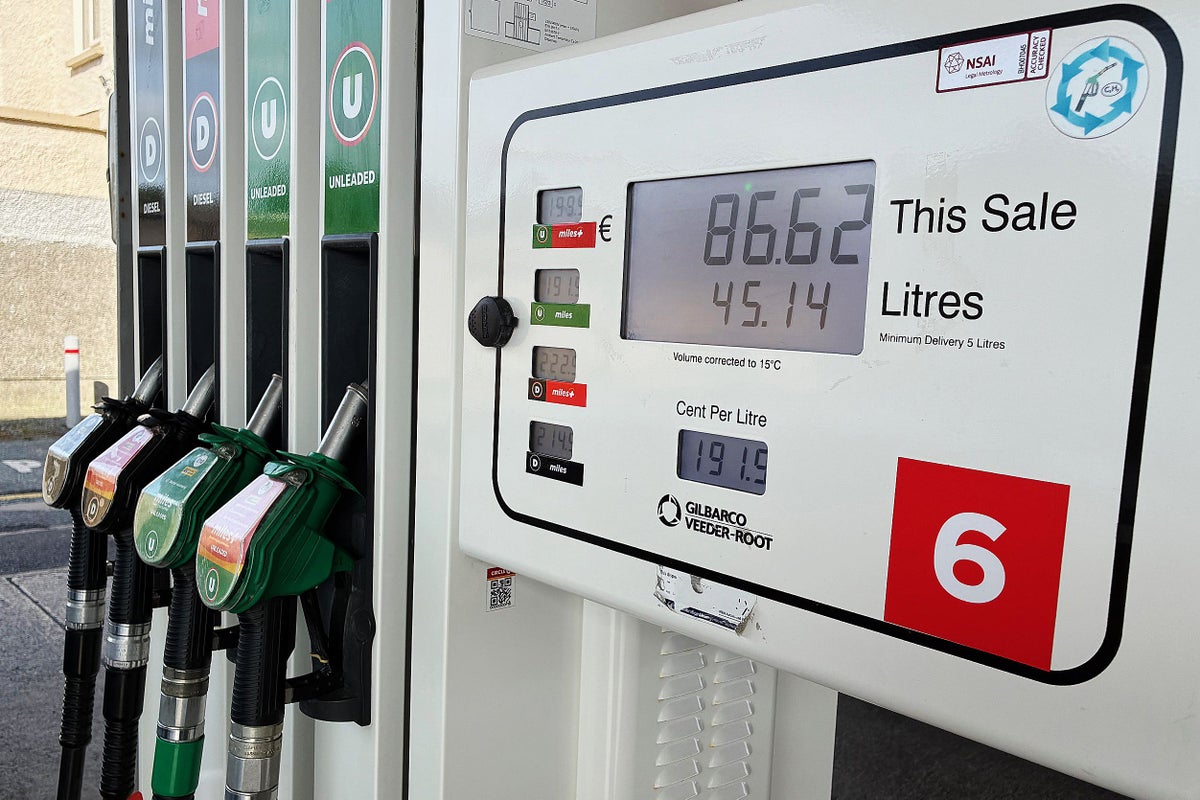 Business1 week ago
UK inflation accelerates after Iran war drives sharp rise in fuel prices
-

 Tech1 week ago
Nation states responsible for ‘nationally significant’ cyber attacks against UK, says NCSC chief | Computer Weekly
-

 Tech1 week ago
Microsoft faces court battle in £2bn Windows Server class action | Computer Weekly
-

 Entertainment1 week ago
Anne Hathaway shares major news about ‘Princess Diaries 3’
-

 Tech1 week ago
Blackbox replaces two racks of HPE storage with 8U of Everpure | Computer Weekly