

Business
Ford raises 2026 guidance as $1.3 billion tariff refund assists in offsetting higher costs


Ford signage at the New York International Auto Show in New York City on April 2, 2026.
Danielle DeVries | CNBC
DETROIT – Ford Motor raised its 2026 guidance on Wednesday after beating Wall Street’s first-quarter expectations and reporting a $1.3 billion tariff refund benefit after the U.S. Supreme Court ruled that some of President Donald Trump’s tariffs were illegal.
Ford stock rose more than 6% in after-hours trading.
Here’s how the company performed in the first quarter compared with average estimates compiled by LSEG:
- Earnings per share: 66 cents adjusted vs. 19 cents expected
- Automotive revenue: $39.82 billion vs. $38.82 billion expected
The first-quarter results significantly outperformed Ford’s performance from a year earlier, despite a 4% decline in wholesale units during the time period. Its overall revenue increased 6% to $43.3 billion and its adjusted earnings before interest and taxes more than tripled from $1 billion to $3.5 billion. Net income jumped to $2.5 billion, or 63 cents a share, up from $500 million, or 12 cents a share, a year earlier.
Automakers commonly exclude “special items” or one-time charges from their adjusted financial results to provide investors with a clearer picture of their core, ongoing business operations. Excluding special items but including the tariff reimbursement, Ford earned 66 cents a share.
The company’s updated full-year 2026 guidance includes adjusted EBIT of $8.5 billion to $10.5 billion, up from $8 billion to $10 billion. It maintained adjusted free cash flow of between $5 billion and $6 billion and capital expenditures of $9.5 billion to $10.5 billion.
Ford noted the guidance does not include potential impacts of a sustained conflict in the Middle East or a significant downturn in the U.S. economy.
Ford CFO Sherry House said the earnings increase was not strictly because of the tariff reimbursement. The company has not received that refund yet but said it is helping to offset an expected $1 billion incremental increase in commodity costs, specifically aluminum, for the year.
“The rest of the beat came from strong product mix in net pricing and growth in software and physical services,” House said during a media call Wednesday.”Even with the one-time tier of benefit, the underlying business came in around $2.2 billion ahead of expectations.”
Ford already expected an additional $1 billion in increased commodity costs amid higher prices and as it sources aluminum from different suppliers following fires that have affected production at a key Novelis aluminum plant last year in New York. The automaker has said the supplier isn’t expected to be operational again until between May and September.
House said the company decided to book the tariff refund during the first quarter because that’s when the Supreme Court’s decision was made. Trump last week told CNBC that he would gratefully “remember” U.S. companies that do not seek refunds for the tariffs.
House said the company did not raise its automotive free cash flow guidance along with the earnings outlook due to uncertainty about the tariff refund process and timing.
The International Emergency Economic Powers Act tariff benefit was largely expected by Wall Street analysts, but the exact amount Ford would receive was unknown. It is part of $160 billion in potential refunds expected to be returned to companies after the levies were ruled illegal in February by the Supreme Court in a 6-3 decision.
From a business unit basis, Ford’s traditional “Blue” operations led the way for the company with $1.9 billion in earnings during the quarter, followed by its “Pro” commercial business earnings at about $1.7 billion.
Ford’s “Model e” electric vehicle business narrowed its losses from $849 million a year ago to $777 million during the first quarter of this year. That smaller loss corresponded with a 70% decline in year-over-year EV sales for the first quarter.
Ford’s results come a day after crosstown rival General Motors raised its 2026 guidance and significantly beat Wall Street’s first-quarter earnings expectations. GM reported a roughly $500 million benefit from the U.S. Supreme Court IEEPA decision.




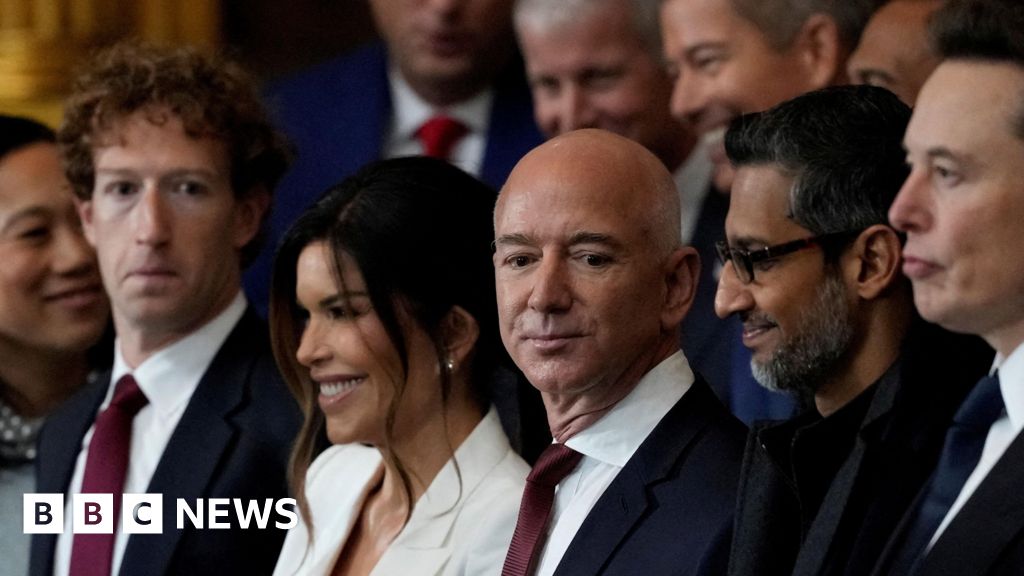
Lee Sustar, an analyst at Forrester, said there is still anxiety “about the sustainability of the AI boom” given the high cost and so far unrealised gains. Yet, tech companies are pushing forward with plans, for this year and next, to pour billions into its development.
Business
Lite fares: Air India may unbundle meals on domestic and short international flights; lounge access for business flyers – The Times of India
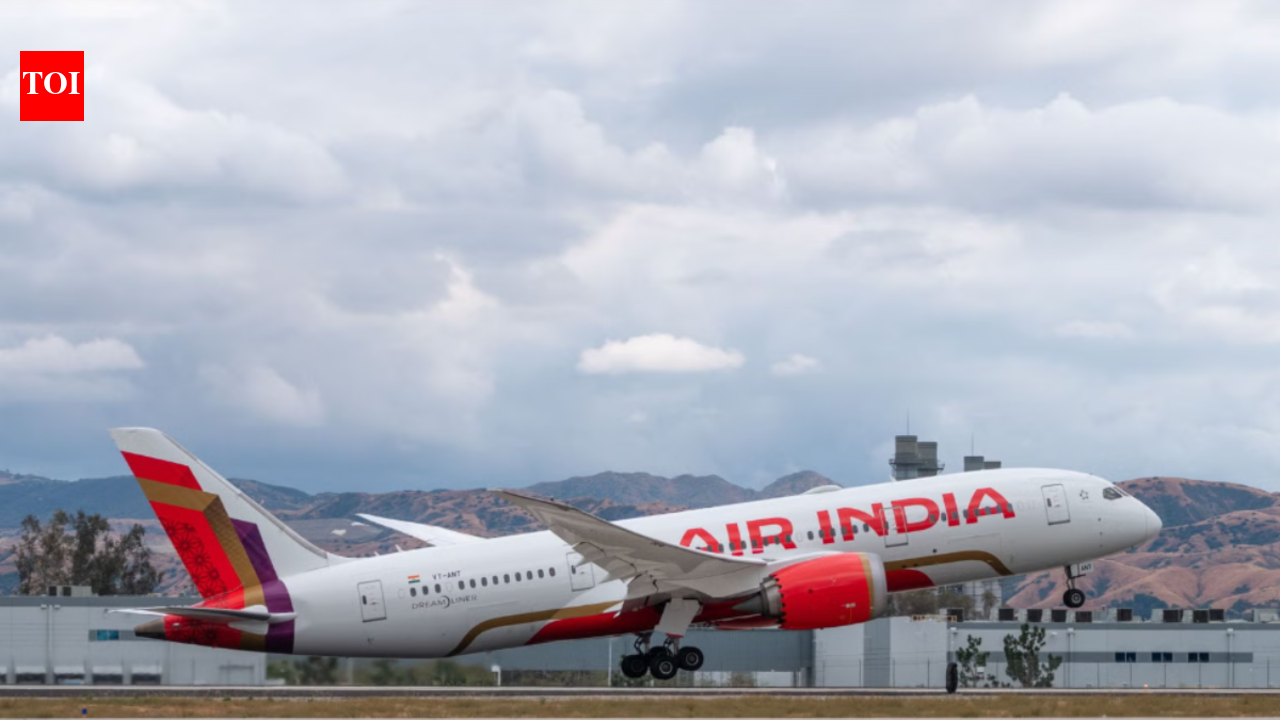
New Delhi: Desperate times call for desperate measures. Full service Air India is planning to make meals optional on its domestic and short international (under two hour) flights. Once this “unbundling” rolls out in the next month or two, passengers opting out of meals could have upwards of Rs 250 shaved off their ticket price. While this move, say people in the know, is “on the anvil,” the airline is looking at several other unprecedented measures to fly through the severe cost-revenue turbulence caused by the unending West Asia war.
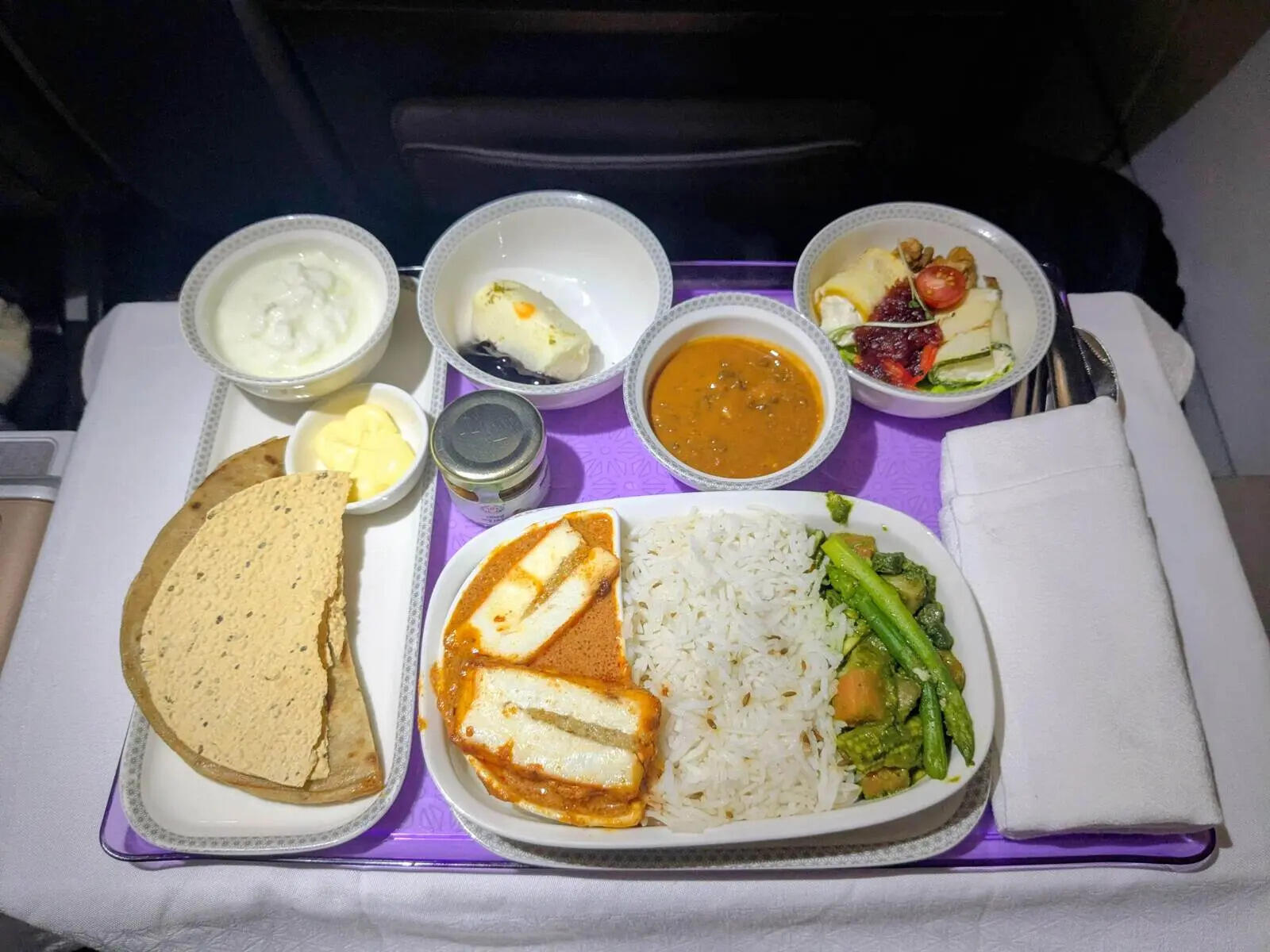
Air India meal
While not opting for meals could lead to slightly cheaper economy tickets, AI is looking at unbundling lounge access for business class passengers because those opting out of this, could get their tickets cheaper. On an average, lounge operators charge Rs 1,100-1,400 per user at metro airports and Rs 600-700 at non metros. The average spend is about Rs 1,000 per lounge. Many business class flyers are frequent travellers who just make it to airports in time for their flight and do not head to the lounge. If unbundled, this could be a saving in their ticket cost. Banks have been reducing lounge access for credit card users for the same reason to cut their costs.“From Day One, Air India has had meals bundled in its ticket price. Now the way aviation turbine fuel (ATF) price is rising and the rupee crashing since Feb 28, ticket prices are going up. India is a price-sensitive market and raising fares beyond a point leads to a fall in traffic with many opting to travel by train or road. This has led to the rethinking to unbundle meals on some flights. Other steps are also being considered,” said people in the know. Several airlines globally have over the past few years unbundled their onboard offerings. Many international full service airlines offer a basic meal in economy while giving the option of buying gourmet meals at an additional cost. Ditto for alcoholic beverages, with cheaper beer and wines being given at no extra cost while the others being charged for. “For passengers, the distinction between full service and low cost airlines is blurring very fast,” said an industry old-timer.Almost all narrow body aircraft being delivered to AI group will be sent to AI Express fleet for lower cost and more revenue as these single class planes have more seats and don’t offer lounge access and free meals. To increase revenue, the group is looking at having ads behind the boarding cards of Air India Express flights — AI boarding cards have the same already. The Iran war has impacted airlines globally and AI is no exception. The Tata group airline has lost about Rs 24,000 crore last fiscal; has sought funds from promoters Tata Sons and Singapore Airlines; is the worst impacted Indian carrier by airspace closures to the west that have made its Europe, UK and North America nonstops much longer and is looking for a new CEO.
Mercedes-Benz and two other lenders are set to challenge the financial watchdog’s compensation scheme for motorists mis-sold car loans.
The Financial Conduct Authority (FCA) faces a legal battle over its redress programme, as a consumer group has also lodged an appeal.
This development follows days after several of the UK’s biggest lenders opted not to pursue similar challenges.
A spokeswoman for Mercedes-Benz said: “Given that this is subject to ongoing legal proceedings, we cannot comment further.”
The German carmaker is exposed to the car finance mis-selling saga through its financial services arm.
The FCA also confirmed that two other lenders were appealing. It did not name the firms but reports have said that Volkswagen Financial Services was one of the companies involved, according to Sky News.
A spokeswoman for the FCA said: “We have received challenges from three lenders in addition to the challenge from Consumer Voice, represented by Courmacs Legal.
“We are considering our approach and will set out more later this week.”
Earlier this week, it appeared that the watchdog had a clearer path to proceed with the compensation plans after the main industry body joined major lenders in backing out of any legal challenge.
The Finance and Leasing Association (FLA) said it had “concerns” about the programme but that it was choosing not to raise a challenge, while Santander, Barclays and Lloyds had also decided to accept the scheme as it is.
The FCA estimates that payouts are due on 12.1 million mis-sold car finance deals from an array of lenders, expected to result in compensation totalling around £7.5 billion.
The deadline for companies to lodge legal challenges to the watchdog’s scheme passed on Monday.
While the lenders are likely to be resisting the billions of pounds of compensation that they are required to pay, the FCA is also being challenged on the other side of the coin by a group representing consumers.
Consumer Voice has applied to the Upper Tribunal for a review of the scheme over concerns that it could leave millions of consumers out of pocket by several hundred pounds per claim.
The consumer group said it supports the need for an industry-wide scheme but argued that it should “fairly reflect” the harm drivers have suffered, with “properly calculated compensatory interest”.

Big US tech stocks swing as investors probe AI spending

Former NFL defensive end Josh Mauro dies at 35
Ford raises 2026 guidance as $1.3 billion tariff refund assists in offsetting higher costs

UK’s Starmer seeks to deflect blame over Mandelson appointment
Us-India Trade Talks: US–India trade deal: Where do talks stand & what to expect – explained – The Times of India
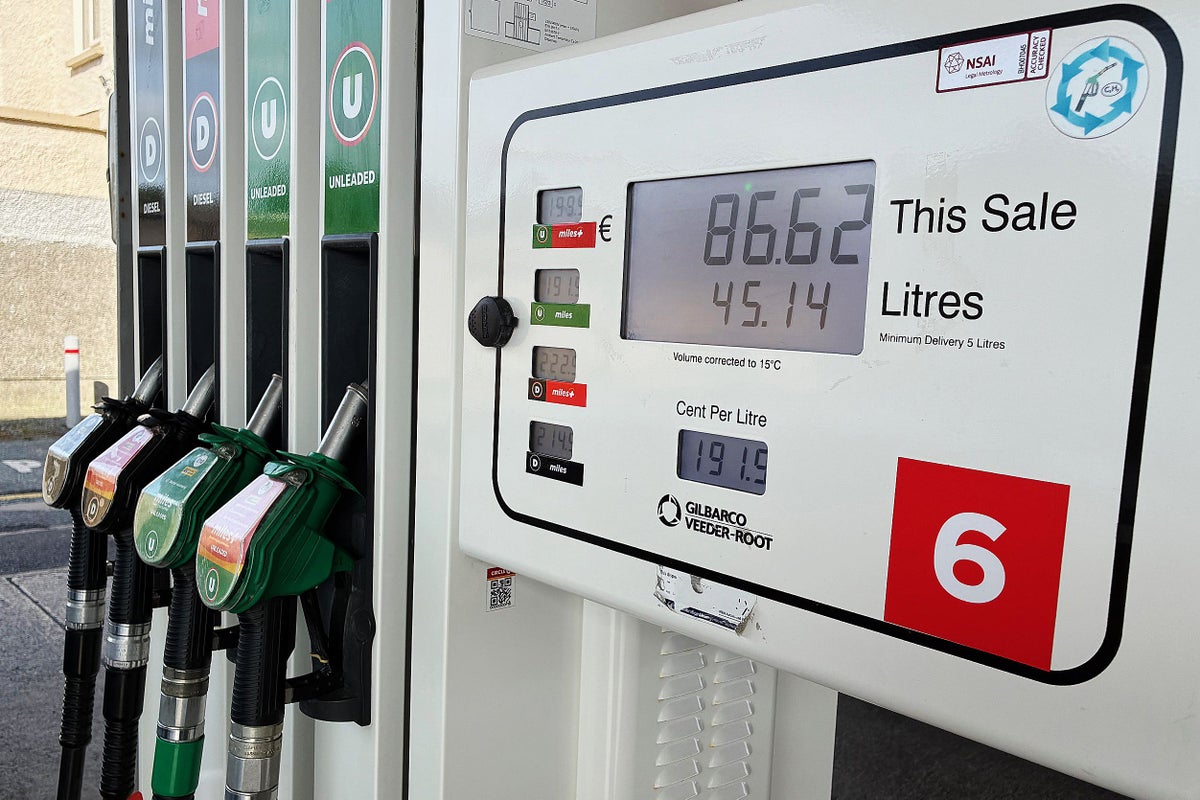
UK inflation accelerates after Iran war drives sharp rise in fuel prices

-
 Politics1 week ago
UK’s Starmer seeks to deflect blame over Mandelson appointment
-
Business1 week ago
Us-India Trade Talks: US–India trade deal: Where do talks stand & what to expect – explained – The Times of India
-
Business1 week ago
UK inflation accelerates after Iran war drives sharp rise in fuel prices
-

 Fashion1 week ago
India, US to resume BTA talks today
-
 Fashion1 week ago
Global energy growth slows to 1.3% in 2025: Report
-

 Tech1 week ago
Nation states responsible for ‘nationally significant’ cyber attacks against UK, says NCSC chief | Computer Weekly
-

 Entertainment1 week ago
Christina Applegate exhibits strength amid ‘health issues’
-
 Tech1 week ago
Microsoft faces court battle in £2bn Windows Server class action | Computer Weekly