

Politics
Cash-strapped Taliban look to airspace for windfall

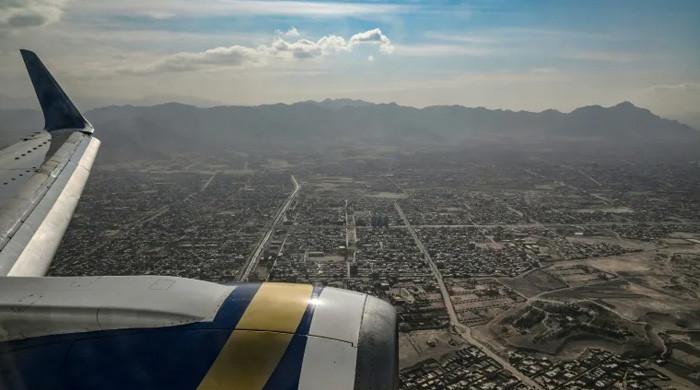
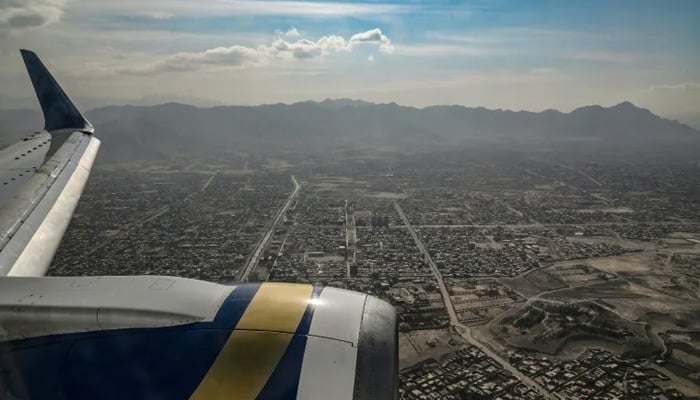
Far above Kabul, the cash-strapped Taliban government has located a potentially lucrative revenue stream: Afghanistan’s airspace.
As Israel and Iran’s exchange of missiles threw flight paths into disarray this year, the skies above Afghanistan offered carriers a less turbulent and faster route to ply — for a flat $700 overflight fee, according to industry insiders.
The US aviation authority eased restrictions on the country’s airspace and paved the way for commercial flyovers in 2023, two years after the Taliban takeover.
Airspace that had long been avoided — as the country endured four decades of war and shifting powerbrokers — suddenly became a viable option, allowing carriers to abbreviate routes and save on fuel costs.
But it was not until the 12-day war between Iran and Israel in June that the route really gained traction, allowing the Taliban government to potentially rake in millions.
Faced with shuttered airspace over Iran and Iraq, and unpredictable openings and closures across the Middle East, airlines saw reason to divert course and found refuge over Afghanistan.
While missiles clogged the neighbouring airspace, “the risk of flying over Afghanistan (was) virtually zero”, said France-based aerospace and defence consultant Xavier Tytelman.
“It’s like flying over the sea.”
May’s average of 50 planes cutting through Afghanistan each day skyrocketed to around 280 after June 13, when war erupted in the neighbourhood, data from tracking website Flightradar24 showed.
Since then, in any given day, more than 200 planes often traverse Afghanistan — equivalent to roughly $4.2 million a month, though this figure is difficult to verify as the authorities do not publish budgets and have declined to comment.

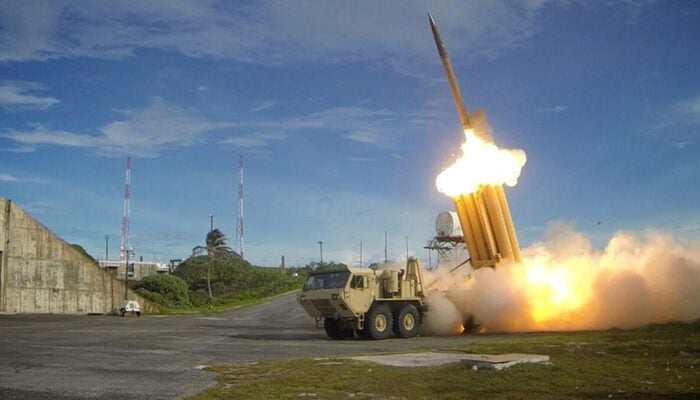
The United States military used up nearly half of its Patriot interceptor missile stockpile during its seven-week campaign against Iran, according to an analysis by the Center for Strategic and International Studies (CSIS).
A report by Washington-based outlet The Hill highlighted significant depletion across several key munitions, citing the CSIS analysis, and raised concerns about Washington’s preparedness for a potential conflict with China.
According to the CSIS study released on Tuesday, US forces fired almost 50% of their Patriot missiles during the operation. More than half of Terminal High Altitude Area Defence (THAAD) interceptors were also used, alongside over 45% of Precision Strike Missiles (PrSMs), during the air and missile campaign in Iran.
The analysis further found that more than 20% of Joint Air-to-Surface Standoff Missiles (JASSMs), over 30% of SM-3 interceptors and at least 10% of SM-6 missiles were expended as part of Operation Epic Fury.
CSIS warned that rebuilding stockpiles — including Tomahawk cruise missiles and JASSMs — to pre-operation levels could take between one and four years. These weapons, it noted, would be vital in any future conflict in the Western Pacific.
“Even before the Iran war, stockpiles were deemed insufficient for a peer competitor fight. That shortfall is now even more acute and building stockpiles to levels adequate for a war with China will take additional time,” the report’s authors wrote.
While the US is still likely to retain enough munitions to continue operations against Iran, the remaining inventory would fall short in a confrontation with a major adversary such as China, the report added.
Amid these concerns, the United States Central Command (Centcom), which led the Iran campaign, said its forces are actively rebuilding capacity during the ceasefire. In a social media message, CENTCOM said its “forces remain ready”.
Speaking alongside US Defence Secretary Pete Hegseth, Centcom commander Admiral Brad Cooper said: “We are rearming. We’re retooling, and we’re adjusting our tactics, techniques and procedures.”
“There is no military in the world that adjusts like we do, and that’s exactly what we’re doing right now during the ceasefire,” he added.
The findings come as President Donald Trump earlier held talks with leading defence contractors in March, after which he said production of “exquisite class” weapons would be increased fourfold.
Responding to the report, Pentagon chief spokesperson Sean Parnell defended the military’s capabilities, telling The Hill that the US remains fully equipped.
“The US military is the most powerful in the world and has everything it needs to execute missions at the time and place of the President’s choosing,” he said.
“As Secretary [Pete] Hegseth has highlighted numerous times, it took less than 10% of American naval power to control traffic in and out of the Strait of Hormuz. Since President Trump took office, we have executed multiple successful operations across combatant commands while ensuring the US military possesses a deep arsenal of capabilities to protect our people and our interests,” Parnell said in a statement. “Attempts to alarm Americans over the Department’s munitions stockpiles are both ill-informed and dishonourable.”
Meanwhile, Pentagon comptroller Jules ‘Jay’ Hurst said officials are planning to expand multi-year munitions contracts to as long as seven years, aimed at strengthening supply chains and encouraging sustained investment. The move forms part of the administration’s proposed $1.5 trillion defence budget.
“Once Operation Epic Fury ends, the naval assets sent to the Middle East will return to the Pacific. Munitions inventories will start to recover, but restoring depleted stockpiles and then achieving the desired inventory levels will take many years,” the report’s authors, Mark F. Cancian and Chris H. Park, wrote.

- US blockade of Iran ports to continue even during ceasefire.
- Trump says closing strait risks Iran losing $500m daily.
- Israel-Lebanon ceasefire talks set for Thursday.
WASHINGTON: President Donald Trump extended the US ceasefire with Iran to allow more time for peace talks, with Tehran silent on the decision early Wednesday.
Trump indefinitely pushed back the end of the two-week truce, crediting a request from mediator Pakistan and stressing the need to give Iran’s “fractured” leadership time to form a proposal. But he said the US blockade of Iran’s ports — a sticking point for Tehran — would continue.
In a Truth social post on Tuesday, the US president accused Iran of wanting to keep the Strait of Hormuz open “so they can make $500 Million Dollars a day,” which he said the Gulf nation would risk losing if it remains closed.
Trump insisted in the post that keeping a US blockade of the strait, a critical waterway for about a fifth of the world’s oil and natural gas exports, is vital for forging a deal with Iran.
“People approached me four days ago, saying, ‘Sir, Iran wants to open up the Strait, immediately.’ But if we do that, there can never be a Deal with Iran, unless we blow up the rest of their Country, their leaders included!,” Trump said in the post.
In an earlier social media post, Trump indicated that he had no desire to extend the ceasefire and had warned of a resumption of bombing when it expired.
“I have… directed our Military to continue the Blockade and, in all other respects, remain ready and able, and will therefore extend the Ceasefire until such time as their (Iran’s) proposal is submitted,” Trump wrote on social media.
Ahead of Trump’s eleventh-hour intervention, it had been unclear when the original ceasefire would expire, with Pakistan indicating it would end at 2350 GMT Tuesday.
This moment came and went with no reports of new military activity by Iran, which had said the ceasefire would end at 0000 GMT. Iran are yet to respond to Trump’s ceasefire extension.
The fate of peace talks hosted by Pakistan was left hanging in the balance following Trump’s announcement.
A White House official confirmed that Vice President JD Vance would not travel to Pakistan for talks on Tuesday as previously planned, pending the submission of an Iranian proposal.
Islamabad lockdown
Strict security measures were adopted on Tuesday in Islamabad which was virtually shut down, even as no Iranian-US meeting was fixed.
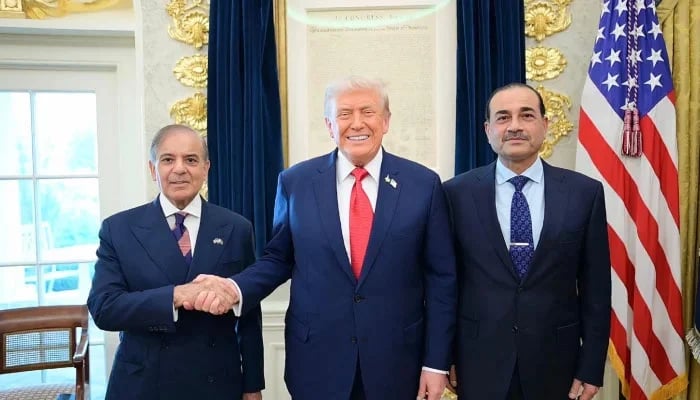
Prime Minister Shehbaz Sharif thanked Trump for extending the ceasefire, with UN Secretary General Antonio Guterres also welcoming it.
As the original ceasefire deadline drew in, Iran preemptively threatened to attack its Gulf neighbors’ oil production facilities if their territory was used to attack it once the ceasefire expired.
Since the first round of talks in Islamabad, Trump announced a blockade of Iranian ports, which US Treasury Secretary Scott Bessent said would remain in place.
“In a matter of days, Kharg Island storage will be full and the fragile Iranian oil wells will be shut in,” Bessent said in an X post Tuesday, adding that constraining Iran’s maritime trade will target its “primary revenue lifelines.”
He warned: “Any person or vessel facilitating these flows-through covert trade and finance risks exposure to US sanctions.”
The US Defence Department said Tuesday that its forces intercepted and boarded a “stateless sanctioned” vessel as part of Washington’s efforts. AFP has identified the vessel as one affiliated with Iranian activity.
Both sides have accused the other of ceasefire breaches.
‘Cursed ceasefire’
Residents in the Iranian capital who spoke to Paris-based AFP journalists say life has only worsened despite the truce.
“This cursed ceasefire has broken us,” said Saghar, 39. “I don’t know anyone around me who is doing well.”
Experts said Iran’s noncommittal public stance was an attempt to put pressure on Washington.
“The current standoff between the United States and Iran is no longer a clash of capabilities but rather a struggle of political endurance and bargaining leverage,” Daniel Byman of the Center for Strategic and International Studies wrote in a commentary.
Despite the ongoing uncertainty, stocks rose on Tuesday amid lingering hopes for a deal to end the conflict.
Israel-Lebanon talks
On another front in the war, Israel and Lebanon, which have no diplomatic relations, will hold fresh talks in Washington on Thursday, a State Department official told AFP.
A separate 10-day ceasefire was agreed between the two nations on Friday and included Hezbollah, whose rocket fire in support of Iran drew Lebanon into the wider Mideast conflict.
Sporadic violence has continued, and Israel’s military warned civilians against returning to dozens of villages in southern Lebanon.
Israeli attacks on Lebanon have killed at least 2,454 people since the start of the war, a Lebanese government body said in its latest toll.
Hezbollah said it launched an attack on northern Israel on Tuesday in retaliation for what it said were Israeli violations of the ceasefire, the first such claim since the truce began.
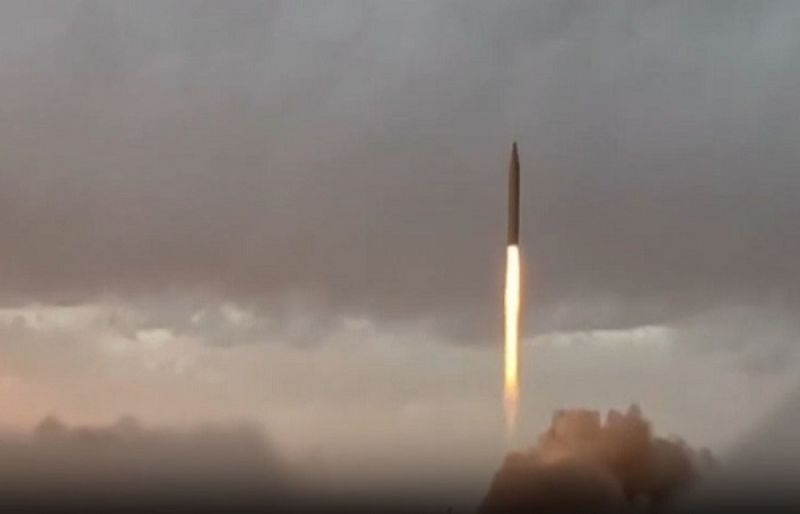
Iran has fully prepared for the possible resumption of war as the ceasefire deadline approaches, with new surprises ready for any new round of imposed war, the Tasnim News Agency reported on Tuesday, citing informed sources.
According to the report, the US naval blockade announcements and Washington’s excessive demands have prevented the formation of new negotiations as the agreed ceasefire period nears its end.
“Iran is fully prepared for the possibility of a new war and has prepared new surprises for a potential new round of combat,” the report said.
The sources told Tasnim that over the past two weeks, Iran has taken the possibility of renewed war seriously.
“Accordingly, some military movements and new target lists have been prepared for this purpose,” the report added.
Iran is ready to create “another hell” for Americans and Israelis from the very beginning of any potential new war, the sources said.
The United States and Israel launched their unprovoked, illegal war of aggression against Iran on February 28, assassinating the Leader of the Islamic Revolution, Ayatollah Seyyed Ali Khamenei, and striking nuclear facilities, schools, hospitals and bridges, along other civilian sites.
Iran’s armed forces responded with 100 waves of decisive retaliatory strikes under Operation True Promise 4, launching hundreds of ballistic and hypersonic missiles, as well as drones, against American military bases across West Asia and Israeli positions throughout the occupied territories.
A two-week ceasefire, brokered by Pakistan, took effect following the intense 40-day war. However, tensions have remained high.
The United States has declared plans for a naval blockade of Iranian ports, a move Tehran has condemned as provocative and a violation of the ceasefire.
Iranian officials have repeatedly warned that any US attempt to impose a blockade or conduct mine-sweeping operations in the Strait of Hormuz will be met with a decisive military response.
Iranian Foreign Minister Abbas Araghchi has previously accused Washington of bad faith, citing repeated US violations of the ceasefire, threats against Iranian shores and vessels, and continuous contradictions in American statements.
Tehran has made it clear that while it remains committed to diplomacy, it will not accept diktats or conditions imposed by the United States.


Oil prices fluctuate as Trump extends Iran war ceasefire

Chaos reigns in Asian Champions League after VAR intervenes over substitution

Italy’s inflation edges up to 1.7% in March: Istat

-

 Fashion6 days ago
France’s LVMH Q1 revenue falls 6%, shows resilience amid Iran war
-

 Entertainment7 days ago
Is Claude down? Here’s why users are seeing errors
-
 Business1 week ago
Delta Air Lines unveils first new Delta One suite in premium cabin arms race
-

 Fashion1 week ago
Asia claims largest share of markets on Kearney FDI Confidence Index
-

 Sports7 days ago
PSL 11: Peshawar Zalmi win toss, opt to field first against Quetta Gladiators
-

 Tech1 week ago
The Deepfake Nudes Crisis in Schools Is Much Worse Than You Thought
-

 Tech1 week ago
Bremont Is Sending a Watch to the Moon’s Surface
-
 Business1 week ago
BP sees ‘exceptional’ oil trading result as Iran war sends crude costs soaring