

Business
Cava, Chipotle and other fast-casual restaurant chains are finally hit by consumer slowdown


Cava stock tumbled 16% in afternoon trading on Wednesday, making it the latest fast-casual chain to feel Wall Street’s wrath after reporting disappointing quarterly sales.
A year ago, eateries like Chipotle Mexican Grill and Cava were reporting double-digit same-store sales growth, even as the broader restaurant industry posted falling traffic and slumping sales. But times have changed. This spring, fast-casual chains saw foot traffic decline as sales slowed down or even shrank.
To explain the downturn, executives have said that diners are “cautious,” in the words of Sweetgreen CEO Jonathan Neman, or dealing with an economic “fog,” according to Cava CFO Tricia Tolivar.
And just as diners are finding reasons why to cut back on their Shake Shack burgers or Chipotle bowls, investors are trimming their fast-casual holdings after rewarding the companies last year for outperforming the rest of the industry. So far in 2025, Shake Shack shares have fallen 16%; Chipotle stock has slid 28%; Cava shares have tumbled 37%; and Sweetgreen stock has plunged 70%. Of the notable publicly traded fast-casual chains, only Wingstop has managed to stay in the green this year, with gains of 20%.
More broadly, investors have grown more cautious about betting on any restaurants, given weak traffic trends and concerns about consumer spending, according to a research note on Sunday from UBS. Even fast-food companies have struggled with the traffic declines and sluggish sales growth, despite their historical reputation as a safer bet during economic uncertainty.
While some fast-casual chains flagged company-specific reasons for their weaker-than-expected results, executives also said that economic uncertainty is weighing on consumers – and hurting their sales.
Generally, fast-casual diners are higher income and more likely to have white-collar jobs. However, Chipotle CEO Scott Boatwright blamed a pullback from low-income consumers for the chain’s same-store sales declines of 4% in the second quarter.
“You have to look no further than what’s going with our competitors with snack occasions or $5 meals. That’s where the consumer is drifting towards, [with] value as a price point, because of low consumer sentiment. I think as sentiment improves, the business will improve. I think that’s probably the biggest headwind we face,” he told analysts on the company’s earnings conference call on June 23.
The University of Michigan’s index of consumer sentiment slid in April to 52.2, one of its lowest-ever recorded readings. It held at that level in May before rising in June to 60.7.
Fast-casual chains are seeing consumers’ economic anxieties in their own research, too.
“Through our regular consumer research, we hear concerns about elevated prices, future job prospects and general anxiety about the future,” Wingstop CEO Michael Skipworth said on the company’s earnings conference call in late July.
The chicken wing chain reported same-store sales declines of 1.9% for the quarter, a dramatic reversal compared to its growth of 28.7% in the year-ago period.
On the company’s earnings conference call on Thursday, Sweetgreen’s Neman said that the chain saw “a more cautious consumer environment starting in April” — coinciding with the drop in consumer sentiment. A “subdued industry backdrop,” particularly in several of the chain’s biggest urban markets, contributed to Sweetgreen’s “really, really rough quarter,” according to Neman.
That’s one reason why the salad chain reported a steeper-than-expected decline in its same-store sales and cut its full-year forecast for the second straight quarter. Sweetgreen executives also attributed the weak quarterly performance to a tough comparison to last year’s steak launch and the transition of its loyalty program.
To improve its value perception among customers, Sweetgreen is increasing its chicken and tofu portions by 25%, improving its chicken and salmon recipes and implementing some promotional pricing, like $13 menu bowl drops for its loyalty program members.
As for Cava, the company had been wowing investors with impressive same-store sales growth since its initial public offering two years ago. But this quarter, the Mediterranean chain reported same-store sales growth of 2.1%, well below Wall Street projections of 6.1%. Executives said that it faced difficult comparisons to the year-ago period’s same-store sales growth of 14.4%, which was fueled by its own steak launch and strong demand at newer restaurant locations that waned this year.
“Cava isn’t so special after all. After blowing out same store sales in Q1 of 10.8%, it fell in line with the industry at 2.1% in Q2. It’s not negative, so that’s helpful,” Tracey Ryniec, stock strategist at Zacks Investment Research, said.
Cava executives also acknowledged that economic concerns are weighing on diners.
“Certainly, we’re operating in a fluid macroeconomic environment and it’s one that sort of creates a fog for consumers where things are changing constantly and it’s hard to see the clear. And during those times, they tend to step off of the gas,” Tolivar said on the company’s conference call on Tuesday evening.
Still, Cava isn’t seeing consumers trade down to cheaper protein options, or experiencing any other deeper business concerns, co-founder and CEO Brett Schulman said. And as it enters the third quarter, its same-store sales have improved, Tolivar said.
And Cava isn’t the only fast-casual eatery anticipating a return to form in the latter half of the year, especially as consumer sentiment improved in June and July.
Chipotle said its traffic started growing again as the burrito chain exited the quarter and continued into July. Sweetgreen has seen “modest” improvement in its same-store sales so far into the third quarter, according to Neman.
And while Wingstop executives said that they’re still seeing weaker consumer demand, the chain is facing easier comparisons to last year’s performance.



Business
Crude oil prices in focus: OPEC+ increases output by 206,000 bpd amid Middle East tensions – The Times of India
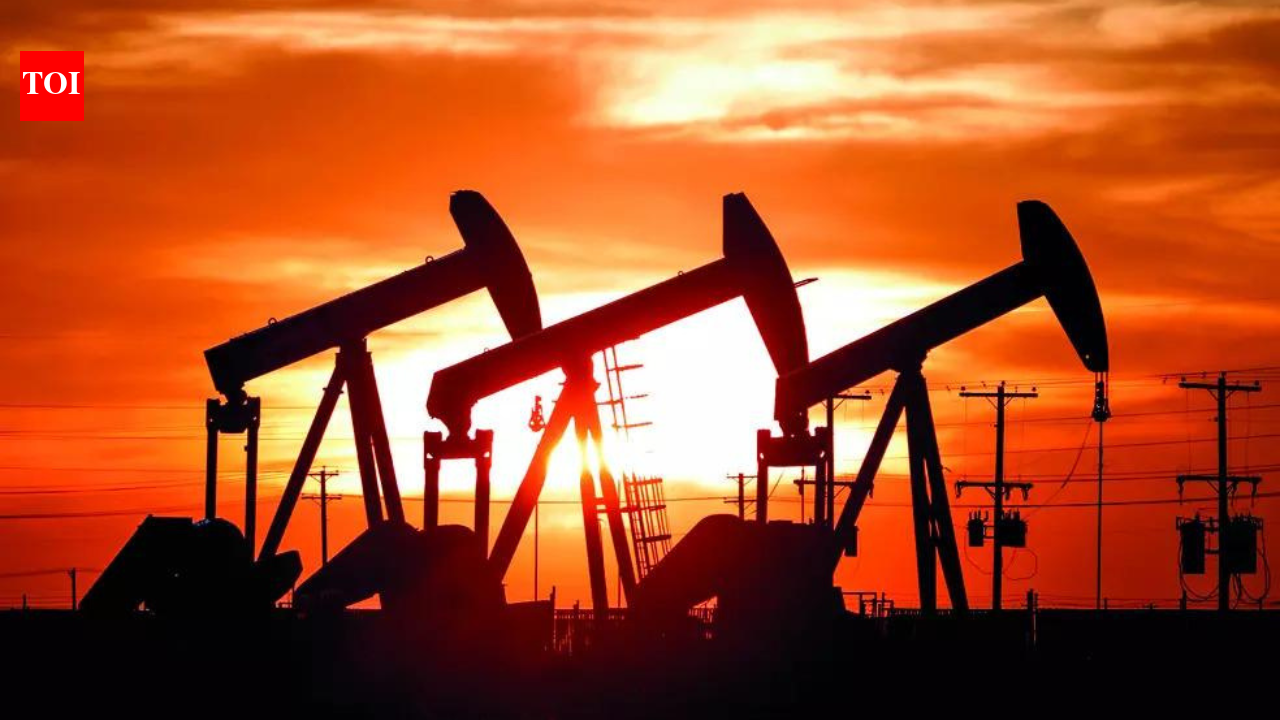
OPEC+ on Sunday announced a higher-than-expected increase in oil production quotas, days after US and Israeli strikes on Tehran triggered Iranian retaliation across the Middle East, according to AFP.The oil producers’ group, which includes Saudi Arabia, Russia and several Gulf states affected by the escalation, said it had “agreed on a production adjustment of 206 thousand barrels per day”.“This adjustment will be implemented in April,” OPEC+ said in a statement.While the cartel did not directly refer to the Iran conflict, it cited “a steady global economic outlook and current healthy market fundamentals” as the rationale behind the output increase.The move comes amid heightened geopolitical tensions in the Middle East, a region critical to global crude oil supply.
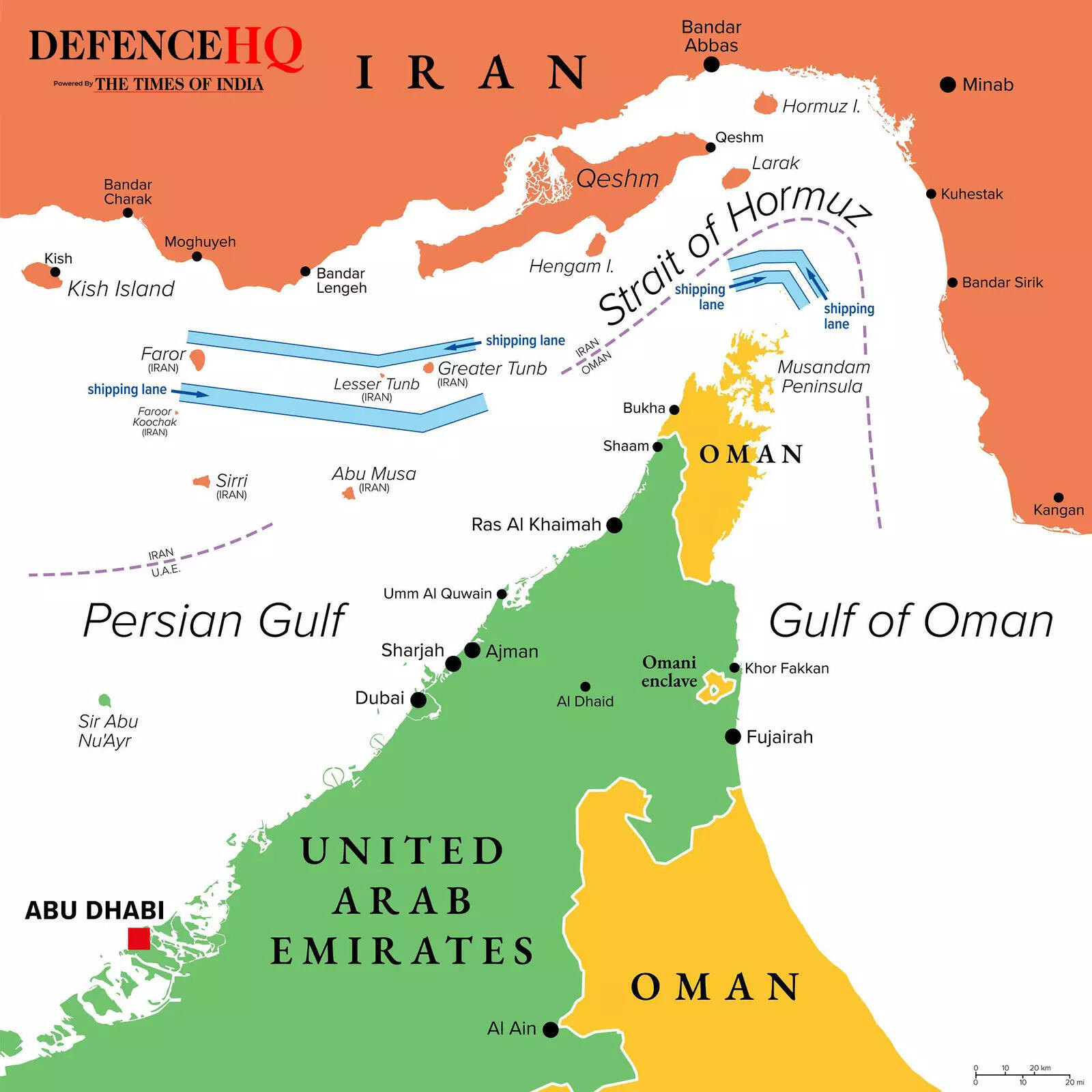
The announcement did not directly reference the outbreak of the Iran conflict, instead attributing the decision to “a steady global economic outlook and current healthy market fundamentals”.Before the meeting, analysts had projected a more modest increase of 137,000 barrels per day.However, Jorge Leon, an analyst at Rystad Energy, cautioned that the agreed hike may not be sufficient to offset the potential impact of escalating tensions on crude oil markets.Leon highlighted the risk of disruption in the Strait of Hormuz, a critical waterway through which nearly a quarter of the world’s seaborne oil supplies transit.Iran’s Revolutionary Guards have reportedly contacted vessels to declare the strait closed. Iranian state television on Sunday said an oil tanker attempting to “illegally” pass through the strait was struck and was sinking, broadcasting footage of a burning tanker at sea.“If oil cannot move through Hormuz, an extra 206,000 barrels per day does very little to ease the market,” Leon said, adding that “logistics and transit risk matter more than production targets right now”.He said the OPEC+ move “is unlikely to calm markets”, noting that “prices will respond to developments in the Gulf and the status of shipping flows, not to a relatively small increase in output.”Apart from Russia and Saudi Arabia, the V8 group includes Kuwait, Oman, Iraq and the United Arab Emirates — all of which were targeted by Iranian attacks for a second consecutive day on Sunday. Algeria and Kazakhstan are also part of the group.
Greggs is to shed light on demand from customers as the high street bakery chain contends with the rise of weight loss treatments and cost of living pressures on shoppers.
The high street chain is also wrestling with other factors including increases to labour costs and tax changes.
As a result, on Tuesday March 3, Greggs is expected to reveal pre-tax profits of around £173 million for the year to December 27, representing a 9% drop.
In its previous update shortly after Christmas, Greggs pointed to a strong finish to 2025 as sales growth accelerated in the final quarter of the year.
Like-for-like sales growth rose from 1.5% in the third quarter to 2.9% in the final months of 2025.
Totals sales were up 7.4% in the final quarter amid a boost from the group’s continued store opening programme.
The company opened 121 stores last year.
However, analysts at Deutsche Bank said expectations “have already been set low” for 2026 and are “unlikely to change”.
In January, Greggs said it was “cautious but hopeful” about its outlook for 2026, highlighting “subdued” consumer confidence.
Roisin Currie, chief executive of Greggs, also warned alongside its previous update that there was “no doubt” appetite-suppressing medication is having an impact on the bakery chain’s business.
It may provide more detail on how this continues to change customer eating habits.
Meanwhile, the group also announced that inflation was likely to be shallower than last year.
The group increased the price on a number of products and deals last year, so shareholders will also be keen to see how these changes have continued to impact trading.
Aarin Chiekrie, equity analyst at Hargreaves Lansdown, said: “Investors are keen to hear how 2026 is shaping up in the early months.
“While the picture on the cost front is beginning to look more favourable, Greggs has plenty of other challenges still to wrestle with.
“Unhelpful changes to tax rules and minimum wages, slowing UK economic growth, and cost-conscious consumers are all weighing on the outlook.”
Business
Chief of Staff of the Iranian Armed Forces Confirmed Martyred in US, Israeli Strikes – SUCH TV

Major General Seyed Abdolrahim Mousavi, the Chief of Staff of Iran’s Armed Forces, attained martyrdom in a cowardly Israeli-American aggression on Saturday.
Leader of the Islamic Revolution, Ayatollah Seyyed Ali Khamenei, was also martyred in the Saturday aggression, alongside many top-ranking military commanders and defense officials.
Major General Mousavi succeeded Major General Mohammad Bagheri following the 12-day war in June last year and carried forward the remarkable legacy of his predecessor.
He played a particularly vital role in the June 2025 war, leading the Iranian armed forces in their retaliatory operations that forced the Israeli regime to beg for surrender.
Mousavi previously served as the commander-in-chief of the Islamic Republic of Iran Army and played an instrumental role in bolstering the might of the army.
On August 21, 2017, he was promoted from Brigadier General to Major General and appointed Commander-in-Chief of the Islamic Republic of Iran Army by the Leader, replacing Seyed Ataollah Salehi.
Later, on May 28, 2019, Ayatollah Khamenei appointed him as the commander of the Khatam al-Anbia Air Defense Base, while he continued to serve as the army’s top commander.
Mousavi was born in 1960 in the holy city of Qom in central Iran. He was a graduate of the Army’s Ground Forces Officers’ University and held a doctorate in defense studies from the Supreme National Defense University. He joined the Iranian army in 1979.
During the years of the Imposed War in the 1980s, Major General Mousavi served in the Army’s artillery unit on various fronts, including the western battlefields in Kurdistan (28th Kurdistan Division) and the southwestern fronts (33rd Artillery Group of the Ground Forces) in Khuzestan province.
He participated in many operations such as Valfajr 4, Valfajr 9, Beit al-Moqaddas 5, Qader, Nasr, and several others. He is recognized as a veteran of the war.
After the Imposed War ended in 1997, he completed the Advanced Command and Staff Course (DAFOS) and later earned a doctoral degree in defense management at the Supreme National Defense University.
From 1999 to 2005, he served as the Chief of Joint Staff of the Army, and from 2008 to 2016, he was Deputy Commander-in-Chief of the Army. Following that, from 2016 to 2017, he held the position of Deputy Chief of Staff of the Armed Forces.
Mousavi held several significant leadership positions within Iran’s military. From 1999 to 2005, he served as the Chief of Joint Staff of the Army, later assuming the role of Deputy Commander-in-Chief from 2008 to 2016.
In 2016, he was appointed Deputy Chief of Staff of the Armed Forces, a position he held until 2017, when he was named Commander-in-Chief of the Islamic Republic of Iran Army, a role he held until today.
Additionally, since May 2019, served as the Commander of the Khatam al-Anbia Air Defense Base, further solidifying his central role in the country’s military strategy and operations.
Major General Mousavi also served as the Commander of Imam Ali (PBUH) Officers’ University, where he contributed to the training and development of military personnel.
He also led the Army’s Northeast Operational Base, overseeing strategic operations in the region.
In addition, he was the Deputy for Training and the Deputy for Planning and Programs within the Army Ground Forces, playing a key role in shaping military preparedness and strategy.
Mousavi’s expertise in operations led to his appointment as the Head of Operations for the Army, and later, he became the Director of the Army Strategic Studies Center, where he engaged in high-level research and policy development.


T20 World Cup 2026: India win toss, opt to bowl against West Indies

This Backyard Smoker Delivers Results Even a Pitmaster Would Approve Of
Crude oil prices in focus: OPEC+ increases output by 206,000 bpd amid Middle East tensions – The Times of India

-
 Business1 week ago
US Top Court Blocks Trump’s Tariff Orders: Does It Mean Zero Duties For Indian Goods?
-

 Fashion1 week ago
ICE cotton ticks higher on crude oil rally
-

 Entertainment1 week ago
The White Lotus” creator Mike White reflects on his time on “Survivor
-
 Politics1 week ago
Pakistan carries out precision strikes on seven militant hideouts in Afghanistan
-
 Business1 week ago
Eye-popping rise in one year: Betting on just gold and silver for long-term wealth creation? Think again! – The Times of India
-
 Sports1 week ago
Brett Favre blasts NFL for no longer appealing to ‘true’ fans: ‘There’s been a slight shift’
-

 Entertainment1 week ago
Viral monkey Punch makes IKEA toy global sensation: Here’s what it costs
-

 Sports1 week ago
Kansas’ Darryn Peterson misses most of 2nd half with cramping