Connect with us

Fashion

Chanel emerges as fastest-growing luxury fashion brand in 2025: Report

Published

on

Chanel emerges as fastest-growing luxury fashion brand in 2025: Report
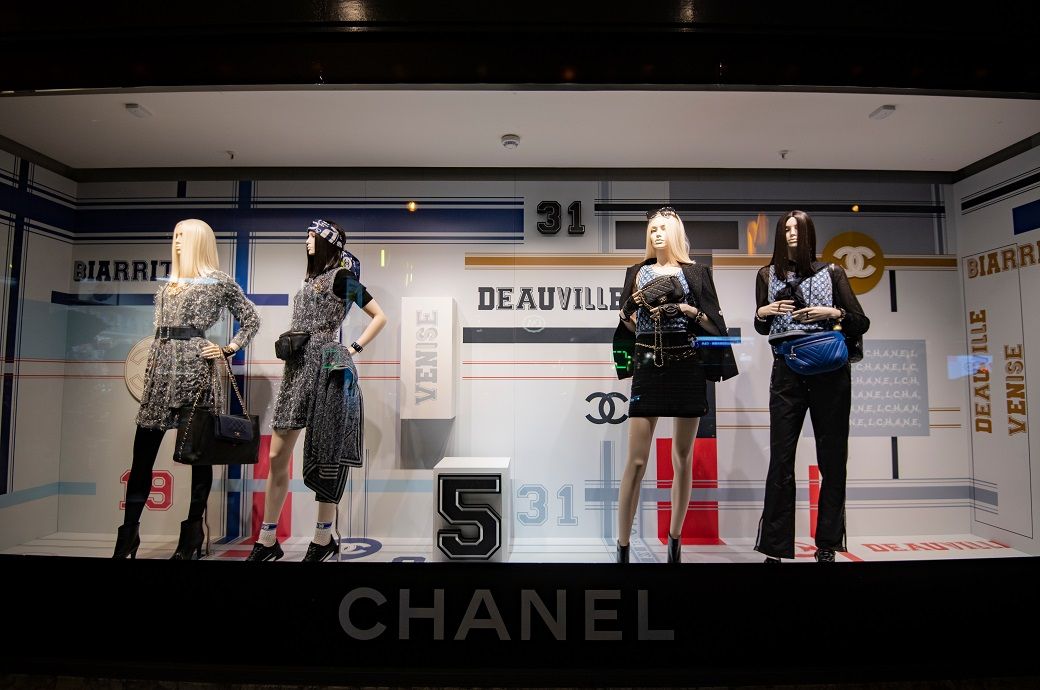


French luxury house Chanel has emerged as the fastest-growing luxury fashion brand, with its value jumping 45 per cent to $37.9 billion, according to Brand Finance’s Luxury & Premium 50 2025 report, lifting it to second place globally among luxury and premium brands.

Louis Vuitton posted modest growth of 2 per cent, taking its brand value to $32.9 billion, though its ranking slipped to third among the world’s most valuable brands. Hermes held on to fourth place, underpinned by its disciplined scarcity approach, craftsmanship-driven positioning, and steady demand across leather goods, apparel, and accessories.

Chanel emerged as the fastest-growing luxury fashion brand in 2025, with brand value surging 45 per cent to $37.9 billion, ranking second globally, as per a recent report.
Apparel-led brands dominated nearly 69.7 per cent of total value.
Louis Vuitton slipped to third despite growth, while Dior was named the strongest brand.
France remained the global luxury hub, followed by Italy and Germany.

Apparel-focused luxury brands dominated the rankings, accounting for nearly 69.7 per cent of total brand value, underscoring fashion’s pivotal role in shaping the global luxury landscape.

Dior strengthened its standing as one of the sector’s most influential fashion houses, with brand value rising 18 per cent to $17.3 billion. Beyond value growth, Dior was named the strongest luxury and premium brand globally, achieving a Brand Strength Index score of 93.5 out of 100. Brand Finance highlighted Dior’s exceptional reputation scores, including a perfect score in the US, alongside strong consideration and recommendation metrics in Europe and North America.

Gucci, despite a 24 per cent decline in brand value to $11.4 billion and a drop to ninth place, remained firmly within the global top 10. Brand Finance noted that while the brand faces a period of transition, its scale, heritage, and global recognition continue to anchor its long-term relevance in luxury fashion.

Geographically, France remained the epicentre of luxury fashion, accounting for 48.7 per cent of total luxury and premium brand value, followed by Italy at 18.4 per cent and Germany at 13 per cent, added the report.

Five of the top 50 brands have earned an esteemed AAA+ brand strength rating—the highest rating awarded by Brand Finance.

Fibre2Fashion News Desk (SG)


Source link

Continue Reading
Click to comment

Leave a Reply

Your email address will not be published. Required fields are marked *

Fashion

Burberry celebrates Year of the Horse 2026 with Shanghai campaign

Published

on

Burberry celebrates Year of the Horse 2026 with Shanghai campaign


Burberry honours the Year of the Horse 2026 with a capsule collection and campaign starring actors and brand ambassadors Chen Kun, Tang Wei, Wu Lei and Zhang Jingyi. Presented through an intimate lens, the campaign celebrates togetherness.

Directed by AJ Duan and photographed by Anton Gottlob in the streets of Shanghai, the hero film captures the poetry of movement in the city’s rush hour – a dance of anticipation as the four characters race towards a reunion. Amid the hum of the streets, fleeting moments of humour, warmth and surprise are revealed like hidden treasures.

Burberry marks the Year of the Horse 2026 with a capsule collection and Shanghai-set campaign starring Chen Kun, Tang Wei, Wu Lei and Zhang Jingyi.
The line reimagines the iconic Knight motif in painterly techniques, anchored in lucky red tones.
Store windows across China and Asia Pacific feature hand-painted designs created with de Gournay and artist Liao Wenjun.

The capsule collection

At the heart of the capsule collection – titled Burberry Year of the Horse Collection – is our house code, the Knight, playfully reinterpreted as a watercolour and ink sketch, brought to life through intricate techniques such as vibrant metallic embroidery, cross-stitch and appliquéd badges.

The horse is a significant motif for Burberry. The original Knight was the winning entry of a public  public competition to design a logo for the house, circa 1901. Imbued with symbolism, it represents protection, innovation and Burberry’s forward-looking spirit.

The collection is grounded in red, a symbol of luck and prosperity in Chinese culture, with scarves and daywear in an exclusive new red Burberry Check.

Outerwear pieces include the Berryhill car coat and Floriston quilted jacket in iridescent nylon, while the gifting offering is expanded through soft accessories, bags and small leather goods detailed with the seasonal Knight.

Window and store display

Burberry has partnered with esteemed British hand painted wallpaper brand de Gournay on window designs throughout stores in China and Asia Pacific. The collaboration celebrates the craft and texture of Xuan paper – the traditional Chinese paper used for calligraphy and painting. Both surface and subject, the paper becomes a canvas for painterly expression and a reflection of artistry and heritage, by Chinese artist Liao Wenjun.

Note: The headline, insights, and image of this press release may have been refined by the Fibre2Fashion staff; the rest of the content remains unchanged.

Fibre2Fashion News Desk (RM)


Source link

Continue Reading

Fashion

Asia-Pacific airfreight holds firm in November despite cooling PMI

Published

on

Asia-Pacific airfreight holds firm in November despite cooling PMI


Global manufacturing activity lost momentum in November as the Purchasing Managers’ Index (PMI) edged down to 50.5, with output and new orders slowing and employment slipping back into contraction, signalling a fragile start to 2026 for global trade and logistics, according to Taiwan-based Diversified Merchandise Corporation (Dimerco). Despite the softer macro backdrop, airfreight demand across Asia-Pacific remains resilient, driven by strong e-commerce flows to North America and Europe.

Across Southeast Asia, pre-Chinese New Year (CNY) activity is creating fresh congestion, with export backlogs, holiday disruptions and surging e-commerce volumes putting pressure on key gateways. To ease bottlenecks, China Airlines Cargo (CK) is shifting its Bangkok operations to the Thai Airways (TG) terminal from January 2026 in a bid to improve handling efficiency. However, regional capacity remains constrained as aircraft delivery delays keep belly capacity close to 2025 levels, crowding major transit hubs including Hong Kong, Taipei, Singapore, Incheon (South Korea) and Narita (Japan), Dimerco said in its January 2026 Asia-Pacific Freight Report.

Global PMI slipped to 50.5 in November, signalling a fragile start to 2026, yet Asia-Pacific airfreight remains resilient, driven by strong e-commerce demand, according to Dimerco.
Taiwan’s AI exports rose 56 per cent YoY, tightening capacity, while pre-CNY demand is straining Southeast Asia.
Intra-Asia air rates are rising, global container capacity is uneven, and ocean markets remain volatile.

Intra-Asia air rates are also set to climb as the annual block space agreement (BSA) renewal season approaches, with average prices expected to rise by around 10-20 per cent.

On the ocean freight side, global capacity continues to grow, though unevenly across trade lanes. The world container fleet expanded 7.3 per cent YoY to 33.2 million Twenty-foot Equivalent Units (TEUs), with most new tonnage deployed on Middle East-Indian Subcontinent, Asia-Africa and Asia-Europe routes. By contrast, transpacific capacity fell 2.9 per cent, reflecting cautious carrier deployment amid weak US import demand.

Shippers remain wary despite a temporary tariff truce between major economies. Market participants expect only a muted rebound in volumes, with lingering uncertainty over whether shipping lines will resume Red Sea transits or continue routing vessels around South Africa, a factor that could significantly alter capacity dynamics in 2026.

Regionally, Southeast Asia is seeing tightening conditions in both air and ocean freight, while India’s air cargo market has eased after the peak season, though winter fog poses a growing risk to flight schedules. Indian ocean freight rates remain broadly stable, but exporters have been advised to build buffer time for potential inland transport delays.

In North America, airfreight demand typically softens after the year-end retail peak but is expected to firm again ahead of Lunar New Year, lifting spot rates. Ocean freight demand remains weak, with abundant capacity keeping pricing under pressure. Europe, meanwhile, faces fresh disruption from strikes across the UK, Spain, Italy and Portugal, reducing air cargo reliability and effective capacity.

“Until trade activity clearly recovers, any early return to the Red Sea could add excess capacity and further disrupt an already fragile market in 2026,” said Ted Chen, director—Ocean Freight at Dimerco Express Group.

“By the end of 2025, several key Intra-Asia lanes, across both air and ocean freight, have reached historical highs, exceeding even pandemic-period levels. This trend has strengthened carriers’ confidence in a robust market outlook for 2026,” said Kathy Liu, VP, global sales and marketing, Dimerco Express Group.

“Ocean freight will be shaped more by capacity imbalances and regional disparities, with potential disruptions linked to any return to Suez Canal routes. Simultaneously, airfreight remains robust, driven by high-tech and e-commerce demands to North America and Europe,” said Catherine Chien, chairwoman of Dimerco Express Group.

Fibre2Fashion News Desk (SG)


Source link

Continue Reading

Fashion

Germany’s Puma appoints Nadia Kokni as senior global marketing leader

Published

on

Germany’s Puma appoints Nadia Kokni as senior global marketing leader


Sports company PUMA has appointed Nadia Kokni as Vice President, Global Brand Marketing, effective January 1, 2026. Nadia joins PUMA’s global leadership team and reports directly to Chief Brand Officer Maria Valdes.

In her new role as PUMA’s most senior global marketing leader, Nadia will oversee brand marketing strategy, brand marketing creative direction, integrated marketing and communication globally. Her appointment comes as PUMA accelerates its global brand ambition and sharpens storytelling around its product icons and innovation pipeline.

Puma has appointed Nadia as its most senior global marketing leader, overseeing brand strategy, creative direction and global communications worldwide.
With senior roles at JD Sports, H&M, Adidas, Tommy Hilfiger and most recently Hugo Boss, she joins as Puma sharpens product storytelling and innovation focus.
Nadia replaces Richard Teyssier and will work closely with chief brand officer Maria Valdes.

Nadia brings deep international experience shaping and transforming leading global brands across the sport, fashion and lifestyle industries. She has held senior leadership roles at JD Sports, H&M, adidas, Tommy Hilfiger, and most recently at Hugo Boss as Senior Vice President of Global Marketing & Communications, where she spearheaded large-scale brand transformation and digital acceleration.

“Nadia is a world-class marketing leader with a proven ability to build modern global brands through strategic clarity, creative excellence and cultural relevance,” said Maria Valdes, Chief Brand Officer at PUMA. “Her appointment comes at an important time for PUMA as we bring product creation and storytelling even closer together. Nadia’s leadership will help us deliver sharper product narratives, stronger brand heat and deeper consumer connections globally.”

Nadia’s appointment follows PUMA’s recent decision to put Brand Marketing, Product, Creative Direction, Innovation and Go-To-Market into a single global organisation led by Chief Brand Officer Maria Valdes.

“I’m delighted to join PUMA at such an exciting moment for the brand, it has a powerful heritage and a clear opportunity to lead at the intersection of sports, culture and performance. I look forward to working with Maria and teams around the world to deliver bold, meaningful storytelling that inspires consumers and accelerates PUMA’s next phase of growth,” said Nadia.

Nadia replaces Richard Teyssier, who has decided to leave PUMA to pursue other opportunities.

Note: The headline, insights, and image of this press release may have been refined by the Fibre2Fashion staff; the rest of the content remains unchanged.

Fibre2Fashion News Desk (RM)


Source link

Continue Reading

Trending