

Business
Children ‘routinely bombarded’ with ads for appearance-changing products online

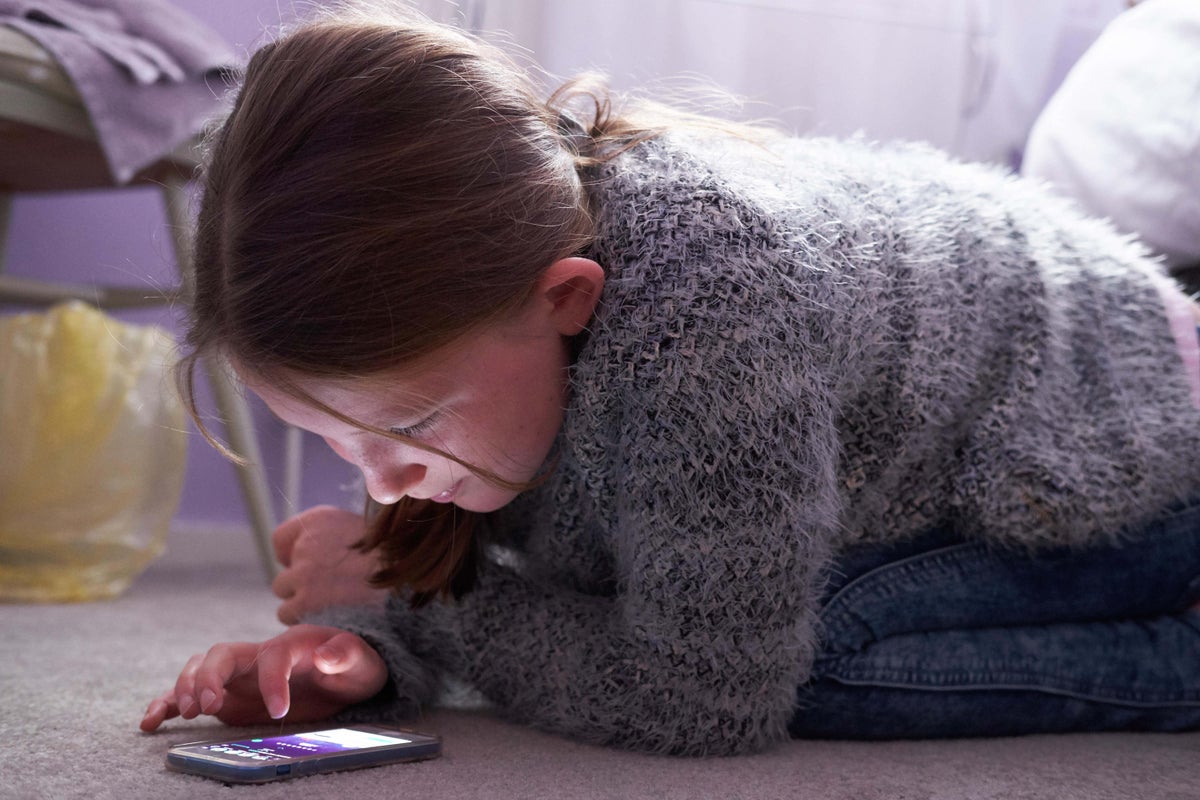
The Children’s Commissioner has called for an urgent end to advertising on social media to children after finding they are being “routinely bombarded” with products that claim to change their bodies and appearance.
Dame Rachel de Souza said children were routinely exposed to harmful appearance-changing products online, including weight loss injections, skin lightening products and steroids.
More than three quarters of children (78%) said the ads negatively impacted their self-esteem, with 41% of 13 to 17-year-olds seeing prescription-only weight loss drugs despite a ban on them being advertised to the public.
Dame Rachel’s report, A healthy influence? Children’s exposure to appearance-changing products online, found more than half of children (54%) had seen exercise and diet plans and 52% had seen ads for food and drink products claiming to aid weight loss.
Some 46% of black children and 35% of Asian children has seen ads for skin lightening products, significantly higher than the 24% of white children who reported seeing them and despite many of these products being illegal to sell in the UK and containing toxic ingredients.
Two thirds of children (66%) had seen teeth whitening products online and more than half of girls (56%) had seen cosmetic procedures such as fillers or Botox, despite these being illegal for under-18s.
Some 8% of children had bought or tried non-prescription pills that claimed to aid weight loss, despite these products often being age-restricted to over-18s, and 21% of children had bought or tried food or drink marketed for weight loss.
Black children were more likely to try these products, as well as exercise and diet plans, than white children, the study found.
Some children reported reactions after buying or trying appearance-changing products online, including infections from eyelash products that contained undisclosed chemicals.
The latest report follows findings from a survey by the commissioner in 2024 that found just 40% of girls and 60% of boys were happy with how they look.
Dame Rachel is calling for an end to all advertising to children on social media by amending the Online Safety Act, changes to Ofcom’s Children’s Code of Practice to explicitly protect children from body stigma content, and stronger regulation and enforcement of online sales of age-restricted products.
Dame Rachel said: “Childhood is a short and precious time, but it is undeniable that children today are facing pressures like never before, with too many children growing up in an online world that takes advantage of their insecurities and tells them they are not good enough as they are.
“Extreme and potentially dangerous appearance changing products are being normalised to children through advertising, influencer culture and online posts, despite many of these products being unsafe, illegal or strictly age-restricted. For their developing and fragile sense of self-esteem, this is immensely damaging.
“Many parts of the online world are not built with children’s best interests at heart. The Government should consider every mechanism available to protect children from harmful content and services, including restricting children’s access to some social media platforms, but a social media ban for under-16s can only be one part of the solution. It is not an immediate guarantee that children will be safer online.
“Any ban must respond to what children think and how they behave online, with a clear plan of how it will be enforced so that it does not drive children to other, darker parts of the internet.
“Urgent action is needed to create an online world that is truly safer by design. We cannot continue to accept an online world that profits from children’s insecurities and constantly tells them they need to change or must be better.”
OnePoll surveyed 2,000 children aged 13 to 17 in December.

Trump said on Saturday that an agreement would include the reopening of the Strait of Hormuz, without giving further details.
Source link

UK high streets and shopping destinations are showing signs of recovery as more than 13 retail stores opened each week over the past year, according to new figures.
However, England and Wales have still seen more than 6,000 retail premises vanish from local communities over the past five years.
Analysis of Valuation Office Agency data by tax firm Ryan, found that there were 507,810 retail premises across England and Wales at the end of 2025.
It said the figures showed that a recent contraction across the sector has appeared to stabilise, with a 723 net increase in the number of retail stores compared with a year earlier.
Property numbers increased across every region of England and Wales, with the exception of the North West, which saw a decline of 41.
It suggests that parts of the sector are now beginning to rebalance following significant structural contraction seen since the pandemic.
The creation of new retail units also comes as many retail real estate firms, such as Hammerson, have turned empty large units, often former department stores, into a greater number of smaller units.
Other retail groups, such as John Lewis, have moved away from ambitions to transform some retail property for other uses such as rental accommodation.
Nevertheless, the retail sector is still facing pressure from higher business rates for many firms, increased labour costs and concerns over consumer sentiment.
The data also shows that there has also been significant decline over the past few years, with a net reduction of 6,045 retail properties since the end of 2020.
London recorded the largest five-year regional reduction, with 1,266 retail premises disappearing over the period, followed by the South East (-1,191), North West (-719) and North East (-672).
The figures show retail premises which have permanently disappeared from communities altogether, having either been demolished or converted for alternative use.
The figures come as Ryan’s 2026 annual business rates review highlighted that the retail sector saw a 9.3% increase in rateable values at the 2026 business rates revaluation despite the major shift in the retail landscape since the pandemic.
Alex Probyn, practice leader for Europe and Asia-Pacific property tax at Ryan, said: “The pandemic accelerated structural changes that were already emerging across the retail sector, including changing consumer behaviour, hybrid working patterns and a reduced reliance on traditional retail floorspace in many locations.
“Many locations were arguably over-retailed before Covid and high streets have evolved towards more mixed-use environments, with retail space being rebalanced alongside growing demand for residential, leisure, hospitality and service-led uses.
“The revaluation outcome does suggest a large proportion of retail premises have seen bigger increases in their assessments than underlying market conditions and rental evidence would have led occupiers to expect.
“Retailers should therefore carefully review and, where appropriate, challenge their assessments.”

Indians sharply cut back on overseas travel spending in March, with remittances for foreign trips dropping by more than $212 million from the previous month, according to Reserve Bank of India data. The fall in outbound travel expenditure came amid rising oil prices linked to the Middle East conflict and persistent pressure on rupee, even as travel remained the single largest component of outward remittances under the Liberalised Remittance Scheme (LRS).In March, travel-related remittances fell to $1.09 billion from $1.3 billion in February and $1.65 billion in January. The decline came at a time when the West Asia conflict pushed oil prices higher and weakened rupee to record lows. Amid the situation, Prime Minister Narendra Modi urged citizens to cut down on foreign travel and adopt measures such as carpooling. Lower overseas travel spending could reduce foreign exchange outflows and help ease pressure on rupee.According to the RBI’s data on outward remittances by resident individuals, travel continued to account for the largest share of money sent abroad under the LRS in March. Total remittances during the month stood at $2.59 billion.The RBI tracks overseas spending across categories including travel, studies abroad, maintenance of close relatives, overseas investments, and property purchases. Under the LRS framework, resident individuals, including minors, can remit up to $250,000 in a financial year for permitted current or capital account transactions.Within the travel segment, the biggest component remained the ‘other travel’ category, which covers holiday spending and international credit card settlements. Indians spent $623.05 million under this category in March, accounting for nearly 57 per cent of total travel-related remittances during the month.Expenditure linked to education travel, including hostel and fee payments, stood at $450.16 million. Business travel, pilgrimage, and overseas medical treatment together accounted for $21.39 million.The data also showed a rise in remittances meant for the maintenance of close relatives abroad. Such transfers increased to $389.78 million in March from $266.18 million in February.At the same time, spending under the ‘studies abroad’ category declined. This category includes payments made for educational services accessed remotely without travelling overseas, such as correspondence courses. Remittances under this head stood at $151.71 million in March, compared to $175.68 million in February and $267.42 million in January.For the financial year 2024-25, Indians remitted a total of $29.56 billion under the LRS. Travel made up the largest portion of this amount at $16.96 billion.The RBI figures further showed that investments by Indians in overseas equity and debt instruments rose significantly to $440.22 million in March from $265.99 million in February.Meanwhile, outward remittances for the purchase of immovable property overseas declined to $38.68 million in March, down from $51.36 million a month earlier.


How Bangladesh turned denim into enviable success story

A Probe Took Incredible Pictures of Mars on Its Way to a Far-Off Asteroid

Tiruppur’s synthetic bet meets the oil wall

-

 Entertainment1 week ago
Where Pete Davidson, Elsie Hewitt stand after breakup: Details revealed
-

 Politics1 week ago
Rising diesel costs from Iran war strain US school budgets
-

 Tech1 week ago
Why Is Your Grill So Dumb? The Best Grills Set Temp Like an Oven
-

 Tech1 week ago
This Solar-Powered Smart Sprinkler Keeps My Lawn Watered Without Any Power Cables
-

 Fashion6 days ago
Nigeria Kwara Garment Factory, KWS Garment Production Village ink pact
-

 Entertainment1 week ago
Princess of Wales praised as ‘step ahead’ of royal family
-

 Fashion1 week ago
India’s Pearl Global’s FY26 revenue crosses $521 mn milestone
-

 Fashion4 days ago
ICE cotton sees mixed trend as rain forecasts weaken sentiment