

Entertainment
China has entered the courtroom

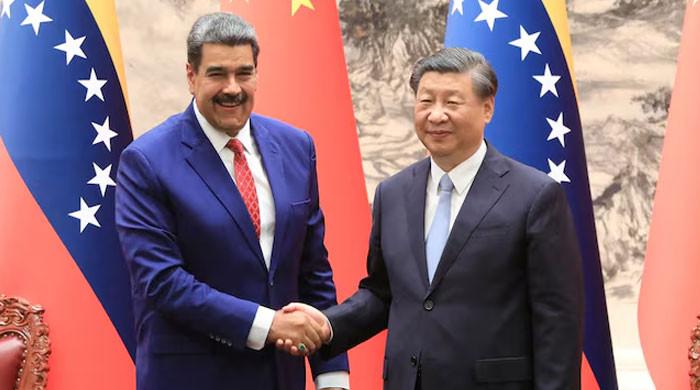
The recent US action in Venezuela, in which President Nicolas Maduro was abducted to the US to face criminal charges, has triggered a dramatic rupture not only in Western Hemisphere geopolitics but also in the assumptions that have underpinned global sovereign lending for decades.
In Washington, the action was cast as a criminal law enforcement action; in Beijing and much of the Global South, it has been seen as an illegal overreach and a weaponisation of US power.
China’s reaction has been especially significant: rather than threatening military escalation, Beijing has framed its response in legal and diplomatic terms, signalling an aggressive defence of contracts, sovereign debt instruments and investment treaties. In doing so, China is asserting that the future of geopolitical competition may be defined as much by law firms and arbitral tribunals as by aircraft carriers.
To understand why this matters, it is necessary to situate the current standoff within the broader context of Chinese overseas lending and the legal frameworks on which it relies. Over the last two decades, China has become the largest lender to developing countries, largely through state policy banks and under the Belt and Road Initiative, which spans infrastructure, mining, energy and other strategic sectors across Asia, Africa, Latin America and beyond.
While authoritative global estimates vary, independent research has documented that Chinese sovereign lending totals well into the hundreds of billions and, by some accounts, over $1 trillion across more than 100 countries. This debt is structured through bilateral agreements, commercial contracts, and in some cases, formal bilateral investment treaties (BITs).
Underlying these arrangements is a foundational legal assumption: when a sovereign borrows money or grants concessions for projects, be it for a railway in Africa, a port in Southeast Asia or energy infrastructure in Latin America, successor governments will honour the obligations undertaken by their predecessors.
This assumption is not merely a matter of bookkeeping; it is a cornerstone of modern sovereign lending and investment. Creditors price risk, investors commit capital, and contractors deploy resources based on the expectation that contracts and treaties will be respected through shifts in political power. International financial institutions, private creditors and commercial lawyers alike depend on this continuity. When that assumption breaks down, the entire edifice of cross-border investment is thrown into question.
That is why China’s response to the operation in Venezuela is so revealing. Rather than responding with threats of force, which would be widely understood as an escalation, Beijing’s public statements have emphasised the illegality of the US action under international law, principles of sovereignty and basic norms of state conduct.
China’s foreign ministry condemned the operation as a violation of the UN Charter and basic norms of international relations, and called on the US to respect Venezuela’s sovereignty, release its president and resolve disputes through negotiation and dialogue. These statements reflect a deliberate framing of the issue in legal terms.
Crucially, recent developments show that China and Venezuela had already been deepening their legal and economic ties. In late 2024, Venezuela ratified a bilateral investment treaty with China, establishing protections such as fair and equitable treatment, full protection and security and most-favoured-nation treatment for covered investments.
The treaty also prescribes mechanisms for resolving disputes, including by arbitration under specified international frameworks. Though China has not yet ratified the treaty, its existence illustrates a legal architecture that both parties have been building around their economic relationship.
This legal framework assumes a functioning sovereign Venezuelan government to which obligations can attach. What happens, though, when that sovereign is violently removed from office at the behest of a rival power and subjected to external legal processes unrelated to the underlying investments?
This is the scenario that motivates the more dramatic claim circulating in some analytical circles that China is prepared to wage “lawyer war” by invoking investment treaties, international arbitration, and global legal institutions to defend its interests and to impose legal costs on governments that fail to honour commitments to Chinese creditors. In other words, Chinese strategy may embrace law itself as a geopolitical instrument.
At first glance, this might sound hyperbolic: how could legal claims match the strategic weight of military force? The answer lies in the nature of China’s global exposure. Unlike traditional Western creditors whose sovereign bonds are often issued under New York or London law with clear enforcement mechanisms, China’s lending is far more diffuse, spread across jurisdictions with varying legal capacities and often backed by project revenues, commodity deliveries, or bilateral conventions.
The enforceability of these obligations has always been uncertain.
If those obligations were suddenly disavowed by successor governments, particularly those aligned with US policy preferences after regime change, the economic consequences for China’s creditors could be devastating. Defaults would accumulate, infrastructure deals would unravel, and Chinese capital would be at risk of losses on a scale that dwarfs any single bilateral dispute. Legal action is one lever to prevent that outcome.
Viewed through this lens, China’s emphasis on legal norms and international adjudication is not merely about Venezuela; it is about protecting the institutional underpinnings of its global lending model. Treaty protections, arbitral forums and bilateral investment agreements are mechanisms through which sovereign obligations can be enforced or at least negotiated when disputes arise.
If China can successfully bring claims against a post-Maduro Venezuelan government or secure recognition of its rights on the basis of existing treaties, it would establish a precedent affirming that sovereign debt and contracts cannot be rendered null by external intervention. That would reinforce the confidence of Chinese creditors and investors in the durability of their claims, mitigating the political risk that now seems existential.
This legal strategy also aligns with broader developments in China’s approach to dispute resolution. The country has been cultivating a network of domestic and international arbitration institutions capable of handling commercial and investment disputes involving Chinese parties.
From the China International Economic and Trade Arbitration Commission (CIETAC) to the China International Commercial Court (CICC) and related bodies, these institutions provide venues for resolving transnational disputes involving China. Although their global reach and acceptance are still evolving, they represent an expanding toolkit for legal statecraft under the Belt and Road Initiative.
Yet, there are limitations and countervailing forces worth acknowledging. International arbitration and investment treaty enforcement are highly contested domains. Western legal institutions, such as those found in The Hague or under the auspices of the International Centre for Settlement of Investment Disputes (ICSID), have historically been viewed with scepticism in China and other emerging powers, leading to alternative arrangements and hybrid mechanisms.
Enforcement of arbitral awards against sovereign states often depends on reciprocal legal frameworks and political will, rather than simple juridical determination. In other words, securing a legal victory is one thing; implementing it is another. The political dimensions of this standoff cannot be separated from the legal arguments too.
China’s official posture of non-intervention and respect for sovereignty is itself a strategic narrative that resonates across much of the Global South, where memories of colonialism and unilateral interventionism remain potent.
By framing its challenge to American behaviour in terms of international law, China portrays itself as a defender of a rules-based world order, even as it simultaneously pursues a network of bilateral arrangements that serve its own strategic interests. This duality complicates Western efforts to paint China’s expanding influence solely in terms of debt dependency or coercive economics.
For the US, the focus has been on immediate security and criminal justice concerns related to narcotics trafficking and international law enforcement. But Washington’s actions, unprecedented in their direct seizure of a sitting head of state from foreign soil, challenge longstanding assumptions about sovereign conduct and invite pushback from countries that see their own investments and legal claims jeopardised. If American policy endorses the notion that external intervention can reset a country’s legal obligations, the implications for global sovereign contracts could be profound.
The narrative that China is “declaring war with lawyers” is more than a rhetorical flourish; it captures a deeper shift in the tools of global competition. Military power and traditional geopolitics matter, but so do legal norms, treaty rights and the enforceability of agreements that bind sovereign states to external obligations. China’s response to the Venezuela crisis illustrates how law has become an arena of strategic contestation, an arena where contracts, arbitration and investment protection may shape the calculus of power in the twenty-first century.
As geopolitical rivalry intensifies, the question of who writes the rules and who can enforce them will be at the heart of global order. And in that contest, legal strategy may indeed be one of the most consequential instruments of statecraft.
The writer is a trade facilitation expert, working with the federal government of Pakistan.
Disclaimer: The viewpoints expressed in this piece are the writer’s own and don’t necessarily reflect Geo.tv’s editorial policy.
Originally published in The News
Entertainment
US offers refuge to Iran women’s football team after Islamic Republic calls them ‘traitors’

United States (U.S.) President Donald Trump has offered asylum to the Iran women’s football team after the Iranian state media labelled them as “traitors” following the team’s refusal to sing the Islamic Republic of Iran’s national anthem.
The Iran women’s football team, currently in Australia for the Asia Cup, lost their final group match on Sunday and are set to return home to Iran amid the ongoing U.S.-Israel and Iran war.
Australia is facing calls to protect the team and prevent them from returning to Iran.
In a post on his Truth Social platform, the U.S. president wrote: “Australia is making a terrible humanitarian mistake by allowing the Iran National Women’s Soccer team to be forced back to Iran, where they will most likely be killed.”
Trump urged the Australian prime minister to offer them asylum, adding, “The U.S. will take them if you won’t.”
This comes after the football team refused to sing Iran’s national anthem before their first match on March 2.
They have since performed the anthem in the subsequent matches but the Iranian media have described the initial act of defiance as “the pinnacle of dishonour.”
A campaign is ongoing in Australia calling for the government to “Save our girls”. An online petition calling for Australia to ensure the safety of the women’s football team has garnered more than 50,000 signatures so far.
The Australian government is yet to react to the U.S. president and human rights activists’ demands.

In a groundbreaking development, researchers at the National Aeronautics and Space Administration (NASA) have discovered that humans successfully deflected an asteroid from its regular orbit around the Sun in a 2022 experiment, marking a historic first in planetary defence.
In 2022, NASA scientists deliberately crashed a spacecraft into a small asteroid moonlet, Dimorphos, and successfully changed its path around its parent asteroid, Didymos.
For context, a moonlet is a very small natural satellite, typically under 1-2 km in diameter, that orbits a planet, dwarf planet, or asteroid.
Now, researchers have found that the first-ever successful demonstration of human capability to change an asteroid’s trajectory also resulted in the deflection of both asteroids from their regular orbits around the Sun.
A recent study published in the journal Science Advances revealed that the spacecraft’s collision with the moonlet caused Didymos’s speed to slow by 11.7 micrometers per second.
The researchers from the University of Illinois Urbana-Champaign determined the change after examining more than 6,000 orbital laps of the asteroid around the star.
This means that future missions could target the moonlets around asteroids to change their orbit, if they pose a threat to Earth.
The lead scientist for solar system small bodies at NASA Headquarters in Washington, Thomas Statler, hailed the incredible success achieved through the Double Asteroid Redirection Test (DART).
He said, “This is a tiny change to the orbit, but given enough time, even a tiny change can grow to a significant deflection.”
Despite the success, NASA has warned that there are no other DART-like spacecraft ready for launch if the need arises.
Entertainment
Matthew Fox opens up about why he took a break from Hollywood, talks starring in "The Madison"

Matthew Fox, who starred in the hit series “Lost,” talks about being part of the cast for the new Paramount+ show “The Madison.” He describes how he relates to his character, why he decided to return to Hollywood and working with Kurt Russell again.
Source link


Adidas salutes USMNT’s 1994 World Cup run with denim jersey

Oil surges past $100 a barrel as stocks tumble amid US-Israeli aggression against Iran
Espresso Machines Are Like Guitars: The Rich Don’t Win

-
 Politics2 days ago
India let Iran warship dock the day US sank another off Sri Lanka, say officials
-

 Sports3 days ago
Pakistan set for FIH Pro League debut | The Express Tribune
-

 Sports1 week ago
College basketball star suspended by team for spitting toward opposing fan
-

 Entertainment1 week ago
Al Jazeera broadcast interrupted by emergency missile alert in Qatar
-

 Entertainment2 days ago
Harry Styles kicks off new era with ‘One Night Only’ comeback show
-
 Business1 week ago
Labour parliamentarians urge UK Government to oppose Rosebank oil field
-
 Business3 days ago
Home heating oil: ‘Most of my pension has gone on home heating oil’
-

 Sports1 week ago
Michigan loses L.J. Cason for rest of season with torn ACL