

Fashion
China poised to lead apparel sector’s decarbonisation drive: Report

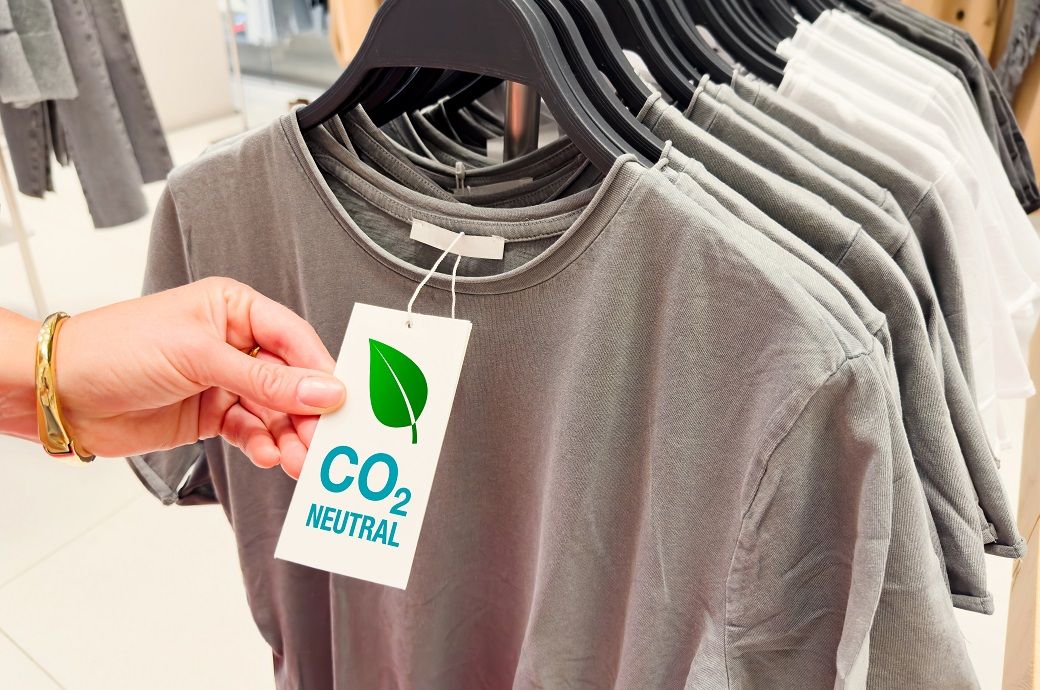
Published by Apparel Impact Institute (Aii), in collaboration with Development Finance International Inc (DFI), the report builds upon the work of Chinese apparel sector stakeholders to explore the financing, implementation, and policy landscape and offer practical pathways for scaling decarbonisation across China’s textile and apparel sector.
The country’s renewable energy leadership and significant apparel footprint drive its decarbonisation opportunity, finds the new research, with over 40,000 suppliers in the country having the operational scale and data to take immediate action. Additionally, the country’s vast industrial park infrastructure, in which more than 11,000 enterprises operate within over 1,300 textile industrial parks, can be leveraged to develop shared governance platforms and bundle project options that lower transition costs.
China could lead the apparel sector in cutting emissions 50 per cent by 2030, driven by its renewable energy leadership and vast supplier base, a new report has said.
Achieving this requires $40.8 billion, stronger value-chain collaboration, scalable financing models, local technical support, and leveraging industrial parks to coordinate and accelerate sector-wide decarbonisation.
To realise the country’s potential in the apparel sector, the report calls for collaboration across and beyond the value chain to develop awareness, planning tools, technical expertise, and accessible capital vehicles.
Around $40.8 billion will be required to achieve a 50 per cent emissions reduction across China’s apparel and textile sector by 2030, and while international finance institutions offer both financing and technical support, uptake remains limited due to complex requirements and higher interest rates. To best support suppliers, the report recommends the development of additional financing mechanisms, including blended models and deployment-linked grants, expanded local technical assistance, and the integration of low-carbon planning into core business strategies. It also highlights the importance of sector-wide coordination and leveraging industrial parks as platforms for coordinated decarbonisation, shared infrastructure, and replication of pilot projects.
“China’s textile industry has the scale, capability, and growing alignment to lead fashion’s next climate chapter. The building blocks are already here,” said Dave de la Questa, head of Asia Operations at Development Finance International, Inc. “The next step is connecting them — linking finance, policy, and industry so that every facility, no matter its size, can participate in the transition.”
“While financing and policy frameworks are essential, they only work when paired with practical, scalable, and inclusive on-the-ground conditions that give manufacturers confidence and clarity,” said Lewis Perkins, president and CEO at Apparel Impact Institute. “The report offers a clear call to action: scale local financing, support supplier readiness, and develop an infrastructure of collaboration that will deliver tangible results.”
Fibre2Fashion News Desk (RR)










During the quarter, active clients totalled 2.29 million, reflecting a 0.8 per cent decline quarter on quarter (QoQ) and a 3.5 per cent decrease YoY. However, net revenue per active client rose 7.4 per cent YoY to $577, indicating higher spending levels among existing customers.
Stitch Fix has reported net revenue of $341.3 million in Q2 FY26, up 9.4 per cent YoY, despite active clients falling 3.5 per cent to 2.29 million. Revenue per active client rose 7.4 per cent to $577.
Gross margin stood at 43.6 per cent, while net loss narrowed to $2.7 million.
The company expects FY26 revenue of $1.33-1.35 billion with positive free cash flow.
The company reported a gross margin of 43.6 per cent, down 90 basis points YoY, while net loss narrowed to $2.7 million, translating into a net loss margin of 0.8 per cent and a diluted loss per share of $0.02. Meanwhile, adjusted EBITDA reached $15.9 million, representing a 4.7 per cent margin, Stitch Fix said in a press release.
Operational performance also reflected stable liquidity. Net cash from operating activities stood at $7.3 million, while free cash flow totalled $3.4 million during the quarter. The company ended the period with cash, cash equivalents and investments of $240.5 million and no outstanding debt.
For the third quarter (Q3) of fiscal 2026 FY26) ending May 2, 2026, Stitch Fix expects net revenue between $330 million and $335 million, representing 1.5 per cent to 3.1 per cent YoY growth. The company projects adjusted EBITDA between $7 million and $10 million, with a margin of 2.1 per cent to 3 per cent.
“Our client experience enhancements, improvements to the quality and breadth of our assortment, and new AI features are resonating and driving increased client engagement,” said Matt Baer, CEO of Stitch Fix. “We delivered a strong Q2 with 9.4 per cent revenue growth year over year. We are gaining market share and strengthening our role as our clients’ retailer of choice for apparel, footwear and accessories as we remain focused on offering the most client-centric and personalised shopping experience in apparel retail.”
Looking ahead to the fiscal 2026 (FY26), Stitch Fix forecasts net revenue in the range of $1.33 billion to $1.35 billion, reflecting 5 per cent to 6.5 per cent YoY growth. The company expects adjusted EBITDA between $42 million and $50 million, corresponding to a margin of 3.2 per cent to 3.7 per cent.
The company also expects gross margin between 43 per cent and 44 per cent in FY26, while advertising expenses are projected at 9 per cent to 10 per cent of revenue. Stitch Fix anticipates positive free cash flow for the full fiscal.
Fibre2Fashion News Desk (SG)
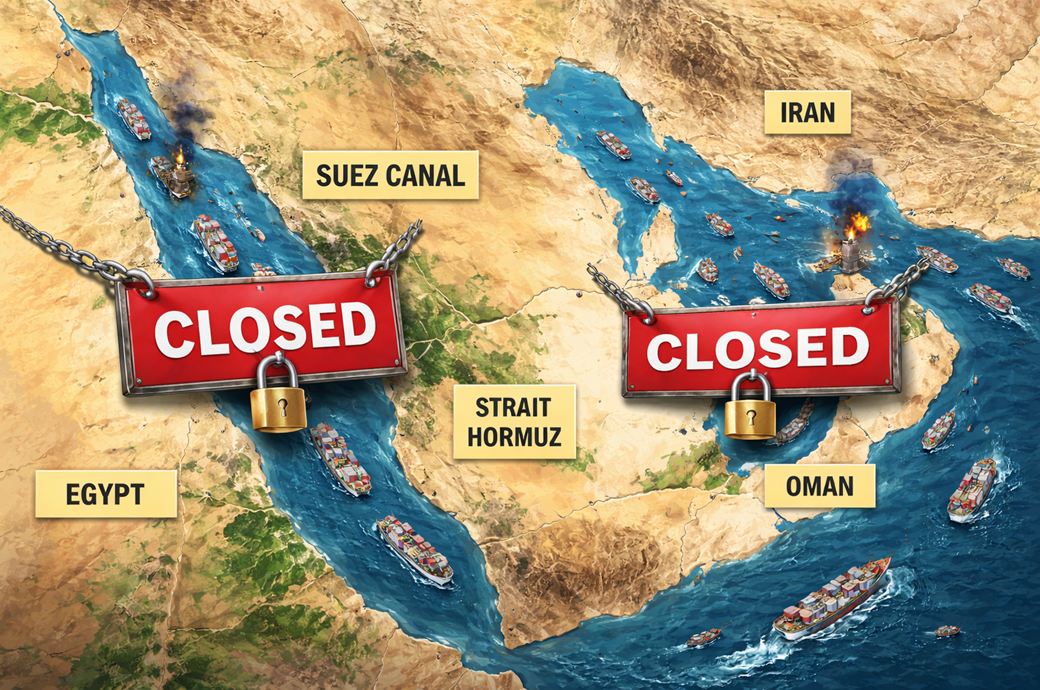
For the first time in modern maritime history, both of the Middle East’s critical shipping chokepoints—the Strait of Hormuz and Bab el-Mandeb (Red Sea)—are simultaneously closed or under active threat to major commercial shipping. Following the launch of US-Israeli strikes on Iran on February **, ****, Iran declared the Strait of Hormuz closed to Western-allied vessels within ** hours. Tanker traffic collapsed from approximately *** vessels per day to near-zero. Within the same **-hour window, Houthi forces in Yemen threatened to resume attacks on Red Sea shipping, forcing Maersk to re-pause all trans-Suez sailings just weeks after a **-month diversion had finally ended.
All four major global container carriers—Maersk, MSC, CMA CGM, and Hapag-Lloyd—suspended Gulf transits on March *. P&I war risk insurance was cancelled by more than ** International Group clubs, effective March *. Dubai’s Jebel Ali port, the critical transshipment hub for South Asian textile manufacturers, has been struck by Iranian missiles and drones, operating at severely reduced capacity. Gulf airline cargo capacity—Emirates, Qatar Airways, Etihad—is down by over ** per cent, crippling the air freight corridor that Bangladesh’s garment exporters depend on for time-sensitive deliveries to Europe.
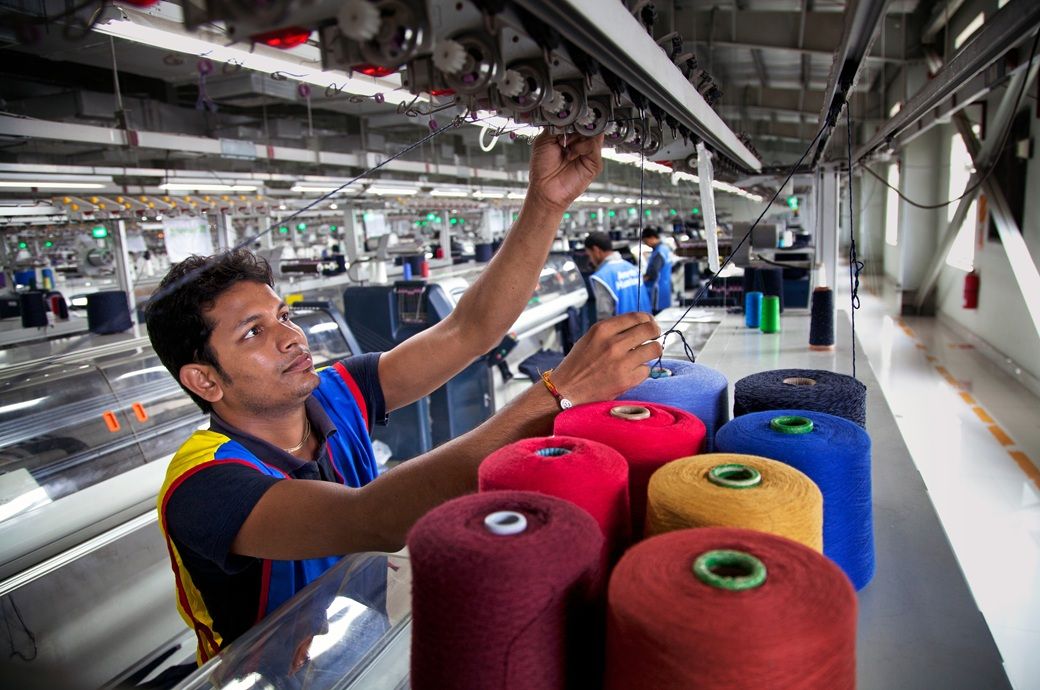
The sector has navigated shocks before, including price wars, factory compliance reforms, political instability and swings in global demand. What makes the current moment different is the simultaneity of pressures. Financial strain, weakening export momentum, rising competition and geopolitical disruptions are emerging at the same time, just as Bangladesh approaches a major transition in its global trade status.
According to export performance data from the Bangladesh Garment Manufacturers and Exporters Association (BGMEA), compiled from Export Promotion Bureau (EPB) statistics, Bangladesh’s ready-made garment (RMG) exports reached $**.** billion between July **** and January ****, accounting for about ** per cent of the country’s $**.** billion merchandise exports. The International Labour Organization estimates that the export-oriented garment sector employs around * million workers, highlighting the scale of an industry central to Bangladesh’s economy.


US’ Stitch Fix Q2 FY26 revenue rises 9.4% to $341.3 mn

Ryan Gosling ‘Project Hail Mary!’ reaches ‘New Heights’
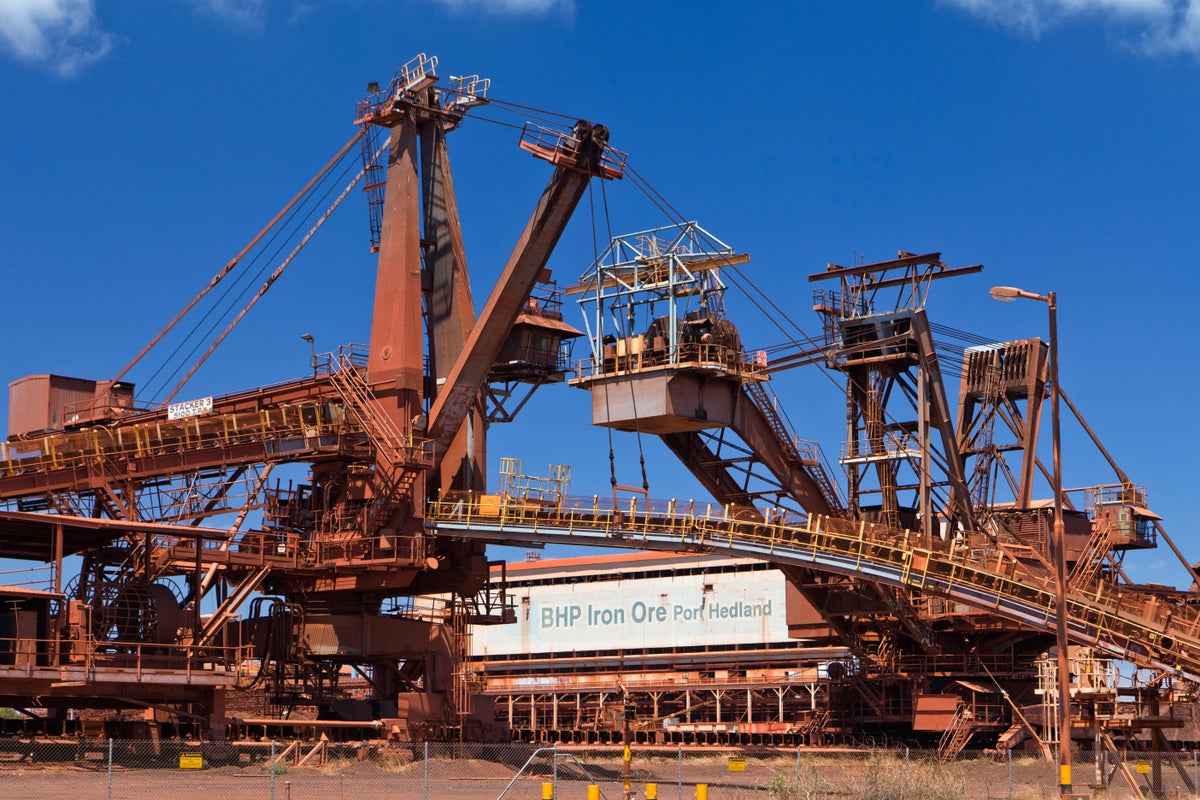
World’s largest mining group names new chief executive

Stock market crash today (March 12, 2026): Nifty50 opens below 23,600; BSE Sensex down over 900 points on continuing US-Iran war – The Times of India

Intertextile Shanghai 2026: Fringe events spotlight market trends

What time will NASA’s 600 kg satellite crash to Earth today— 14 years after launch?

-
Business6 days ago
Stock market crash today (March 12, 2026): Nifty50 opens below 23,600; BSE Sensex down over 900 points on continuing US-Iran war – The Times of India
-
 Fashion1 week ago
Intertextile Shanghai 2026: Fringe events spotlight market trends
-
 Entertainment1 week ago
What time will NASA’s 600 kg satellite crash to Earth today— 14 years after launch?
-

 Fashion1 week ago
German brand Adidas posts 13% revenue growth in 2025
-

 Fashion7 days ago
UK’s Topshop unveils Tolu Coker capsule collection
-

 Tech7 days ago
Meta Developed 4 New Chips to Power Its AI and Recommendation Systems
-
 Business7 days ago
8th Pay Commission: How Much Will Central Govt Employees’ Salaries Rise? What We Know So Far
-

 Fashion7 days ago
India’s textile recycling market may reach $3.5 bn by 2030: Report