

Tech
Why DoorDash Will Now Pay You to Eat at a Restaurant

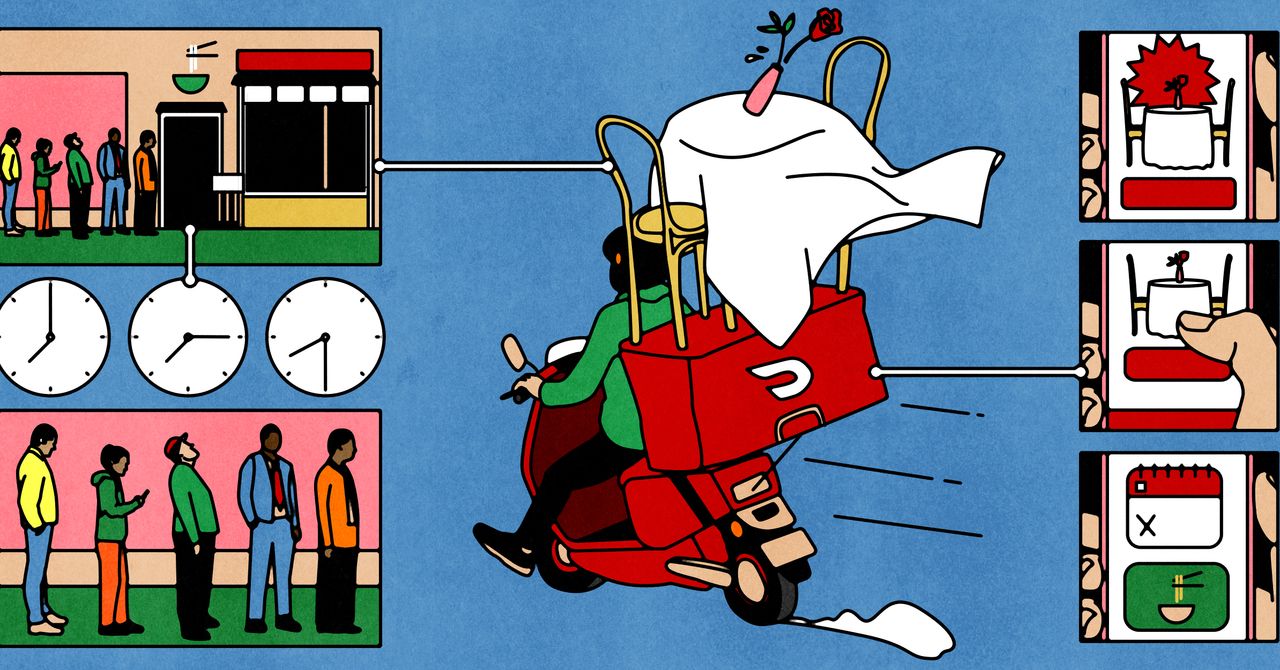
At The Eighty-Six in Manhattan, exclusivity is the point.
The luxe, 11-table steakhouse is the sort of place that lavishes caviar and aged mimolette cheese on its potatoes, and crows that your market-price duck was raised by one Dr. Joe Jurgielewicz, DVM, in the rural hills of Pennsylvania. Taylor Swift has reportedly dined there in a Miu Miu skirt.
Reservations are a scarce commodity that the restaurant, and New York law forbids you from selling one. “Access is the main asset,” wrote food writer Helen Rosner in a recent New Yorker review of The Eighty-Six. “The product is the door, and what a door! An impossible door!”
What may be more surprising is that arguably New York’s most exclusive restaurant will set aside space for diners only via “table drops” for The Eighty-Six on DoorDash, a food logistics app that until recently placed its bets on the notion that you’d rather eat burritos at home.
After acquiring hospitality tech company SevenRooms last year, DoorDash has plunged whole-body into a raging war with competing tech companies such as Resy and OpenTable for control over an increasingly scarce asset: seats at some of the most exclusive restaurants in the country.
“We’re offering value to customers to discover new restaurants for casual dining,” DoorDash CEO Tony Xu told investors in a February 2026 earnings call. “We’re also doing it in the form of access— where we’re offering reservations to some of the best restaurants.”
Equally unreservable New York sister restaurants Or’esh and The Corner Store, likewise, will not save you a seat except through DoorDash’s app and website. Exclusive arrangements with DoorDash and SevenRooms also hold for some of the most gate-kept restaurants in Miami, like Michelin-recognized Ecuadorian hot spot Cotoa or Miami-London steakhouse Sparrow Italia.
So far, DoorDash has rolled out reservations in 13 of the largest US cities, including Los Angeles, Las Vegas, and Chicago. But many more are slated.
Deep in the Reservation Wars
Maybe it’s the aftermath of the Covid-19 pandemic, which accustomed the country to wildly long incubation times on plans for food and drink. Or maybe it’s just a sign of growing wealth inequality, as middlebrow restaurants struggle but ultra-exclusive experiences for the wealthy proliferate.
But as WIRED’s colleagues at Bon Appetit noted a few years back, restaurant reservation mania has in recent years spiraled into competitive sport, leading to a gray economy of gig-work line-standers and a damaging black market of restaurant scalpers who hoarded reservations and resold seats to high bidders.
A parade of American cities, beginning with New York, have since outlawed reservation scalping after lobbying by restaurant groups. What’s taken its place is a new pitched battle among restaurant reservation apps.
DoorDash is the newest and perhaps most disruptive entrant in these reservation wars, as technology apps leverage restaurant access to bring diners into an entire loyalty-based ecosystem—often through partnerships with credit card companies.
OpenTable is now offering dining credits and reserved tables at luxe restaurants in a number of major American cities for Chase Sapphire cardholders. Reservation app Resy, owned by credit card company American Express, has absorbed event ticketing app Tock to take this even further, creating an ecosystem of exclusive “experiences” and loyalty rewards for American Express cardholders.
DoorDash Moving in Fast
“But no one seems to be moving in as quickly, or as aggressively, as DoorDash, already the largest dining delivery app in the country before folding in SevenRooms. DoorDash has been quick to press this advantage by locking down exclusive access to some of the most in-demand tables across the country.
In Manhattan alone, more than 200 restaurants have current or pending deals with DoorDash to offer exclusive tables, times, or reservations. At the February earnings call, DoorDash CEO Xu laid out the strategy: becoming an everything app for restaurants to capture customers.










Tech
I Tried the Best Mobile Gaming Controllers That Make Playing for Hours on End Easy and Comfortable
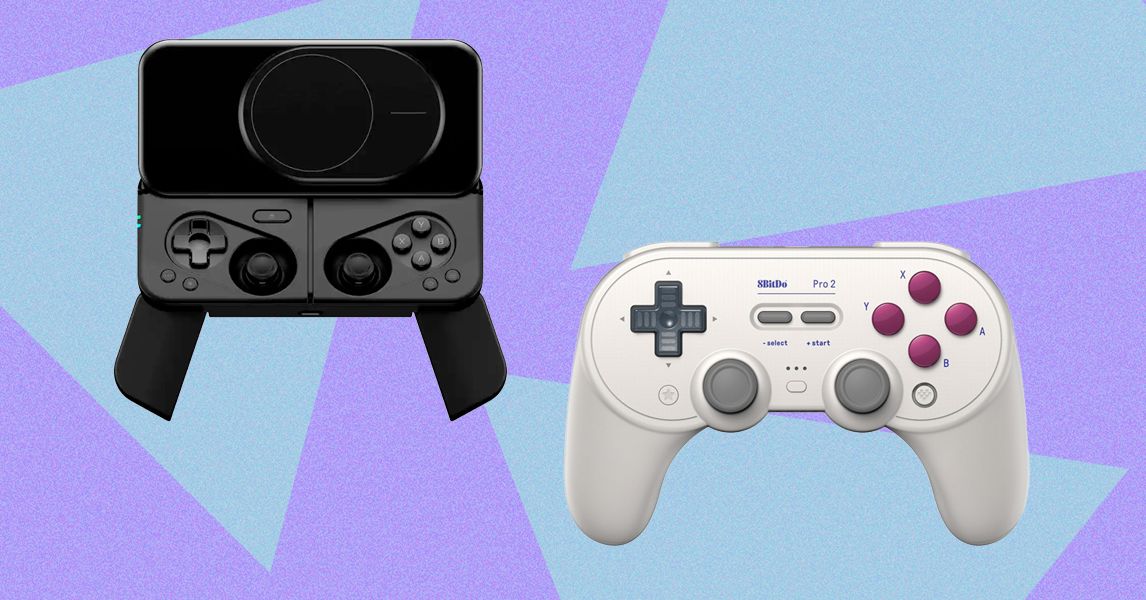
The best mobile gaming controllers are excellent tools that allow you to play compatible games for hours on end. Whether you’re looking for an iPhone or Android controller, we’ve tested all the top picks (aka we’ve played a bunch of games on our phones) and have opinions on them all. Backbone makes the best mobile gaming controllers we’ve tried that’ll work for most people, but we also have solid recommendations for specific uses, like for pairing with smart glasses or a tablet.
Make sure to check out our related buying guides, including the Best Cheap Phones, Best Android Phones, Best Gaming Controllers, and Best MagSafe Accessories.
Our Top Picks


Jump to Section
Best Mobile Gaming Controller

The Backbone One is as easy to recommend as it is to use. Slot the connector—either USB-C or Lightning—into your phone and stretch the controller over the back. The buttons and triggers are clicky and responsive, and the controller feels comfortable for hours-long gaming sessions without being too bulky. It also has pass-through charging, a screenshot or screen recording button, a mute button, and a headphone jack.
Part of what makes all Backbone controllers so great is the manufacturer’s software and additional features. The controller supports a number of gaming apps and services, and the companion app is fantastic (though not required). My favorite bit is the list of recommended games with controller support. You can also use the app to message and party chat with your friends, stream directly to Twitch, record and edit videos in 1080p at 60 frames per second, and more. Some of these features are locked behind a Backbone+ membership, which costs $40 per year. The subscription is nice, but you don’t need it to have a great experience. The controller is also available in some limited-edition styles or platform-dedicated versions like PlayStation Edition, but the differences are cosmetic.
Officially works with iPhone, Android, Nvidia GeForce Now, Xbox and PlayStation Remote Play, Amazon Luna, and Steam Link
Best Upgrade Mobile Gaming Controller
-
Photograph: Louryn Strampe
-
Photograph: Louryn Strampe
-
-


The Backbone Pro expands on all of the features I loved about the Backbone One. The Pro is slightly chunkier, grippier, and more comfortable, and although my hands are small, I can imagine this is easier to hold for folks with larger hands. It has a quieter, more premium feel, and it still has the headphone port and pass-through charging capabilities of the One. The Pro feels just as ergonomic to me as a console controller, with no drawbacks or compromises. I liked the full-size joysticks, programmable back buttons, and Hall-effect rear triggers.
The Backbone Pro also has Bluetooth connectivity, which means you can use it with your phone, tablet, laptop, VR headset, and compatible smart TVs. You can connect to multiple devices simultaneously and switch between them with just a tap. If you’re serious about mobile gaming, or you want a comfortable controller that can swap between your devices seamlessly, I recommend the Backbone Pro. I think it’s worth snagging a carrying case like this one, though, to store it.
Officially works with iPhone, Android, Nvidia GeForce Now, Xbox and PlayStation Remote Play, Amazon Luna, and Steam Link
Best Magnetic Mobile Gaming Controller
-
Photograph: Louryn Strampe
-
Photograph: Louryn Strampe

ohsnap!
Mcon Mobile Gaming Controller
The Mcon controller from Ohsnap has some quirks, but its general concept is neat. The MagSafe controller attaches to the back of your iPhone or Android phone (a magnetic ring is included for Android users, though Ohsnap recommends using a MagSafe case). Press the Eject button to pop out your phone, almost like you would with an old-school T-Mobile Sidekick, and reveal the D-pad, joystick, and buttons below. You can also pop off the entire magnetic component and use the built-in kickstand to prop up your phone while controlling it with the separate controller half of the device. There are hand grips you can pull down and out for added stability if you’d rather have a more traditional design than playing with a rectangular controller. The Mcon pairs with your phone via Bluetooth and has minimal latency, with recessed thumbsticks and buttons that feel satisfying to press.
There are myriad Mcon accessories that are neat, like the Key Cast or Dock, which can charge your controller (via USB-C) and cast your phone screen to a monitor or TV. I could see this device especially coming in handy for travel, given its compact size that you can slip it in your pocket—which is not true for many of the controllers in this guide. It’s also a great option if you’d rather play on your phone but not while you’re holding your phone.
What do you love about coffee? Is it the caffeine boost in the morning, the creamy sweetness of a cappuccino or latte, the bucket of filter coffee you can sip on all day, or the quick kick of a good espresso? Or is it the zen-like ritual of it all, the measuring of beans and the precision of the perfect extraction? Good thing it’s much better for you than science previously realized.
If the marketing hype is to be believed, you can have it all, thanks to the best in fully automatic coffee machines. These compact countertop cafés promise to deliver a vast menu of drinks at the touch of a button, all with no barista prowess needed. But are the brews actually any good?
WIRED tests a lot of coffee machines—productivity would grind to a halt if we stopped. But for this group blind test, we wanted to see what coffee professionals thought of the drinks produced by the “best” in fully automatic machines, without being influenced by any fancy design or brand awareness. We’re not judging the machine’s usability here, the app’s interface (there’s always an app), or how easy it is to clean. We only want to know about the Joe.
By the end of our experiment, it was clear that while money can buy you endless choice and push-button convenience, it doesn’t necessarily guarantee barista-grade, café-quality coffee at home.
Our Experts
Adam Cozens is the cofounder of Perky Blenders, a UK specialty coffee brand from coffee-shop-dense, hipster-populated East London. He was joined in WIRED’s test café by his business manager and coffee aficionado Calum Hunt. Launching in 2015 from a three-wheeled coffee cart, they now have multiple cafés and more than 100 retail partners across the UK.
For this test, they chose their Forest Blend beans, noted for their dark chocolate, molasses, and walnut notes, creamy body, low acidity, and a sweet, lingering finish. Crucially, Cozens and Hunt know implicitly how the Forest Blend beans should taste, and they are ideally positioned to decide which of our machines produces the best coffee with the most accurate flavor profile from the beans provided.
The Test
Each of the machines we chose is a fully automatic bean-to-cup behemoth capable of producing upwards of 50 types of coffee drinks at the push of a button; everything from espresso and cortado to iced lattes with syrup or a simple long black.
WIRED chose the latte—America’s most popular steamed-milk coffee order—and a classic espresso to blind taste test. The latte allows us to test the milk-heating, frothing, and steaming mechanisms, while the espresso reveals any weaknesses in extraction and coffee flavor. Per Cozens’ instructions, we used organic whole milk.
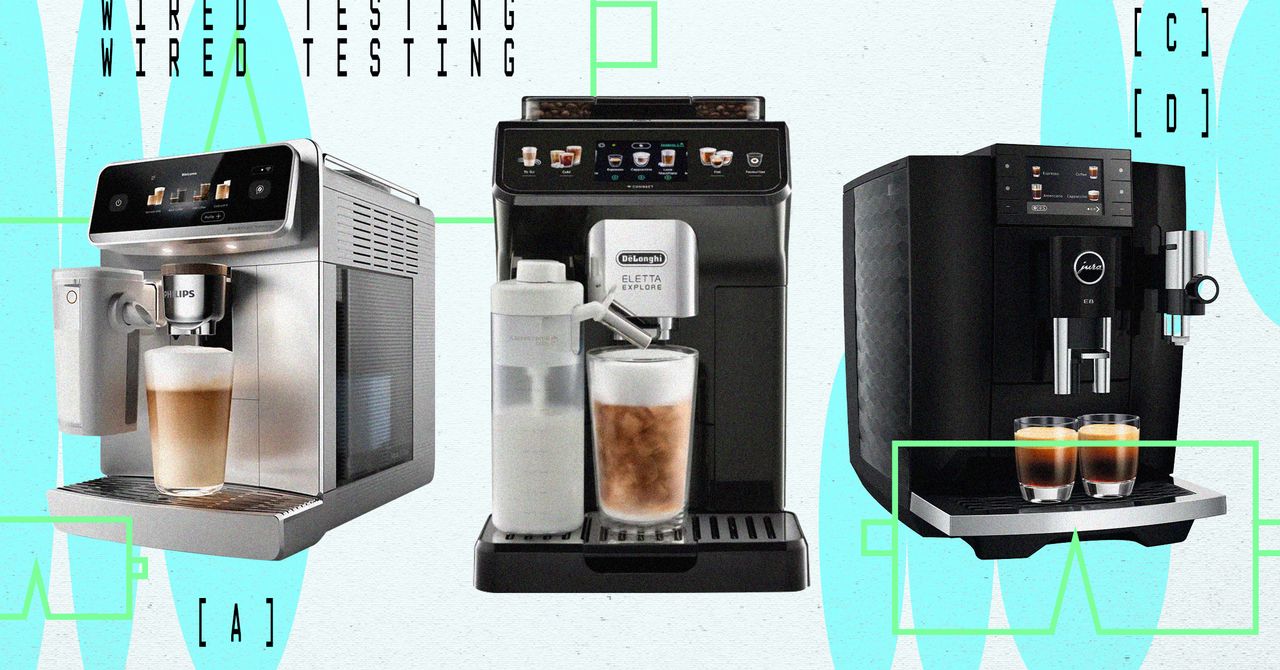
Our experts were blindfolded and then presented with one latte and one espresso from each machine. Labelled A, B, C, and D, the machines were visible to the testers, but they had no idea which coffee came from which. They then assessed each drink on looks, milk-steaming quality, crema (the golden aromatic foam on top of espresso), temperature, extraction, and flavor. The coffees were then ranked in order from best to worst.
To reiterate, this is not a test of the machine’s usability, desirability, or features. Each design can have every aspect of every recipe tweaked, but we’re not convinced the average buyer will want to dive deep into the settings. These are sophisticated push-button machines designed to take the faff and fiddle out of making good coffee at home—anything for an easy life.
The Coffee Machines
Machine “A”
One of only a few machines capable of making espresso-based drinks and classic drip coffee, the TK-02, from NYC-based Terra Kaffe, is a gorgeous-looking piece of kitchen kit with premium components, a delightful glass milk carafe, a super-cool monochrome touchscreen, extensive personalization, and full app control.

In the existing state, identity is human-centric. Today’s identity and access management (IAM) systems were designed for a world dominated by human users and static applications. Identities are provisioned, authenticated, and authorised using models such as role-based access control (RBAC) and multifactor authentication (MFA), with decisions made at login time. Even with the evolution toward zero-trust, the core assumption remains largely unchanged: identities are known, bounded, and relatively stable.
However, agentic AI systems break these assumptions. The transition to agentic systems has fundamentally altered the security landscape. We are no longer just securing “users”; we are securing a massive, autonomous web of non-human identities (NHIs) that move at machine speed. Autonomous agents dynamically invoke tools, access APIs, generate sub-agents, and operate across multiple domains without direct human intervention. These agents often use shared credentials, ephemeral tokens, or implicit trust boundaries, leading to identity ambiguity, weak attribution, and expanded attack surfaces. In short, the current IAM stack is misaligned with the fluid, autonomous nature of AI agents.
The need for a new identity stack
The rise of agentic AI systems introduces a new class of identities, autonomous, non-human actors such as AI agents, bots, and services, that operate independently, dynamically, and at scale. Unlike human identities, these entities can be created on demand, delegate tasks to other agents, and interact across multiple systems without direct oversight, posing challenges for attribution, control, and trust. For example, agents move faster than human oversight, and the ‘kill switch’ has moved from a button to an autonomous circuit breaker. Traditional identity models, built around static users and roles, are insufficient to govern this fluid ecosystem. As a result, there is a critical need for an evolved identity framework that can uniquely identify these actors, track their provenance, enforce fine-grained and contextual access, and continuously validate their behavior to ensure secure and accountable operations.
A look into the modern identity stack for agentic systems
- Agent identity and provenance: Every AI agent must have a unique, verifiable identity tied to its origin, whether created by a human, system, or another agent. Provenance ensures traceability, enabling organizations to understand who initiated an action and under what authority. This establishes accountability and prevents anonymous or rogue agent behavior.
- Ephemeral credentialing: Instead of long-lived credentials, agents should use short-lived, task-specific tokens that are automatically issued and revoked. This minimizes exposure in case of compromise and aligns access strictly with the duration and scope of a task. It enforces the zero-standing privilege (ZSP) principle.
- Contextual Authorisation: Access decisions should be dynamic and based on real-time context, such as behavior, environment, and risk signals. Rather than static roles, permissions adapt continuously to the agent’s actions and location, ensuring tighter, more relevant control.
- Delegation and chain of trust: Agentic systems often involve multiple layers of delegation covering user communication to agent and agent communication with tools. A clear and enforceable chain of trust is required to track authority and limit how far and wide permissions can propagate, thereby preventing privilege escalation.
- Identity threat detection and response (ITDR): Systems must continuously monitor agent actions, reassess risk, and adjust permissions in real time. For example, continuous verification now monitors semantic drift, in which an agent’s actions gradually deviate from its original intent or authorised purpose. It helps detect subtle misuse, compromised workflows, or manipulated prompts that may not trigger traditional security alerts.
- Observability and attribution: A robust audit trail is essential for capturing who performed which action, through which agent, and with which tools. This level of visibility ensures accountability, supports incident response, and builds trust in autonomous systems by making their actions transparent and explainable.
Identity as a real-time control plane in agentic systems
Identity will evolve into a real-time control plane for agentic systems, not just an access gateway. Key shifts will include:
- Identity becomes behavioural as trust is continuously scored rather than statically assigned.
- Agents become first-class principals, managed, governed, and audited like human users.
- Policies must be adaptive as AI-driven policies evolve alongside threats and usage patterns.
- Zero-trust becomes zero-standing privilege, in which access exists only for the duration of a verified task.
- Identity integrates with execution frameworks as every tool call is authenticated, authorised, and logged.
Inference
The rise of agentic AI systems demands a fundamental rethink of identity. Static credentials and perimeter-based trust models are no longer sufficient. Agent identity management needs a shift from RBAC to ABAC. The new identity stack must be dynamic, contextual, and deeply integrated into the execution fabric of AI systems, ensuring that every action, whether initiated by a human or an autonomous agent, is verifiable, accountable, and secure by design.


Iran still reviewing US war-end proposal, dismisses American deadline pressure

Middle East conflict burns Indian oil firms: Rs 30,000 crore monthly hit to keep fuel prices stable – The Times of India

Ben Abraham on his music journey, collaborations and how he thinks he can “make a difference”

-
 Business1 week ago
PSX plunges over 4,800 points | The Express Tribune
-

 Politics5 days ago
Iran weighs US reply delivered via Pakistan as Trump signals opposition to deal terms
-

 Fashion6 days ago
US’ J.Jill, Inc. appoints Kimberly Wallengren as CMO
-

 Tech1 week ago
This Indigenous Language Survived Russian Occupation. Can It Survive YouTube?
-

 Tech1 week ago
Almost half of UK businesses hit by cyber attacks | Computer Weekly
-

 Entertainment1 week ago
David Allan Coe, country singer who wrote “Take This Job and Shove It,” dies at age 86
-
 Business1 week ago
Government hikes jet fuel prices by 5% for international airlines – The Times of India
-

 Fashion1 week ago
US’ Gap partners with Victoria Beckham on timeless wardrobe essentials