

Business
Delta raises revenue guidance as CEO says travel demand has been ‘really, really great’


Delta Air Lines said Tuesday that the company was maintaining its profit guidance for the first quarter and raising revenue expectations, despite airlines dealing with higher jet fuel prices since the war in Iran started.
CEO Ed Bastian told CNBC’s Phil LeBeau that Delta had taken a $400 million hit so far for the fourth quarter, but that demand has been “really, really great,” which was leading to higher revenue growth than the airline had originally guided for.
“The higher revenue is offsetting the cost of not just the fuel, but we’ve also had a pretty tough winter season in terms of storms,” he said. “So you put that all together, we’re expecting to come in within the original guidance of 50 to 90 cents EPS.”
Delta had previously forecast an increase in sales of as much as 7% in the first three months of 2026 and adjusted earnings of between 50 cents per share and 90 cents per share for the first quarter.
Delta stock was up nearly 4% in premarket trading.
In an 8K filed Tuesday morning, Delta said it was raising revenue guidance due to momentum in demand, citing strength across the main cabin, premium, loyalty and more. The airline also said its domestic and international unit revenue are growing in the mid-single digits year-over-year.
Delta added that it has its strongest balance sheet in its history.
Bastian said most of Delta’s revenue comes from higher-spending customers who still want to travel, as well as from corporate customers.
“We’ve seen eight of the top 10 sales days in our history this quarter, and five of those just within the last two weeks, within just the last week of March,” he said. “Even with the war going on, our revenues, our bookings are up 25% year over year.”
Last quarter’s bookings are a softer comparison as the airline dealt with customers pulling back over tariff concerns.




Mortgage costs are rising and homeowners who need to renew a fixed rate deal should move quickly, experts have warned.
The Bank of England is likely to hold rates when its Monetary Policy Committee meets on Thursday, rather than cut them as had been widely anticipated before the Middle East crisis.
That means further pressure on mortgage deals as the best offers get pulled from the market. The so-called “swap rates”, which reflect the markets view of which way borrowing costs will go, are on the rise.
Since the outbreak of the Iran war, mortgages at less than 4 per cent, common not so long ago, have met a rapid demise.
Elliot Nathan, partner at mortgage broker Eddge, says: “As of today, its easier to name which banks haven’t increased rates in the past few days.
“I suspect with the uncertainty we shall continue to see SWAPs rise which in turn will lead to lenders making further increases. I would strongly recommend anyone thinking of securing a fixed rate for a remortgage which is due to expire this year, to move quickly.”
None of the big lenders are offering a fixed rate below 4 per cent at the moment.
All of the biggest banks – namely Barclays, HSBC, Lloyds Bank, NatWest and Santander – have increased rates since the start of March. Building societies have done the same. Nationwide rates on some fixed rate deals go up by 0.35% from Tuesday March 17.
While recent mortgage costs are up, they are still better than a year ago, before the Bank of England cut rates. Sadly for the UK, borrowing costs are being driven by world events rather than UK government policy, which may limit what politicians are able to do in mitigation, say brokers.
Rachel Springall, finance expert at Moneyfactscompare.co.uk, said: “Borrowers looking for the lowest fixed rates will be disappointed to see the demise of sub-4 per cent mortgages, but they are not sustainable with swap rates increasing.
“Lenders look at margins very carefully, so it would be unwise to price their deals too low, if the expectations are for interest rates to rise, even if over the short-term.”
She added: “The mortgage market needs stability, and really, borrowing costs are lower than in recent years, and we have had sub-4 per cent deals on the shelves for over a year (since February 2025). While many of the biggest lenders no longer offer a sub-4 per cent fixed deal, it is a cautious decision.
“Mortgage rates are rising due to global pressures, not UK fiscal policy, so while not ideal, rate increases are not mirroring the ‘mini-Budget’ fiasco in 2022.”
Peter Stimson, director of mortgages at MQube, said: “Since the start of the Iran war, swaps, which fixed rate mortgage pricing is based off, have risen around 0.60% and all of this has essentially now been passed on to mortgage customers with all the big lenders now having repriced at least twice, in the form of higher mortgage rates.”
This means a first time buyer wishing to take out a 90 per cent LTV mortgage is now paying around 4.65 per cent for a 2-year fixed rate (£999 fee) and around 4.90 per cent for a 5-year deal (£999 fee).
Mr Stimson added: “However, rates are changing rapidly and the longer the war continues the more we can expect rates to continue their upward trajectory. How bad could this get? If this is protracted and we get oil approaching $150 a barrel, we may see yet another interest rate rise being priced into the swap curve by the market and another jump in mortgage rates. Hopefully, there is resolution before then.”
Oil on Tuesday was trading at $103 a barrel.
Dan Coatsworth, head of markets at AJ Bell, said: “The longer the oil price stays above $100 per barrel, the louder the alarm bells for the market over inflation risks. Iran’s continued attacks on regional energy infrastructure are helping to keep crude at elevated levels.”
Some say the issue for mortgage prices is a lack of new housing.
Mary-Lou Press, President of NAEA Propertymark (National Association of Estate Agents), said: “The loss of sub-4 per cent fixed rate mortgages will be disappointing for many buyers, particularly first-time buyers already facing affordability pressures.
“This shift highlights how sensitive mortgage rates are to wider economic uncertainty, making it harder for people to plan and potentially slowing activity across the housing market.
“Even small increases in rates can significantly impact borrowing capacity and monthly costs, reinforcing the need for stability and confidence.”

One day after a famous short-seller said Close Brothers has “systematically misrepresented” the extent of its exposure to the car loan mis-selling scandal, the merchant bank said it would axe 600 jobs as it looks to cut costs.
Yesterday shares in the finance house tumbled 14 per cent on Monday after Viceroy Research, which has previously called out Wirecard and Home Reit, said Close would have to at least double its provision for the scandal, which could end up costing the car loan sector £10 billion, watchdogs estimate.
Close expects to pay £300m for the car saga, which saw the commission paid to sales people not disclosed to consumers.
Lloyds Bank has the biggest exposure of any financial business, with much of the car trade also on the hook. Lloyds could end up paying out £2bn, though it has raised criticisms of how the regulator, the Financial Conduct Authority, is calculating payments.
The FCA said payouts are due on around 14 million unfair car finance deals, averaging at about £700 each, within a 360-page consultation document for its proposed redress scheme published last week.
Shares in Close were up slightly today at 360p.
The firm said the cuts – nearly a quarter of its 2,600-strong workforce – would be made over the next 18 months across its teams in the UK and Ireland.
It comes as part of plans to cut costs by about £25 million in its current year to the end of September, up from a £20 million previous target, and by around another £60 million in the next financial year, which is a year earlier than planned.
The cuts will come from actions including moves to outsource and offshore work, cut back its office network and roll out the use of artificial intelligence (AI) “at pace”.
Chief executive Mike Morgan said: “While the impact on affected colleagues is regrettable, these actions are necessary to structurally lower our cost base, while increasing our agility and ability to serve our customers.”
The note from Viceroy said: “We believe Close Brothers has systematically misrepresented its exposure to the Financial Conduct Authority’s forthcoming motor finance consumer redress scheme.”
Viceroy thinks Close could have to pay out between £572m and £1.23bn to compensate customers in all. At the higher end, that exceeds the entire market value of the company.
Close Brothers said it “strongly disagrees” with Viceroy’s conclusions. It added: “Our provisioning approach in relation to this matter is in accordance with UK-adopted international accounting standards and follows a robust governance process.”
Short-sellers such as Viceroy take a market position against shares, betting they will fall.
Close today which it reported a £65.5m loss for the six months to the end of January. It reported a £102.2m loss for the same period last year.
Additional reporting by PA
Business
LPG crisis hits restaurants: Staff face salary cuts, layoffs as eateries struggle to keep kitchens running – The Times of India
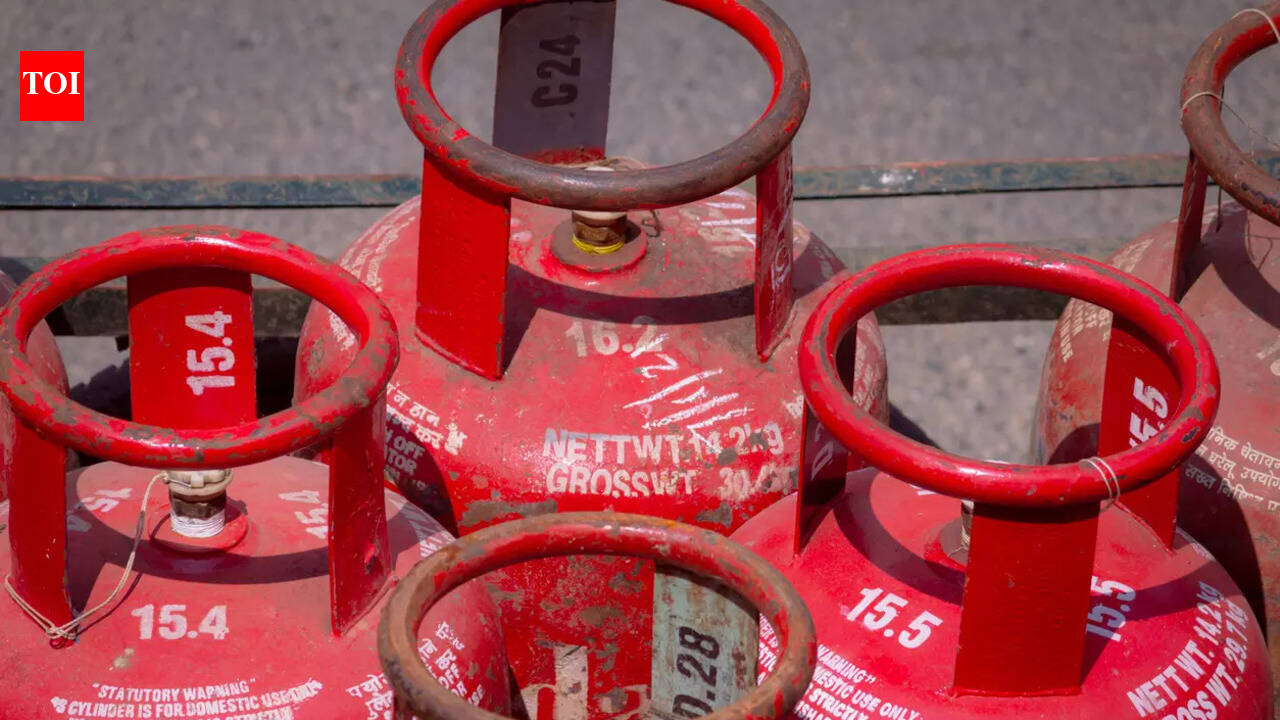
The Middle East crisis continues to boil and the ripples have triggered an operational stress for India’s food services sector. As LPG supply flows are disrupted amid the Strait of Hormuz transit issues, industry voices have warned of layoffs, salary cuts and widespread business impact if the situation drags on. Despite assurances from the government on boosting availability, restaurant owners and caterers have flagged that access to commercial LPG remains inconsistent, leaving many scrambling to keep operations afloat. Several described the situation as unpredictable, with little clarity on when normal supply will resume.Anjan Chatterjee, founder of Speciality Restaurants pointed to the growing distress across the sector. Highlighting the uncertainty of the situation, Chatterjee told ET that people are running from pillar to post. The founder further cautioned that the worst-hit would be workers at the lower end of the chain. “If restaurants and eateries are unable to do business, the first ones to get hit will be people down below.”
Impact on businesses, especially smaller players
Smaller restaurants, street-side eateries, caterers and cloud kitchens are the worst affected, with many already shutting or scaling down. Anjan Chatterjee of Speciality Restaurants described the chaos, saying people are running from pillar to post, and warned, “If restaurants and eateries are unable to do business, the first ones to get hit will be people down below.” He added, “While we hope supplies improve soon, currently, the situation is dynamic and we don’t know how things will pan out. At the ground level, particularly for local and street-side eateries, things are much worse.”Kirit Budhdev of the Federation of All India Caterers flagged worsening delays, “Suppliers are telling us to wait for 15 days. The on-ground situation is very challenging and it’s actually worsening for a lot of our members.”
Financial strain and risk of layoffs
The shortage is hitting profitability, menus and operating hours. Sagar Daryani of the National Restaurant Association of India said, “Smaller players which cannot bear the loss will see job cuts and the bigger players may bear the brunt for a while,” adding that multiple aspects of operations will be impacted.The strain is cascading to workers, especially those at the lower end. Aditya Narayan Mishra of CIEL HR explained, “For instance, if a restaurant has to close shop or run for fewer days in a week, they will not be employing helpers, local delivery boys, etc., who typically get paid Rs 500-700 daily. This segment, which accounts for the largest number of people employed, is already seeing an impact.”In Pune, Ganesh Shetty said, “Our members are still being told by agencies and suppliers that the supply is not for them but for other priority sectors like hospitals. Smaller restaurants have already shut down and they are not operational in Pune.Meanwhile, street food vendors in Madhya Pradesh are facing mounting pressure as a shortage of commercial gas cylinders disrupts operations, particularly for pani puri stalls and similar snack sellers. The impact is clearly visible across key markets such as Kolar, Jawahar Chowk and the BHEL area, where several carts remain closed or operate only during limited peak evening hours. Vendors who once catered to regular crowds are now struggling to secure enough fuel even for basic preparation.
Turning towards alternatives
Cloud kitchens are also under pressure, with FreshMenu’s Rashmi Daga noting, “At a central level, we are trying to move to firewood cooking, bring in induction, electric stoves, etc. But one can’t just move seamlessly to electric equipment given that summer months will also see power cuts.” At the same time in MP, two villages, Bandarkol in Jabalpur district and Baghuwar in neighbouring Narsinghpur, remain largely unaffected, with kitchen stoves continuing to run smoothly. In these villages, residents have turned to biogas instead of LPG cylinders. In Bandarkol, several households have installed small biogas plants that convert cattle dung into cooking fuel. Villagers say the system requires only a few minutes of daily effort while ensuring a steady supply of fuel for use throughout the day.
Uncertainty and outlook
Industry stakeholders say the situation remains volatile, with no clear timeline for recovery. While there has been slight easing compared to earlier days, supply gaps persist, and businesses continue to operate under uncertainty as they brace for prolonged disruption. Chatterjee added that while there is hope for improvement, conditions on the ground remain volatile. “While we hope supplies improve soon, currently, the situation is dynamic and we don’t know how things will pan out. At the ground level, particularly for local and street-side eateries, things are much worse,” he said. Speaking to ET, Rashmi Daga also highlighted the uncertainty ahead, saying, “One can’t even plan for perishables without knowing if gas is available the next day. Right now, the industry is bracing for 40-60 days of pain, but who knows, it could continue for months, too. If this happens, we will have no choice but to send some workers home.” The All Assam Restaurant Association (AARA) has called on the state government to urgently ensure a dedicated supply of commercial LPG cylinders for the hospitality sector, cautioning that continued shortages could force restaurants and hotels across the state to shut down operations entirely. The association has appealed to CM Himanta Biswa Sarma to step in, describing the situation as an “escalating commercial LPG crisis” impacting the restaurant industry in Assam. Members said that eateries across the state are grappling with an abrupt disruption in the supply of commercial LPG cylinders, leaving many struggling to function.


A Week With Skylight’s Calendar 2 Has Me Converted

WBC championship: USA-Venezuela preview, live updates, analysis
Fix your mortgage now or face higher payments, experts warn

Stock market crash today (March 12, 2026): Nifty50 opens below 23,600; BSE Sensex down over 900 points on continuing US-Iran war – The Times of India

Intertextile Shanghai 2026: Fringe events spotlight market trends

2026 NCAA Tournament Berth Tracker: Automatic Bids, Championship Game Times, and Defending Champs

-
Business5 days ago
Stock market crash today (March 12, 2026): Nifty50 opens below 23,600; BSE Sensex down over 900 points on continuing US-Iran war – The Times of India
-
 Fashion1 week ago
Intertextile Shanghai 2026: Fringe events spotlight market trends
-
 Sports1 week ago
2026 NCAA Tournament Berth Tracker: Automatic Bids, Championship Game Times, and Defending Champs
-

 Entertainment1 week ago
What time will NASA’s 600 kg satellite crash to Earth today— 14 years after launch?
-
 Business1 week ago
Gulf war risks global economic shock | The Express Tribune
-
 Business1 week ago
Crude oil surpasses $100: WTI up 30%, brent crude reaches $118; what it means? – The Times of India
-

 Fashion1 week ago
German brand Adidas posts 13% revenue growth in 2025
-
 Business6 days ago
8th Pay Commission: How Much Will Central Govt Employees’ Salaries Rise? What We Know So Far