

Tech
‘Energy sandwich’ could power next-generation solar and lighting

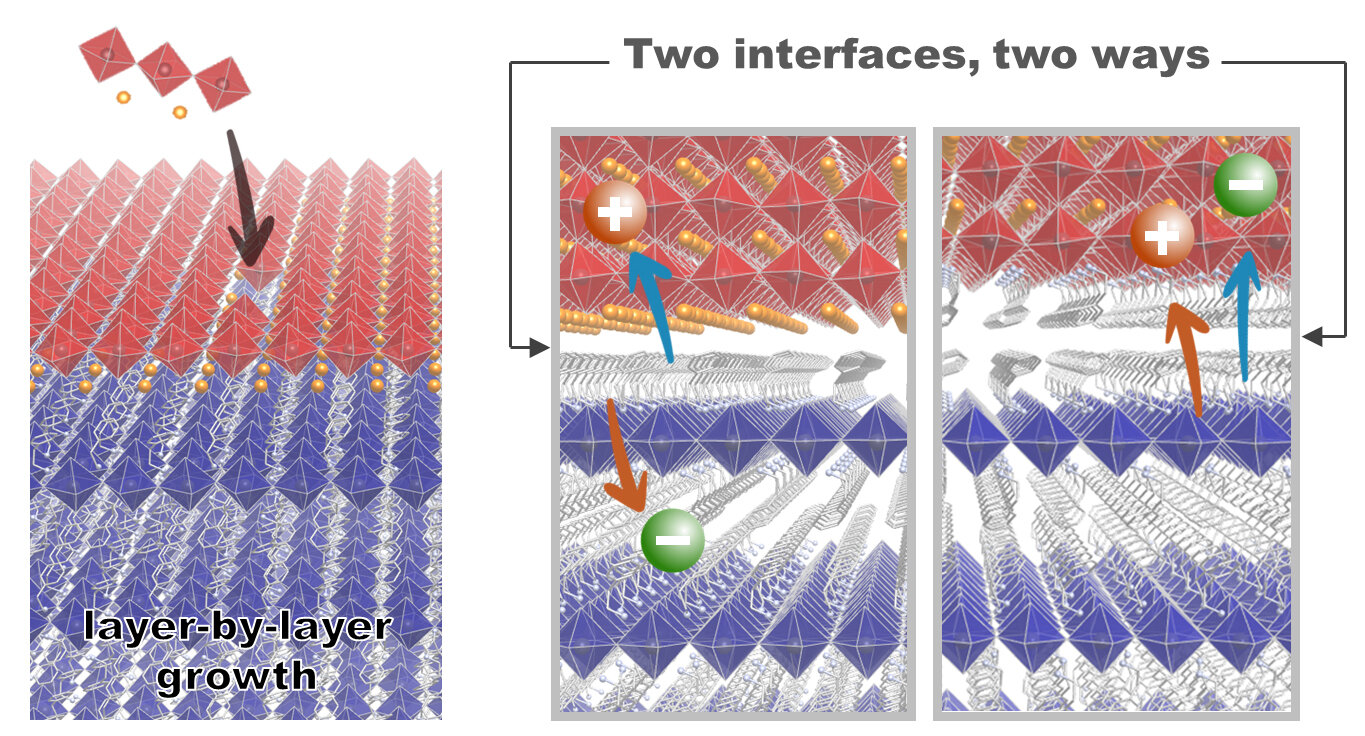
Researchers have achieved a new level of control over the atomic structure of a family of materials known as halide perovskites, creating a finely tuned “energy sandwich” that could transform how solar cells, LEDs and lasers are made.
Due to their remarkable ability to absorb and emit light, and because they are cheaper and can be configured to convert more of the solar spectrum into energy than silicon, perovskites have long been touted as a potential replacement for silicon in solar cells, LEDs and quantum technologies.
However, their instability and durability has, so far, largely limited perovskite devices to the laboratory. In addition, scientists have struggled to precisely control the thickness of perovskite films, and control how different perovskite layers interact when stacked together—an important step in building functional, multi-layered structures.
Breakthrough in perovskite film growth
Now, a team of researchers led by the University of Cambridge has found a new way to grow ultra-thin layers of perovskite films so their atoms line up perfectly, which could enable more powerful, durable and efficient devices.
The researchers used a vapor-based technique to grow three-dimensional and two-dimensional perovskites one layer at a time, which enabled them to control the thicknesses of the films down to fractions of an atom.
Their results, reported in the journal Science, could open the door to usable perovskite devices that can be produced at scale, using a process like that used to make commercial semiconductors.
Each layer in a semiconductor “sandwich” does a different job in moving electrons and their positively-charged counterparts—called holes—around and determines how the semiconductors absorb or emit light. Together, the layers act like one-way streets that guide the electric charges in opposite directions, preventing them from bumping back into each other and wasting energy as heat.
In other widely-used semiconductors, such as silicon or newer materials such as gallium nitride, the properties of the individual layers can be fine-tuned using various methods. But perovskites, despite their excellent performance, have so far proved difficult to control in layered devices, due in part to their ‘chaotic’ atomic structure.

Vapor processing enables atomic precision
“A lot of perovskite research uses solution processing, which is messy and hard to control,” Professor Sam Stranks from the Department of Chemical Engineering and Biotechnology, who co-led the research, said.
“By switching to vapor processing—the same method used for standard semiconductors—we can get that same degree of atomic control, but with materials that are much more forgiving.”
The researchers used a combination of three-dimensional and two-dimensional perovskites to create and control their atomically-tuned stacks, a phenomenon known as epitaxial growth. This fine control let the team directly observe how the light given off by the material changes depending on whether it’s a single layer, a double layer, or thicker.
“The hope was we could grow a perfect perovskite crystal where we change the chemical composition layer by layer, and that’s what we did,” said co-first author Dr. Yang Lu from Cambridge’s Department of Chemical Engineering and Biotechnology and Cavendish Laboratory.
“It’s like building a semiconductor from the ground up, one atomic layer after another, but with materials that are much easier and cheaper to process.”
Controlling charge behavior and device potential
The researchers also found they could engineer the junctions between the layers to control whether electrons and holes stayed together or apart—a key factor in how efficiently a material emits light.
“We’ve reached a level of tunability that wasn’t even on our radar when we started,” said Professor Sir Richard Friend from the Cavendish Laboratory, who co-led the research.
“We can now decide what kind of junction we want—one that holds charges together or one that pulls them apart—just by slightly changing the growth conditions.”
The researchers found they could tune the energy difference between the layers by more than half an electron volt, and in some cases, extend the lifetime of electrons and holes to over 10 microseconds: far longer than usual.
The team says this level of precision could pave the way for scalable, high-performance devices that use light in new ways, from lasers and detectors to next-generation quantum technologies.
“Changing the composition and performance of perovskites at will—and probing these changes—is a real achievement and reflects the amount of time and investment we’ve made here at Cambridge,” said Stranks.
“But more importantly, it shows how we can make working semiconductors from perovskites, which could one day revolutionize how we make cheap electronics and solar cells.”
More information:
Yang Lu et al, Layer-by-layer epitaxial growth of perovskite heterostructures with tunable band offsets, Science (2025). DOI: 10.1126/science.adx5685. www.science.org/doi/10.1126/science.adx5685
Citation:
‘Energy sandwich’ could power next-generation solar and lighting (2025, November 13)
retrieved 13 November 2025
from https://techxplore.com/news/2025-11-energy-sandwich-power-generation-solar.html
This document is subject to copyright. Apart from any fair dealing for the purpose of private study or research, no
part may be reproduced without the written permission. The content is provided for information purposes only.









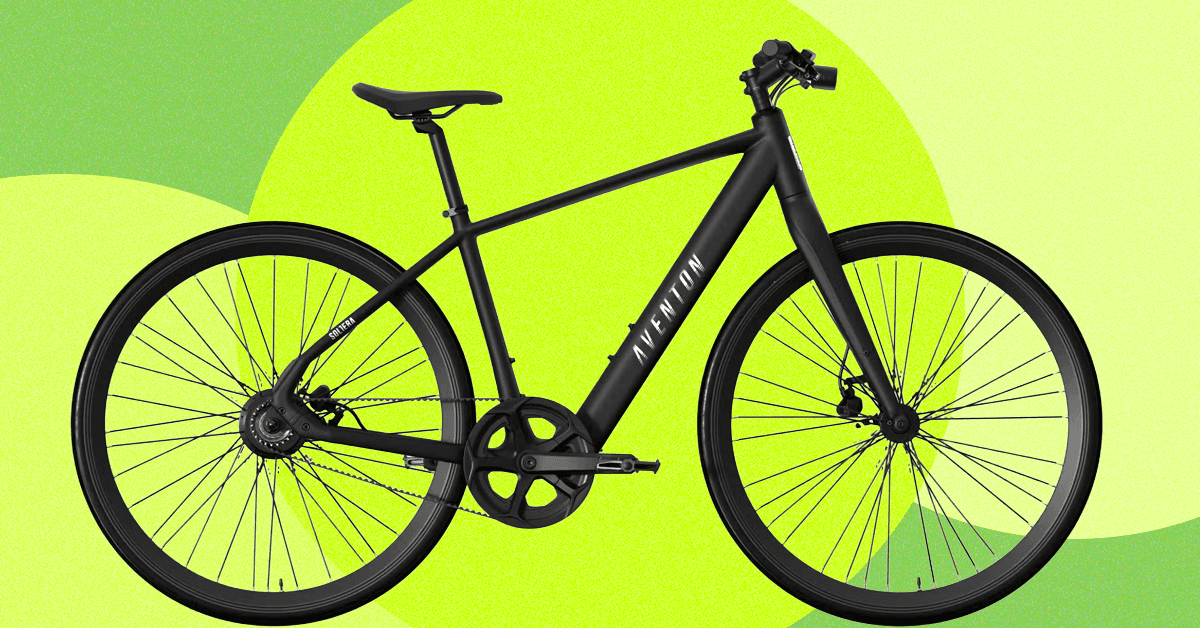
Belt-drive bikes offer some huge upsides. First, they usually require less maintenance, with many belts often lasting twice as long as a typical chain. Second, there’s no grease to speak of, and therefore, no black smudges on your work pants. Third, in the case of the Soltera 3, the belt comes from the Gates brand, whose drivetrain belts are as good as it gets. Belt-drive bikes are silent and often smoother than their chain-driven counterparts.
That said, the inclusion of a low-maintenance element such as a belt drive paired with hydraulic disc brakes, which require bleeding roughly every year, struck me as an odd choice. If Aventon wanted to make the Soltera 3 as hands-off as possible, cable-actuated brakes would have been a more intuitive choice.
The other thing that immediately jumps out about the Soltera 3 is its relatively light weight. At 37 pounds, the Soltera 3 is heavy for an analog bike. But it’s certainly not heavy for an ebike, and it’s nearly as stiff, nimble, and navigable as a conventional bicycle. One issue I’ve always had with ebikes is their heft. Given that they’re often made to replace a car, they’re built with load bearing in mind. Also, ebike batteries are heavy.
Adding to that sense of “this is just like my other bikes,” the Soltera 3 simply looks cool, which is often not the case when it comes to ebikes. The matte black my tester bike arrived in looks cool because matte black almost never doesn’t look cool. (Additionally, the Soltera 3 is available in dark matte blue and a sleek silver.) But beyond the finish, the bike’s geometry; its wide, almost perfectly flat handlebars; and its narrow (by ebike standards) 700 x 36 tires make it feel closer in DNA to a road bike than a traditional ebike.
Button Press
Photograph: Michael Venutolo-Mantovani
I’m 6′4′′, and the extra large Soltera 3 that I tested was at a maximum saddle height. It was suitable for me, but I couldn’t recommend anyone bigger than me riding the Soltera 3. That said, with four sizes ranging from small to extra large, the line covers a wide swath of riders, ranging from my height all the way down to 5′ tall.

Chet Kittleson, 38, is the cofounder of Tin Can and a father of three kids, 10, 8, and 5. I suspect he wouldn’t much like my description of the product’s function as “spying” (keeping watch over one’s kids is part of a parent’s job) or the product itself as a “toy.” He thinks of it, instead, as a utility: a way for kids to talk to Grandma or make plans with friends and to be “part of the same world that grown-ups are a part of.” When he was a kid, he says, the landline was “arguably the most successful social network of all time.” Every house had one. Then came cell phones and smartphones. Direct lines to the internet. “And somewhere along the way we decided the landline was obsolete,” Kittleson says. “In doing that, we overlooked a group that was a major beneficiary of it: kids.”
I’m talking to him over Zoom one afternoon from my home in Los Angeles and his office in Seattle. When I tell him that Amos and Clara had called me more than two dozen times, he doesn’t seem particularly surprised. At first there’s a burst of activity, he says, and then over the course of a few weeks, the kids mature. “They’re like, oh, OK, I see that I can actually do things with this that are important,” he says.
Kittleson, who guesses that most Tin Can users are between the ages of 5 and 13, says he wants to help create a “better childhood” or, as he puts it, “giving kids back a sense of independence and confidence.” (Mike Duboe, a partner at Greylock Ventures, which led a round that invested $12 million in the company in October, says something similar.) One parent, describing their kid’s Tin Can use on X, wrote that it “felt like the old days.”
Amos and Clara weren’t the only ones who, over the holidays, got the gift of gab. In late December, frustrated parents flooded the company’s feedback forms and posted on Reddit that their Tin Cans weren’t working. Though the Tin Can engineers had anticipated a surge in usage around the holidays, the hundredfold increase in call volume took them by surprise.
When I ask Kittleson about the holiday meltdown, he winces. “It was a stressful Christmas,” he concedes. (A message on the Tin Can homepage said, “We’re investigating an issue impacting the network.”) He says that future shipments of the product will be staggered.
And the product’s far from perfect: There can be echoes, unstable sound quality, and long pauses. The buttons on the device are hard to press, which can be challenging to little fingers like Amos’. His mother, Rebecca, sometimes has to help him make calls. “It takes a little bit out of the independence of it,” she says.
My first phone, like that of other kids in my generation, was my family’s, a mustard yellow piece of hard plastic that sat on the mottled brown linoleum counter adjacent to the kitchen. It held a special place in my imagination—an object full of potential—but like most phones back then it was shared within a family and maybe even overheard or monitored. It was also tethered to a wall, making it difficult to multitask or move around while on a call. Kittleson, in fact, says that one inspiration for Tin Can was his frustration when he called his mother on her cell phone. She was, he says, “the worst”: the sort of person who ran around the house while on the call, doing laundry or whatnot. Difficult to hear. Easily distracted.

The Google Pixel 10a comes out on March 5, and right now, Amazon and Best Buy are both offering free $100 gift cards when you preorder. The phone’s price is $499, but the gift card sweetens the deal. It’ll be automatically added to your cart.
Amazon’s gift card is a physical one that ships with the phone; Best Buy’s is a digital gift card that will be sent to your email after your preorder is fulfilled. At Amazon, instead of the gift card, you also have the option of choosing a free pair of Pixel Buds 2a when you preorder. They are our favorite earbuds, but you probably don’t need them if you already have decent headphones.
-
Photograph: Julian Chokkattu
-
Photograph: Julian Chokkattu

The Google Pixel 10a isn’t super impressive compared to previous A-series smartphones. In fact, the Pixel 9a is still our favorite Android phone. The two phones are largely similar, even rocking the same chipset. The Pixel 10a does come in some new colors, though, like Fog and Lavender, and the phone is slightly thinner, with a less noticeable camera bump. The screen is a little brighter and a little more scratch-resistant, and the device is made with more recycled materials.
However, there are some software changes in the 10a compared to the 9a. The Pixel 10a is getting some of the same AI features as you’d find in the Pixel 10, plus support for AirDrop as well. The battery lasts up to 30 hours on a single charge, and the phone will have seven years of software and security updates. We can help you decide which Google Pixel to order, and if you decide on the 10a, these gift card deals are definitely worth it (especially if you were already planning on spending money at Amazon or Best Buy anyway).


Sri Lanka’s apparel exports down 2.6% in January 2026

The Aventon Soltera 3 Is the Most Bikey Ebike on the Market Right Now

Italy’s Moncler FY25 revenue reaches $3.69 bn with resilient margins

-

 Tech1 week ago
A $10K Bounty Awaits Anyone Who Can Hack Ring Cameras to Stop Sharing Data With Amazon
-
 Business7 days ago
US Top Court Blocks Trump’s Tariff Orders: Does It Mean Zero Duties For Indian Goods?
-

 Fashion7 days ago
ICE cotton ticks higher on crude oil rally
-

 Tech1 week ago
Donald Trump Jr.’s Private DC Club Has Mysterious Ties to an Ex-Cop With a Controversial Past
-

 Entertainment7 days ago
The White Lotus” creator Mike White reflects on his time on “Survivor
-
 Business6 days ago
Eye-popping rise in one year: Betting on just gold and silver for long-term wealth creation? Think again! – The Times of India
-

 Fashion1 week ago
India’s $28 bn reset: How 5 trade deals will reprice its T&A exports
-

 Sports7 days ago
Brett Favre blasts NFL for no longer appealing to ‘true’ fans: ‘There’s been a slight shift’